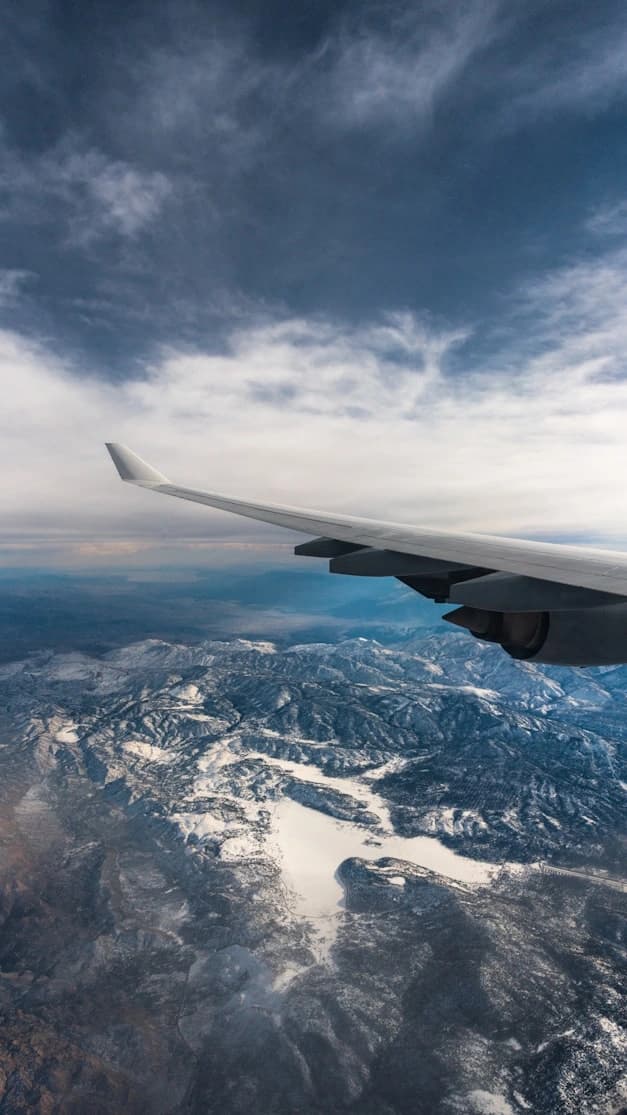
You feel it right after touchdown, or sometimes just before: a sudden jolt, a short shudder, then nothing. Most passengers assume it was weather. It usually isn't.
It's wake turbulence, the spinning air a big jet leaves behind it, and it's one of the most misunderstood things that happens on an ordinary flight. This guide explains exactly what wake turbulence is, what causes it, and why the jolt you felt was never actually dangerous to you.
What That Sudden Jolt Behind a Big Jet Actually Is
Every aircraft that flies creates wake turbulence. It's simply a byproduct of generating lift, and it happens whether the plane is a small regional jet or an Airbus A380.
As a wing moves through the air, it creates a pocket of lower pressure above it and higher pressure underneath. Air rushes from the high-pressure area under the wing up and around the wingtip, trying to even things out. That rolling motion spins off into two counter-rotating tubes of turning air called wingtip vortices, and they trail behind the aircraft like an invisible pair of horizontal tornadoes.
Every wing produces them, on every flight, every time.
They form at the wingtips, not along the fuselage.
They persist in the air after the aircraft has passed, sometimes for more than a minute.
The FAA's Aeronautical Information Manual describes this simply: wake turbulence is a function of an aircraft producing lift, and it can impose rolling or pitching forces on any aircraft that flies through it. On a regional jet or a wide-body airliner, passengers rarely notice more than a short jolt, because the aircraft is large and heavy enough to absorb it without issue.
How Wingtip Vortices Form
The strength of the vortex depends on the pressure differential across the wing, which is directly tied to how much lift the wing is generating at that moment. A heavier aircraft, or one flying more slowly, needs more lift, so it generates a stronger pair of vortices.
This is why the jolt you feel tends to line up with specific moments in a flight, particularly right after touchdown or shortly after another aircraft has taken off ahead of you. It rarely happens mid-cruise, because cruise flight is fast and the aircraft's configuration is clean.
What Causes Wake Turbulence
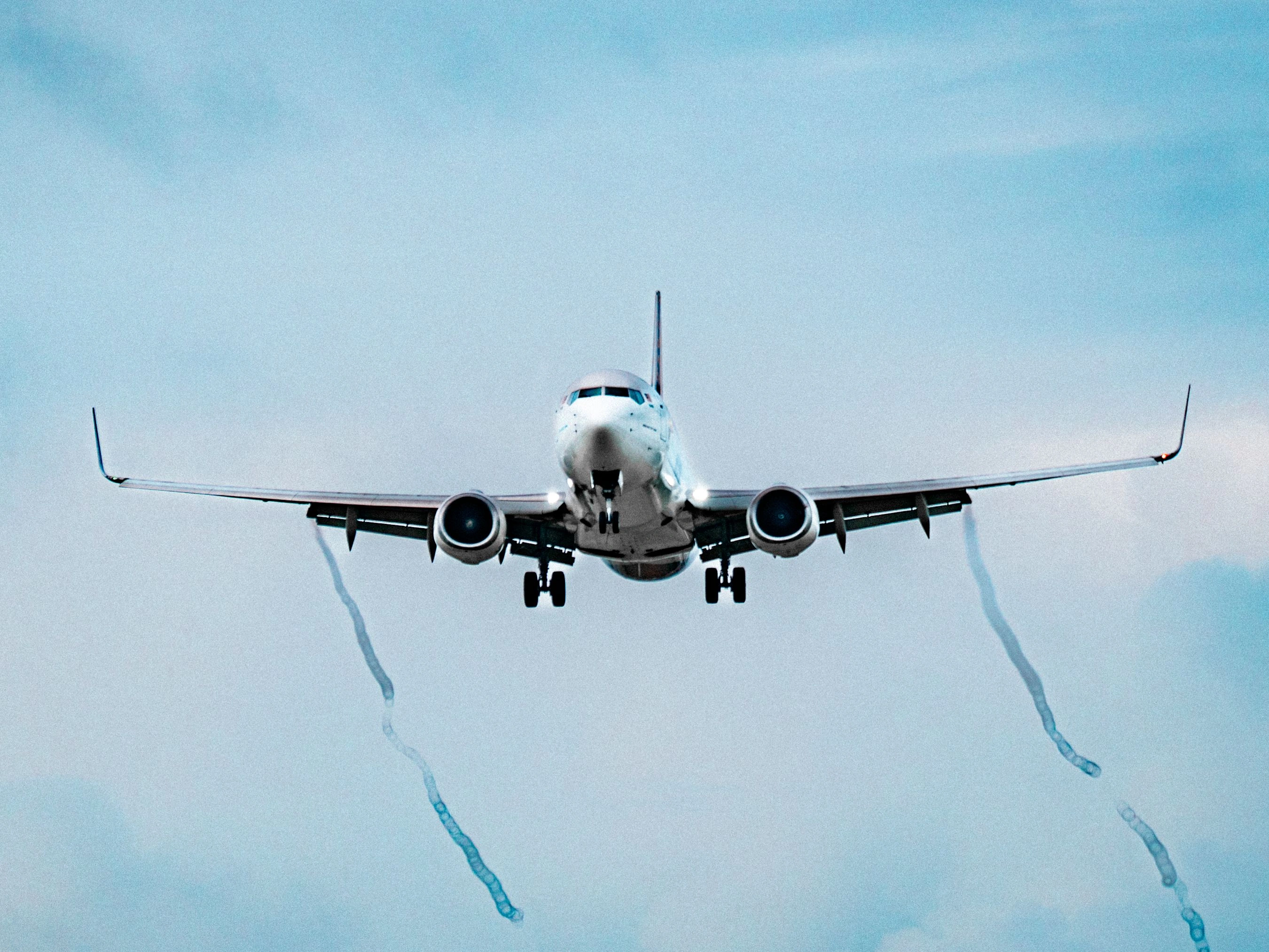
Wake turbulence isn't random. Four factors determine how strong it is, and pilots and controllers plan around every one of them.
Weight heavier aircraft need more lift, producing stronger wingtip vortices.
Speed slower aircraft generate tighter, more concentrated vortices than fast-cruising ones.
Wingspan and shape wider, heavier wings concentrate more rotating air into the vortex core.
Configuration flaps and landing gear extended, as during approach, change vortex behavior compared with a clean wing.
According to the FAA's Aeronautical Information Manual, the greatest vortex strength occurs when the generating aircraft is heavy, clean, and slow, which is exactly the condition of a wide-body jet climbing out after takeoff or descending on final approach.
Why Heavier, Slower Aircraft Create Stronger Wake
A fully loaded Boeing 747 or Airbus A380 in a slow, clean climb produces far more powerful wingtip vortices than the same aircraft cruising fast at altitude with flaps retracted. This is also why wake turbulence avoidance procedures focus on takeoff and landing, where aircraft are heavy, slow, and low the phases Air Gazette covers in why takeoff or landing is the more dangerous phase of flight.
Once the vortices form, they don't stay in place. Flight tests show they sink at a rate of several hundred feet per minute. Once they drop within 100 to 200 feet of the ground, they tend to drift sideways at only 2 to 3 knots.
That slow drift is actually part of what makes them manageable. Controllers and pilots know roughly where the wake will be, and they plan spacing around it rather than guessing.
Wake Turbulence vs. Regular Turbulence What's the Difference
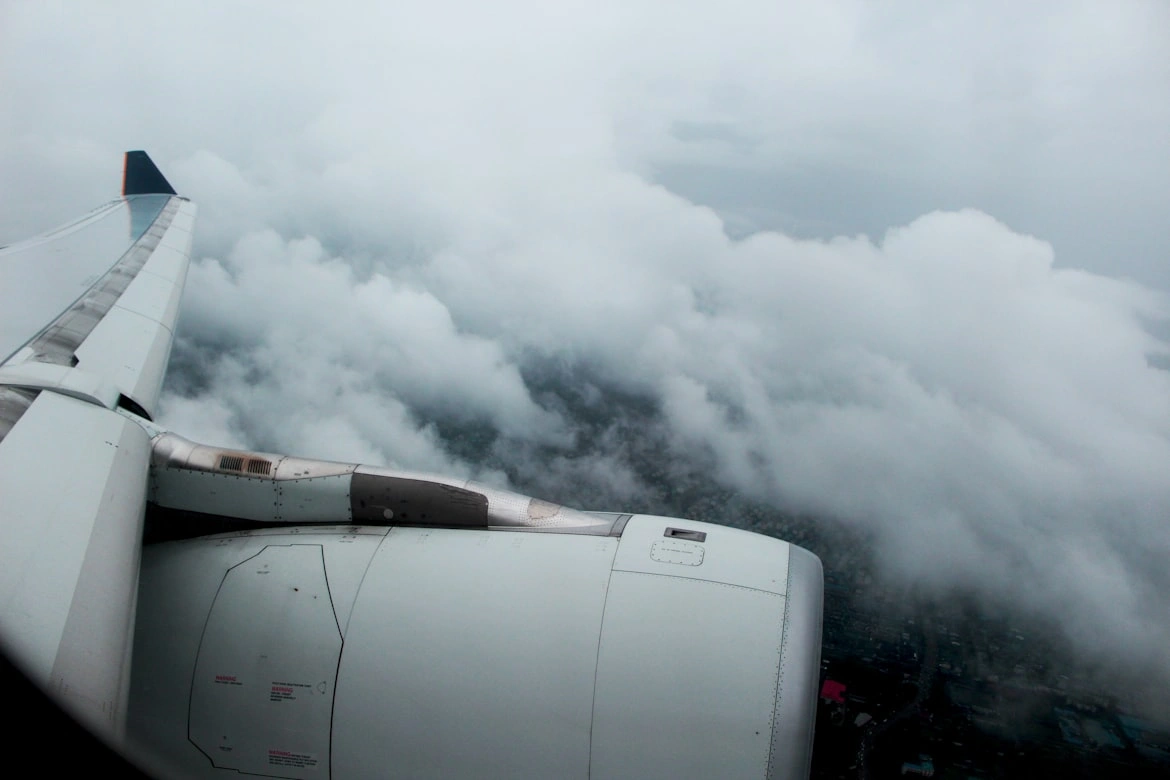
This is the confusion at the heart of the "was that turbulence?" question passengers ask after almost every flight. Regular turbulence comes from the atmosphere itself, things like jet streams, storm cells, or mountain waves, and it can happen anywhere, at any altitude, with no other aircraft nearby.
Wake Turbulence | Atmospheric Turbulence | |
Source | Another aircraft's wingtip vortices | Weather systems, jet streams, terrain |
Typical location | Behind and below another aircraft's flight path | Anywhere, independent of other traffic |
Duration felt | Brief, usually a single jolt or short shake | Can last seconds to minutes |
Predictability | Managed through mandatory spacing rules | Forecast but not fully controllable |
Requires another aircraft nearby | Yes | No |
Wake turbulence needs another aircraft ahead of you to exist at all. If you feel a jolt shortly after a wide-body jet departs the same runway, or just before you touch down behind one, that timing is the tell. Regular turbulence doesn't care whether another plane is anywhere near you, which is the simplest way to separate the two after the fact.
The Weight Categories Behind the Separation Rules
Every separation rule in this guide traces back to a simple weight-based classification system the FAA and ICAO use for every aircraft in the sky.
FAA Category | Maximum Takeoff Weight | Example Aircraft |
Super | No codified weight cutoff reserved specifically for the Airbus A380 | Airbus A380 |
Heavy | 300,000 lbs or more | Boeing 777, 747, 787 |
Large | 41,001 to 299,999 lbs | Boeing 757, Airbus A321 |
Small | 41,000 lbs or less | Regional jets, small turboprops |
Super is not a weight band the way Heavy, Large, and Small are. It's an aircraft-specific designation the FAA assigns individually currently only the A380 carries it, and the retired Antonov An-225 formerly did. Presenting it as a weight threshold would imply a rigor the category doesn't actually have.
The Boeing 757 is a special case worth knowing. It technically falls into the Large category by weight, but its wing design generates wake more like a Heavy aircraft, so the FAA requires controllers to apply Heavy-level separation behind it anyway. This is one of very few aircraft-specific exceptions in the entire system.
How Air Traffic Controllers Keep Planes Separated From Wake Turbulence
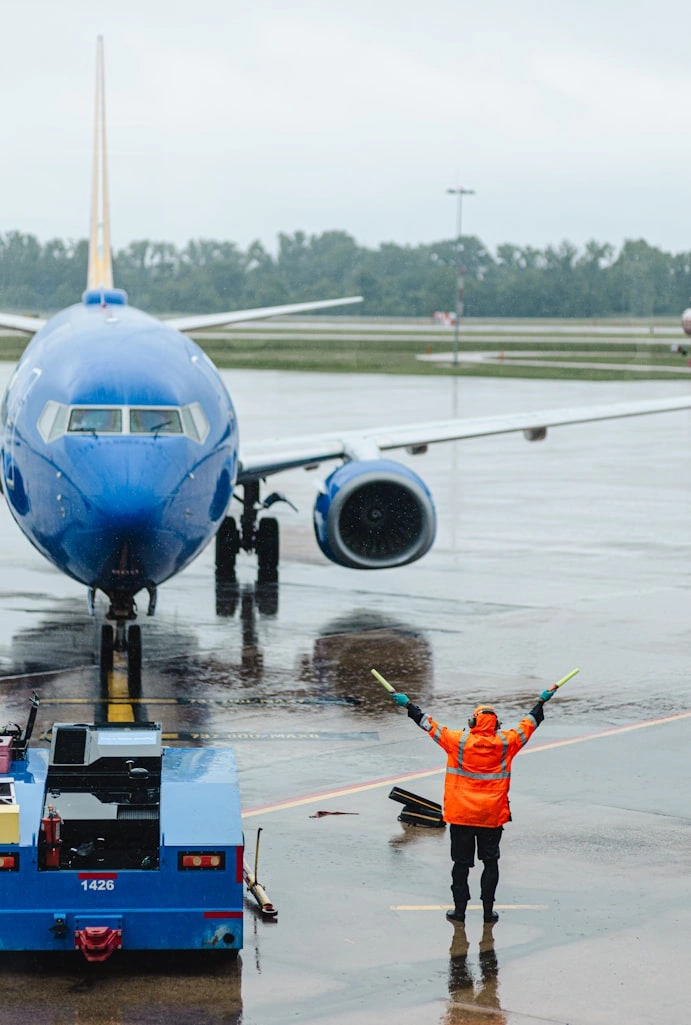
This is the part most passengers never see, and it's the actual reason wake turbulence almost never causes a serious problem on a commercial flight. Air traffic controllers apply mandatory minimum spacing between aircraft based on weight category, specifically to keep smaller planes out of a larger one's wake.
Controllers are required to apply no less than these minimums whenever a smaller aircraft is following a Super, Heavy, or B757-category aircraft.
Trailing Aircraft | Behind This Aircraft | Minimum Separation |
Heavy | Super | 5 nautical miles |
Large | Super | 7 nautical miles |
Small | Super | 8 nautical miles |
Heavy | Heavy | 3 nautical miles |
Small or Large | Heavy | 5 nautical miles |
Small | Boeing 757 | 4 nautical miles |
Small landing | Heavy | 6 nautical miles |
Source: FAA Aeronautical Information Manual, Chapter 7, Section 4.
These aren't suggestions. Pilots can also request extra spacing for wake turbulence avoidance, and controllers have to honor that request as soon as it's practical, even if it means holding an aircraft slightly longer on the ground before a takeoff clearance.
Wake Turbulence Separation Standards, Explained Simply
In plain terms, the bigger and heavier the aircraft ahead of you, the more room air traffic controllers put between you and it. A small regional jet following an A380 gets nearly twice the spacing of a heavy aircraft following another heavy aircraft see Air Gazette's look at how close planes actually fly to each other for how these standards compare to spacing generally.
This is also why you sometimes notice a longer-than-expected wait before takeoff at a busy hub. If a wide-body jet just departed ahead of you, the tower may be holding your aircraft for exactly the interval this table describes, not because of a delay on the ground, but because of physics still hanging in the air ahead of you.
Why Smaller Aircraft Face the Highest Risk
Wake turbulence works in one direction. A heavier aircraft barely notices the wake of a smaller one, but a smaller aircraft can be meaningfully affected by a much larger aircraft's vortices. That's why every separation rule in this guide is built around the size gap between the aircraft ahead and the aircraft behind, not just the size of either one alone.
This asymmetry matters most in general aviation, where a small single-engine aircraft can encounter genuinely hazardous wake from an airliner at a shared airport. Commercial passengers are effectively shielded from this scenario because airliners are, by definition, never the smallest aircraft in the separation equation on a major runway.
Wake turbulence isn't the only invisible system working in the background of a flight GPS spoofing is another risk aircraft are built and operated to route around before it reaches the cabin.
How RECAT Is Making Separation Smarter
The separation numbers in this guide come from the FAA's traditional four-category system, but the agency has spent the past decade rolling out a more precise replacement called Wake Turbulence Recategorization, or RECAT.
The old system grouped aircraft only by weight, which meant some pairings were separated more than physics actually required. A Boeing 767 following a Boeing 747, for example, was historically held to the same 4-mile separation as any other Heavy-behind-Heavy pairing, even though the 767's wing is far less sensitive to the 747's wake than a smaller aircraft would be.
RECAT reclassifies aircraft using wingspan, approach speed, and a measured ability to withstand a wake encounter, not weight alone. Where the physics allows it, that has let the FAA reduce separation slightly and safely at some of the country's busiest airports, improving arrival and departure rates without touching the safety margin. This is an active, ongoing rollout rather than a one-time change, and it's the clearest signal of where wake turbulence rules are heading over the next several years: more precise category-by-category spacing rather than one-size-fits-all weight bands.
How to Tell If You've Flown Through Wake Turbulence
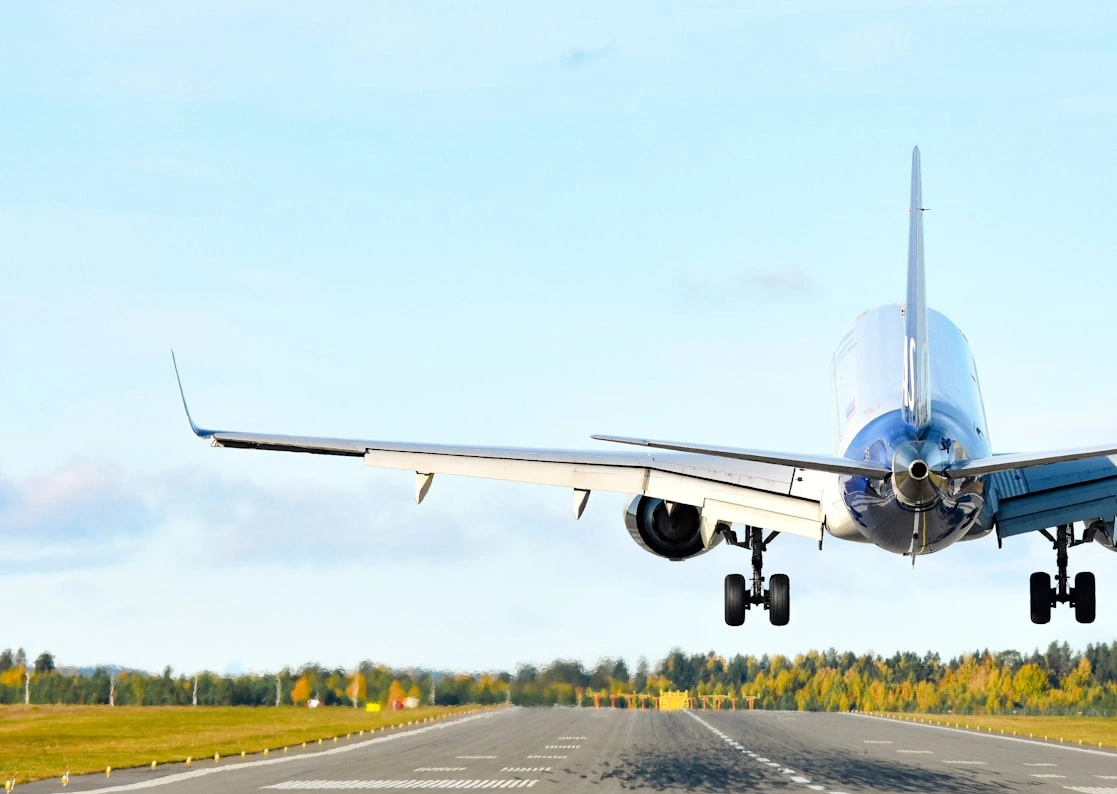
Passengers usually describe the same handful of sensations, and they're worth knowing so you're not left guessing afterward.
A single, sudden jolt rather than a sustained shake
A brief roll or bump, often right after touchdown or shortly after takeoff
Timing that lines up with another aircraft on the same runway shortly before you
No seatbelt sign warning beforehand, unlike most forecast weather turbulence
On May 30, 2026, a Eurowings Airbus A320 climbing near Sarajevo experienced a sudden altitude excursion after a period of turbulence that multiple incident reports attribute in part to wake generated by an Emirates Airbus A380 roughly 7.6 nautical miles ahead of it at the same altitude, according to Aviation Herald's incident reporting. Some secondary accounts note atmospheric turbulence may have contributed alongside the wake encounter, so the exact split between the two causes is not yet settled pending the formal investigation. What is confirmed: the aircraft briefly stopped its climb, descended at up to 3,000 feet per minute, and four passengers along with one flight attendant sustained minor injuries before the flight continued safely to Cologne.
That separation was just above the ICAO minimum for that aircraft pairing, which is a useful, real-world reminder that minimums are a safety floor built to prevent loss of control, not a promise that nobody will ever feel a jolt.
Is Wake Turbulence Dangerous for Passengers
Here's the honest answer: it's a real, physical force capable of rolling or pitching a smaller aircraft, and in rare cases it has caused injuries, as the Sarajevo encounter shows. But it's also one of the most heavily studied and tightly regulated hazards in commercial aviation, which is exactly why serious incidents involving airliners are uncommon.
I've felt that unmistakable single-jolt shudder landing into Tokyo Haneda behind a heavier aircraft on ANA, and it passed in under two seconds without the cabin crew reacting at all. That's the normal experience on a properly separated commercial flight: brief, mildly startling, and not dangerous.
The danger scenario the FAA's separation rules exist to prevent is a much closer, much lower-altitude encounter, typically involving a small general aviation aircraft following a much larger one at minimal distance. Mandatory spacing is specifically designed to rule that scenario out on commercial routes, which is why the vast majority of wake turbulence encounters on an airliner never make the news.
For context on how airlines and regulators manage risks that shape a flight before you notice them, see Air Gazette's breakdown of how Boeing's 787 compares to the Airbus A350 on the wide-body routes most likely to generate strong wake, and what happens when a power bank overheats on a plane as another managed cabin risk.
Conclusion
Wake turbulence is not a mystery and it is not weather. It's the predictable, physical result of an aircraft generating lift, and it's one of the most closely managed risks in the entire air traffic system, backed by weight categories, mandatory spacing rules, and decades of research into exactly how vortices form and behave.
The next time you feel that quick jolt after landing behind a big jet, you'll know exactly what happened, why the aircraft ahead of you caused it, and exactly why it was never something to worry about.
Read more on Air Gazette's Aviation Safety coverage for the mechanics behind every flight risk passengers never see.
Frequently Asked Questions
What is wake turbulence?
Wake turbulence is the spinning air, called wingtip vortices, that every aircraft leaves behind as its wings generate lift. It's strongest behind heavy, slow-moving aircraft and can briefly affect a smaller trailing aircraft.
What causes wake turbulence?
It's caused by the pressure difference between the top and bottom of a wing. Air escaping around the wingtip rolls into two counter-rotating vortices, and the effect gets stronger with a heavier, slower aircraft.
How do pilots avoid wake turbulence?
Pilots stay above or slightly to the side of a preceding aircraft's flight path and rely on air traffic control's mandatory separation minimums. On landing, they aim to touch down beyond the point where the aircraft ahead landed.
Is wake turbulence worse on landing?
Wake turbulence is strongest during takeoff and landing, because aircraft are heavy, slow, and configured with flaps extended, which are exactly the conditions that produce the strongest vortices.
How long does wake turbulence last?
The vortices themselves can linger in the air for a minute or more after an aircraft passes, though the sinking and drifting motion means the risk window at any single point is much shorter.
What happens if you fly into wake turbulence?
Most commercial encounters feel like a brief, single jolt or shudder that passes in a second or two. In rare, closer encounters, it can cause a sudden roll or altitude change strong enough to injure unbelted passengers.
Which aircraft creates the strongest wake turbulence?
The Airbus A380 sits in its own "Super" category and generates the strongest wake of any aircraft in commercial service, followed by other heavy wide-bodies like the Boeing 747 and 777.