TSA PreCheck membership runs for five years, and the renewal fee is no longer the flat number it used to be. Three authorized providers now set their own rates, and the difference between the cheapest and most expensive option is real money.
Here is what renewal actually costs in 2026, how early to start, and the one email pattern worth recognizing before it lands in your inbox.
How Long TSA PreCheck Lasts Before You Need to Renew
TSA PreCheck membership lasts five years from approval, regardless of which provider processed the enrollment. Members can renew online up to six months before that expiration date, and the new membership period picks up exactly where the old one ends.
There is no overlap penalty for renewing early. TSA recommends starting the process at least 60 days before expiration, since approval typically takes three to five business days but can stretch to 60 in some cases.
Renewal notifications go out at four checkpoints: six months, three months, one month, and two weeks before expiration. Every one of them arrives from an address using the name "Universal Enroll," which matters more than it sounds once scam attempts enter the picture.
TSA PreCheck Renewal Cost in 2026
Renewal pricing now depends on which of the three authorized providers processes it. IDEMIA, CLEAR, and Telos each set their own fee, and IDEMIA is currently the cheapest online option of the three.
TSA's own 2021 and 2022 announcements show the direction this has moved: the online renewal fee dropped from $85 to $70, and IDEMIA's in-person renewal fee separately dropped from $85 to $78. Providers have continued adjusting rates independently since then.
Provider | Online renewal | In-person renewal |
IDEMIA | $58.75 the cheapest online option | $66.75 |
CLEAR | $69.95 tied with Telos for the highest online rate | $79.95 the highest in-person rate of the three |
Telos | $69.95 tied with CLEAR online | $58.75 cheaper than its own online rate, the reverse pattern of the other two providers |
Sources: TSA PreCheck® online renewal fee will decrease to $70, tsa.gov (2021); TSA reduces TSA PreCheck® enrollment fee, tsa.gov (2022). Provider-specific figures reflect tsa.gov pricing last verified August 2026.
Telos is the outlier worth noting directly: it is the only provider where renewing online costs more than renewing in person, the reverse of how IDEMIA and CLEAR price their own options. Confirm the live number for your chosen provider on the official renewal page before paying, since exact figures shift with little notice.
Why the Renewal Fee Differs From New Enrollment

New enrollment costs more than renewal at every provider, because it requires a full in-person background check and fingerprinting session. Renewal skips that step entirely for most members.
Members who renew within the standard window keep their existing fingerprint record on file. That is the structural reason renewal is priced lower than starting from zero.
A name change is the main exception. Anyone who has changed their legal name since enrolling must contact the TSA Help Center before renewing, and that process may require an in-person visit regardless of provider.
How to Renew TSA PreCheck Online, Step by Step
Renewing online takes about five minutes for most members, and the process runs almost entirely through your existing Known Traveler Number. Start at the official renewal page at tsa.gov, never through a third-party site that is not a .gov domain.
Here is the sequence:
Go to the official TSA PreCheck renewal page and select a provider.
Enter your Known Traveler Number and verify your identity details.
Confirm your name, address, and other profile information are current.
Pay the renewal fee for your chosen provider.
Submit and wait for an approval notification, typically within three to five business days.
Your KTN stays identical through this entire process. I have renewed mine twice now without touching an enrollment center, and the number never changed on a single airline reservation.
Choosing Between IDEMIA, CLEAR, and Telos
All three providers submit the same information to TSA and the FBI, so approval odds do not change based on which one you pick. The differences that matter are price, renewal location options, and whether you already hold a related membership.
CLEAR members get a one-time discount toward CLEAR+ enrollment immediately after completing a PreCheck renewal through CLEAR, since CLEAR deducts the PreCheck cost from its own membership price. That perk only applies when the renewal itself runs through CLEAR, not through IDEMIA or Telos.
Anyone who already carries an airport lounge membership or premium travel card should check whether that same card reimburses the PreCheck fee before choosing a provider. A reimbursement policy tied to one card issuer sometimes only applies to charges from a specific provider's payment page.
Travelers who also use O'Hare regularly for tight connections have extra reason to keep PreCheck current without a lapse. A missed self-transfer connection at ORD is expensive enough without adding standard-line screening delays on top of it.
Using a Credit Card to Cover the Renewal Fee
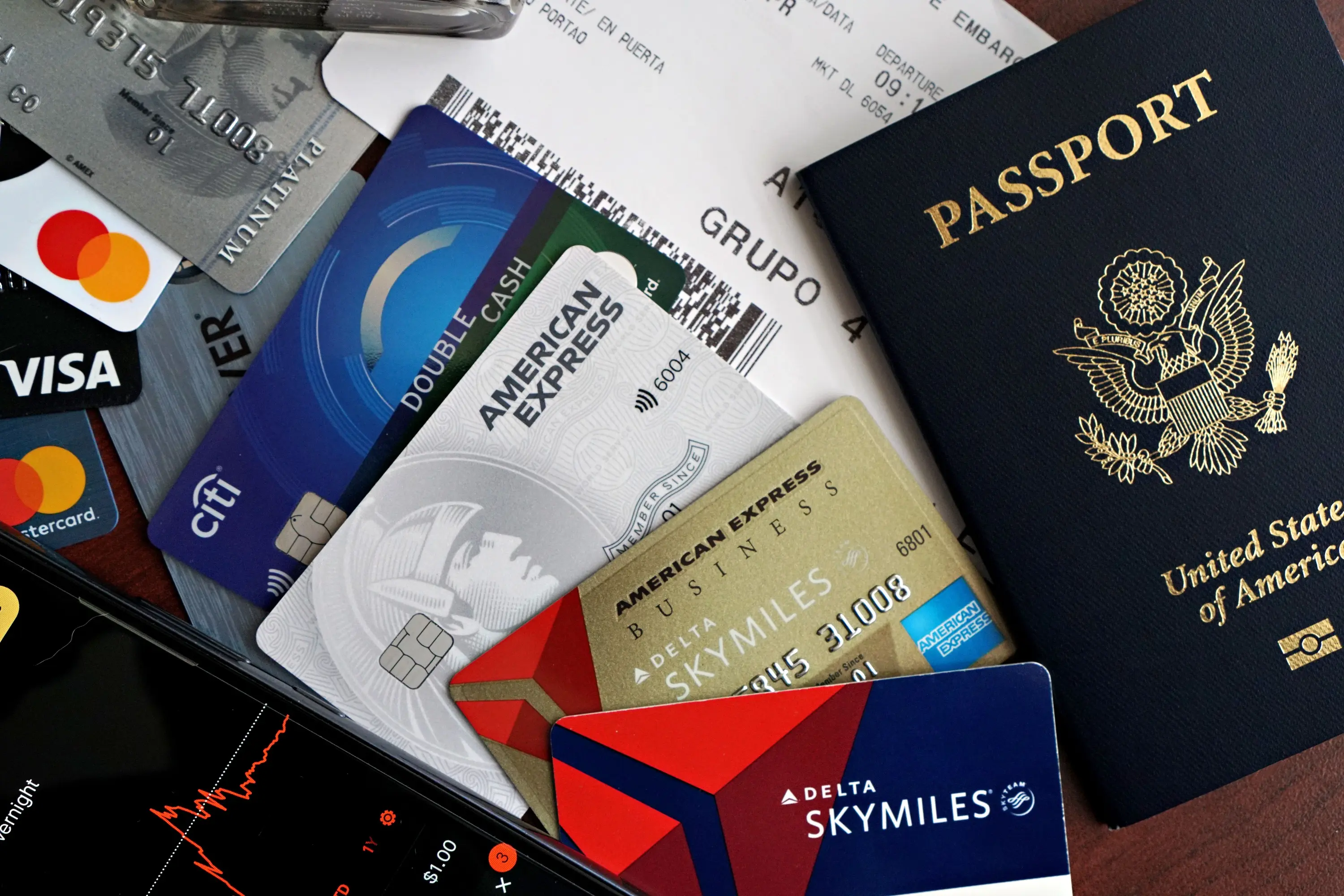
Several premium travel credit cards reimburse the TSA PreCheck application and renewal fee as a standing statement credit. That benefit typically applies once every four to five years, timed to match the membership cycle rather than annually.
Cards commonly offering this credit include premium travel cards from American Express, Chase, Capital One, and Bank of America, though the exact list and reimbursement window change periodically. Check the specific benefits guide for your card before paying out of pocket, since some cards reimburse Global Entry or CLEAR instead of PreCheck directly, and the fee must usually be charged to that exact card to trigger the credit.
A card that reimburses Global Entry's application fee also covers the TSA PreCheck benefit bundled inside it, since Global Entry members receive PreCheck automatically. That distinction matters when deciding which trusted traveler program to renew first if a traveler holds both.
Letting a Card That Isn't Yours Cover the Fee
Most issuers allow the statement credit to apply even when a cardholder pays for someone else's PreCheck renewal. That makes it possible for one household member with the right card to cover renewal fees for a spouse or family member who does not carry that card.
The charge still needs to run through the cardholder's own card number during the actual renewal payment step. Confirm this works with the specific issuer beforehand, since policies on third-party enrollments are set at the card level, not by TSA.
TSA PreCheck Renewal for Military Members and Family
Active-duty members of the U.S. Armed Forces already have PreCheck access built into their DoD ID number, which functions as a Known Traveler Number without a separate renewal fee or process. Reservation details still need to stay current for the indicator to actually appear on a boarding pass.
DoD civilian employees must separately opt in through the milConnect website before their DoD ID functions as a KTN for PreCheck purposes. That opt-in only needs to happen once, unlike a standard civilian membership.
Cadets and midshipmen at the U.S. Military Academy, Air Force Academy, Naval Academy, and Coast Guard Academy also receive PreCheck benefits at no cost, tied to their DoD ID number the same way. None of these military pathways involve the standard five-year renewal cycle that civilian members need to track.
Family Members and Children
Children age 12 and under can use the PreCheck lane for free when traveling on the same reservation as a parent or guardian who has the indicator on their boarding pass. No separate enrollment or renewal applies to them at all.
Children between 13 and 17 traveling on the same reservation as an enrolled parent may also access PreCheck lanes, though they can be randomly excluded from receiving the indicator on any given trip. A traveler over 18 needs an individual membership and their own renewal cycle, regardless of a parent's status.
TSA PreCheck Renewal vs Global Entry Renewal
Global Entry includes TSA PreCheck as part of its membership, so a Global Entry renewal effectively renews both benefits at once. Travelers who hold both separately sometimes let one lapse without realizing the other still covers domestic screening.
Global Entry's renewal runs through the Trusted Traveler Program website rather than TSA's portal, with its own fee structure and review timeline. Anyone flying internationally twice a year or more is generally better served renewing Global Entry directly, since it carries PreCheck automatically.
Travelers who only fly domestically rarely need Global Entry at all, and a standalone PreCheck renewal is the simpler, cheaper path. Comparing the two before a five-year cycle starts over is worth the ten minutes it takes.
What Changed in TSA PreCheck Renewal for 2026

The most concrete 2026 change is not the fee structure, it is what an active PreCheck membership now unlocks at the checkpoint itself. TSA expanded its Touchless ID facial recognition lanes to roughly 65 airports by spring 2026, prioritizing host cities for the 2026 World Cup ahead of the expected surge in travel.
Touchless ID lets an eligible PreCheck member clear identity verification with a brief face scan instead of handing over a physical ID and boarding pass. It is free for any traveler who already has PreCheck, including those who get it through Global Entry, and currently works with American, Delta, United, Southwest, Alaska, and Hawaiian.
A lapsed membership loses access to both the standard PreCheck lane and these newer Touchless ID lanes at the same time. That raises the practical cost of letting a renewal slip past the deadline in 2026 specifically, on top of the multi-provider pricing spread covered above.
Checking Your Renewal Status and Spotting a Legitimate Email
Every legitimate TSA PreCheck renewal notice comes from an address referencing "Universal Enroll," and directs members back to a .gov domain to complete the process. Any email demanding payment through a third-party link outside that pattern should be treated as suspicious.
Members can check their own expiration date at any time by logging into their account and looking for the field marked "TSA PreCheck Expiration Date." That same login also shows whether a renewal is currently in progress.
If a flight is booked before expiration but departs after the membership lapses, no PreCheck indicator will appear on that boarding pass. Renewing before the expiration date, not before the flight date, is the detail that actually protects a trip.
Carry-On Rules Still Apply Even With PreCheck
PreCheck status speeds up the identity and shoe-and-jacket process, but it does not exempt a traveler from current screening restrictions. TSA's tightened power bank and lithium battery rules apply in PreCheck lanes exactly as they do everywhere else.
Worth checking at the same time a renewal comes up, since both are easy to assume are settled once a KTN is active. Neither one is a "set it and forget it" detail.
Planning Renewal Around Your Travel Calendar
Renewal timing matters most for travelers with a trip already booked close to their expiration date. Building in a buffer avoids the scenario where a renewal is still processing on departure day.
Frequent flyers who also budget for airport parking at a home hub like Logan already think in terms of advance planning windows. The same logic applies here: renewing at the 60-day mark, rather than the two-week mark, removes almost all of the risk.
Travelers who pair PreCheck with premium airport access, such as Delta's newer lounge options at LAX, have even more reason to keep the membership current without a gap. A lapsed KTN does not affect lounge entry directly, but it does erase the expedited-lane advantage that makes an early lounge arrival worthwhile in the first place.
Common TSA PreCheck Renewal Mistakes
Waiting until the two-week notification to start the process is the single most common mistake. Approval can take up to 60 days in some cases, removing almost all margin before a booked trip.
Assuming the renewal fee is identical across all three providers is the second common error. Confirming the live rate at renewal time avoids paying more than necessary.
Ignoring a name change until arriving at the airport is the third. Anyone who has legally changed their name since enrolling needs to contact TSA before renewing, since that update can take time to process.
What This Signals for the Months Ahead
Provider-level price competition is likely to continue rather than settle into a single flat rate again. That rewards travelers who compare before renewing instead of defaulting to whichever provider they used originally.
Expect renewal processing to keep shifting toward digital-first as more of TSA's enrollment volume moves online. The in-person visit is increasingly the exception rather than the default path.
Conclusion
TSA PreCheck renewal in 2026 is cheaper, faster, and more provider-dependent than it was even a few years ago. Renewing online within six months of expiration, with the correct provider chosen ahead of time, is the difference between a five-minute task and a scramble at the airport.
Confirm the current fee for your chosen provider directly at TSA's official renewal page before paying, since rates shift with little advance notice. For more coverage of the systems that shape a smoother trip through US airports, explore the full collection at Air Gazette.
Frequently Asked Questions
How often does TSA PreCheck have to be renewed?
TSA PreCheck membership lasts five years from approval. Renewal can begin online up to six months before the expiration date, with the new membership period starting exactly when the old one ends.
What is the easiest way to renew my TSA PreCheck?
Renewing online through the official TSA PreCheck renewal page is the fastest option for most members, typically taking about five minutes. It requires only a Known Traveler Number and a current identity profile, with no in-person visit needed.
How do I check if my TSA PreCheck is expired?
Log into your account through the official enrollment site and look for the field labeled "TSA PreCheck Expiration Date." The same account also shows whether a renewal is currently pending approval.
Is TSA PreCheck free for seniors?
No blanket senior discount exists for TSA PreCheck renewal or enrollment. Seniors pay the same provider-set fee as any other traveler, though some credit cards that reimburse the fee are marketed toward frequent older travelers specifically.
How much does TSA PreCheck renewal cost?
The exact fee depends on which of the three authorized providers processes it, and online renewal is consistently cheaper than an in-person visit at every provider. Confirm the current rate directly on the official renewal page before paying, since providers adjust pricing independently.
Which TSA PreCheck renewal provider is best?
All three approved providers, IDEMIA, CLEAR, and Telos, submit identical information to TSA and the FBI, so approval odds are the same regardless of choice. Price and any bundled perks, such as a CLEAR+ discount, are the main differentiators.
Is the TSA PreCheck renewal email legitimate?
Legitimate renewal notices reference "Universal Enroll" as the sender and direct members back to a .gov domain to complete the process. Any email requesting payment through a non-government link should be treated as a scam attempt and reported.