A cheap fare through Chicago O'Hare can hide a costly assumption. If your itinerary is really two separate tickets stitched together rather than
one connection, the airline behind either leg is not obligated to get you to your meeting on time.
That distinction matters more at O'Hare International Airport than almost anywhere else in the country right now. Here is what business travelers need to verify before they click "book" on a fare that looks too good to pass up.
What "Self-Connecting" Actually Means at O'Hare
A self-transfer, sometimes called a virtual interline, is not a normal connection. It is two or more flights from carriers with no codeshare or interline agreement, packaged together by a search tool but ticketed independently.
Google's own travel documentation labels these itineraries "separate tickets booked together" for exactly this reason. Each flight is a standalone reservation, and the airlines involved have no formal relationship to each other beyond appearing in the same search result.
That packaging is often what makes the fare cheaper than a single-ticket itinerary, the same dynamic that drives a lot of O'Hare-adjacent pricing behavior. It is also worth noting who benefits from that packaging: OTAs and metasearch tools typically earn a booking fee for selling these split itineraries, which gives them a direct incentive to surface self-transfer options prominently, whether or not the connection risk is disclosed as clearly as the fare.
The savings are real, and so is the exposure that comes with them.
Self-Transfer vs a Normal Connection vs a Codeshare
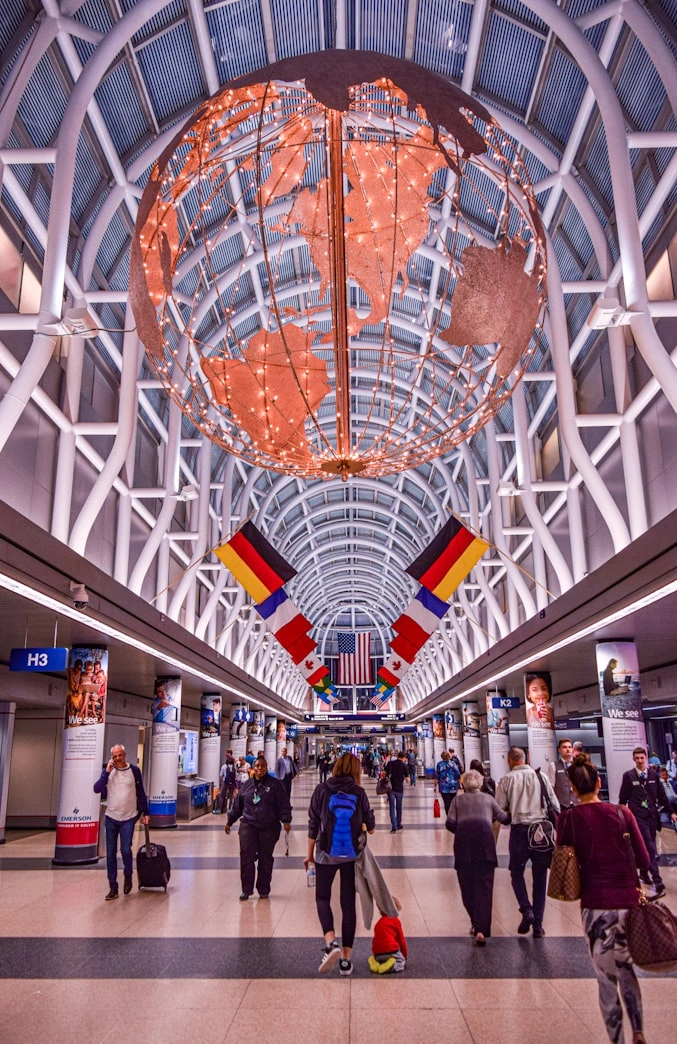
A standard single-ticket connection sits entirely with one airline. If the first flight runs late and the traveler misses the second one, that airline is contractually on the hook to get them to the final destination, one way or another.
A codeshare or interline itinerary works almost the same way, even though two airline names appear on the ticket. Alliance partners like United and its Star Alliance partners, or American and its Oneworld partners, have agreements that make one operating carrier responsible for the whole journey.
A self-transfer has none of that scaffolding. It looks identical to a normal connection on the search results page, but it behaves like two unrelated trips that happen to share an airport and a rough time window.
At O'Hare specifically, this plays out along terminal lines. Star Alliance partners cluster around United in Terminal 1, Oneworld partners cluster around American in Terminal 3, and a self-transfer that mixes carriers from outside those alliances is often the itinerary crossing the most physical ground with the least institutional backup.
O'Hare's Minimum Connection Time and Why It's Not a Guarantee
Airlines publish a minimum connection time, or MCT, for every airport they serve, and United's own guidance states a general baseline of at least 45 minutes for a domestic-to-domestic connection. For a domestic-to-international connection, that stated minimum rises to at least 90 minutes.
That number is a floor set by the airline, not a promise to the passenger. A federal review of airline scheduling practices found that carriers will not accept responsibility for transferring passengers or bags on connections booked below that published minimum, and there is no formal mechanism forcing an airline to honor it beyond its own booking system.
At a self-transfer, there is no shared MCT at all, because no single airline governs the itinerary end to end. The traveler is the one deciding what counts as enough time, with no institutional floor backing that decision up.
How the Layout Works Across Terminals 1, 2, 3, and 5
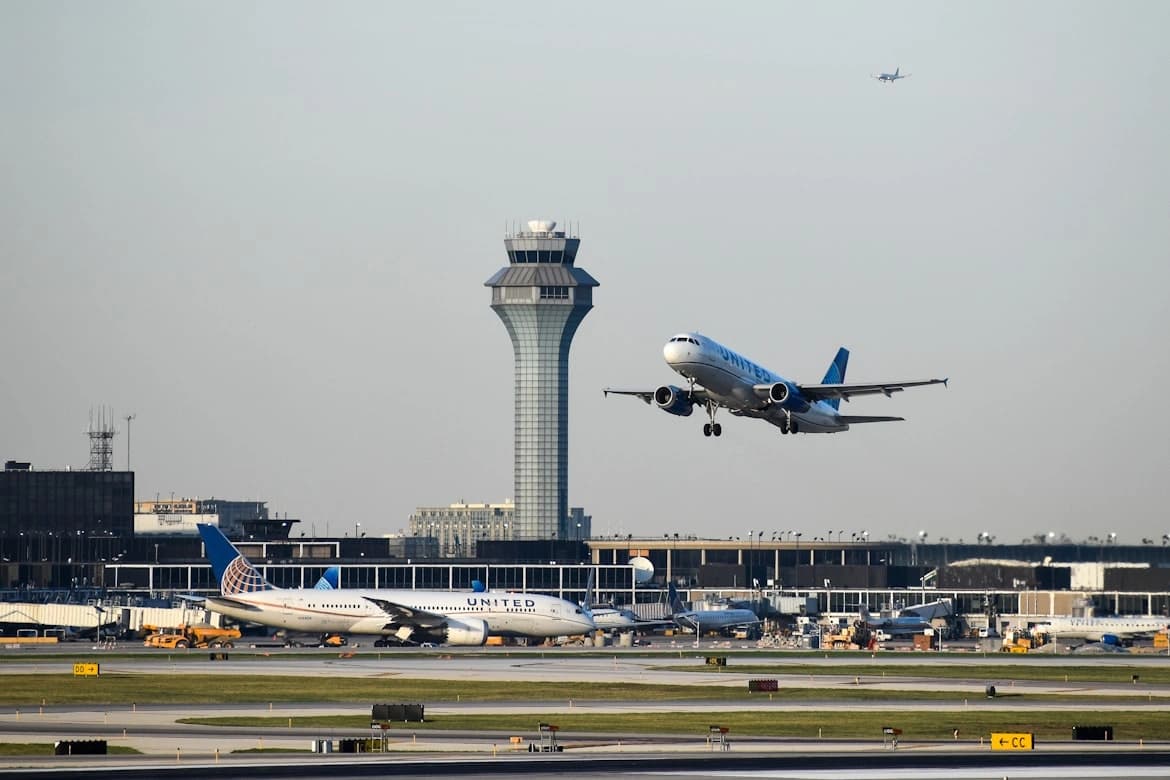
O'Hare has four passenger terminals: 1, 2, 3, and 5. United operates its hub out of Terminal 1, across Concourses B and C, while American's hub sits in Terminal 3, across Concourses G, H, K, and L.
Terminals 1, 2, and 3 connect airside by pedestrian walkway, so a domestic-to-domestic connection within that cluster does not require a security re-clear. Terminal 5, the international terminal, sits apart from that cluster and is reached only by the Airport Transit System train or a terminal transfer bus.
Connection type | What it typically involves |
Domestic to domestic, same cluster (T1–T3) | Airside walkway, no re-screening, United's stated 45-minute floor |
Domestic to international, or vice versa (T5) | ATS train ride, often a security re-clear, United's stated 90-minute floor |
Self-transfer, any combination | Landside exit, baggage reclaim, re-check-in, no published floor at all |
A self-transfer that crosses from Terminal 5 to the Terminal 1 through 3 cluster is the slowest and riskiest version of this trip. It combines the longest physical distance at the airport with the least institutional protection if anything runs late.
Who Absorbs the Cost When a Self-Connection Fails
On a single-ticket itinerary, a delay is the airline's problem to solve. United's ConnectionSaver program will even hold a departing flight a few extra minutes for passengers connecting from a delayed inbound one, because both flights sit on the same ticket and the same operating carrier.
None of that applies to a self-transfer. If the first flight runs late and the second one is a separate reservation, the traveler eats the missed fare, the rebooking cost, and often a same-day standby scramble to salvage the trip.
For a business traveler with a meeting on the other end, that is not a theoretical risk. A same-day walk-up fare on a competing carrier can run several hundred dollars more than the original ticket, on top of a missed first meeting and, in a worst case, an unplanned hotel night.
The Baggage and Customs Step Most Self-Transfers Create
Checked baggage does not move between the two reservations on a self-transfer, because the two airlines have no interline agreement authorizing them to hand it off to each other. That means collecting the bag at the carousel, exiting the secure zone, and re-checking it in again at the second airline's counter before starting the security process over.
That step alone can eat 20 to 40 minutes on a good day, longer if the carousel is slow or the second airline's check-in line is backed up. It is also a step that does not exist at all on a single-ticket connection, where bags are checked through to the final destination automatically.
If one leg of the trip is international, the traveler typically clears U.S. Customs and Border Protection at Terminal 5 before making that walk or train ride to the domestic side. Queue times there vary by flight bank and time of day, and they are not something a fare search or a generic MCT figure ever accounts for.
Why O'Hare's Connection Risk Is Higher Right Now
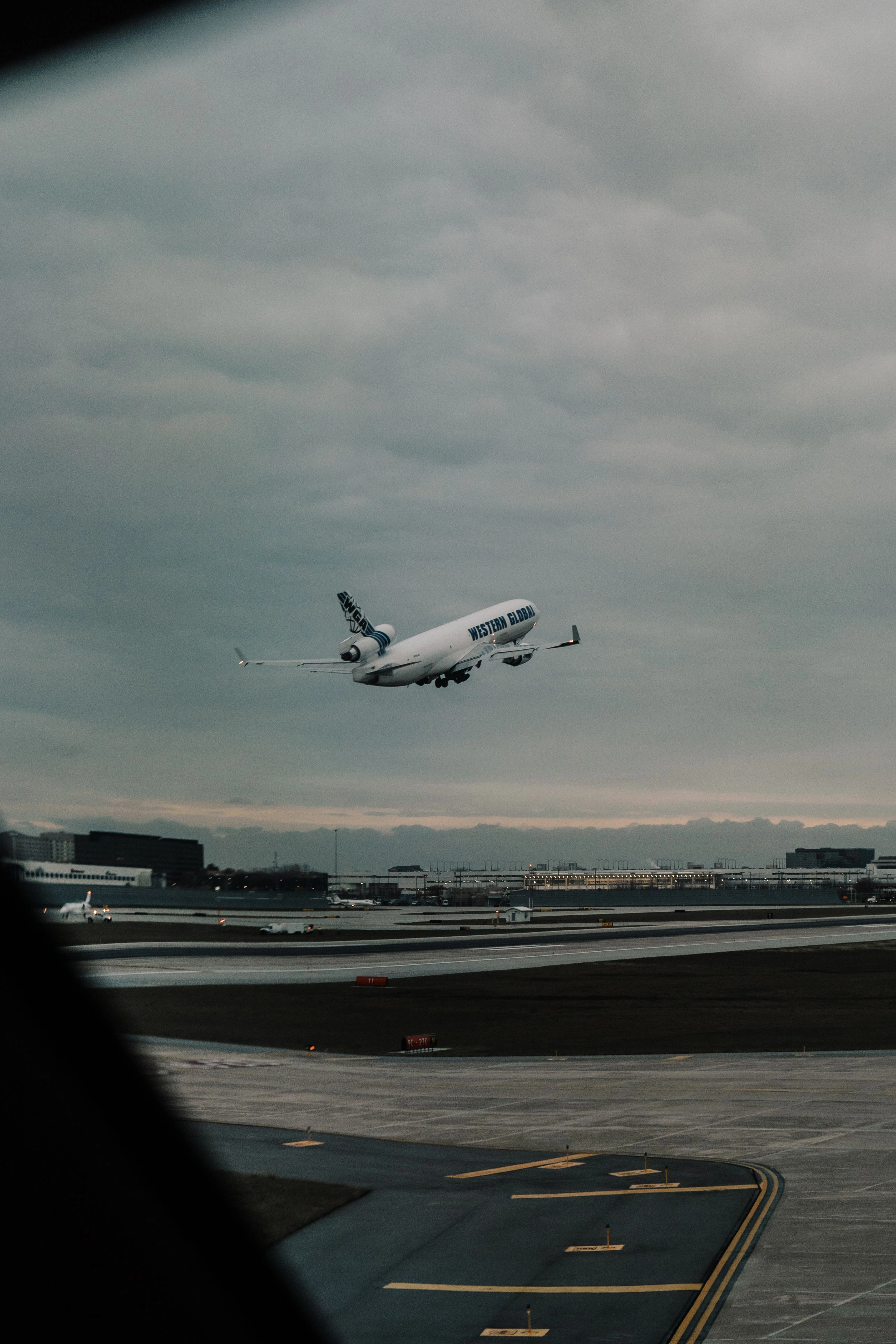
O'Hare reclaimed its title as the busiest airport in the country by aircraft operations in 2025, logging 857,392 takeoffs and landings, according to preliminary FAA data cited by the City of Chicago. That figure marks a 10.5 percent jump over 2024, and it puts O'Hare ahead of Atlanta's Hartsfield-Jackson by a meaningful margin on this specific measure.
The summer of 2025 pushed those numbers even higher, with O'Hare welcoming more than 48.3 million passengers in the year's first seven months alone. TSA screening volumes broke records repeatedly that season, including a single day above 115,000 travelers screened, a level the airport had never hit before.
More traffic through the same gates and taxiways means more opportunities for a ripple delay to eat into a tight connection. The airport is also mid-construction on a new $1.3 billion, 19-gate concourse that will not open until late 2028, which keeps some walkways, gate assignments, and walking distances in flux for the next several years.
None of that shows up in a fare search. It only shows up when a flight boards ten minutes late and a self-transfer traveler realizes there is no budget-carrier-style buffer built into the price they paid.
A Sample Itinerary: Single Ticket vs Self-Transfer
The difference between these two booking types is easiest to see side by side on a typical business route through O'Hare, such as a trip connecting from the East Coast onward to the Mountain West. The fare gap is often real, and so is everything the traveler gives up to get it.
Single-ticket connection | Self-transfer | |
Ticketing | One reservation, one airline responsible end to end | Two separate reservations, no shared airline |
Bags | Checked through automatically to final destination | Collected, exited landside, and re-checked separately |
Delay on leg one | Airline rebooks at no extra cost, may hold leg two | Traveler rebooks and pays for it themselves |
Minimum connection time | Airline-published floor, roughly 45 to 90 minutes | No published floor; buffer is the traveler's own estimate |
Reading a table like this before booking turns an abstract savings number into a concrete list of what that savings is actually buying. For a leisure trip with no fixed arrival time, that trade can be an easy one to make.
What Business Travelers Should Do Before Booking a Self-Connection at ORD
A self-transfer through O'Hare can still make sense. It usually just needs more buffer time, and more honesty about what that buffer is actually protecting against.
Start by treating United's 45- and 90-minute figures as an airline's own internal floor for its own single tickets, not a safe number to copy for a separate-ticket connection. Add real buffer time on top of whatever a search tool displays by default, especially on any itinerary crossing between Terminal 5 and the Terminal 1 through 3 cluster.
Check in advance which terminal each leg of the trip actually uses, since a same-cluster domestic connection is a very different trip than one that requires the ATS train. Keep the cheaper or more flexible leg on the self-transfer side of the itinerary, so that a missed connection is easier and less expensive to fix later.
Carry only what fits in the overhead bin if the layover is genuinely tight, since a checked bag adds a baggage reclaim and re-check step that no published MCT accounts for. Book a same-day backup option mentally, even if it costs more, so a missed connection becomes a known fallback instead of a scramble at an unfamiliar counter.
Consider travel protection built specifically for separate-ticket itineraries, since standard airline travel insurance and most credit card trip-delay benefits are written around a single reservation. The math changes fast once a meeting on the other end has a hard start time, and a three-hour buffer that looks wasteful on the calendar is cheap compared with what a missed connection actually costs.
What This Signals for the Months Ahead
O'Hare's construction timeline runs through at least 2028, and the airport's traffic growth shows no sign of reversing after reclaiming the top national spot in operations. That combination means the underlying risk behind a tight self-transfer connection at ORD is a multi-year condition, not a single busy season to plan around.
At the same time, search tools and online travel agencies keep surfacing self-transfer and virtual interline options more prominently, because the fare savings are genuinely attractive to a broader set of travelers. Expect more business travelers to encounter these itineraries by default, whether they are actively searching for the cheapest routing or simply clicking the first result that beats a nonstop fare.
The airlines are unlikely to build any new protection into these bookings, since they are not the ones selling the combined itinerary in the first place. That leaves the buffer-time decision, and the cost of getting it wrong, squarely with the traveler for the foreseeable future.
Conclusion
Self-transfer flights through O'Hare are not a trick or a booking mistake. They are a real trade-off: cheaper fares in exchange for taking on the airline's usual job of getting a traveler to their destination.
That trade only works when the traveler understands exactly what protection they are giving up in return. For more coverage of how airports and airlines actually price and manage this kind of risk, visit the full collection at Air Gazette.
Frequently Asked Questions
What does self-transfer mean on a flight?
A self-transfer, also called a virtual interline, combines flights from two airlines with no codeshare or interline agreement between them. Each flight is booked and ticketed separately, even when a search tool displays them together as a single itinerary, and Google's own travel documentation labels this arrangement "separate tickets booked together."
Is a 45-minute layover too short at O'Hare?
United's own published guidance treats 45 minutes as the general floor for a domestic-to-domestic connection on a single ticket. That floor does not extend to a self-transfer, where there is no shared airline managing the connection at all, so the same 45 minutes carries meaningfully more risk and should not be treated as a like-for-like comparison.
What is O'Hare's minimum connection time?
United's stated baseline is at least 45 minutes for domestic-to-domestic connections and at least 90 minutes for domestic-to-international ones. These figures come from the airline's own booking guidance and can vary in practice by specific routing, time of day, and terminal, and they are not independently published by the airport authority itself.
Does the airline rebook me if I miss a self-connected flight?
No. On a self-transfer, each flight is an independent reservation, so neither airline is obligated to rebook, refund, or otherwise assist with a missed connection caused by the other carrier's delay. That responsibility, along with any added cost, falls entirely on the traveler who booked the two tickets separately.
How is a self-transfer different from a normal connection?
A normal connection sits on one ticket with one airline, or a group of airlines under a codeshare or interline agreement, and that airline carries the responsibility for getting the traveler to the final destination. A self-transfer carries no such agreement, so that responsibility sits entirely with the traveler booking it, from rebooking to covering any new fare.
Why is O'Hare riskier for tight connections right now?
O'Hare recorded 857,392 aircraft operations in 2025, reclaiming its position as the busiest U.S. airport by that measure, while a new concourse remains under active construction through 2028. Higher year-round traffic combined with ongoing construction both raise the odds of a delay eating into a tight connection buffer, and that combination is expected to persist for the next several years.
Do checked bags transfer automatically on a self-transfer?
No. Because the two airlines have no interline agreement, checked bags must be collected at the carousel and re-checked with the second airline, which adds a step that does not exist on a single-ticket connection.
Should I ever book a self-transfer through O'Hare?
It can still be worth it for a flexible trip with real buffer time built into the schedule. For a business trip built around a fixed meeting time, the fare savings rarely justify giving up the airline's obligation to actually get the traveler there.