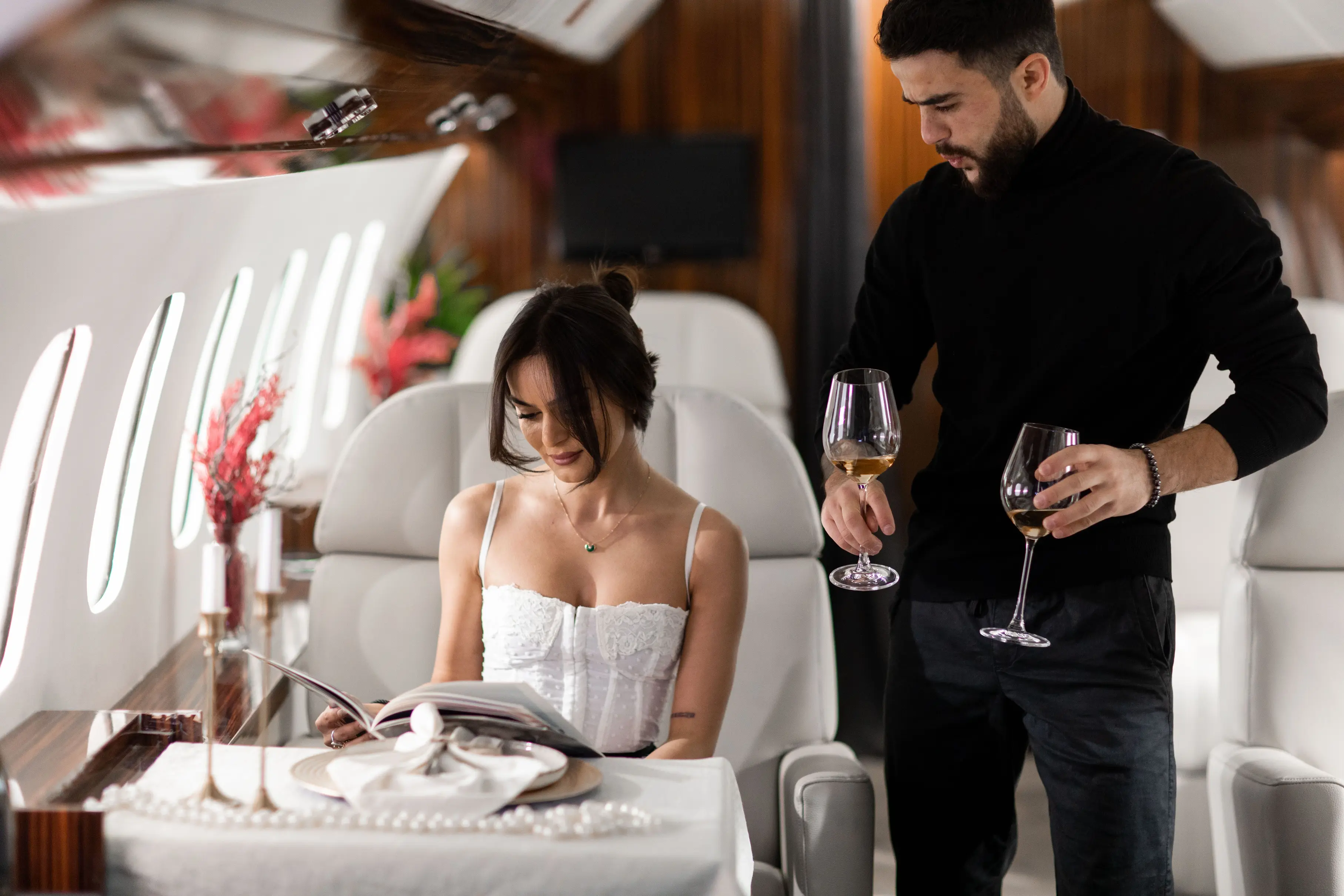
That glass of Bordeaux felt unremarkable at cruising altitude, then tasted completely different the moment you got home. It is not the wine's fault.
Cabin pressure and desert-dry air genuinely change how sweetness, aroma, and balance register on the tongue. Airlines know this, and their wine programs are built around it.
The Actual Study Behind This
The most cited research on this comes from a real, peer-reviewed source, not a travel blog theory. Researchers at Germany's Fraunhofer Institute tested taste and smell perception inside a simulated pressurized aircraft cabin, in a study commissioned by Lufthansa.
The results, published in the Journal für Verbraucherschutz und Lebensmittelsicherheit in 2011, found that salt perception dropped by roughly 20 to 30 percent under cabin conditions, with sweetness dropping somewhat less, by roughly 15 to 20 percent. Sour, bitter, and umami held up noticeably better.
Why Cabin Air Makes This Worse
Low pressure is only half the problem. Airplane cabins also run extremely dry, with humidity commonly falling somewhere between 10 and 20 percent depending on the aircraft and cabin section, according to the World Health Organization.
Smell drives most of what people perceive as taste, and dry nasal passages blunt that sense significantly. Combine dulled sweetness with a weaker sense of smell, and a wine that tasted balanced on the ground can taste flat or sour in the air.
What This Means for the Glass in Your Hand
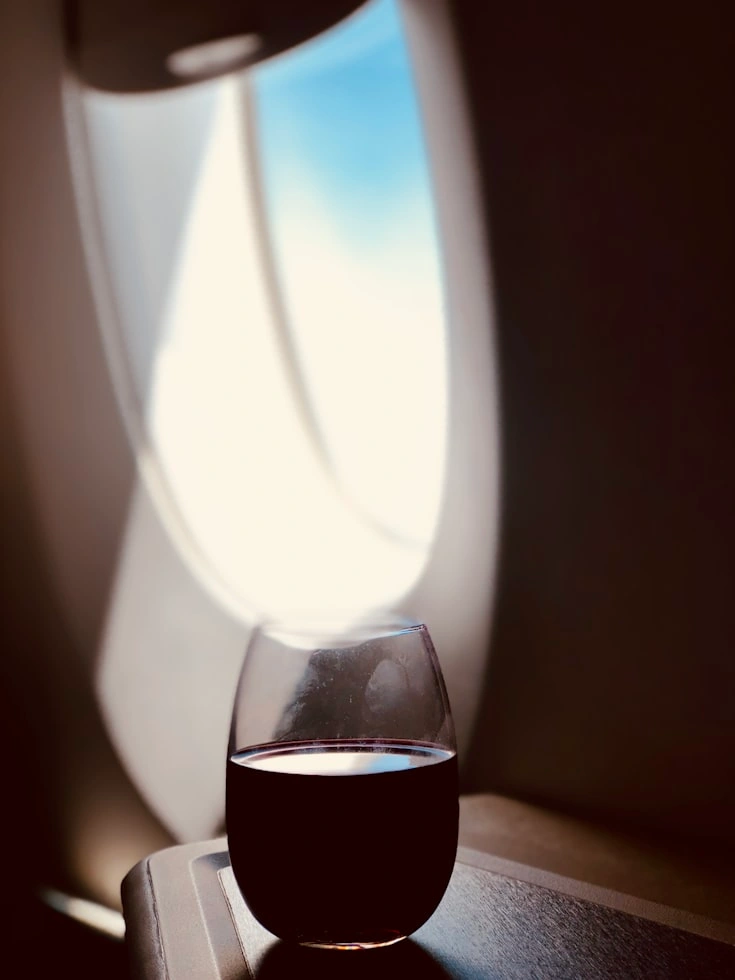
A wine's sweetness and aromatic complexity are exactly what altitude attacks first. That is a problem for delicate, subtle wines, and less of one for bolder, more structured styles, which is part of why business class wine service leans toward bigger, more assertive selections rather than quiet, delicate ones.
Fresh, acid-driven wines tend to hold their character better under these conditions than soft, low-acid ones. Higher-intensity fruit and firmer structure survive the trip from bottle to tray table with less getting lost along the way.
Carbonation helps for a similar reason. Researchers studying taste at altitude have found that fizz and effervescence stimulate taste receptors that dulled cabin conditions otherwise leave underused, which is part of why Champagne consistently performs well in inflight wine competitions.
How Airlines Actually Build Around It
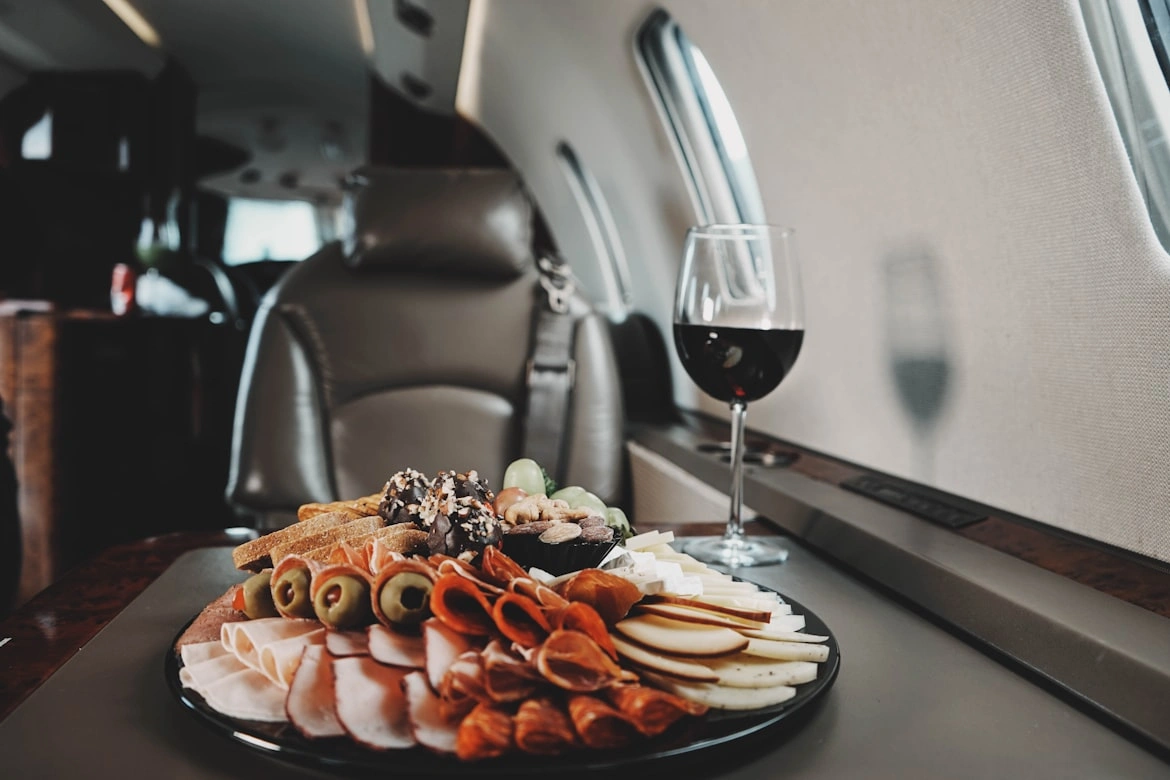
This is not a guess on the airlines' part. Wine buyers for premium carriers taste and select specifically with cabin conditions in mind, not just ground-level scoring.
Business Traveller's Cellars in the Sky Awards, now in its 40th year, exists largely because of this reality. The 2026 results awarded gold medals across categories including Qantas for white and fortified wine, Lufthansa for red, British Airways for rosé, and a joint sparkling win for Qatar Airways, Qantas, and Singapore Airlines.
Thai Airways took home three medals in this year's competition, including a fortified wine award for a 10-year-old tawny port. That is a meaningful result for a carrier competing against airlines with far larger beverage budgets.
Why Some Airlines Hire Master Sommeliers
A handful of US carriers, including Delta, United, and Hawaiian Airlines, have gone further and brought in Master Sommeliers to curate their programs directly. Delta alone pours roughly 2.5 million bottles a year across its premium cabins, according to wine trade reporting, which changes the calculus entirely.
At that volume, a sommelier is not picking one great bottle. They are selecting wines that need to perform consistently for thousands of different palates, all under the same dulled sensory conditions.
Lounge Wine Programs Are Catching Up Too
The 2026 awards gave airport lounge wine cellars newly prominent standing as their own category. Cathay Pacific and Malaysia Airlines both won gold in that category, reflecting a broader shift toward treating the premium lounge experience as part of the wine program, not separate from it.
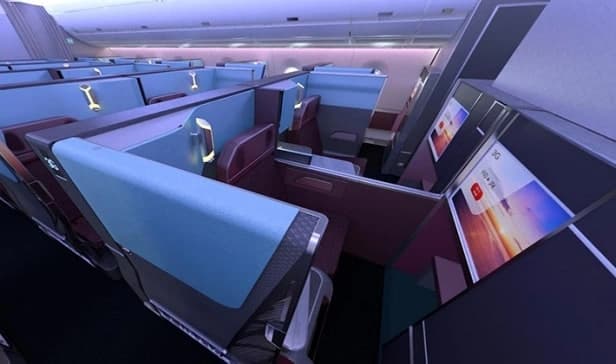
Passengers do not have to be in a lie-flat seat to notice the difference, either. A well-chosen business class wine list is increasingly built to taste right well before takeoff.
Conclusion
The wine is not getting worse at altitude. The environment is changing how it registers, and the best wine programs are the ones built to work with that, not against it.
This entire explanation traces back to one real, peer-reviewed source: the Fraunhofer Institute's cabin taste-perception study, commissioned by Lufthansa and published in 2011.
Curious what else separates a genuinely great premium cabin from an average one? Explore more airline coverage at Air Gazette.
Frequently Asked Questions
Why does wine taste different on a plane?
Cabin pressure and low humidity both dull the perception of sweetness and aroma, based on peer-reviewed research commissioned by Lufthansa. The effect is strongest on delicate, subtle wines and weakest on bold, acid-driven ones.
Do airlines actually pick wine based on altitude?
Yes. Premium carriers taste and select wine specifically for cabin conditions, favoring higher-acid, higher-intensity styles that hold their character better under low pressure and dry air.
What is the Cellars in the Sky Awards?
It is Business Traveller's long-running inflight wine competition, marking its 40th anniversary in 2026. Airlines and, as of this year, airport lounges compete across categories like sparkling, red, white, and fortified wine.
Is cabin air really that dry?
Yes. The World Health Organization reports commercial cabin humidity commonly runs under 20 percent, and it can fall into single digits in some premium cabin sections and older aircraft.