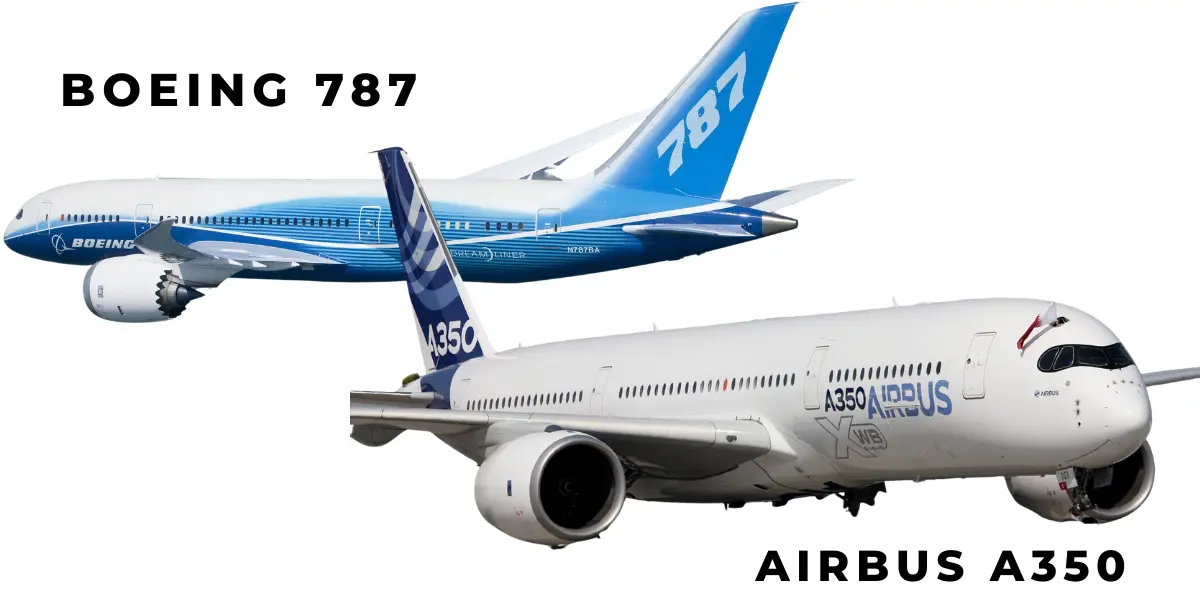
Two wide body jets dominate long-haul flying. The Boeing 787 Dreamliner and the Airbus A350 together account for the majority of new long-haul routes launched in the past decade. Both are built from carbon fiber composites, both fly 8,000-mile routes, and both offer a cabin experience that older aircraft simply cannot match.
However, they are not the same plane. The differences between them in cabin width, range, windows, and operating economics matter enough that frequent travelers should know which one they are boarding.
Boeing 787 vs A350: How They Compare at a Glance
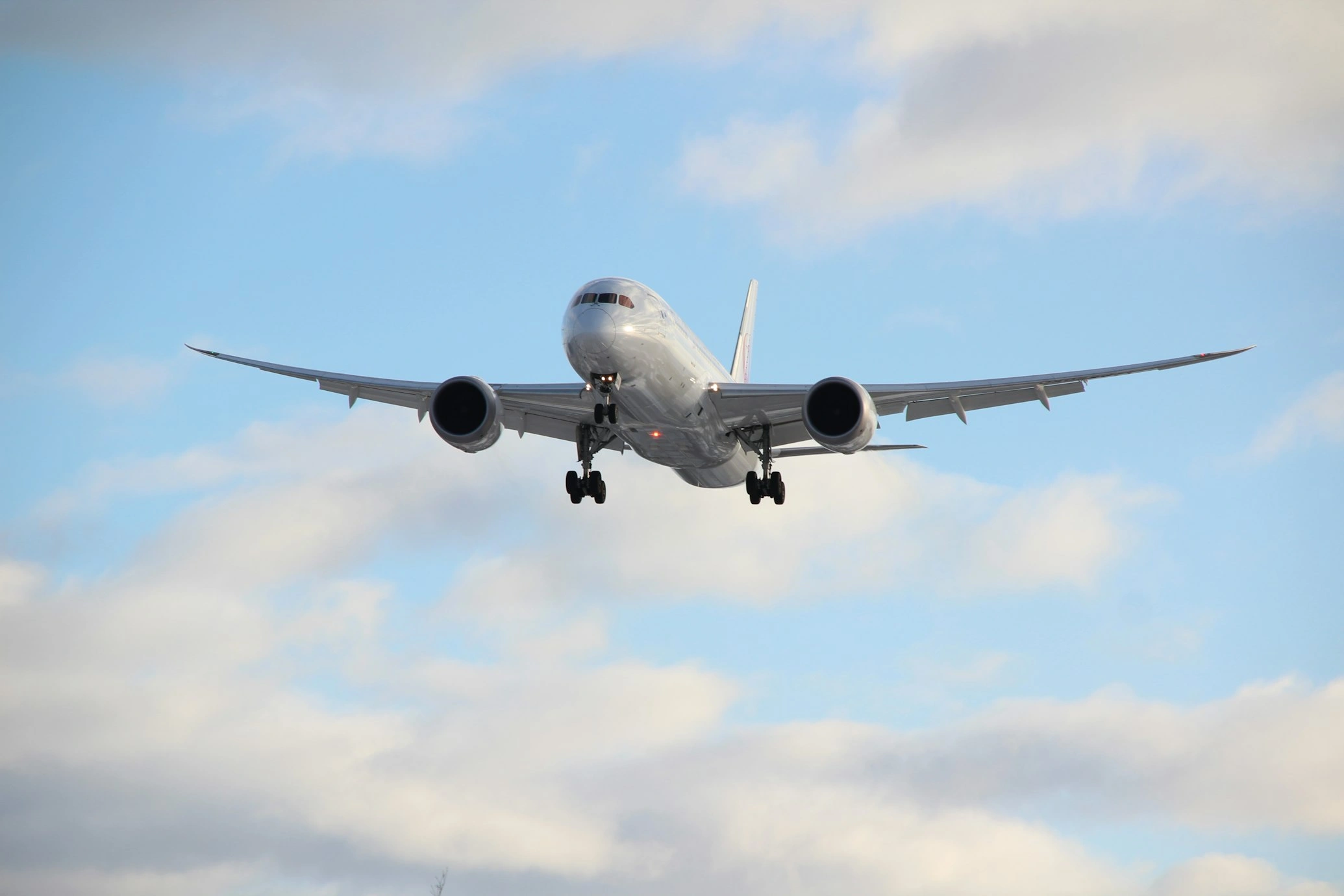
Boeing launched the Dreamliner first. The 787-8 entered service with All Nippon Airways in October 2011. Airbus followed with the A350-900 in January 2015, with Qatar Airways as the launch customer. Both jets were designed to replace older widebodies and cut fuel costs dramatically. Both use composite materials for roughly half the airframe by weight.
The core differences come down to size, range, and cabin philosophy.
Feature | Boeing 787-9 | Airbus A350-900 |
Entry into service | August 2014 | January 2015 |
Typical 3-class seating | 290 | 300–350 |
Range | 7,635 nm (14,140 km) | 8,500 nm (15,740 km) |
Cabin interior width | 18 ft (5.49 m) | 18 ft 5 in (5.61 m) |
Composite share | ~50% | ~53% |
Engines | GEnx-1B or Trent 1000 | Rolls-Royce Trent XWB-84 |
Approx. list price | ~$292 million | ~$317 million |
Cruise speed | Mach 0.85 | Mach 0.85 |
The A350-900 is larger, heavier, and longer-ranged. The 787-9 is lighter and slightly cheaper to operate on routes within its range. Both cruise at the same speed. Both carry broadly similar passenger counts in real-world airline configurations.
Full Variant Comparison
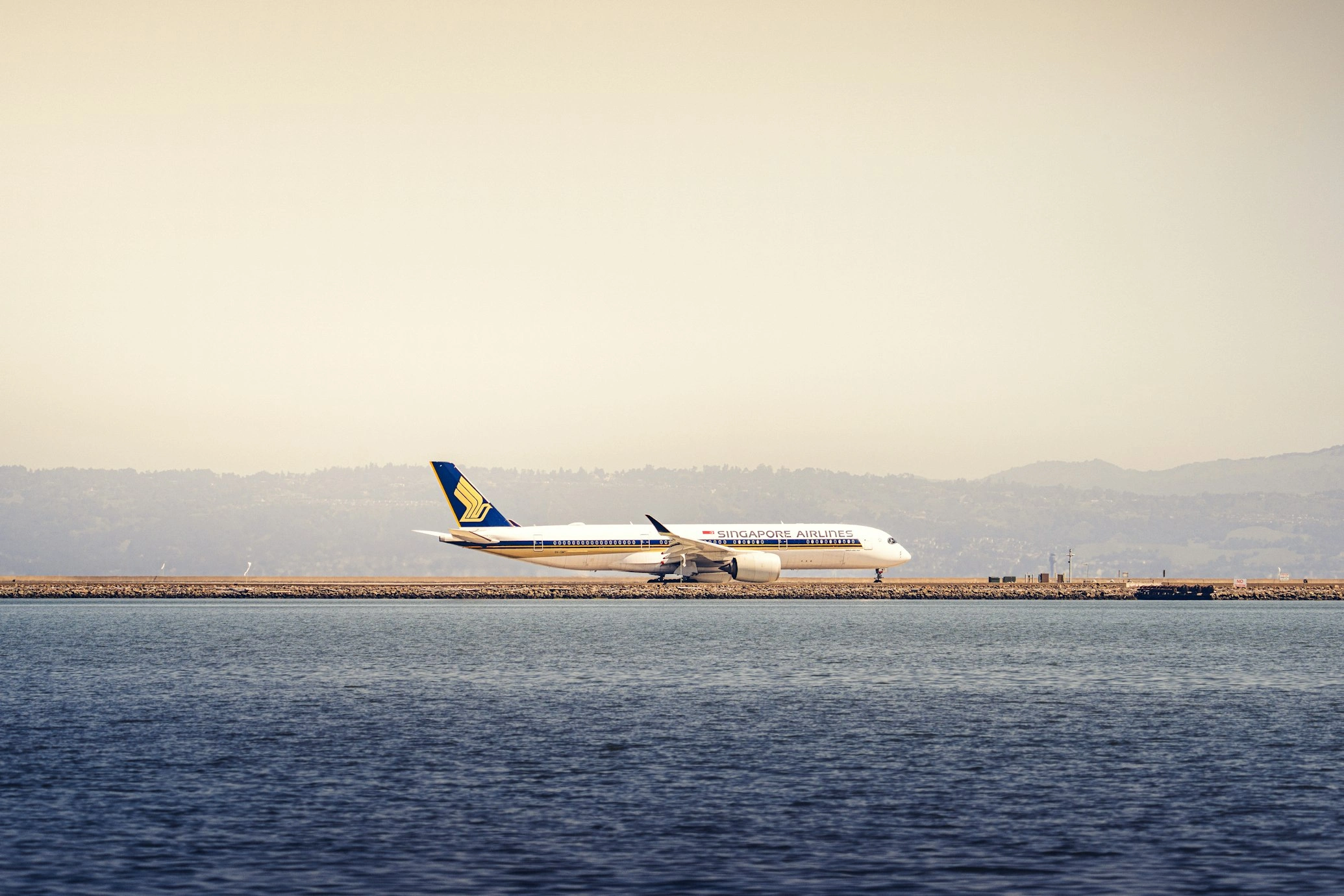
Both aircraft come in multiple sizes. Here is how the full families compare:
Variant | Length | Typical Seats | Range |
Boeing 787-8 | 56.7 m (186 ft) | 242 | 7,355 nm (13,620 km) |
Boeing 787-9 | 62.8 m (206 ft) | 290 | 7,635 nm (14,140 km) |
Boeing 787-10 | 68.3 m (224 ft) | 330 | 6,430 nm (11,910 km) |
Airbus A350-900 | 66.8 m (219 ft) | 300–350 | 8,500 nm (15,740 km) |
Airbus A350-1000 | 73.8 m (242 ft) | 350–410 | 8,900 nm (16,480 km) |
Airbus A350-900ULR | 66.8 m (219 ft) | ~161–253 | 9,700 nm (18,000 km) |
The 787-10 is the longest 787 by fuselage but the shortest by range. It trades range for capacity and is used by Singapore Airlines and United Airlines on high-density medium-long-haul routes where range is less critical than seat count. The A350-900ULR sits in its own category it operates the world's longest commercial flights and no Boeing variant can match it at that range.
Cabin Comfort: Where Passengers Feel the Difference
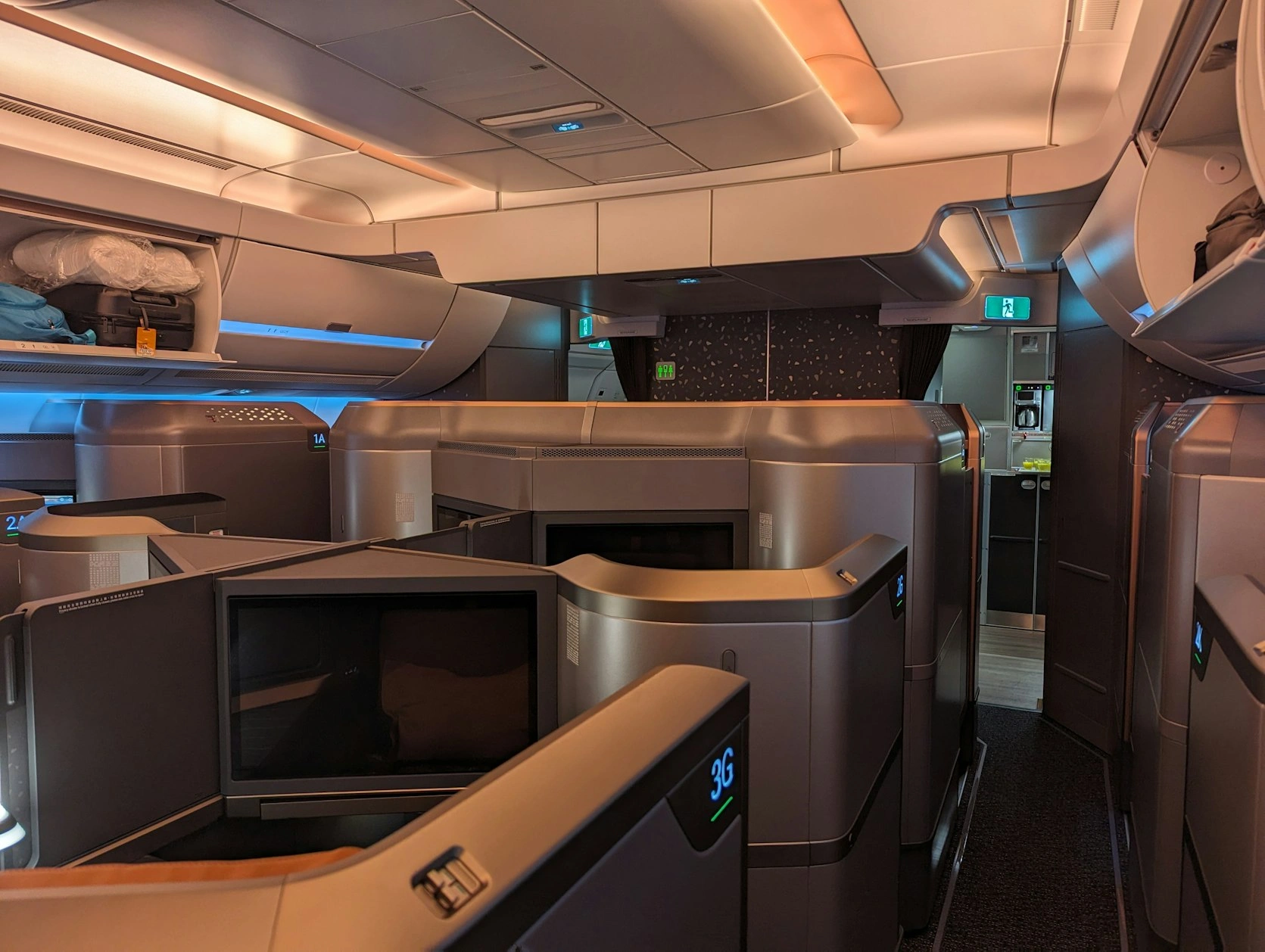
Cabin width is the most tangible difference. The A350 fuselage is five inches wider on the interior. In standard 9-abreast economy, that translates to economy seats measuring around 18 inches wide on the A350, compared to roughly 17 to 17.5 inches on the 787 in the same configuration.
That one-inch difference matters more than it sounds. Over a 12-hour flight, seat width affects shoulder room, the ability to sleep on your side, and how much you feel your neighbor's movements. For travelers who have flown both aircraft in economy on comparable long-haul routes, the A350 tends to win on physical comfort.
Cabin pressure and humidity are where both aircraft clearly beat older jets. Conventional aircraft pressurize the cabin to the equivalent of 8,000 feet altitude. Both the 787 and A350 bring that down to approximately 6,000 feet, with some sources noting the A350 achieves closer to 5,500 feet in practice. That means more oxygen per breath, less fatigue, and less dehydration. According to the Aircraft Owners and Pilots Association, both aircraft maintain cabin humidity levels up to 22% compared to just 2–7% on most older widebodies. The composite fuselage construction makes this possible by eliminating the corrosion risk that prevented older aluminum-skinned aircraft from running higher humidity.
Comfort Factor | Boeing 787 | Airbus A350 | Conventional Widebody |
Cabin pressure altitude | ~6,000 ft | ~5,500–6,000 ft | ~8,000 ft |
Cabin humidity | Up to 22% | Up to 22% | 2–7% |
Economy seat width (9-abreast) | ~17–17.5 in | ~18 in | ~17 in |
Window system | Electrochromic dimming | Manual shades | Manual shades |
Cabin noise level | Low | Quietest in class | Higher |
The 787's Window Advantage
The 787's windows are notably larger than on any other commercial aircraft and use electrochromic dimming instead of pull-down shades. Passengers control the tint electronically across five levels. This creates a brighter, more connected cabin environment on daytime flights. The A350 uses conventional window shades, which block light fully but lack the architectural impact of the Dreamliner's windows.
For passengers who care about maximizing the window experience on transatlantic routes, the best time to fly New York to Paris covers timing and seat selection to get the most from whichever aircraft you end up on.
Which Cabin Wins?
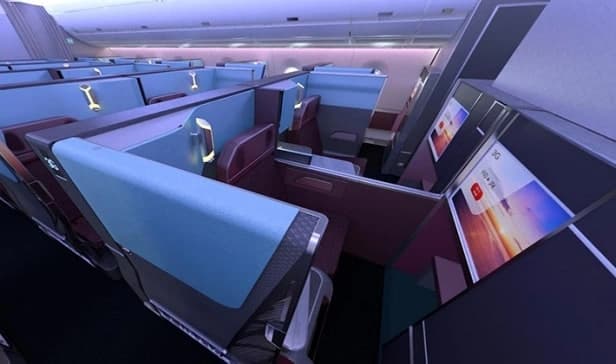
Economy passengers generally prefer the A350 for seat width. Window enthusiasts and those sensitive to cabin air quality tend to prefer the 787. Business class depends almost entirely on the airline, not the aircraft both platforms support fully flat beds and direct aisle access when the airline invests in a quality product.
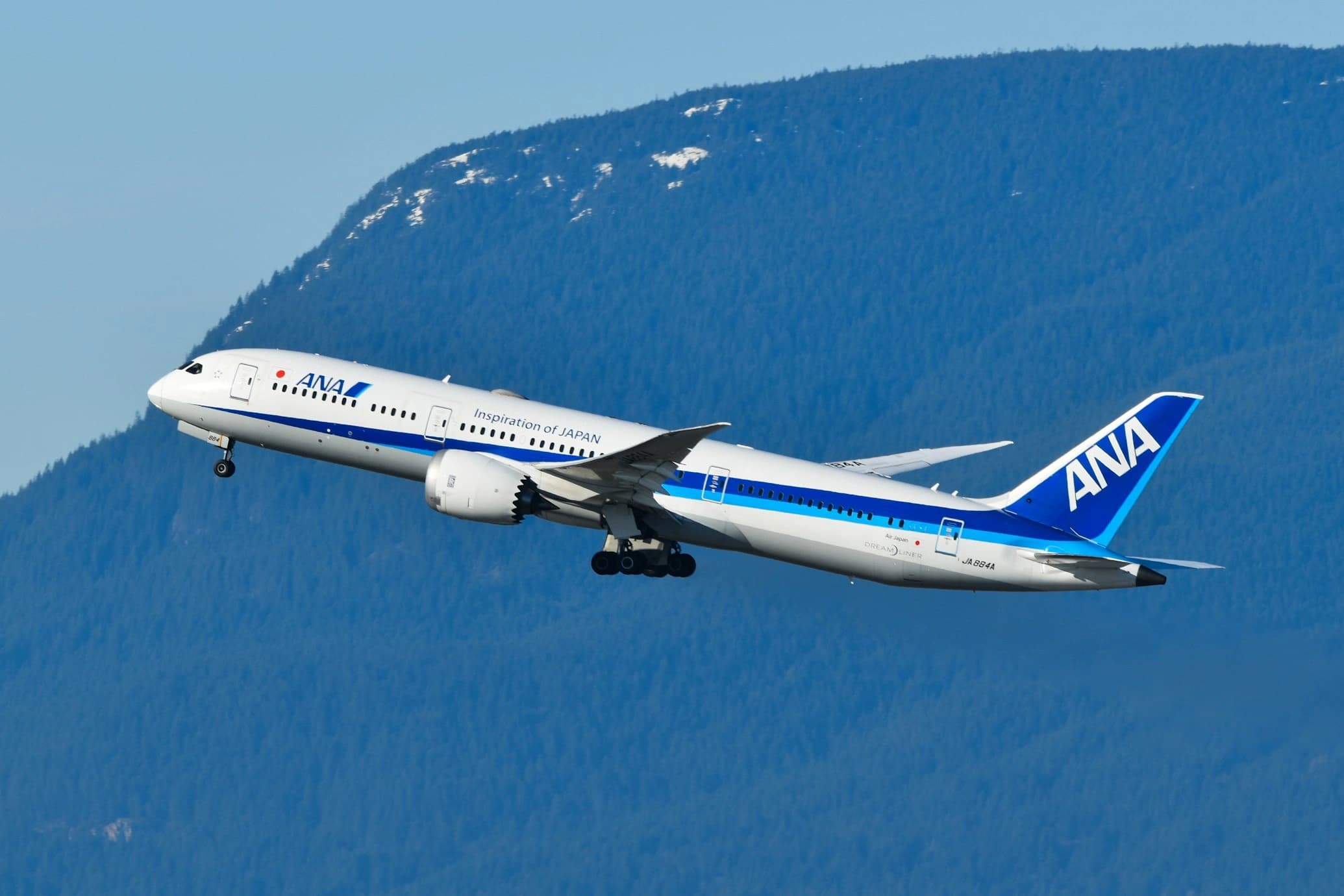
I’ve flown ANA's 787-9 between Tokyo and London and Qatar Airways' A350-1000 on the Doha to Auckland sector. The A350 cabin is quieter and marginally more spacious in economy. The 787 windows make a genuine difference on a long daytime sector. Neither is a bad place to spend 14 hours. The gap between a good 787 operator and a mediocre A350 operator is larger than the difference between the aircraft themselves. The full ANA airlines review covers exactly what ANA's 787-9 product delivers at its best on long-haul routes.
Range and Route Capability: Which Jet Goes Further?
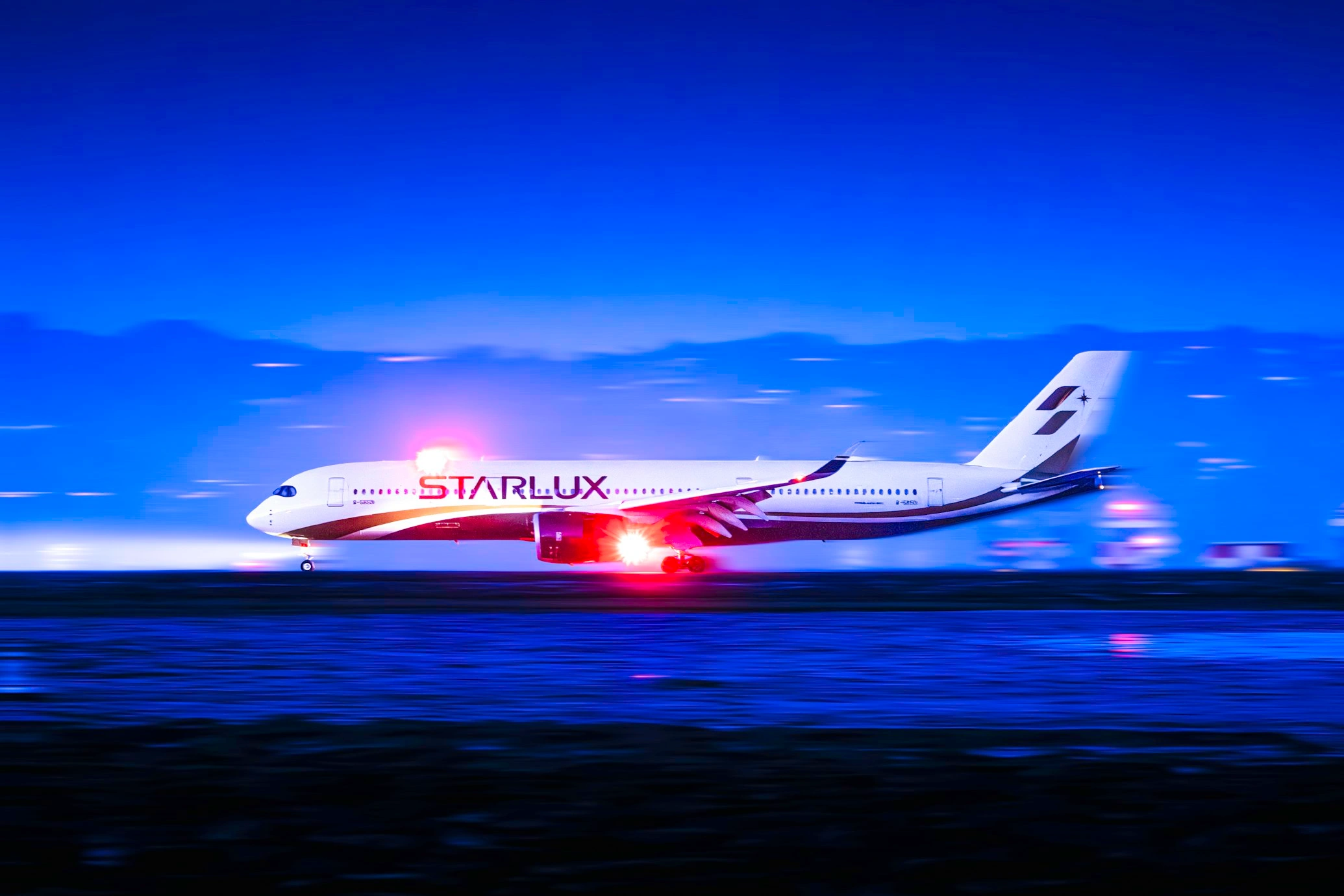
Range is the A350's clearest structural advantage. The A350-900 covers 8,500 nm versus the 787-9's 7,635 nm a gap of 865 nm. At the larger end, the A350-1000 reaches 8,900 nm while the 787-10 manages only 6,430 nm.
That gap closes routes. Qatar Airways operates Doha to Auckland 7,848 nautical miles with the A350-1000. The 787-10 cannot complete that route even with maximum fuel and minimum payload. British Airways uses A350-1000s on London to San Diego because headwind conditions on that westbound sector push 787-10 operations close to weight restriction limits on roughly 15% of flights, according to route analysis from The Flying Engineer.
The A350-900ULR takes this further. Singapore Airlines operates Singapore to New York roughly 9,537 nm in around 19 hours. No 787 variant can fly that mission.
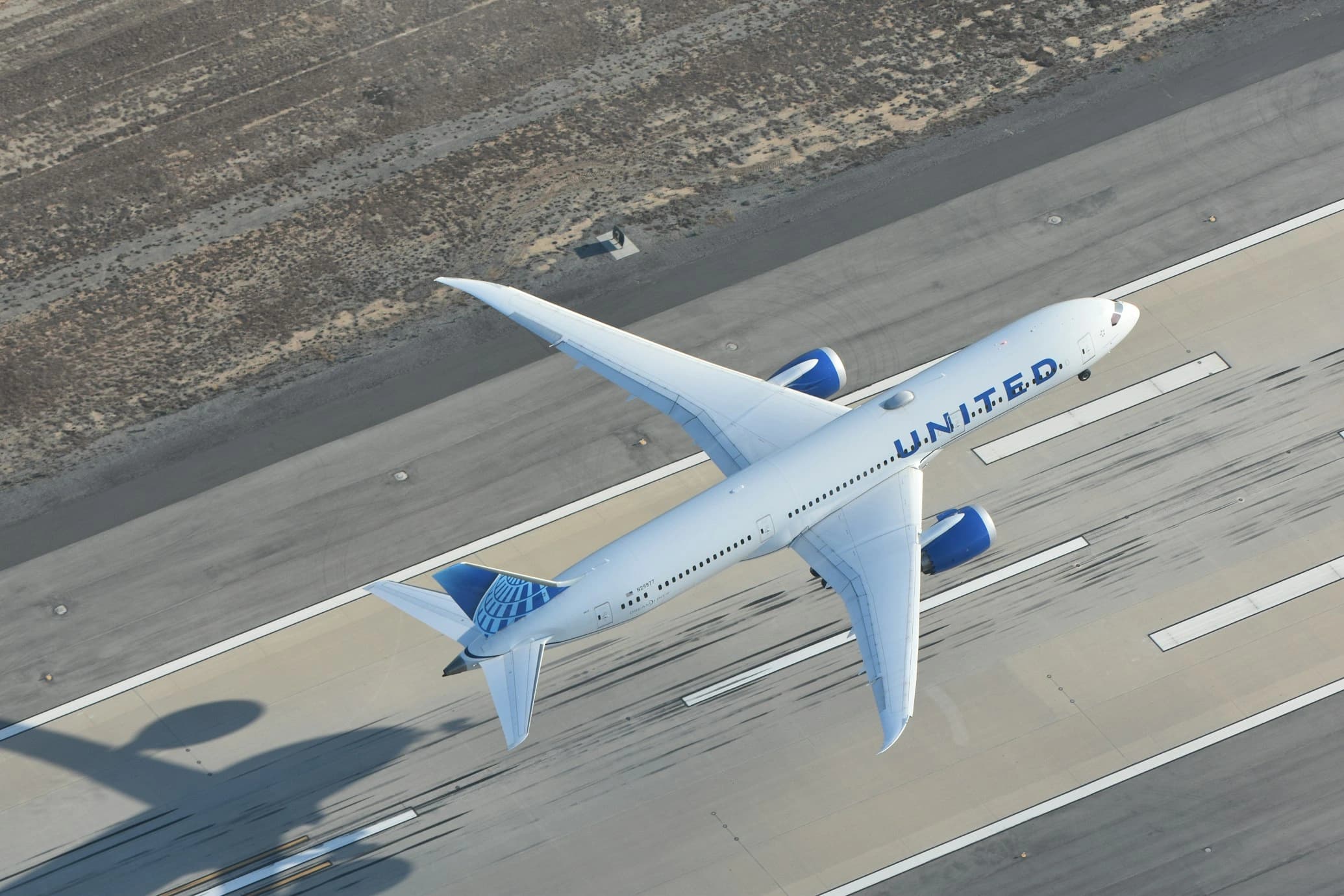
For routes under 8,000 nm, the 787-9 and A350-900 are direct competitors. ANA uses 787-9s on Tokyo to London (5,974 nm) and Tokyo to Los Angeles (5,451 nm) daily. Both routes fit easily within the 787-9's range with significant margin. Travelers choosing between Japan's two flag carriers on the same routes will find the ANA vs JAL comparison useful it covers how both airlines configure these aircraft differently for the same long-haul missions.
Operating Economics: What Airlines Pay to Fly Both
Airlines buy aircraft based on economics. The 787 and A350 both offer dramatic improvements over older jets, but they perform differently depending on mission length.
The 787-9 is lighter and burns fuel at a lower rate per aircraft mile. However, the A350-900 carries more passengers on the same mission, making its per-seat fuel cost competitive and often lower on high-density routes. For airlines filling both aircraft at comparable load factors, the economics are closer than the raw specs suggest.
Economics Metric | Boeing 787-10 | Airbus A350-1000 |
Approx. list price | ~$317 million | ~$366 million |
Price gap | ~$49 million more | |
Typical trip cost (4,000 nm) | ~$28,000 | ~$30,000 |
Fuel capacity | ~33,399 US gallons | ~44,000 US gallons |
Range advantage | +2,470 nm | |
Composite share | ~50% | ~53% |
The 787-10 costs approximately 7% less per flight on routes within its range. That saving compounds across hundreds of flights annually. For routes exceeding 7,500 nm, however, the A350-1000 is the only practical option regardless of that price gap.
Airlines choosing the A350-1000 are buying range margin and capacity, not just per-mile fuel costs. According to Airbus's official April figures, the A350 family had 1,381 total orders with 651 deliveries a backlog that confirms strong long-term commercial demand.
Japan Airlines operates A350-900s on its European routes from Haneda. The Japan Airlines first class review covers what that product delivers at the front of the cabin on those sectors.
The Future of Both Aircraft
Both programmes are in active production and will remain so through the 2030s.
Boeing stabilized 787 deliveries at around seven per month through 2025 after a difficult period involving manufacturing quality pauses between 2021 and 2023. Total 787 deliveries across all variants now exceed 1,100 aircraft. Boeing plans to increase production toward ten aircraft per month through 2026.
Airbus faced its own A350 production headwinds in 2025, averaging roughly four deliveries per month against a target of six. Supply chain constraints on the Rolls-Royce Trent XWB engine contributed to the shortfall. Despite that, the A350 backlog remains substantial and production is expected to recover toward target rates through 2026.
Neither aircraft faces replacement in the near term. The 787 will serve airlines well into the 2040s and the A350 family is built for the same longevity. For travelers who want to understand how premium long-haul cabins are evolving across both aircraft types, the future of business class covers the product changes that 787 and A350 operators are introducing including full-suite private cabin installations reshaping what premium travel means.
For more aviation guides and airline coverage, explore Air Gazette at Air Gazette .
Frequently Asked Questions
Is the Boeing 787 or Airbus A350 more comfortable for passengers?
In economy, most passengers find the A350 slightly better because its wider cabin allows 18-inch seats in standard 9-abreast configuration. The 787 compensates with significantly larger windows and electrochromic dimming. In business class, the airline's product matters far more than the aircraft type.
What is the range difference between the 787 and A350?
The Boeing 787-9 has a range of 7,635 nautical miles (14,140 km). The Airbus A350-900 covers 8,500 nautical miles (15,740 km). The gap is larger at the bigger end: the A350-1000 reaches 8,900 nm while the 787-10 is limited to 6,430 nm.
Which aircraft handles the world's longest flights?
The Airbus A350-900ULR. Singapore Airlines uses it on the Singapore to New York route approximately 9,537 nm and around 19 hours of flight time. No 787 variant can complete that mission. The A350-900ULR's maximum range is 9,700 nm.
Do the 787 and A350 have the same cabin pressure?
Both aircraft maintain cabin pressure equivalent to approximately 6,000 feet altitude, compared to 8,000 feet on older jets. The improvement comes from composite fuselage construction, which tolerates higher pressurization without structural fatigue. Both also maintain significantly higher cabin humidity than older widebodies.
Which airlines fly the Boeing 787 and Airbus A350?
ANA, United Airlines, and British Airways operate all three 787 variants. Major A350 operators include Qatar Airways, Singapore Airlines, Cathay Pacific, and Delta Air Lines. Delta became the first US carrier to receive an A350 in July 2017.
Is the A350 newer than the 787?
The 787-8 entered service in October 2011 with ANA. The A350-900 entered service in January 2015 with Qatar Airways. Both are considered current-generation widebodies and both remain in active production.
Which aircraft is better for flying to Japan?
ANA operates 787-9s on long-haul routes from Tokyo to London, New York, and Los Angeles. JAL operates A350 variants on European routes from Haneda. For travelers booking award tickets for Japan, the ANA full review and Japan Airlines first class review on Air Gazette cover what to expect in each cabin.