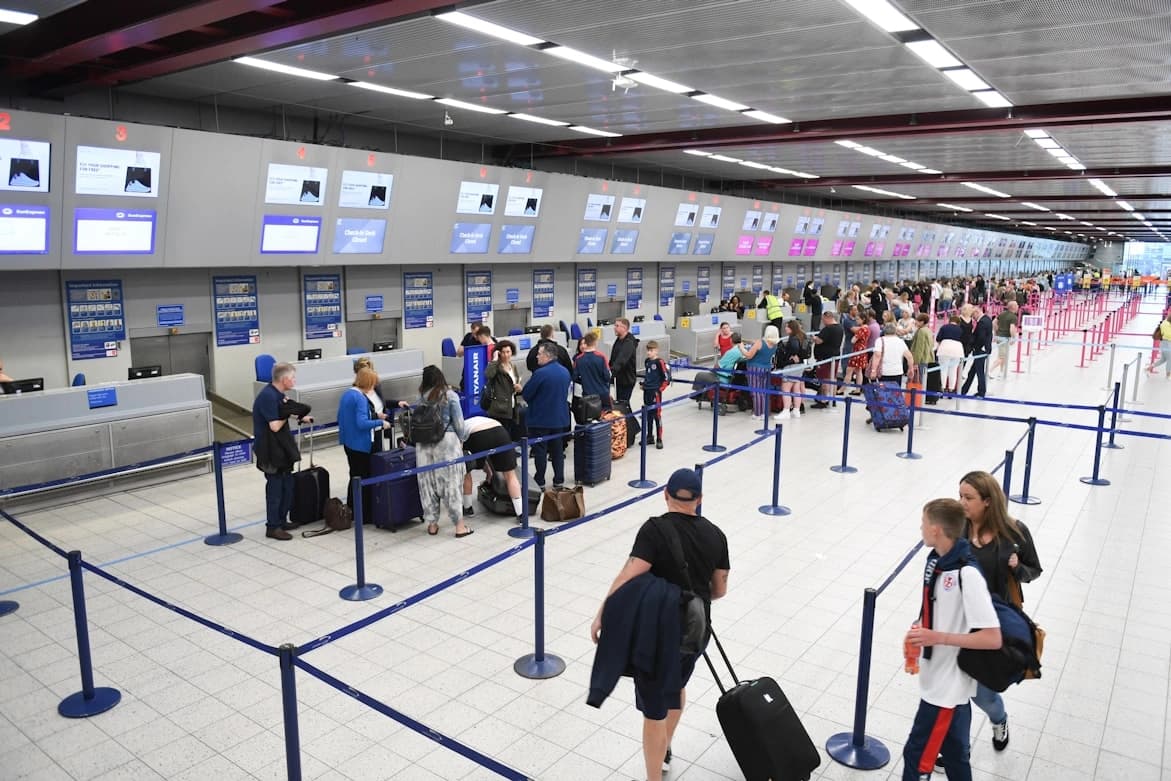
You have probably sat on a delayed Gulf sector with no explanation from the crew. The departure board said "air traffic control restriction." The gate agent said nothing useful. Your connection was tight, and you made it or you didn't.
GPS spoofing may have been the reason. State actors across Eastern Europe, the Middle East, and the Gulf are actively corrupting the sat
ellite navigation signals commercial aircraft depend on. Airlines know this is happening. Regulators have issued bulletins about it. Crew training manuals have been updated. You have not been told any of it.
What GPS Spoofing Actually Does to Your Flight
Here is the part that matters for passengers: GPS spoofing does not cause crashes. It causes delays, missed approaches, unexpected holding patterns, and in rare cases, diversions to alternate airports.
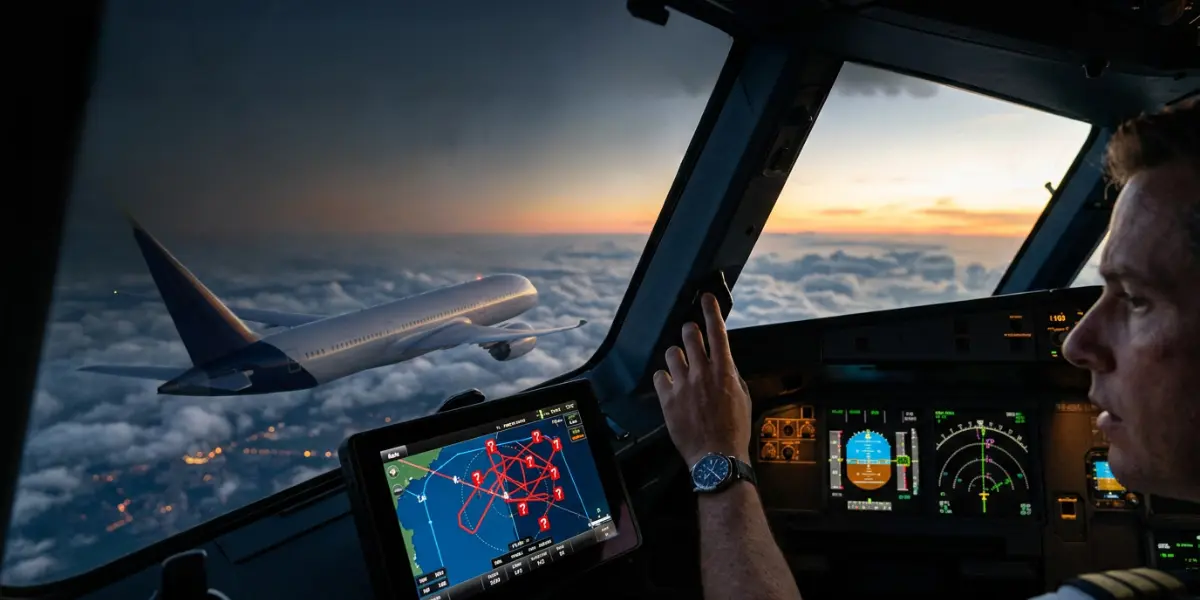
The mechanism is straightforward. Jamming cuts a GPS signal entirely. Spoofing replaces it with a false one. Your aircraft receives fake coordinates that look completely legitimate to its navigation computers. No cockpit alert fires. The system simply reports a position that does not match where the aircraft actually is.
For you, sitting in seat 34A, that translates into:
Extended holding patterns over Gulf hubs while crews sort out a navigation anomaly
Late approaches at airports near spoofing zones, adding 15 to 40 minutes to arrival
Missed connections at Dubai, Istanbul, or Frankfurt with no explanation beyond "operational delay"
Diversions to alternate airports in rare cases where the anomaly cannot be resolved quickly
A vague "ATC restriction" on your flight status app that tells you nothing about what actually happened
The aircraft itself is not in danger in normal operations. The backup navigation systems work. But the procedural friction of managing a spoofing event mid-flight costs time and that time comes out of your schedule, not the airline's.
GPS Spoofing vs. Jamming: What the Difference Means for Your Flight
Type | What Happens Onboard | Passenger Impact |
GPS Jamming | Signal cuts out, crew switches to backup immediately | Minimal fast crew response |
GPS Spoofing | False signal accepted as valid, delay before detection | Higher time lost before anomaly identified |
GNSS Interference | Broad disruption across frequencies | Varies depends on aircraft equipment |
Spoofing is the more disruptive of the two precisely because it is silent. A jammed GPS forces an immediate crew response. A spoofed GPS may go undetected for several minutes while the aircraft drifts toward the wrong position.
The Routes You Are Flying Through Without Knowing It
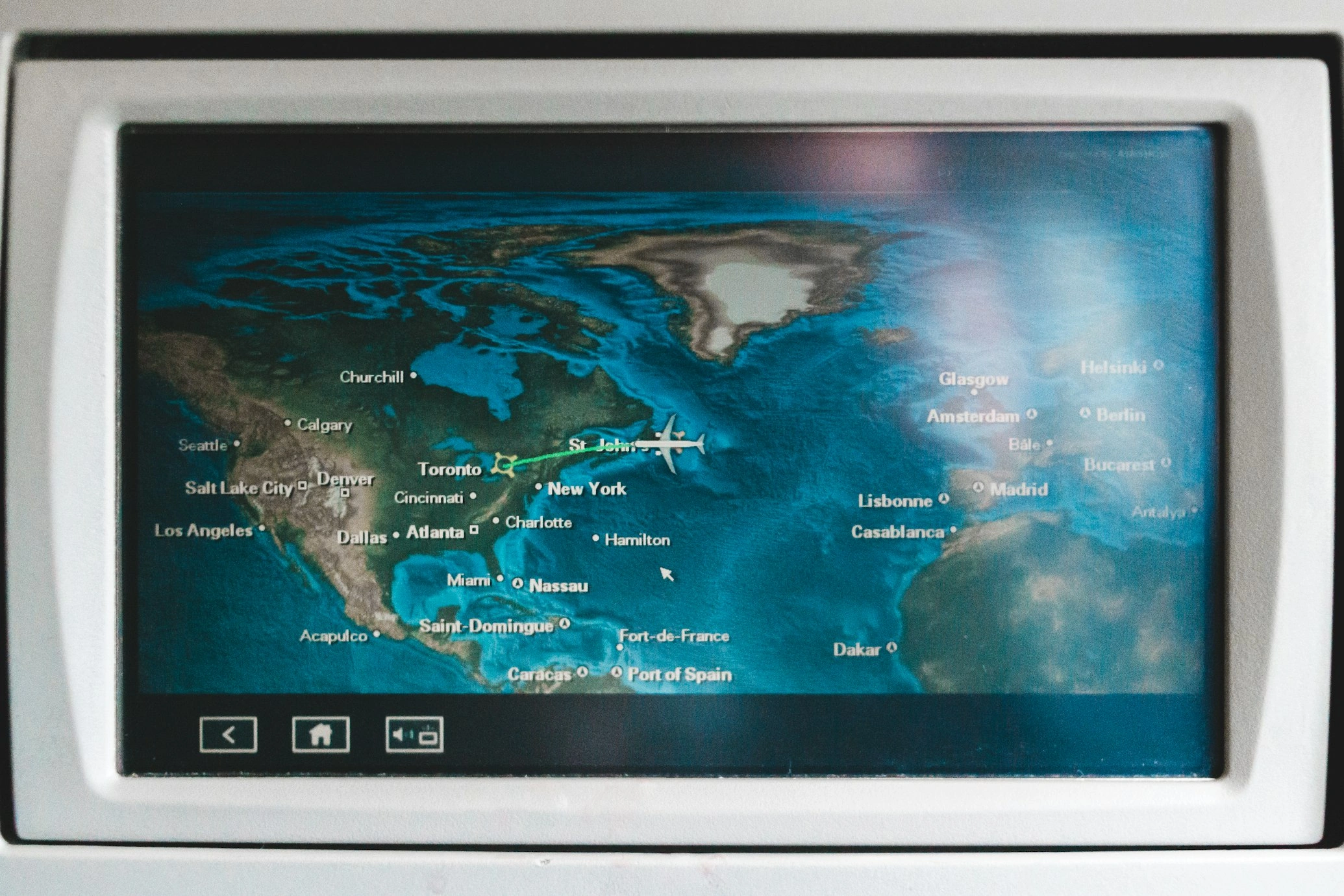
If you fly long-haul internationally with any regularity, you are almost certainly transiting spoofing-active airspace. These are not obscure corridors. They are the routes that carry the highest passenger volumes in global aviation.
EASA's Safety Information Bulletin SIB 2023-02 formally identified four primary risk corridors after confirmed spoofing incidents placed aircraft at false positions inside Iranian airspace. That bulletin remains the active regulatory reference for European and Gulf carriers today.
The Four Active Spoofing Zones
Baltic Region Persistent GNSS spoofing has been documented over Finland, Estonia, Latvia, and the Baltic Sea. Every flight transiting this zone is required by ICAO standing NOTAMs to cross-check GPS against backup navigation systems before entry.
Black Sea Corridor One of the first documented spoofing environments in commercial aviation. Flights between Central Europe and the Caucasus including services to Tbilisi, Baku, and Yerevan pass through active interference zones on every sector.
Eastern Mediterranean The zone covering Cyprus, Lebanon, Israel, Syria, and northern Egypt has produced the highest number of reported civilian incidents. Aircraft have been falsely shown entering restricted airspace, triggering ATC responses to events that were not actually occurring.
Gulf of Oman and Persian Gulf Every flight between Europe and South or Southeast Asia passes through this corridor. London to Dubai, Frankfurt to Bangkok, Paris to Singapore all transit here, on every single departure.
Route You Fly | Spoofing Zone Crossed | Risk Level |
London (LHR) → Dubai (DXB) | Gulf of Oman | High |
Frankfurt (FRA) → Bangkok (BKK) | Eastern Mediterranean + Gulf | High |
Istanbul (IST) → Delhi (DEL) | Eastern Mediterranean | Moderate-High |
Helsinki (HEL) → Tallinn (TLL) | Baltic Region | Moderate |
Munich (MUC) → Tel Aviv (TLV) | Eastern Mediterranean | High |
Amsterdam (AMS) → Baku (GYD) | Black Sea Corridor | Moderate |
Paris (CDG) → Singapore (SIN) | Eastern Mediterranean + Gulf | High |
If you fly any of these routing pairs regularly, you transit spoofing-active airspace multiple times per year. You have never been informed of this. That is not an oversight it is how the industry handles operational risk by default.
What Airlines Know and Have Chosen Not to Tell You
This is the information that exists inside the industry and does not reach the passenger cabin.
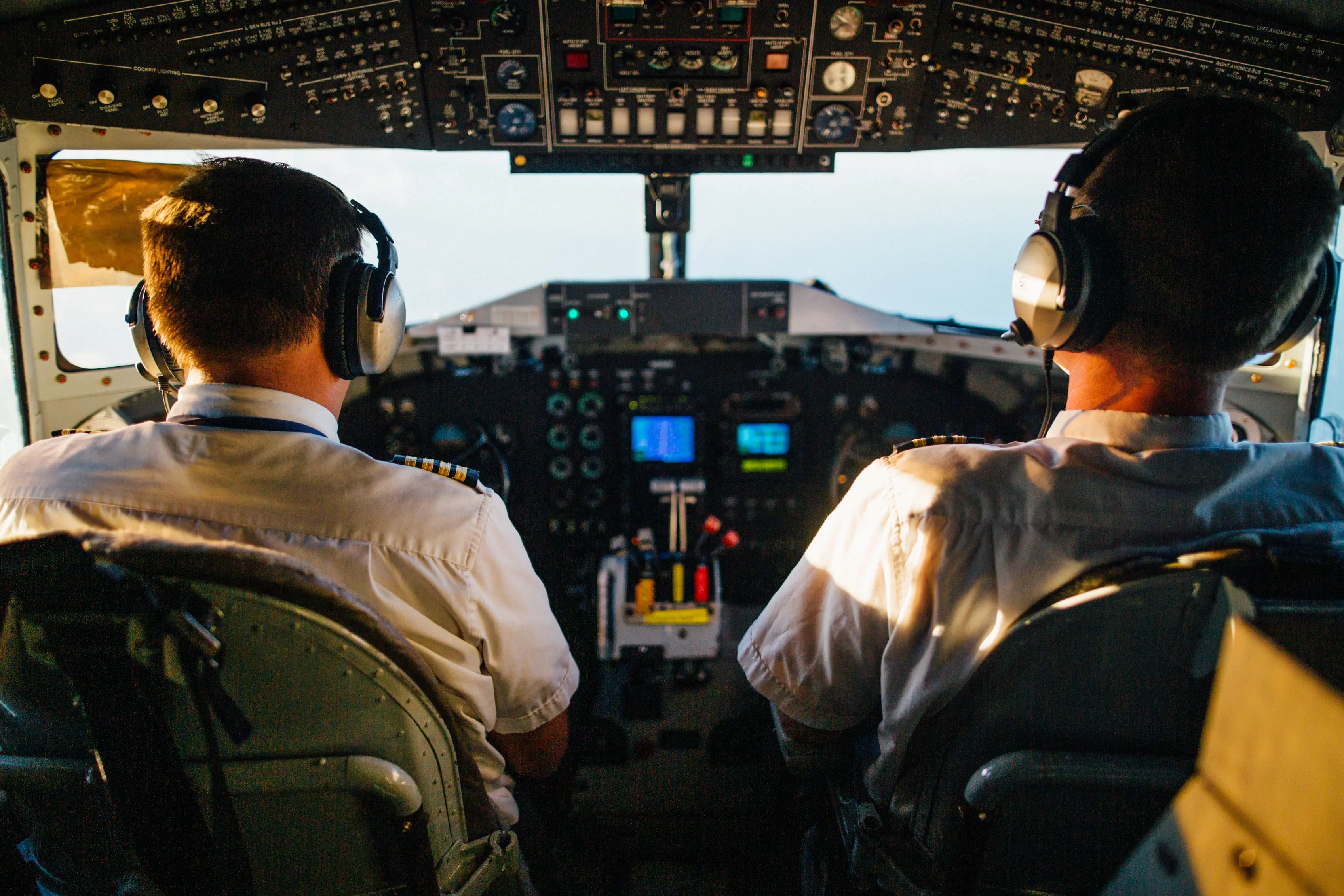
European carriers have updated their Flight Crew Operating Manuals following EASA SIB 2023-02. Gulf carriers including Emirates and Etihad have added dedicated spoofing-awareness modules to crew training. Airlines operating Baltic routes run mandatory GPS cross-checks at specific waypoints on every sector. Some operators have stopped using GPS-based instrument approaches near spoofing zones entirely, falling back to ground-based navigation aids instead.
The crew on your London–Dubai flight knows the navigation environment on that sector is compromised before they push back from the gate. Dispatch has flagged the active spoofing NOTAMs in the pre-departure briefing. The captain has reviewed the cross-check procedure. You have been handed a menu.
The silence is not a conspiracy. There is no regulatory requirement that compels airlines to disclose GNSS-degraded environments to passengers. Aviation communicates operational risk to crews, not to customers. The same information gap applies to turbulence re-routes, ATC congestion holds, and airspace restrictions. Understanding how airline pricing and technology systems respond to these operational disruptions helps explain why information asymmetry is structural in this industry, not incidental.
What your crew is doing while you watch the in-flight map loop over the Gulf:
Cross-checking GPS position against the inertial reference system at zone entry
Treating any position divergence above threshold as a potential spoofing event
Reverting to backup navigation and notifying ATC if GPS data looks compromised
Avoiding GPS-based approaches at airports where the anomaly persists on descent
Filing an incident report that feeds into the EASA and FAA notification systems you never see
The system works when crews follow it. The problem is that it depends on human detection of an invisible anomaly, using equipment that was never designed for an adversarial signal environment.
Why the Rules Are Already Behind the Threat
Regulators were slow to respond. EASA's SIB 2023-02 was the first formal acknowledgment that systematic GPS spoofing posed a threat to commercial aviation and it arrived years after incidents were already accumulating in pilot reports.
The bulletin requires airlines to ensure crews can identify and respond to navigation anomalies. It does not mandate specific equipment upgrades. It does not require airlines to tell passengers anything. It does not set a deadline for fixing the fleet types most at risk.
That is the regulatory failure in one paragraph. The rules that exist are procedural workarounds for an equipment architecture that was never built to handle deliberate signal corruption at scale.
What Regulators Are Still Working On
Action | Current Status | Who It Affects |
Dual backup navigation cross-check mandate | Expected timeline active | All carriers on designated high-risk routes |
Multi-constellation GNSS certification review | In progress | Carriers on older single-GPS equipment |
ICAO global GNSS integrity standard | Targeting 2027 adoption | Every commercial operator worldwide |
Boeing and Airbus legacy fleet retrofit guidance | Working group stage | 737NG, A320ceo, 777-200 operators |
The ICAO standard is the most important item on this list. It will set a universal baseline for navigation integrity that every commercial operator globally must meet replacing the current patchwork of regional bulletins with a single enforceable requirement. Until it is adopted, compliance varies too much across jurisdictions to provide consistent passenger protection.
The FAA's active GNSS interference notification system illustrates the problem clearly. Warnings go out after incidents are reported. The system is reactive by design. Mandatory equipment standards that prevent the problem before it accumulates have not arrived at the pace the threat requires.
Why the Aircraft You Board Matters More Than You Think
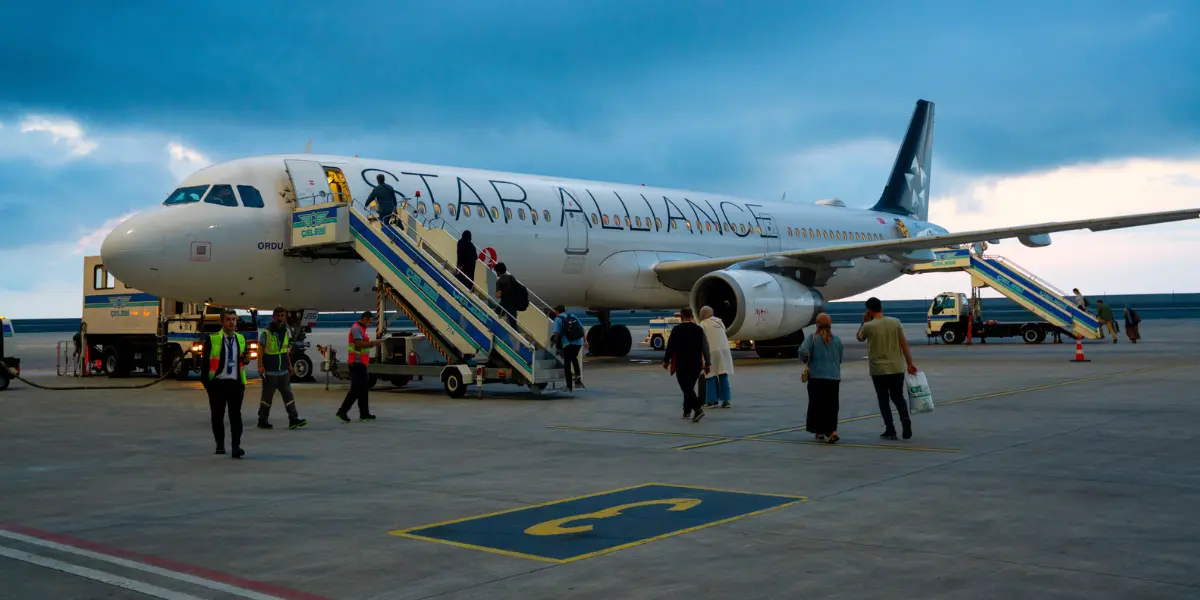
Two passengers flying the same route on the same day can have meaningfully different experiences depending on which aircraft their airline has assigned and most frequent flyers have no idea this variable exists.
Aircraft equipped with multi-constellation navigation receivers draw simultaneously from American GPS, Russian GLONASS, and European Galileo satellite systems. Spoofing all three at once is exponentially harder than spoofing a single-constellation receiver. Modern wide-body types including the Airbus A350, Boeing 787-9, and 777X carry this capability as standard. They are the aircraft types best positioned to detect and resist spoofing events without crew intervention.
Older single-aisle jets particularly the 737NG and A320ceo were certified under navigation assumptions that predate systematic spoofing. They rely more heavily on single-constellation GPS and have less built-in redundancy. These are also the most common aircraft types in global service, which means the gap between what regulation requires and what the fleet can actually do is wide.
The age of an aircraft does not tell you what you need to know. A 737 MAX 8 a recent delivery carries navigation architecture more exposed to spoofing than a 787-9 that entered service a decade ago, because the relevant variable is avionics specification, not airframe age. Checking the scheduled equipment on your booking takes thirty seconds on SeatGuru or the airline's own seat map. On a Gulf or Eastern Mediterranean routing, that check is worth doing.
When booking on high-risk routes, prioritize carriers operating A350, 787-9, or 777X equipment. Understanding aircraft types and what they mean for your onboard experience is already standard practice for experienced travelers navigation resilience is now a practical reason to add to that checklist.
What You Can Actually Do as a Frequent Flyer
The information gap between airlines and passengers is not closing on any visible timeline. That makes self-informed booking decisions the most practical tool available right now.
Know which routes are exposed. London–Dubai, Frankfurt–Bangkok, Istanbul–Delhi, any European routing to the Gulf or South Asia these are active spoofing corridors. That is not a reason to avoid them. It is a reason to understand that an unexplained delay on these sectors may have a specific technical cause your airline has chosen not to name.
Know your aircraft before you board. Multi-constellation equipment on modern wide-bodies provides real additional protection. When two carriers offer the same route and one operates an A350 while the other operates a 737NG, the equipment difference matters on these sectors in a way it does not on a domestic hop.
Read the departure board differently. "ATC restriction," "operational delay," and "air traffic flow management" on a Gulf sector are descriptions that can cover a GPS spoofing event. They are not inaccurate they are just incomplete. Knowing this does not change your options at the gate, but it calibrates your expectations for the sector ahead.
Know your rights when the delay hits. Spoofing-related disruptions trigger the same passenger protections as any other operational delay. Understanding how standby flight processes and rebooking rights work when airlines reroute means you are not starting from zero when the gate agent tells you your connection is gone.
Build buffer on points bookings through these zones. Spoofing-related delays are most punishing when you are on a tight award itinerary. A 35-minute late arrival into Dubai on an inbound Gulf sector can collapse an onward connection that looked comfortable on paper. If you are using miles for time-sensitive travel the kind of high-value redemption decisions covered for AAdvantage miles holders planning ahead Gulf and Eastern Mediterranean routing demands at least 90 minutes of connection buffer, not the 60 minutes that looks adequate on a booking screen.
Conclusion
You have been flying through GPS spoofing zones for years. So has everyone else on those Gulf and Eastern Mediterranean sectors. The crews knew. The airlines knew. The regulators issued bulletins about it. The passengers got a menu and a vague update on the departure board.
That is not going to change quickly. There is no regulatory requirement compelling airlines to disclose GNSS-degraded environments to passengers. The equipment upgrades needed to address the problem at fleet scale are years away from completion. And the passengers most exposed are the same frequent flyers who already absorb the most operational friction in long-haul commercial aviation the missed connections, the unexplained holds, the gate agent who cannot tell you anything useful.
What changes is whether you know what you are dealing with. A delay described as an ATC restriction on a Gulf sector is not the same as a mechanical issue or a weather hold. It has a different likely duration, a different probability of repeating on your return sector, and a different set of implications for your connection strategy. Knowing the landscape does not eliminate the disruption. It eliminates the part where you are caught completely off guard.
Staying informed is the only real leverage frequent flyers have. For more aviation safety coverage, route analysis, and accountability journalism, visit Air Gazette.
Frequently Asked Questions
What is GPS spoofing and how does it affect my flight?
GPS spoofing occurs when ground-based transmitters broadcast false satellite signals that replace legitimate GPS data on an aircraft. For passengers, the result is operational disruption extended holding patterns, delayed approaches, and missed connections rather than physical danger. The aircraft's backup navigation systems handle the anomaly, but the time cost falls on your schedule.
Is it safe to fly on routes affected by GPS spoofing?
Yes, in normal operations. Commercial aircraft carry inertial navigation systems that operate independently of GPS and provide backup positioning when satellite data is compromised. Crews on affected routes are trained specifically for spoofing scenarios. The risk is procedural friction and delay, not structural safety failure.
Which long-haul routes are most disrupted by GPS spoofing?
The highest-impact routes include London to Dubai, Frankfurt to Bangkok, Istanbul to Delhi, Munich to Tel Aviv, and any European service routing through the Eastern Mediterranean or Gulf. Virtually every long-haul flight between Europe and South or Southeast Asia transits at least one active spoofing zone on every departure.
Why don't airlines tell passengers when GPS spoofing is affecting their flight?
There is no regulatory requirement compelling airlines to disclose GNSS-degraded environments to passengers. Operational risk management in commercial aviation is communicated to flight crews, not to customers. Delays and diversions caused by spoofing events are typically described as ATC restrictions or operational disruptions technically accurate, but uninformative.
Does the aircraft type I fly on make a difference for GPS spoofing exposure?
Yes, significantly. Aircraft with multi-constellation navigation receivers drawing from GPS, GLONASS, and Galileo simultaneously are much harder to spoof than older single-constellation systems. Modern wide-bodies including the A350, 787-9, and 777X carry this capability as standard. The 737NG and A320ceo are more exposed. Aircraft age is less relevant than avionics specification.
What are regulators doing to fix the GPS spoofing problem?
EASA issued Safety Information Bulletin SIB 2023-02 requiring airlines to ensure crews can detect and respond to navigation anomalies. Mandatory equipment upgrades and dual backup navigation cross-check requirements are expected but not yet finalized. An ICAO global standard for navigation integrity is targeting 2027 adoption, which would create a universal compliance baseline for all commercial operators.
What should I do if my flight is delayed and I suspect GPS spoofing is the cause?
Your passenger rights for delays and diversions apply regardless of the technical cause. Ask the gate agent for the specific reason for delay in writing. If your connection is missed, you are entitled to rebooking under standard DOT rules. Understanding your standby eligibility and compensation entitlements before you reach the gate puts you in a stronger negotiating position.