Air traffic controller salary figures get thrown around constantly, but most skip the one detail that actually decides your paycheck: where you're stationed. The FAA ranks every facility in the country from Level 4 to Level 12, and that number matters more than years on the job.
A controller at a small regional tower and one at a major TRACON can be doing structurally similar work with a six-figure gap between their salaries. Here's the actual breakdown, by facility level, using the FAA's own pay tables.
How Much Does an Air Traffic Controller Actually Make?
The most recent Bureau of Labor Statistics data puts the national median air traffic controller salary at $144,580 a year, current as of the May 2024 release. That figure covers every controller, every facility level, and every experience stage combined into one number.
The spread underneath that median is wide. The bottom 10 percent of controllers earn under $76,090, while the top 10 percent clear $210,410, according to the same BLS occupational data.
That gap is almost entirely explained by facility level and certification status. It has very little to do with state or seniority in isolation, which is why two controllers with identical years of service can have wildly different paychecks.
How FAA Facility Levels Work
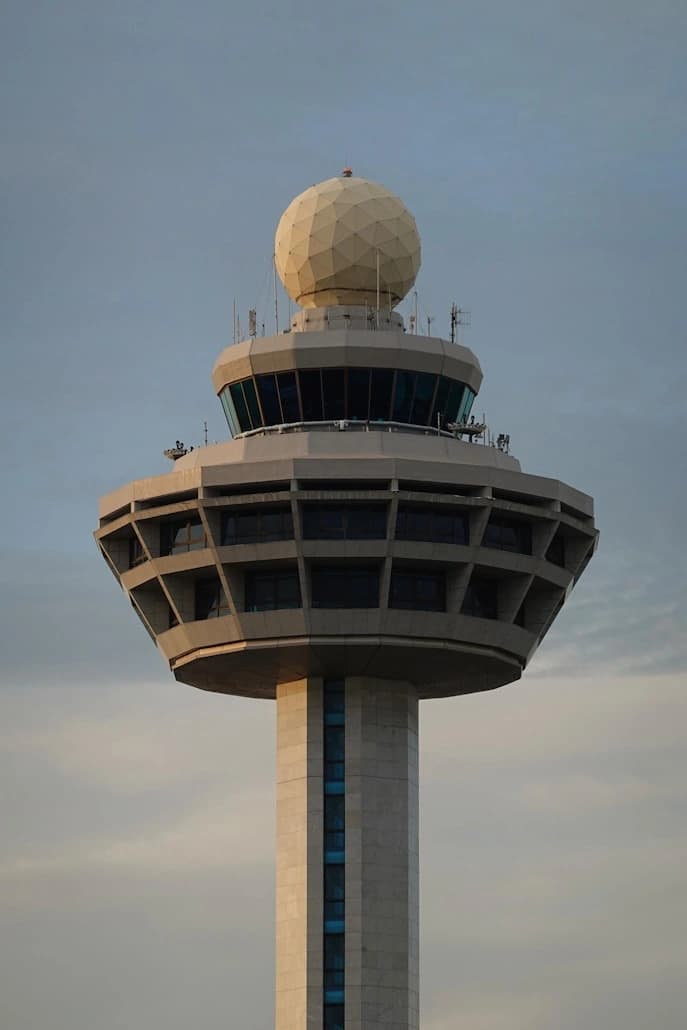
Every FAA air traffic facility carries a level from 4 through 12, assigned based on traffic volume, airspace complexity, and the mix of aircraft it handles. A small regional tower with light single-runway traffic typically sits at Level 4 or 5.
The busiest terminal radar approach controls and en route centers, the ones managing dense commercial corridors, sit at Level 11 or 12. Atlanta, the Chicago O'Hare-area TRACON, and major East Coast en route centers are typical examples of top-tier assignments.
Towers, TRACONs, and en route centers all get separate level ratings, so a Level 8 tower and a Level 8 center handle very different operational complexity despite sharing a number. Towers manage takeoffs, landings, and ground movement near the airport, TRACONs sequence traffic across a wider metro approach corridor, and en route centers manage aircraft at cruising altitude across enormous stretches of the country. A controller's day-to-day work looks different at each facility type, even when the level number matches.
Air Traffic Controller Salary by Facility Level (2026)
The table below uses the FAA's Air Traffic Specialized Pay Plan bands, published by the National Air Traffic Controllers Association, effective January 12, 2025. Figures are adjusted for the confirmed 1.0 percent general federal pay increase that took effect in January 2026, and exclude locality pay.
That 1.0 percent is not the whole story for controllers specifically. The FY2026 spending bill separately appropriated $140 million for a targeted 3.8 percent pay increase for air traffic controllers and their supervisors, contingent on the FAA Administrator certifying that workforce scheduling and staffing efficiencies were being met. That condition was reported satisfied and the raise implemented by around May 2026, meaning current controller pay likely runs above the 1.0 percent-only figures below once that adjustment is factored in.
Facility Level | CPC Minimum (2026 est.) | CPC Maximum (2026 est.) |
Level 4 | $61,152 | $82,553 |
Level 5 | $69,408 | $93,700 |
Level 6 | $76,698 | $103,541 |
Level 7 | $84,751 | $114,413 |
Level 8 | $93,650 | $126,428 |
Level 9 | $103,481 | $139,698 |
Level 10 | $119,005 | $160,656 |
Level 11 | $125,247 | $169,086 |
Level 12 | $131,514 | $177,543 |
These figures are CPC, meaning fully Certified Professional Controller, base pay only. Locality pay, overtime, and premium differentials all stack on top of these numbers depending on the facility's location and staffing situation.
What Explains the Level 9-to-10 Jump
The jump from Level 9 to Level 10 is the steepest single step in the entire table, adding roughly $15,000 to $21,000 in base pay depending on where you land in the band. That's a bigger jump than any other adjacent pair of levels.
This is one reason controllers at mid-tier facilities frequently bid for openings at busier ones, even knowing the transfer resets part of their certification clock at the new location. A Level 9 controller moving to a Level 10 facility accepts a temporary drop to developmental pay in exchange for a much higher ceiling once recertified.
Not every controller makes that trade. Some prioritize a shorter commute or a lighter operational tempo over the higher band, especially later in a career when the pay difference matters less than lifestyle.
The Path to Full Pay: Academy, Developmental Stages, and Certification
New hires start at the FAA Academy in Oklahoma City on a flat trainee rate, regardless of which facility they will eventually staff. The FAA's own hiring page lists that rate at $22.61 an hour, which annualizes to roughly $47,000; other FAA-adjacent figures for post-Academy developmental starting pay run closer to $45,000, so the honest range for early-career pay is $45,000 to $47,500 depending on exactly which stage is being measured.
Academy training runs several months, and washouts happen at this stage, before a trainee ever reaches an assigned facility. Historical washout rates during this phase have run meaningfully high, which is part of why FAA hiring pipelines stay under constant pressure.
Trainees who pass move into developmental status at their assigned tower or center, where pay increases at each certification milestone. The stages run D1, D2, then D3, with D3 sitting just below full CPC pay for that facility's level.
Premium Pay, Overtime, and Staffing Shortages
Controllers can earn extra pay for holidays, Sunday work, and night shifts, on top of their base facility-level rate. At a facility running 24/7 operations, these differentials can meaningfully raise annual take-home pay beyond the CPC table figures.
Staffing-short facilities frequently rely on mandatory overtime to keep positions covered, which adds real income but also real fatigue risk. This has been an ongoing operational pressure point across several major FAA facilities in recent years.
None of these premiums are reflected in the base pay bands above. They're additive, and they vary significantly by facility depending on staffing levels and operating hours.
What Understaffing Actually Costs Passengers
The staffing pressure behind mandatory overtime isn't just a controller pay story. When a facility can't fill every position with certified controllers, the FAA's fallback options are mandatory overtime, reduced traffic throughput, or both, and passengers absorb whichever one gets chosen.
Air Gazette has previously covered how FAA staffing gaps at a single major facility drove the flight caps imposed at Newark, which forced airlines to trim schedules and reshaped connections for business travelers across the New York area for months.
That's the throughline worth keeping in view: the same understaffing that pushes a controller's overtime pay higher is often the direct cause of the delays or capacity restrictions passengers experience at that facility. Controllers get paid more for the extra hours; travelers get fewer flights and less reliability.
Where the Ceiling Actually Sits
No matter how high a controller's base pay and locality percentage combine, federal law caps total compensation at the rate for Level II of the Executive Schedule. For 2026, that ceiling is $228,000.
A Level 12 controller in a high-locality city can calculate a combined figure well above that number on paper. The excess simply doesn't get paid out, since the cap applies to base pay plus locality pay combined, not to either figure in isolation.
This is one reason experienced controllers sometimes treat a high-locality Level 12 assignment and a lower-cost Level 12 assignment as financially similar in practice. Once the cap is reached, additional locality percentage stops adding real income.
Locality Pay: The Other Half of the Equation
Locality pay adds on top of every base figure in the table above, and it varies substantially by metro area. The 2026 locality percentages range from 17.06 percent in lower-cost areas to 46.34 percent in the highest-cost metros, per the Office of Personnel Management's January 2026 pay notice.
New York-area facilities and several California TRACONs carry some of the largest locality adjustments in the entire federal system. That's part of why those regions dominate ATC salary search interest, even though the underlying base pay bands are identical nationwide.
A Level 10 facility in a high-locality city can out-earn a Level 12 facility in a lower-cost one, once locality math is applied, at least until the federal pay cap intervenes.
Air Traffic Controller Salary by State: What the Numbers Actually Reflect
State-specific ATC salary searches cluster around a handful of markets, and California, Texas, Florida, and New York show the most consistent search interest. That pattern tracks closely with where the country's highest facility-level assignments happen to sit.
It's worth being precise here: there is no separate state-by-state ATC pay scale. Every controller nationwide sits on the same ATSPP bands described above; state-level differences come from facility level and locality pay, not from a distinct state schedule, a dynamic similar to what determines pay timelines in Air Gazette's guide on how long it actually takes to become a commercial pilot.
That distinction matters when comparing offers. A Level 10 facility in a moderate-cost state can out-earn a Level 8 facility in an expensive one, once the full band and locality math is worked through.
How ATC Pay Compares to Other Aviation Careers
Air traffic controller compensation sits in an unusual spot relative to other aviation careers, running higher than most entry-level roles but structured on a federal pay-band system rather than the airline seniority model that defines pilot compensation, as covered in Big 3 pilot salary breakdown.
Both career tracks reward tenure and location heavily. Controllers, however, reach their full facility-level pay years faster than pilots typically reach senior captain pay, since certification rather than seniority-list position drives the raise.
Civilian FAA vs. Contract Tower vs. Military Controllers
Most controllers covered in this guide work directly for the FAA under the ATSPP pay bands above. A smaller number work at contract towers, staffed by private companies under FAA contract, often at the lower end of comparable facility levels.
Military air traffic controllers are paid under military rank-based pay scales rather than the FAA's civilian system entirely. Direct comparison depends on rank, years of service, and whether the assignment includes additional flight or hazard pay, so a straight dollar-for-dollar comparison to the ATSPP table above doesn't hold.
Pay Beyond CPC: Supervisors and Managers
Reaching full CPC pay isn't necessarily the ceiling of a controller's career earnings. Front Line Managers, the first supervisory tier, typically earn 15 to 20 percent more than the CPCs they oversee at the same facility.
Operations Managers and Air Traffic Managers sit above that tier again, with ATMs at Level 12 facilities commanding base pay above $220,000 in some cases. These roles remain subject to the same federal pay cap described earlier, so the premium narrows once combined pay approaches that ceiling.
Supervisory openings tend to appear roughly 8 to 12 years into a controller's career, and competition for them is real. All of the pay-band figures in this guide, CPC through supervisory, trace back to the FAA's own pay and benefits documentation, which publishes the underlying tables directly rather than through a third-party summary.
What's Likely to Change in the Next 6 to 12 Months
FAA controller pay hasn't moved in a vacuum, and the near-term picture is shaped by a prolonged national staffing shortage driven partly by a wave of retirements and partly by Academy washout rates. That shortage is the single biggest variable to watch over the coming year.
Some of what would normally sit in a "what's next" section has already landed: the targeted 3.8 percent ATC-specific raise cleared its Administrator-certification hurdle and was reported implemented by around May 2026, alongside a reported 30 percent bump to Academy trainee starting pay and a retention incentive worth 20 percent of base pay for each additional year a retirement-eligible controller stays on position.
What's still genuinely open is whether that targeted-raise model repeats. The 2026 appropriation was structured as a one-time, conditional infusion, so the real question over the next 6 to 12 months is whether Congress funds a similar mechanism again in the FY2027 cycle, or whether ATC pay reverts to tracking the standard federal general increase alone.
For a wider view of aviation career paths and what other airline roles pay, Air Gazette's guide to airline jobs in the USA covers pilots, mechanics, dispatchers, and ground staff side by side
What This Means If You're Considering the Career
The headline median of $144,580 is a reasonable expectation for an experienced controller, but it undersells what's possible at a Level 11 or 12 facility once locality pay is factored in. It also overstates early-career reality, since Academy and developmental pay sit well below that figure.
Facility choice, more than almost any other factor, determines long-term earning potential in this career. Anyone comparing offers or planning a bid strategy should treat facility level, locality percentage, and the federal pay cap as three separate variables, not one combined number.
For more reporting on the structural stories behind aviation careers, staffing, and pay, visit The Air Gazette.
Frequently Asked Questions
How much do air traffic controllers make a year?
The national median is $144,580 a year as of the most recent BLS data, but the real number depends heavily on facility level. Controllers at the busiest Level 12 facilities can clear $177,000 in base pay alone before locality adjustments.
What is the starting salary for an air traffic controller?
New hires earn a flat rate during FAA Academy training, in the $45,000 to $47,500 range depending on stage, per FAA's published hiring figures. Pay increases at each developmental certification stage after Academy graduation, before reaching full facility-level pay.
Do air traffic controllers get paid overtime?
Yes. Controllers can earn premium pay for holidays, Sundays, and night shifts, and staffing-short facilities frequently rely on mandatory overtime, which adds meaningfully to total annual compensation.
What is the highest-paying air traffic controller facility level?
Level 12 facilities pay the highest base rates, with CPC maximum base pay projected around $177,500 for 2026 before locality pay is applied.
Is there a limit on how much an air traffic controller can earn?
Yes. Federal law caps combined base and locality pay at the Executive Schedule Level II rate, which is $228,000 for 2026. Earnings beyond that cap are not paid out, regardless of the facility's locality percentage.
Do military air traffic controllers get paid differently than civilian ones?
Military controllers are paid under military rank-based pay scales rather than the FAA's ATSPP system, so direct comparison depends on rank, years of service, and whether the role includes flight or hazard pay.
How long does it take to reach full certified pay?
Most controllers reach Certified Professional Controller status, and therefore full facility-level pay, within one to three years of arriving at their assigned facility, according to FAA training timelines. The exact pace depends on the facility's complexity and how quickly a developmental clears each position on the certification checklist.