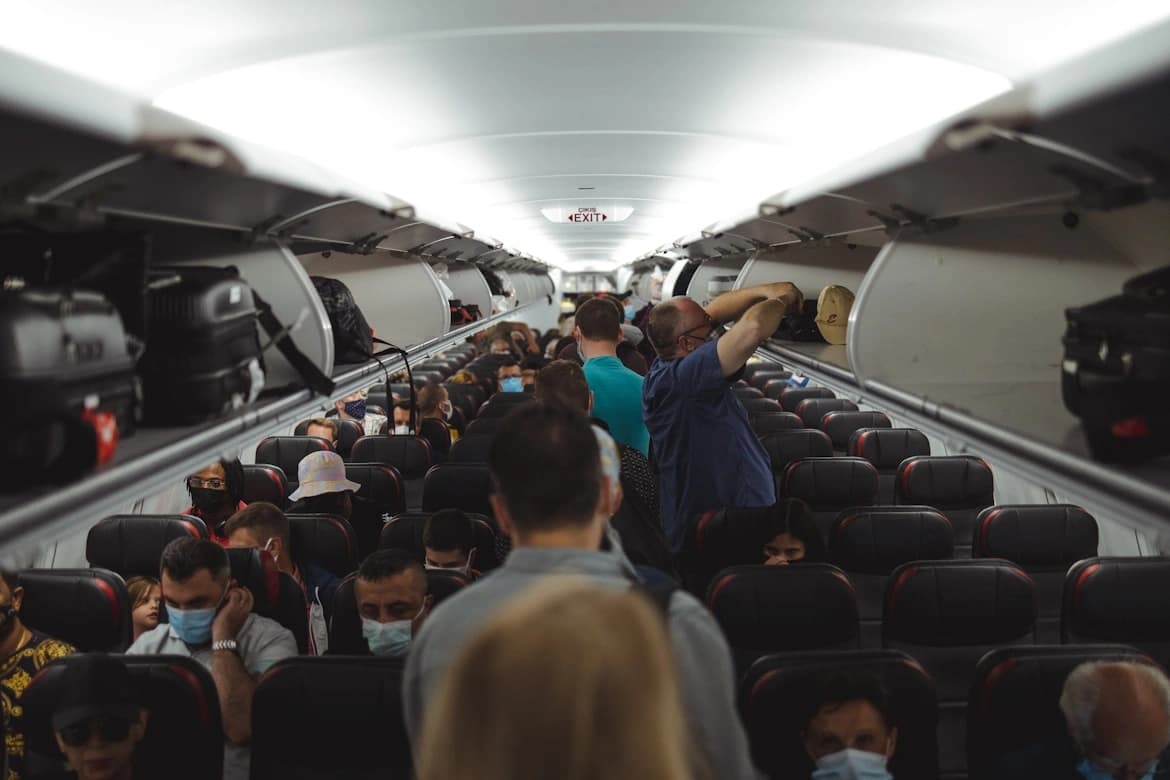
The pilot mandatory retirement age has been 65 since 2007. A new Senate bill wants to push it to 67. But even if it passes, a rule most travelers have never heard of could still stop pilots from flying the international routes that pay the best.
Here's what the FAA rule actually says, what the bill changes, and where those two things collide. In two decades covering this industry, I've rarely seen a bill this politically loud get this little scrutiny on what it actually changes.
A Senate bill wants airline pilots flying until 67, but a rule most travelers have never heard of could keep them grounded on the routes that pay the most, as The Air Gazette first reported.
What Is the Current Pilot Mandatory Retirement Age?
Every airline pilot flying for a US carrier under FAA Part 121 has to stop flying at 65. Not 66, not "65 and a half." The day a captain turns 65, they're done in that seat, full stop, even in the middle of the current hiring boom driving thousands of open airline jobs across the US.
That number isn't arbitrary. It came from a specific law, and it's lower than what most people assume a "retirement age" should be.
Why the FAA Raised It to 65 in 2007
Before 2007, the mandatory retirement age was 60. That number dated back to 1959, when the FAA set it with almost no research behind it, largely as a precaution during the early jet age when medical screening for pilots was far less advanced than it is now.
Pilots and unions spent decades arguing that 60 was outdated, pointing to improved cardiac screening, annual medical exams, and longer healthy lifespans generally. The Fair Treatment for Experienced Pilots Act finally changed the number in December 2007, raising the ceiling by five years to 65.
That's the last time this number moved. It's been frozen at 65 for nearly two decades while life expectancy, medical screening, and pilot shortages have all shifted underneath it, which is exactly the argument the current bill's sponsors are making.
How the US Pilot Retirement Age Compares to Other Countries
The US isn't unusual here. Most aviation authorities that follow ICAO's standard also cap airline pilots at 65 for international flying, regardless of what their own domestic law says.
Country / Body | Domestic Retirement Age | International Flying Limit |
United States (FAA) | 65 | Governed by ICAO standard |
ICAO standard (most member states) | N/A | 60 for single-pilot ops, 65 for multi-pilot ops |
European Union (EASA) | 65 | Same ICAO limit applies |
That last column is the part the bill's drafters already accounted for, even though most coverage treats it as an afterthought. More on that below.
The Bill That Wants to Raise the Pilot Retirement Age to 67

A Senate bill introduced in April 2026 would raise the domestic mandatory retire
ment age from 65 to 67. It has bipartisan sponsorship, which is unusual for an aviation labor fight this contentious.
What the Let Experienced Pilots Fly Act Actually Proposes
The bill, S.4452, was introduced by Senator Lindsey Graham of South Carolina and Senator Mark Kelly of Arizona, a Republican and a Democrat co-sponsoring together. It's currently sitting in the Senate Commerce Committee, which is the normal early stop for a bill like this, not a sign it's close to a vote.
An earlier House version, tied to Representative Troy Nehls, worked through similar territory in 2025. Neither has reached the floor yet.
No, the FAA Isn't Raising It to 68
A number of searches and forum threads float 68 as the new target. That's not what's in the bill. The proposal on the table raises the ceiling to 67, matching the age already used for most other safety-sensitive federal roles like air traffic controllers.
If you see 68 quoted anywhere, treat it as a rumor, not a number from the actual bill text.
Why the ICAO Rule Already Shapes What This Bill Can Actually Do

Here's the part almost no coverage of this bill explains clearly: the international flying limit doesn't move just because Congress votes yes, and the bill's own text already accounts for that.
The Age-65 Wall on International Multi-Crew Flights
ICAO, the United Nations aviation body that sets the standard most countries follow, caps pilots at 65 for international flights with more than one pilot in the cockpit, and at 60 for international flights with only one pilot. There used to be an additional wrinkle: a pilot between 60 and 65 could fly internationally only if paired with a co-pilot under 60. ICAO dropped that pairing requirement in a November 2014 amendment to Annex 1, and the FAA followed with a matching rule change. Since then, two pilots over 60 can crew an international flight together, as long as neither has reached 65.
That standard doesn't care what US domestic law says. It's adopted separately by each country's own aviation authority, and most of the world's major aviation regulators follow it, including the UK, the EU's EASA members, and most of Asia's major carriers.
The hard wall that hasn't moved since 2014 is age 65 for multi-pilot international operations. A pilot can fly right up to that birthday on an international widebody route. The day after, ICAO's standard removes them from that flight deck entirely, regardless of what any single country's domestic law allows.
What Happens to a Captain's Route Bids After 65
That means a US captain who's 66 under the proposed new domestic rule could still legally fly a US-only route to Cleveland, but not the Tokyo or Frankfurt route they spent 20 years bidding seniority for. Two extra years of eligibility, but not for the routes that pay the widebody premium.
This isn't an oversight the bill's sponsors missed. S.4452 defines the routes eligible for the new age-67 ceiling, calling them "covered operations," and explicitly excludes international airspace where flying past 65 wouldn't comply with the Annexes to the Convention on International Civil Aviation. In plain terms, the bill's own text already limits the 65-to-67 group to domestic flying. The gap between US law and international rules isn't a loophole critics discovered. It's a carve-out the drafters wrote in on purpose, because they had no other option under ICAO's standard.
How Pilot Retirement Compares to Other Safety-Sensitive Aviation Jobs
Airline pilots aren't the only aviation workers with a hard age cutoff. Air traffic controllers face an even earlier one, which is part of why the "67 matches other federal roles" argument gets used so often in this debate.
Role | Current Mandatory Retirement Age |
Airline pilot (Part 121) | 65 |
Air traffic controller (FAA) | 56, with limited exceptions to 61 |
Federal law enforcement officer | 57 |
Proposed pilot age under S.4452 | 67 |
Bill supporters use this table to argue that 67 isn't an aggressive ask, since it would put pilots roughly in line with judges and other safety-adjacent federal positions that already run past 65. Opponents counter that the comparison doesn't hold, since none of those other roles carry the same split between domestic law and an international standard that pilots alone are stuck with. For a closer look at how that shorter controller career translates into pay, Air Gazette's air traffic controller salary guide breaks down the numbers by facility and experience.
Who Supports Raising the Retirement Age and Who's Fighting It
This isn't a simple industry-versus-passengers story. The airlines, the union, and the regional carriers all land in different places, and the reasons matter more than the headline.
ALPA's Case Against a Higher Mandatory Pilot Retirement Age
The Air Line Pilots Association has publicly opposed every version of this bill going back years, pointing to the international flying conflict above as one reason the change creates more complexity than it solves. "This legislation is a solution in search of a problem," ALPA president Capt. Jason Ambrosi said in a March 2023 statement opposing an earlier version of the bill, a position the union has maintained through each reintroduction since. Rather than fixing anything, the union argues, a higher domestic age just creates a new category of captain who can fly to Cleveland but not to Frankfurt.
The union's position also touches on safety data around pilot fatigue and age-related medical risk, though that argument is contested by supporters of the bill, who point to the same annual medical certification requirements that already apply to every working pilot regardless of age.
Regional Airlines and the Pilot Shortage Argument
Regional carriers, who've struggled hardest to staff cockpits, back the change for a simpler reason: two more years of experienced captains is two more years they don't have to backfill through an expensive, slow training pipeline. Training a first officer into a captain's seat takes years even under ideal conditions, and regional carriers have had anything but ideal conditions since the pandemic-era hiring crunch.
For them, this bill is a staffing fix disguised as a labor policy debate. Keeping a 65-year-old captain flying domestic routes for two more years is, from a pure scheduling standpoint, cheaper and faster than training a replacement from scratch.
Who Benefits, and Who Absorbs the Cost
Every version of this debate has a winner and a loser, and it's rarely framed that plainly. Laying it out directly makes the actual stakes easier to see.
Group | What Changes if the Age Rises to 67 |
Senior captains near 65 | Gain two more years at peak pay, but only on domestic-eligible routes |
Regional and major airlines | Retain experienced captains longer, easing the training pipeline bottleneck |
Younger first officers | Upgrade to captain seats two years later than they would otherwise |
Passengers on international routes | No direct change, since ICAO's age-65 cap still applies regardless |
Passengers on domestic routes | Marginal safety debate continues, contested by both sides with dueling data |
The group that absorbs the least visible cost here is younger pilots working toward a captain's seat. Every year a senior captain stays in place is a year that upgrade doesn't happen for someone else in the seniority list, and airline seniority systems make that delay very literal, not abstract.
What Actually Happens When an Airline Pilot Turns 65
Retirement at 65 doesn't mean unemployment. Most pilots who want to keep working have a path, just not one that keeps them in the captain's seat on a passenger jet.
Simulator and Training Roles After the Flight Deck
Many retiring captains move into simulator instruction or training roles, passing on decades of experience to new hires without holding a type-rating seat on an active flight. These roles don't require the same medical certification tier as an active line pilot, which is part of why they're open to pilots past the mandatory retirement age in the first place.
Airlines actively want to keep this expertise in-house, even after the flying stops. A 30-year captain training a brand-new first officer is a genuinely valuable pipeline, and most major carriers have formal programs built specifically around retiring captains stepping into these instructor seats rather than leaving the company entirely, the same way experienced aircraft mechanics often move into inspection and training roles late in their careers rather than retiring outright.
The Financial Hit of a Forced Retirement Age
The bigger issue is usually financial. A senior widebody captain forced out at 65 loses two years of peak-scale pay, often the highest-earning years of an entire career, at the exact point pilots typically hit maximum seniority and route choice.
At the Big Three, senior widebody captains can clear well over $400,000 a year once profit-sharing and overrides are included, per Air Gazette's breakdown of United, American, and Delta pilot pay. Two years of that pay scale is a meaningfully different retirement outcome than two years at a training-role salary, which is one reason this bill has real financial backing behind it beyond the staffing argument.
What This Signals for the Next 6–12 Months
Realistically, this bill is early-stage. Committee referral in April 2026 puts it months, likely longer, from a floor vote, and aviation labor bills routinely stall for multiple sessions before movement.
Where S.4452 Stands in Committee Right Now
Watch for hearing dates out of the Senate Commerce Committee as the clearest next signal. Bills at this stage typically need a committee hearing, a markup session, and a committee vote before they're even eligible for the floor, and each of those steps can take months on its own.
Until a hearing is scheduled, this stays a policy conversation, not a near-term change to anyone's retirement date. For career planning purposes, pilots approaching 65 in the next year should plan around the current rule, not a bill that hasn't moved out of committee. Even in an optimistic scenario where the Senate moves quickly, a companion House bill would still need to clear its own committee process before reaching a president's desk, which pushes any realistic effective date well past the 6 to 12 month window most industry watchers are using as a benchmark.
Pilots mapping out the years before this rule even applies to them can check Air Gazette's commercial pilot career timeline for how long that climb from first flight hour to captain actually takes.
Career planning around this rule matters more than the headlines suggest. A pilot at 58 today is making seniority bids, route choices, and retirement-savings decisions right now based on a retirement date that may or may not move. Betting a financial plan on a bill still sitting in committee is a different risk than betting on the rule as it's actually written today, and that distinction is worth remembering every time this story resurfaces in the news cycle.
The mandatory retirement age fight isn't going away, and neither is the ICAO gap nobody in Washington seems eager to solve. For now, 65 is still the number that matters, on paper and in the cockpit. According to the full text of S.4452, that number stays exactly where it is unless the bill clears committee, passes both chambers, and gets signed, none of which has happened yet.
For more reporting on the policies shaping your next flight, visit The Air Gazette.
Frequently Asked Questions
What is the retirement age for a pilot?
US airline pilots flying under FAA Part 121 must retire at 65. This has been the rule since 2007, when it was raised from 60.
Why is the airline pilot retirement age set at 65?
The number comes from the Fair Treatment for Experienced Pilots Act of 2007, which raised the prior limit of 60 after years of pressure from pilots and unions. It hasn't changed since.
When did the FAA raise the pilot retirement age to 65?
The change took effect in December 2007, moving the ceiling from 60 to 65 for Part 121 airline pilots.
Will the FAA raise the pilot retirement age to 67?
Not yet. A Senate bill, S.4452, proposes raising it to 67, but it's still in committee with no scheduled vote. The FAA doesn't set this number independently; Congress would need to change the underlying law first.
Does the pilot mandatory retirement age apply to international flights?
US law only governs domestic retirement age. International flying is separately capped at 65 by an ICAO standard most countries follow, and that limit wouldn't change even if the US bill passes.
How has the retirement age affected the pilot shortage?
Regional airlines cite the current 65 cutoff as one factor worsening staffing shortages, since it removes experienced captains from the workforce at the same time hiring demand is climbing.
What happens to an airline pilot's career after mandatory retirement?
Many retiring captains shift into simulator instruction or training roles rather than leaving aviation entirely, though they lose access to the highest-paying widebody captain pay scale.