The most-cited number in this field is the same everywhere: $78,680 a year. That figure comes from the Bureau of Labor Statistics, and it is accurate but not very useful on its own.
That median blends airline technicians, general aviation shops, manufacturing plants, and military transitions into one line. Certification, specialization, and employer type move real pay by tens of thousands of dollars.
How Aircraft Mechanic Pay Is Structured: A&P, AMT, and Avionics
Aircraft maintenance pay starts with a credential, not a job title. The Airframe and Powerplant certificate, or A&P, is the baseline license for most civilian aircraft structures and engines.
Avionics is a separate specialization covering a plane's electronic systems: navigation, communication, autopilot, and flight management computers. Two mechanics with identical A&P certificates can still land in very different pay brackets, since certification, employer type, and location move the number together.
Air Gazette's broader guide to airline jobs in the USA covers where mechanics fit alongside pilots, flight attendants, and dispatchers if you're weighing this career against other aviation paths.
A&P mechanics (general airframe and powerplant work): national median $78,680 per year
Avionics technicians (electronic systems specialists): national median $81,390 per year
Both figures come from the BLS Occupational Outlook Handbook, May 2024 data
The gap between the two is roughly $2,700 a year at the median. It compounds, since avionics work tends to concentrate in facilities that already pay above the general median.
BLS also publishes the full range around each median. For aircraft mechanics, the lowest 10% earned less than $47,790 and the highest 10% earned more than $120,080 in May 2024.
For avionics technicians, the range ran from $49,770 to $113,580. That spread, more than $70,000 wide in both cases, shows how much a single median figure understates the top end.
By industry, avionics technicians earned a median of $99,150 in air transportation and $87,640 in aerospace manufacturing in May 2024, against just $67,420 in support activities for air transportation. That gap between employer categories is larger than the gap between A&P and avionics certification itself.
Average Aircraft Mechanic Salary by Certification
Certification | National Median (Annual) | Source |
A&P (Airframe and Powerplant) | $78,680 | BLS OOH, May 2024 |
Avionics Technician | $81,390 | BLS OOH, May 2024 |
Source: U.S. Bureau of Labor Statistics, Occupational Outlook Handbook Aircraft and Avionics Equipment Mechanics and Technicians, May 2024 data (the most recent update to this BLS publication as of 2026)
The certificate itself is what unlocks eligibility for the higher-paying employer categories below. Without it, most of the pay tiers in this guide are not accessible regardless of experience.
Entry-Level Aircraft Mechanic Salary: What New A&P Holders Actually Start At
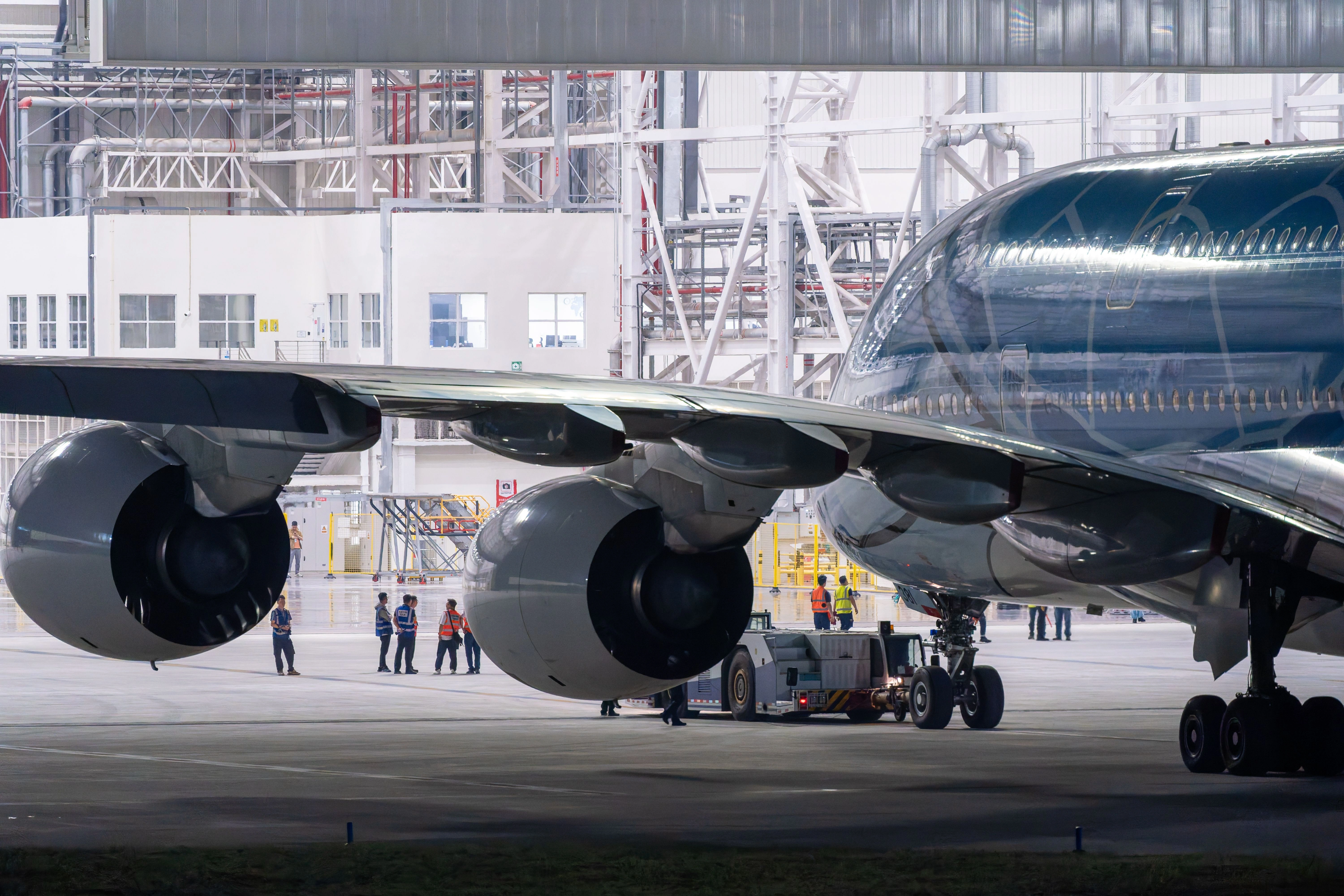
New A&P holders do not start at the national median. BLS's May 2024 data puts the bottom 10% of the field at under $47,790 a year, a reasonable proxy for where a genuinely new hire lands.
Entry-level positions typically mean line maintenance: routine inspections and quick-turn repairs between flights
Component shop work under supervision is another common first assignment
The first two to three years are generally about breadth of experience, not peak earnings
Getting that first paycheck requires the A&P certificate itself. FAA Part 147 schools offer a structured path, generally close to two years for the combined coursework and testing, or candidates can log 30 months of documented on-the-job experience before sitting the FAA exams.
Entry Level Aircraft Mechanic Salary
Progression from entry-level to median pay is not automatic. It depends on which employer category a mechanic moves into next, which is where the real pay differences show up.
Is an A&P Certificate Worth the Training Cost?
Training cost compares favorably to many paths into six-figure-adjacent pay. NPR reported in July 2026 that a two-year A&P program at the Pittsburgh Institute of Aeronautics runs about $42,000.
Against a national median of $78,680, and an air transportation industry median of $95,320, that investment sits well below what many other credentialed trades require relative to the ceiling. It is also a fraction of the time and cost of a commercial pilot certificate.
Air Gazette's breakdown of how long it actually takes to become a commercial pilot lays out the full 1,500-hour timeline and cost for comparison, since the two career tracks are often weighed against each other by the same career-changers.
Airline vs. Cargo vs. MRO: Where Aircraft Mechanics Earn the Most
This is the section that the national median hides. BLS industry-level data shows pay varies substantially depending on who signs the paycheck, even holding certification constant.
Industry Sector | Median Annual Wage | Source |
Air transportation (major airlines) | $95,320 | BLS OOH, May 2024 |
Couriers and express delivery services (cargo carriers) | $89,220 | BLS OOH, May 2024 |
Aerospace product and parts manufacturing | $82,560 | BLS OOH, May 2024 |
Federal government | $72,920 | BLS OOH, May 2024 |
Support activities for air transportation (general MRO) | $66,960 | BLS OOH, May 2024 |
Sources: U.S. Bureau of Labor Statistics, Occupational Outlook Handbook Aircraft and Avionics Equipment Mechanics and Technicians, May 2024 data (the most recent update to this BLS publication as of 2026)
Air transportation pays a median wage roughly 21% above the all-industry median. Cargo carriers sit close behind, while support activities for air transportation, the category that includes most independent MRO shops, anchors the bottom nearly $28,000 below the airline figure.
Commercial Aircraft Mechanic Salary
The pattern holds across specializations: commercial and cargo carrier employment consistently outpays general aviation and independent shop work. Union contracts, shift differentials, and fleet-type premiums explain most of the gap.
Employer distribution reinforces where the jobs actually are. Support activities for air transportation, the lowest-paying category above, employs the largest single share of mechanics at 32%, followed by air transportation at 26% and aerospace manufacturing at 16%.
The single largest employer category by headcount is also the lowest-paying one. That is exactly why the move from a general MRO shop into airline or cargo employment is the biggest single pay jump in this field.
Aircraft Mechanic Salary Per Month vs. Annual Total Compensation
Base annual pay is only the starting point. Total compensation for airline and cargo mechanics typically adds several pieces that never show up in a headline salary figure.
Overtime, common since maintenance often happens overnight or between flights
Shift differentials for nights, weekends, and holiday coverage
Profit-sharing at carriers that offer it, on top of base pay
Employer retirement contributions, which vary by union contract
Monthly pay without overtime lands close to one-twelfth of the annual figures above. Once overtime and shift premiums enter the picture, monthly income can vary considerably, particularly at cargo carriers running overnight operations.
Illustrative example, mid-career A&P mechanic at a major airline: a base annual wage near the air transportation median of $95,320 works out to roughly $7,940 a month before overtime. Add a night-shift differential and occasional overtime during a heavy maintenance check, and monthly pay runs higher in active months.
This is a modeled illustration based on the BLS figures above, not a confirmed payout from any specific employer. Actual differentials vary by union contract and location.
Why Aircraft Mechanic Pay Is Rising: The Technician Shortage
Wage growth in this field is not speculative. It is tied to a documented shortage that both BLS and the industry's own manufacturers are tracking closely.
Boeing's 2026 Pilot and Technician Outlook, released at EAA AirVenture Oshkosh, projects the global industry will need 728,000 new maintenance technicians through 2045, with 125,000 of those positions in North America alone. Roughly two-thirds of that demand comes from replacing retiring workers, and Boeing attributes about 40% of technician attrition specifically to retirement.
That demand sits against a combined workforce of 160,800 aircraft and avionics mechanics and technicians in 2024, per BLS. The combined group is projected to grow 5% through 2034, but aircraft mechanics specifically are projected at 4% (from 139,400 to 145,000 jobs) while avionics technicians run faster at 8% (from 21,400 to 23,100 jobs).
The pipeline supplying new mechanics has not kept pace with need at every training program. Air Gazette's reporting on why Frontier makes more money from fees than from flying you touches on the same industry-wide staffing shift, where airlines are restructuring what roles they hire for as cost pressure and labor shortages both bite.
Military-to-Civilian Transition: What Changes for Former Maintainers
Military maintenance experience does not automatically convert to an FAA A&P certificate, but there is a defined pathway. Veterans with qualifying experience can test for the civilian certificate using documented military work in place of the standard training-hour requirement.
Military maintainers with the right documented experience can often test directly for A&P certification
This experience-based pathway is separate from attending a full Part 147 school program
Employers actively recruit former military maintainers, particularly at cargo carriers and major airlines
Military Aircraft Mechanic Salary
Starting pay for veterans varies by how their military experience is credited, and by which employer category they move into first. The same airline-versus-cargo-versus-general-aviation pattern above applies just as much to veterans as to any other new A&P holder.
Major carriers and cargo operators have leaned on this pipeline as the broader shortage has intensified, since military maintainers arrive with troubleshooting experience that otherwise takes years to build.
How Aircraft Mechanics Increase Their Pay Over Time
Beyond the base A&P certificate, a few credentials and career moves show up repeatedly in how mechanics reach the higher end of the pay range:
Inspection Authorization (IA) available to A&P holders with at least three years of experience, IA privileges allow a mechanic to approve major repairs and annual inspections independently, opening paths to lead mechanic, inspector, and consulting work
Widebody type qualification some employers report additional pay tied to certification on specific wide-body fleets, though this varies by employer
Moving from general aviation to airline or cargo employment the single largest documented pay jump in this guide, a gap of nearly $28,000 a year at the median
Relocating toward major airline and cargo hub markets geography and employer type tend to move together, since those jobs concentrate around major hub airports
Certification-driven pay progression isn't unique to mechanics. Air Gazette's air traffic controller salary breakdown covers a similar pattern, where facility level and certification status matter more than years of service alone.
How Mechanic Pay Compares to Other Aviation Careers
Aircraft mechanic pay sits well below pilot pay at the majors, but it also requires a fraction of the training timeline and none of the type-rating costs pilots absorb. A new-hire first officer at a major airline starts in roughly the same range as a mid-career mechanic at a scheduled carrier, though pilot pay accelerates faster once a pilot upgrades to captain.
Air Gazette's United, American, and Delta pilot salary comparison breaks down first officer and captain pay at the Big 3 for context on how the two tracks diverge over time.
The two paths also differ sharply in time and cost to entry. A mechanic can reach A&P certification and a paycheck in under two years for roughly $42,000, while a commercial pilot career typically takes several years and well over $100,000 before reaching an airline cockpit.
For more career breakdowns, route comparisons, and aviation industry coverage, explore the full collection at Air Gazette.
Frequently Asked Questions
What is the average aircraft mechanic salary in 2026?
The national median is $78,680 per year according to BLS data from May 2024. Mechanics at major airlines earn meaningfully more, with a BLS industry-level median of $95,320 for air transportation specifically.
How much more do avionics technicians earn than general A&P mechanics?
Avionics technicians carry a national median of $81,390 compared to $78,680 for aircraft mechanics broadly, a gap of roughly $2,700. The larger pay difference tends to show up through which employers avionics specialists work for, not the specialization alone.
Do cargo airlines pay aircraft mechanics more than passenger airlines?
BLS industry data shows air transportation paying a higher median wage ($95,320) than couriers and express delivery services ($89,220) as of May 2024. Both sit well above the general national median and are considered strong long-term employers for A&P mechanics.
How long does it take to reach top-scale mechanic pay?
Progression depends on the employer's pay scale structure, typically governed by union contract at major airlines and cargo carriers. Mechanics starting near the BLS-reported bottom 10% figure of $47,790 generally reach the national median within several years of tenure.
Adding Inspection Authorization credentials or a widebody type qualification tends to accelerate that timeline more than seniority alone.
Does military maintenance experience transfer to a higher starting salary?
Documented military maintenance experience can qualify veterans to test directly for the FAA A&P certificate without a full Part 147 school program. Starting pay from there follows the same employer-type pattern as any new A&P holder.
Is the aircraft mechanic shortage actually raising wages?
Industry pressure is real: BLS projects the combined occupational group will grow 5% from 2024 to 2034, with roughly 13,100 average annual openings driven partly by retirements. Aircraft mechanics specifically are projected to grow 4%, while avionics technicians grow faster at 8%.
Boeing's 2026 forecast attributes about 40% of technician attrition to retirement, a large share of the projected 125,000 North American openings through 2045. That sustained demand is a documented factor pushing wages up at employers competing hardest for qualified A&P holders.