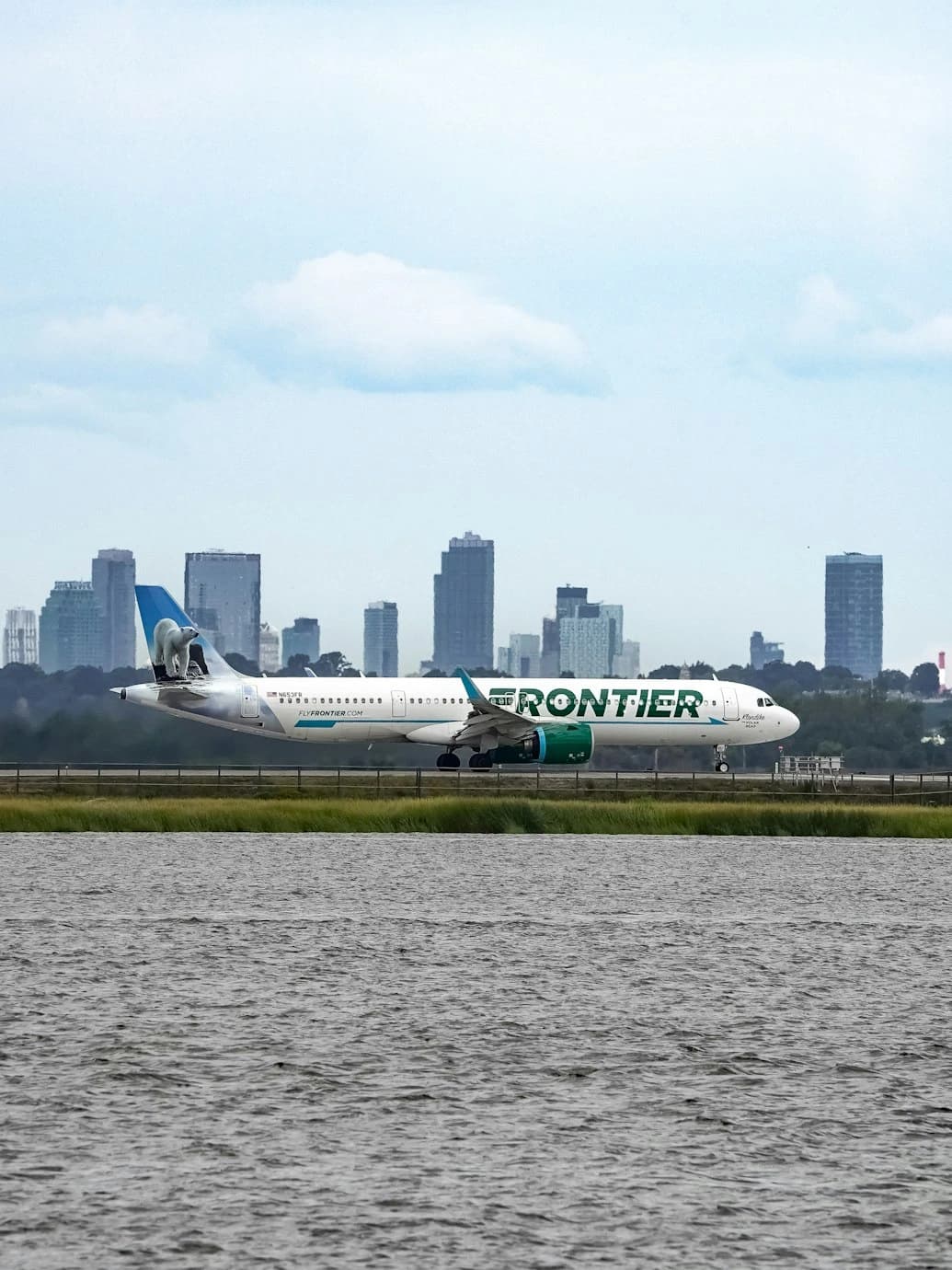
If you have ever wondered why is Frontier so cheap, the answer is in the airline's own financial filings. In 2024, Frontier became the first airline in the world to earn more than 60 percent of its revenue from fees rather than fares.
The $39 ticket is not the product. It is the entry fee to a store where bags, seats, boarding order, and even website check-in carry separate price tags. Here is how the math works, who pays for it, and what changes in 2026.
Why Is Frontier So Cheap? Because the Fare Is Bait, Not the Product
Frontier's average passenger paid $112.17 in total during 2025, according to the airline's full-year results. Of that amount, only about $44.60 came from the actual fare.
The remaining $67.57 came from ancillary revenue: bag charges, seat selection fees, bundles, memberships, and change fees. In other words, the average Frontier passenger spends roughly $1.50 on extras for every $1.00 spent on the ticket itself.
This is not an accident or a side effect. It is the entire design of the ultra low cost carrier model, and Frontier executes it more aggressively than any airline on earth.
The advertised fare gets Frontier into the top of search results on Google Flights and Kayak, where sorting by price decides most bookings.
Once you commit to the cheap fare, every add-on is priced against the cost of starting your search over.
Fees are non-refundable and mostly exempt from the 7.5 percent federal excise tax that applies to base fares, which makes a fee dollar worth more than a fare dollar.
That tax treatment is the quiet regulatory engine underneath the whole model. The U.S. excise tax applies to the price of air transportation, so shifting revenue from fares into optional services lowers Frontier's tax bill on every passenger.
If you want the same fee-by-fee breakdown for other carriers, Air Gazette's Airlines coverage runs this analysis across the U.S. industry.
The Numbers: 62 Cents of Every Dollar
The IdeaWorksCompany Yearbook of
Revenue, the industry's standard reference, found that fees made up 62 percent of Frontier's total revenue in 2024. No airline had ever crossed the 60 percent line before.
Frontier's own filings show how steadily the machine has grown, even through a strategy shift. The dip in 2025 came from bundles, not from passengers paying less overall.
Year | Ancillary revenue per passenger | What drove it |
2021 | $60.55 | Post-pandemic rebuild, GoWild! pass launch era |
2024 | $70.29 | Peak à la carte pricing; 62% of total revenue |
2025 | $67.57 | New Frontier bundles absorb some standalone fees |
Source: Frontier Group Holdings 10-K filings and Q4 2025 results; IdeaWorksCompany 2025 Yearbook of Ancillary Revenue.
How Frontier Compares to Spirit, Allegiant, and the Big Four
Frontier did not invent fee-first economics, but it pushed the model further than any of its peers. The same IdeaWorks study shows just how far ahead it pulled.
Airline | Ancillary share of total revenue (2024) | Primary fee engine |
Frontier | 62.0% | Bags, seats, bundles, memberships |
Spirit | 58.7% | Bags, seats, Big Front Seat upsells |
Allegiant | ~52.9% | Bags, seats, hotel and travel packages |
Big four U.S. carriers | Far lower share | Co-branded credit card loyalty revenue |
The legacy carriers play a different version of the same game. Alaska, American, Delta, Southwest, and United collectively posted $28 billion in loyalty revenue in 2024, most of it from credit card partnerships rather than charges at the airport.
That distinction matters for travelers. A Delta passenger funds the system invisibly through card interchange fees spread across the whole economy, whereas a Frontier passenger funds it visibly, one $75 overweight charge at a time.
There is one more sign the models are converging. At United, seat selection revenue reached approximately $1.3 billion in 2023 and overtook checked bag revenue, making it the first major U.S. carrier where seat fees out-earned bag fees.
The scale across the industry is enormous. U.S. Bureau of Transportation Statistics data shows airlines collected $2.0 billion in baggage fees in the third quarter of 2025 alone, and a 2024 Senate subcommittee report labeled the category "junk fees" and put seat selection revenue under direct scrutiny.
Frontier Airlines Baggage Fees in 2026: The Full Price List
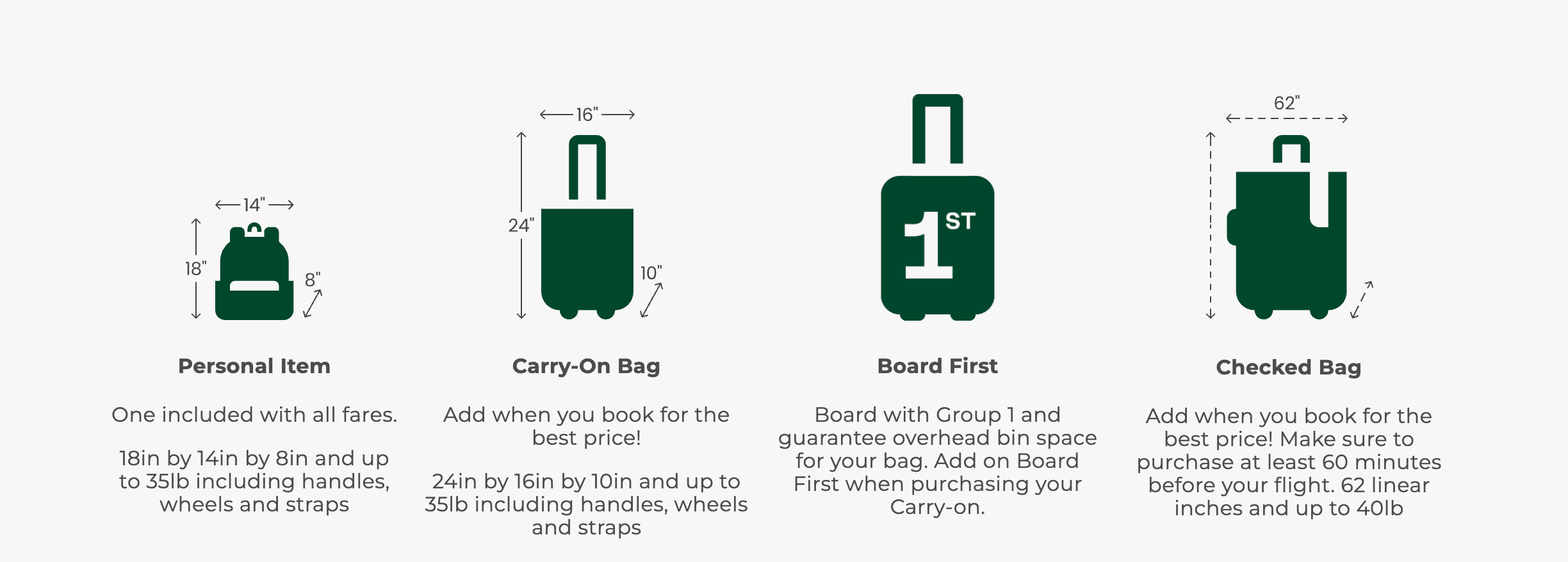
Frontier baggage fees are dynamic, which means the same bag costs different amounts depending on the route, the date, and above all when you pay. The gap between booking and the gate can exceed $50 per bag, per direction.
Here is the current structure, based on Frontier's published optional services schedule as of mid-2026. Every figure is per bag, per direction.
Item | At booking | At the gate |
Personal item (14 x 18 x 8 in, up to 35 lb) | Free | Free if it fits the sizer |
Carry-on bag (24 x 16 x 10 in, up to 35 lb) | $29–$69 | Up to $99 or more |
First checked bag (62 linear in, up to 40 lb) | $53–$63 | $99–$117 |
Overweight bag, 41–50 lb | +$75 | +$75 |
Overweight bag, 51–99.99 lb | $129 for bookings on or after April 4, 2026 | Same |
Oversized bag, 63–110 linear in | +$75 | +$75 |
Source: Frontier Airlines Optional Services schedule, accessed June 2026.
Two traps in that table deserve attention. First, Frontier's checked bag weight limit is 40 pounds, not the 50 pounds that American, Delta, and United allow, so a bag that flies free of surcharges on a legacy carrier triggers a $75 penalty on Frontier.
Second, a pre-booked checked bag is frequently cheaper than a pre-booked carry-on. That inversion exists because carry-on bags slow down boarding, and Frontier prices the overhead bin as premium real estate.
Frontier Hidden Fees Beyond Bags
The bag charges get the headlines, but the fee architecture goes much deeper. Each item below is a separate revenue line.
Seat selection fee on Basic fares; skip it and Frontier assigns you a seat, usually a middle one.
Website check-in carries a fee, while the mobile app is free, which pushes travelers into Frontier's owned channel.
Board First costs $2.99 to $14.99 per direction for Group 1 boarding and guaranteed bin space.
Discount Den membership runs $109.99 in year one and $59.99 on renewal, sold as the gateway to the lowest fares.
The GoWild! All-You-Can-Fly Pass books unlimited standby-style travel at a base fare of one cent per flight, then monetizes every extra on top.
Therefore the real question is never whether the fare is cheap. It is whether the fare is still cheap after you add the things you actually need to travel.
Who Wins and Who Absorbs the Cost
Every pricing model creates winners and losers, and Frontier's model sorts them with unusual precision. The dividing line is preparation.
A traveler with a backpack that fits under the seat, an app check-in, and no seat preference genuinely flies for the advertised fare. Frontier's structure is the best deal in American aviation for that person.
Traveler type | Typical extras paid | Outcome |
Personal-item-only, app check-in, assigned seat | $0 | Pays the advertised fare; the model's true winner |
One carry-on, picks a seat at booking | $40–$90 per direction | Total often matches a basic economy fare on a legacy carrier |
Family with checked bags, added at the airport | $100–$200+ per direction | Frequently pays more than a bundled mainline ticket |
Source: Calculated from Frontier's published 2026 optional services pricing.
The cost falls hardest on infrequent travelers who do not know the rules. Gate-priced bags, the 40-pound weight limit, and personal item sizing checks at boarding all extract the most money from the people least equipped to avoid them.
A Worked Example: The $39 Fare That Costs $250
Consider a one-way Denver to Las Vegas ticket advertised at $39. A prepared solo traveler with a personal item pays exactly that, and Frontier still profits because the marginal cost of one more seat on a flight that was leaving anyway is close to zero.
Now run the same flight for a couple who decides at the airport. Two gate-priced carry-ons at $99 each, one checked bag at $109, and a $75 overweight surcharge on a 44-pound suitcase turn $78 in fares into a $460 trip.
Nothing in that transaction was hidden in the legal sense, because every fee is published. Yet the gap between the advertised price and the realistic price is the entire commercial strategy, and it is why regulators keep circling the category.
Meanwhile, Frontier wins on both sides of the ledger. Fees are nearly pure margin, they arrive whether or not fares cover costs, and dynamic pricing lets the airline adjust them by route and season the same way it adjusts fares, a system we examined in our analysis of how airlines now use AI to set prices.
Why Is Frontier So Cheap to Operate in the First Place
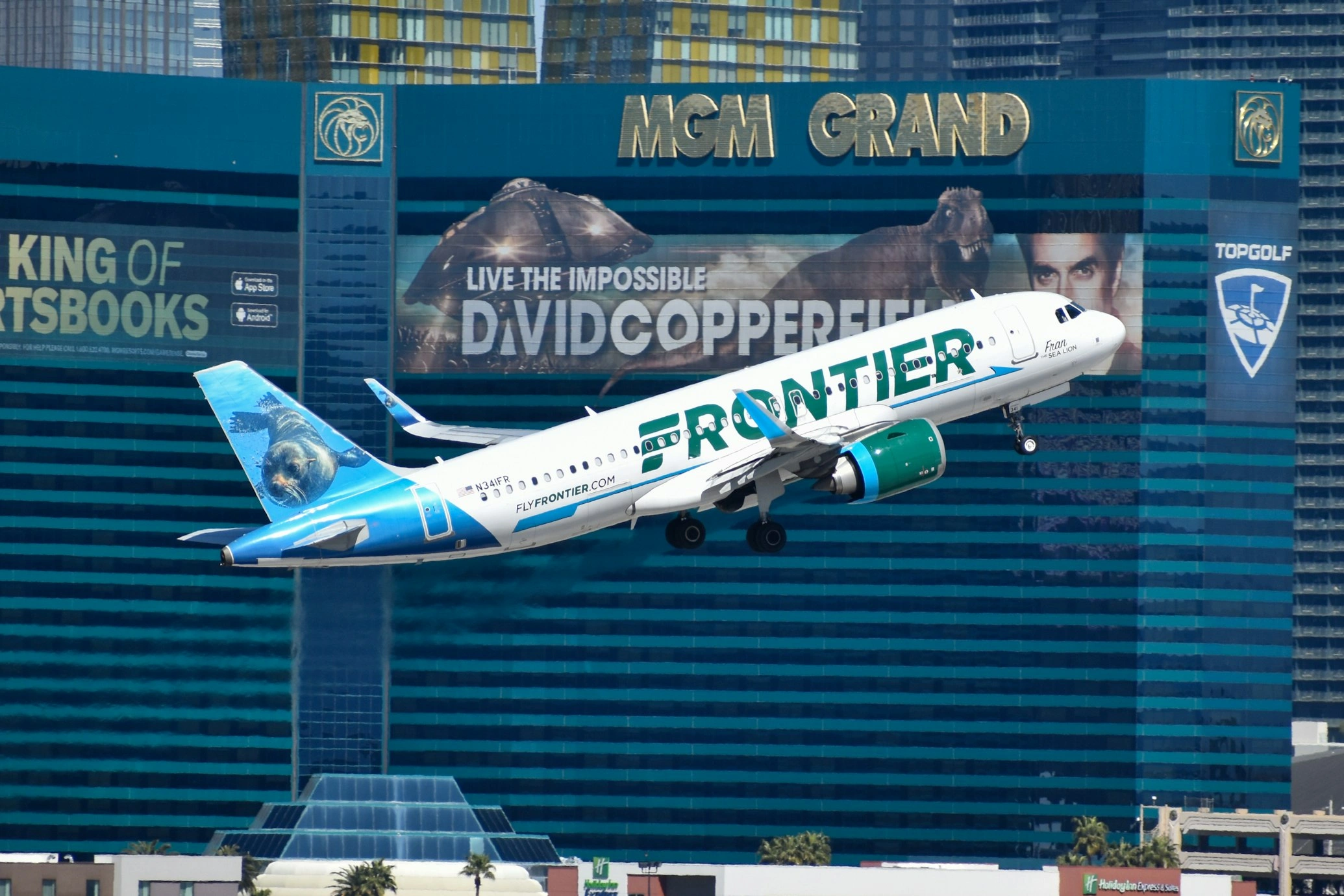
Fees explain the revenue side, but the model only works because Frontier's costs are also among the lowest in the industry. Cheap operations make the loss-leader fare survivable.
Frontier ended 2025 with 176 Airbus single-aisle aircraft averaging about five years of age, one of the youngest fleets among major U.S. carriers. The fleet skews heavily toward the A320neo family, which burns meaningfully less fuel than the previous generation, the same generational economics that separate the Boeing 787 from the Airbus A350 on long-haul routes.
High-density seating puts more passengers on every aircraft than legacy configurations allow.
Frontier describes itself as the most fuel-efficient major U.S. carrier measured by seat miles per gallon, a direct result of fleet age and density.
A single aircraft family keeps training, maintenance, and spare parts simple and cheap.
Non-fuel cost per available seat mile ran 7.24 cents in early 2025, far below legacy carrier levels.
However, low costs alone no longer guarantee profits. Frontier's load factor was 79 percent in the fourth quarter of 2025, which means roughly one in five seats flew empty, and total revenue per passenger has been flat to declining.
That squeeze explains why the fee engine matters so much. When fares cannot rise and planes are not full, ancillary revenue is the lever that still moves.
The structure also changes how Frontier thinks about hiring and growth. A fee-driven airline needs fewer premium service staff and more revenue management analysts, a shift visible across the industry's job boards, which we mapped in our guide to airline jobs in the USA.
What the Next 12 Months Signal: Bundles, First Class, and a Post-Spirit Market
Frontier is now mid-pivot, and the direction is telling. The New Frontier strategy, launched under newly confirmed CEO Jimmy Dempsey, repackages the fee menu into bundles like The PERKS at roughly $69 and The WORKS at roughly $99 per direction.
Bundles trade a little ancillary revenue per passenger for predictability and happier customers, which is exactly why the per-passenger figure dipped from $70.29 to $67.57 in 2025. Additionally, Frontier plans to debut first class seats later in 2026, an idea that would have been heresy at a ULCC five years ago, and one that fits the premium drift we traced in where business class cabins are heading next.
The competitive backdrop makes the timing rational. Spirit's collapse removed Frontier's closest rival and handed it price-sensitive passengers by default, a shake-out we covered in detail when Spirit Airlines shut down.
Regulatory pressure points the same way. With Bureau of Transportation Statistics data showing industry baggage fees hit $2.0 billion in a single quarter, a Senate report putting junk fees on the record, and the Department of Transportation requiring fee disclosure earlier in the booking process, the pure à la carte model carries more political risk than it did in 2024.
Expect the fee share of revenue to hover near 60 percent rather than climb, with the growth shifting into bundles, memberships, and premium seating. The model is not retreating; it is rebranding.
The Verdict: Cheap Is a Skill, Not a Price
Frontier is not lying about its fares. The $39 ticket exists, and disciplined travelers really do fly on it.
But the airline's own numbers settle the question of what business Frontier is in. When $67.57 of an average $112.17 passenger spend comes from extras, Frontier is a fee company that uses cheap flights as its storefront.
Fly it the way the model intends, with a personal item and the app, and you win. Show up at the gate with an unweighed suitcase, and you become the margin. For more data-driven airline economics, explore the full Airlines section at Air Gazette.
Frequently Asked Questions
Why is Frontier so cheap compared to other airlines?
Frontier sells the base fare near cost and earns most of its money from optional fees. Low operating costs from a young, fuel-efficient, high-density Airbus fleet make the cheap fare sustainable.
How much of Frontier's revenue comes from fees?
Fees made up 62 percent of Frontier's total revenue in 2024, the highest share ever recorded for any airline. In 2025 the figure was roughly 60 percent as bundles replaced some standalone charges.
Does Frontier charge for carry-on bags?
Yes. A carry-on costs $29 to $69 when added at booking and can reach $99 or more at the gate. Only a personal item measuring 14 x 18 x 8 inches flies free.
Is a checked bag cheaper than a carry-on on Frontier?
Often, yes. At booking, a first checked bag runs $53 to $63 while a carry-on can cost up to $69, because Frontier prices overhead bin space as a premium. Compare both before paying.
What is Frontier's checked bag weight limit?
Frontier caps checked bags at 40 pounds, ten pounds below the U.S. industry standard. Bags weighing 41 to 50 pounds incur a $75 surcharge, and heavier bags cost $129 for bookings made on or after April 4, 2026.
Are Frontier's bundles like The WORKS worth it?
The WORKS costs about $99 per direction and includes a carry-on, a checked bag, seat selection, and refundability. If you would buy two or more of those items separately, the bundle usually wins.
Will Frontier's fees go down in 2026?
Unlikely. Frontier is shifting fee revenue into bundles, memberships, and new first class seating rather than cutting it, and the roughly 60 percent ancillary share is expected to hold through 2026.
Meta title: Why Is Frontier So Cheap? Fees Make 62% of Its Revenue Meta description: Frontier earns 62 cents of every dollar from fees, not fares. Here's how the base ticket became a loss leader and what it costs you. URL slug: /why-is-frontier-so-cheap Category: Airlines Tags: Frontier Airlines, ancillary fees, ultra-low-cost carriers, baggage fees, airline business models, budget airlines, airline revenue