On May 11, 2026, Turkish Airlines flight TK726 touched down in Kathmandu and caught fire in its right main landing gear. All 277 passengers and 11 crew got out safely. The airport closed for nearly two hours. Most news reports stopped there.
They missed the more interesting question: what does a 5,313 kilometer overnight flight from Istanbul actually do to a landing gear system before it hits the runway? And why has this specific flight number now caused serious problems at this specific airport twice in eleven years?
What Happened on May 11, 2026: TK726 Incident Facts
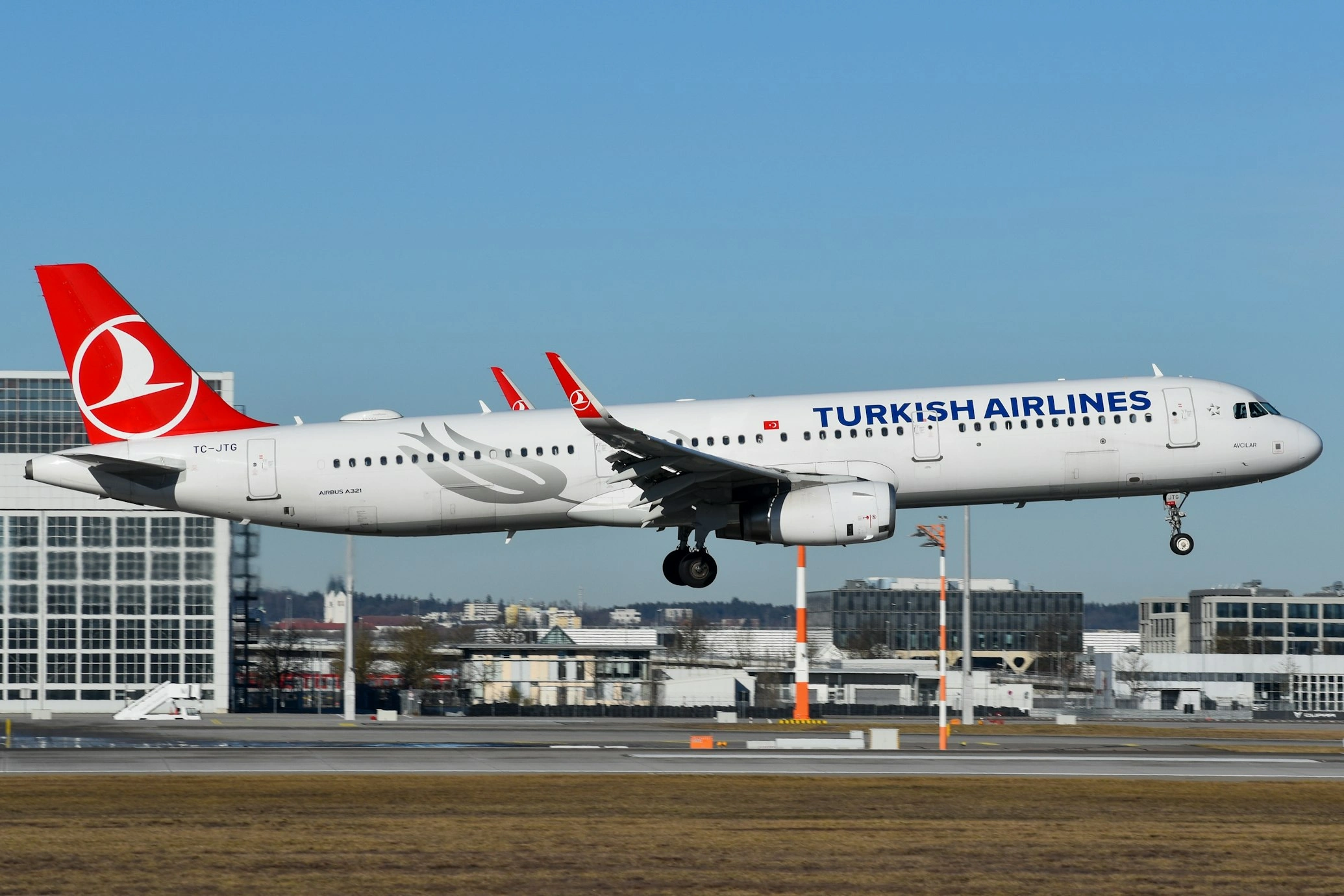
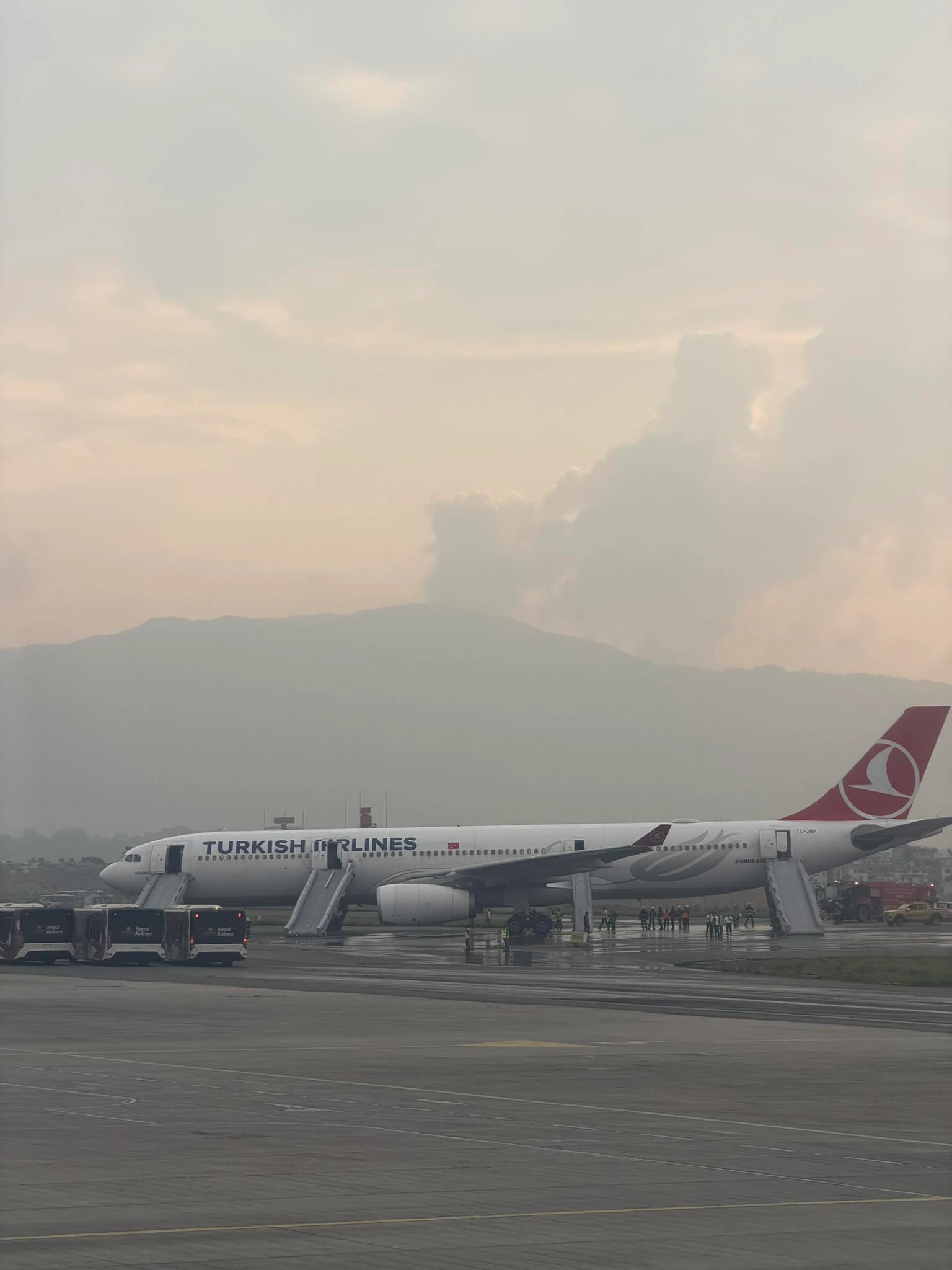
The aircraft an Airbus A330-300 registered TC-JNP, 14 years old landed at Tribhuvan International Airport early Monday morning after flying in from Istanbul. Smoke and flames appeared from the right main landing gear as the plane slowed on the runway. Airport fire crews moved in fast, passengers came out through the emergency slides, and the blaze was put out before it reached anything beyond the gear assembly.
Two passengers suffered minor finger injuries during the slide descent. Everyone else walked away without a scratch.
Detail | Verified Information |
|---|---|
Flight number | TK726 |
Route | Istanbul (IST) to Kathmandu (KTM) |
Flight distance | 5,313 km (3,302 miles) |
Aircraft type | Airbus A330-300 |
Aircraft registration | TC-JNP |
Aircraft age | 14 years |
Engine type | Rolls-Royce Trent 700 (x2) |
Passengers on board | 277 (including several UN officials) |
Crew on board | 11 |
Fire location | Right main landing gear |
Confirmed cause | Hydraulic pipe malfunction (Turkish Airlines statement) |
Injuries | Two passengers with minor finger injuries |
Airport closure duration | Approximately 2 hours |
Notable passengers | Several United Nations officials |
Turkish Airlines Senior Vice President Yahya Üstün addressed the cause publicly: "Technical inspections of the aircraft have been initiated by our teams. Initial assessments indicate that the smoke was caused by a technical malfunction in a hydraulic pipe." The airline arranged a replacement aircraft for the return leg to Istanbul the same day.
CAAN spokesperson Gyanendra Bhul told AFP from the scene: "Fire was visible during the landing. Investigations are ongoing. All passengers are safe."
What a 5,313km Flight Does to a Landing Gear
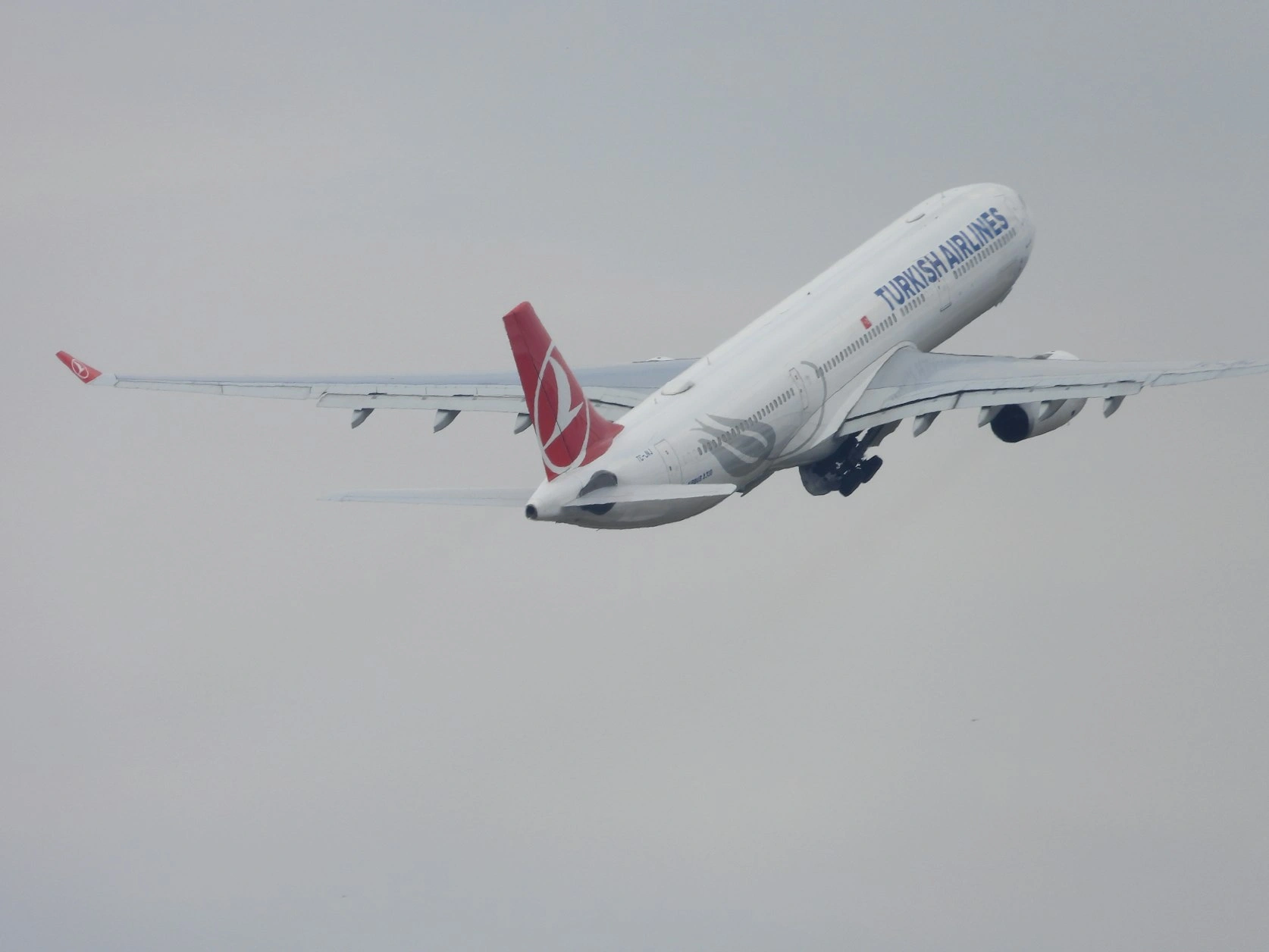
None of the news reports asked this question. They treated the fire as something that happened at landing, full stop. But hydraulic failures on aircraft do not switch on the moment wheels touch tarmac they build across the entire flight.
Why Hydraulic Pipes Fail After Hours at Pressure
The Istanbul–Kathmandu sector takes roughly 6 hours and 45 minutes. For every minute of that flight, the A330's hydraulic systems run continuously. They manage the flight controls, operate the flap and slat mechanisms, retract and extend the landing gear, and power the brakes. Hydraulic fluid in these lines runs at 3,000 PSI under normal conditions. On a long sector, the lines, seals, and pipe joints go through repeated thermal cycles cooling as the aircraft climbs to cruise altitude, warming again on descent.
By the time TC-JNP lined up for Kathmandu, its hydraulic system had been under sustained pressure for nearly seven hours.
Then the landing happens, and everything intensifies at once:
The aircraft decelerates from 250+ km/h to a full stop across roughly 2,000 metres of runway
The brake assemblies clamp hard on the wheels and shed enormous heat in seconds
Hydraulic pressure in the brake lines spikes well beyond cruise levels at the exact moment of touchdown
Any pipe or seal that spent seven hours under sustained stress meets its highest load of the entire flight right here
TC-JNP was 14 years old. Airbus A330 components follow maintenance schedules that account for flight cycles and calendar time, but no schedule eliminates the accumulated fatigue of long sectors on ageing hydraulic lines. A pipe that passed its last inspection can still carry a hairline crack that opens under peak landing load.
Kathmandu makes all of this harder. Tribhuvan sits at 1,338 metres above sea level. At that elevation, air is thinner, which means aircraft need a higher indicated airspeed on approach to generate the same lift. Higher approach speed means faster groundspeed at touchdown. Faster touchdown means the brakes work harder and shed more heat in a shorter distance. Every aircraft landing at Kathmandu arrives with hydraulic systems that have already run for hours, and then demands more from the brake circuit than the same landing at a sea-level airport would require. The airports serving Nepal's regional network face related challenges at even more remote elevations, where this margin is even thinner.
This combination long sector, ageing aircraft, high-elevation stop does not cause hydraulic failures every time. But it is exactly the set of conditions that turns a marginal component into a failed one.
TK726 and Kathmandu: This Has Happened Before
Here is the detail every outlet missed. TK726 is not just a flight number. It is the same Turkish Airlines service Istanbul to Kathmandu that was involved in a serious incident at Tribhuvan International Airport in 2015. Same flight number, same airport, same aircraft family.
The 2015 TK726 Runway Excursion
On March 4, 2015, TK726 was carrying 224 passengers when it came off the runway in dense fog on landing. The aircraft an Airbus A330-303 registered TC-JOC deviated from the runway centreline and rolled onto the grass shoulder, collapsing the nose gear on impact.
Nepal's Accident Investigation Commission traced the cause to something specific: the RNP coordinate data in the aircraft's navigation database had placed the runway threshold 26 metres to the left of its actual position. The crew flew the approach down below decision altitude in visibility well under required minima, following nav data that was wrong. Nobody on board was hurt. But the wreckage blocked Kathmandu's only runway for four full days, grounding every international flight into and out of Nepal for that entire period.
Incident | Year | Aircraft | Cause | Airport Closure |
|---|---|---|---|---|
TK726 runway excursion | 2015 | A330-303 TC-JOC | Navigation database error + approach below minima | 4 days |
TK726 landing gear fire | 2026 | A330-300 TC-JNP | Hydraulic pipe malfunction | ~2 hours |
Turkish Airlines has confirmed there is no operational link between the two events a navigation database error in 2015 and a hydraulic pipe failure in 2026 are different failures on different aircraft. But the Istanbul–Kathmandu sector has now produced two serious incidents at Tribhuvan in eleven years, and the 2015 closure lasted four times longer than this one. Passengers flying this route deserve to know that context.
Nepal Aviation Safety: The Broader Record
The TK726 fire sits inside a well-documented pattern of aviation risk across Nepal. The country's terrain, high-elevation airports, and variable mountain weather create operating conditions that are genuinely more difficult than most international routes. That is geography, not negligence the Himalayas present challenges no airport authority can fully engineer away.
Between 2012 and 2023, Nepal recorded several major commercial aviation accidents:
Year | Incident | Aircraft | Fatalities |
|---|---|---|---|
2012 | Sita Air crash near Kathmandu | Dornier 228 | 19 |
2018 | US-Bangla Airlines crash on landing at TIA | Bombardier Q400 | 51 |
2019 | Summit Air cargo crash | Let L-410 | 3 |
2023 | Yeti Airlines crash on approach to Pokhara | ATR 72-500 | 72 |
The 2018 US-Bangla crash at Tribhuvan killed 51 people and remains the deadliest accident at the airport. The 2023 Yeti Airlines crash at Pokhara 72 deaths was Nepal's worst aviation disaster in over 30 years. Both happened during approach and landing, the same phase where TK726's hydraulic failure occurred.
The TK726 fire was a mechanical event handled correctly it belongs in a different category from those crashes. Still, it happened inside the same operating environment, and understanding why regional airports across Nepal continue to face infrastructure and oversight pressures matters for anyone flying this country's routes regularly.
How CAAN Handled the Emergency
Tribhuvan's fire service holds ICAO Category 9 ARFF certification, which covers wide-body aircraft including the A330. When the gear fire was spotted, fire trucks reached TC-JNP quickly and put out the blaze before it spread to the wing or fuselage. Passengers were on the tarmac within minutes of the aircraft stopping.
Two minor finger injuries from a slide evacuation of 288 people puts this among the cleaner wide-body emergency evacuation outcomes on record. The crew followed procedure correctly. The ground teams responded at the right speed.
Turkish Airlines on the Istanbul–Kathmandu Route
Turkish Airlines runs five flights a week between Istanbul and Kathmandu. The route matters commercially: Nepal drew roughly 1.1 million international visitors in 2024, and Turkish Airlines functions as one of the main gateway options for European travelers who do not want to route through the Gulf. Istanbul's geographic position keeps sector times manageable from both ends of the journey.
The A330-300 seats around 280 passengers in a two-class layout on this service. The Rolls-Royce Trent 700 engines fitted to TC-JNP have a strong reliability record across the global A330 fleet. At 14 years old, the aircraft sits well within normal operational lifespan airlines typically retire A330s at 20 to 25 years of service. Age alone is not the explanation for what happened. The investigation will focus on the maintenance history of the specific hydraulic components that failed, their accumulated flight cycle count, and whether any outstanding airworthiness directives applied to TC-JNP's configuration.
Airline | Aircraft serving KTM | Weekly frequency (approx.) |
|---|---|---|
Turkish Airlines | Airbus A330-300 | 5 |
Qatar Airways | Airbus A350-900 | 14 |
Emirates | Boeing 777-300ER | 14 |
Air India | Boeing 787-8 | 7 |
IndiGo | Airbus A321neo | 21+ |
Every carrier on that list accepts the same single-runway constraint at Tribhuvan. When TC-JNP stopped on the runway with a burning gear assembly on May 11, it blocked every other flight in both directions. Departures to Delhi, Dubai, Doha, and Mumbai queued behind a closed airport until the runway was clear. The ripple ran across the whole day.
Broader shifts in long-haul business class demand are changing how airlines allocate wide-body capacity on thinner routes like Istanbul–Kathmandu. For now, the A330 is staying.
What Investigators Are Looking At
CAAN and Turkish Airlines have both opened investigations. Turkish Airlines named the preliminary cause hydraulic pipe malfunction within hours of the incident. But a preliminary finding is not a final cause, and investigators need to work backward through the maintenance records and flight data before they can say definitively what failed, when the failure started, and whether different maintenance decisions could have prevented it.
The questions being worked through right now:
What is the full maintenance history of TC-JNP's right main landing gear hydraulic circuit, and when were the affected pipe sections last inspected or replaced?
How many flight cycles had the specific failed components accumulated, and how does that compare to Airbus's recommended replacement intervals for that configuration?
Did the flight data recorder capture any hydraulic pressure anomalies during descent into Kathmandu, or did the failure happen suddenly at touchdown?
Are there any outstanding Airbus airworthiness directives for the A330-300 hydraulic system that apply to TC-JNP's age and build standard?
Airbus has issued hydraulic system warnings for the A330/A340 family before. A fire involving a hydraulic auxiliary pump on a Malaysia Airlines A330-300 at Singapore Changi caused around $30 million in structural damage. The TK726 fire stayed localised to the landing gear area a much better outcome. Flight data and cockpit voice recorders from TC-JNP are in investigators' hands. A full published report will take several months.
What This Means for Travelers Flying to Kathmandu
If you fly to Kathmandu regularly, or you are planning to, the TK726 incident gives you practical information worth keeping in mind.
The most common routing into Kathmandu from Europe or the Middle East runs through Istanbul, Doha, or Dubai. All three hub connections depend on TIA being open and on schedule. When TIA closes for any reason, that connection is gone.
A few things that would have helped passengers on May 11:
Book a minimum four-hour connection at your Gulf or Istanbul hub. The May 11 closure ran around two hours. The 2015 TK726 runway excursion closed TIA for four days. A two-hour connection buffer is not enough protection on this route.
Get travel insurance that explicitly covers flight disruption and missed connections from mechanical causes. Standard policies handle mechanical delay differently from weather. Check the fine print before you buy, not at the gate.
Morning arrivals carry lower compounding risk. Delays stack through the day at Kathmandu. A 6am incident disrupts the morning. The same incident at 2pm runs through the whole evening schedule.
Check CAAN and Turkish Airlines updates before you leave home. The TC-JNP investigation is active. If it surfaces a maintenance issue needing fleet-level checks, Turkish Airlines may adjust its Kathmandu schedule temporarily.
For more aviation safety guides and route analysis, head to Air Gazette.
Conclusion
Out of 288 people on TC-JNP that morning, two came away with sore fingers. For a gear fire on a wide-body aircraft at a remote high-altitude airport, that is a good outcome. The crew did the job right and the fire service was ready.
What the incident report will not explain is how the failure developed. A 5,313-kilometre flight puts hydraulic components under continuous pressure for nearly seven hours. The Kathmandu landing faster approach speed, harder braking at 1,338 metres elevation then hits those same components at the moment they have absorbed the most stress of the entire flight. TC-JNP was 14 years old and had accumulated thousands of landing cycles on that gear assembly. None of that is extraordinary. It describes a long-haul widebody doing its job on a demanding route into a high-elevation airport.
TK726 had a serious incident at this airport in 2015. Different aircraft, different cause, same route and same single runway. Turkish Airlines flies it five times a week. That is worth knowing before you book.
Frequently Asked Questions
What caused the Turkish Airlines fire at Kathmandu Airport on May 11, 2026?
Turkish Airlines SVP Yahya Üstün confirmed in a public statement that early inspections pointed to a hydraulic pipe malfunction as the source of the smoke and fire in the right main landing gear assembly. CAAN has opened a formal investigation. A final cause report will take several months to publish.
What aircraft was involved in the Turkish Airlines Kathmandu fire?
The aircraft was an Airbus A330-300, registration TC-JNP, 14 years old at the time of the incident, powered by two Rolls-Royce Trent 700 engines. Several early reports incorrectly identified it as a Boeing 777 that was wrong. Turkish Airlines uses the A330-300 on the Istanbul–Kathmandu service.
How long was Kathmandu Airport closed after the TK726 fire?
Tribhuvan International Airport was closed for approximately two hours on the morning of May 11, 2026. That time was needed to extinguish the fire, evacuate passengers via slides, and clear TC-JNP from the runway before other aircraft could use it. Flights resumed the same day. The 2015 TK726 runway excursion at the same airport closed TIA for four full days by comparison.
Has Turkish Airlines TK726 had an incident at Kathmandu before?
Yes. On March 4, 2015, TK726 flying the same Istanbul–Kathmandu route ran off the runway in dense fog on landing. The aircraft, an A330-303 registered TC-JOC, deviated 26 metres off centreline due to incorrect RNP coordinate data in its navigation database, collapsing the nose gear on the grass shoulder. All 224 passengers were uninjured. The blocked runway closed TIA for four days. Turkish Airlines has confirmed the 2015 and 2026 incidents are mechanically unrelated.
Why is landing gear more likely to fail after a long-haul flight?
An aircraft's hydraulic system runs continuously throughout the entire flight powering flight controls, gear mechanisms, and the brake circuit. On a 6–7 hour sector like Istanbul–Kathmandu, hydraulic lines and seals go through repeated pressure and temperature cycles before the aircraft reaches the runway. The landing itself then demands the most from the brake system at the precise moment those components have had no recovery time. At Kathmandu, faster approach speeds from the high elevation require harder braking, adding more load on top of that accumulated stress. A component that held up through the whole flight can fail at that final peak demand.
Is Turkish Airlines safe to fly to Kathmandu?
Turkish Airlines has a strong international safety record and flies modern Airbus A330-300 aircraft on this route. The May 11 fire was resolved quickly fast evacuation, contained blaze, no serious injuries. The investigation into TC-JNP's hydraulic system is ongoing. Check Turkish Airlines operational updates while the investigation remains open in case it triggers any schedule adjustments on this route.
What should travelers do if their Kathmandu flight is disrupted?
Call your airline immediately and ask to be rebooked on the next available service. Turkish Airlines had a replacement aircraft on the Istanbul return leg within hours of the May 11 incident. If you miss an onward connection through Doha, Dubai, or Istanbul because of a Kathmandu disruption, contact the connecting carrier directly airlines are responsible for rebooking passengers who miss connections due to disruptions on their operated services. Travel insurance with flight disruption cover handles hotel and meal costs during longer delays. Kathmandu disruptions typically clear within hours unless, as in 2015, a disabled aircraft blocks the runway itself in which case the delay can stretch to days.