What the next decade of premium aviation actually holds from someone who flies it
For two decades, the question "what does luxury aviation look like?" had a simple answer: bigger. A bigger plane. A bigger cabin. A bigger spectacle. The Airbus A380 was the apotheosis of that thinking a 500-seat double-decker with showers, bars, staircases, and a marketing department. The plane was the destination. Everything else was logistics.
That answer is now wrong. Or rather: it's correct for exactly one airline, and the rest of the industry is busy building a different one.
The future of luxury aviation is being shaped by three forces that have quietly converged: a generation of long-range, fuel-efficient aircraft that have rewritten what's economically possible; a post-pandemic demand structure where premium revenue grows while economy stalls; and an industry-wide recognition that the front of the plane isn't a marketing flex anymore it's the business. The cabins are getting smaller. The routes are getting more direct. The ladder of cabin classes is growing more rungs. And the airline knows, almost down to the dollar, what each rung is worth to you.
A note on where I'm coming from. I fly this stuff ten or twelve long-haul trips most years, mostly Tokyo, Bangkok, and Jakarta on ANA, JAL, and Thai, almost always in business class booked with credit-card points rather than miles stockpiled with one airline. When I do fly to Europe, I rarely pick a U.S. carrier. KLM, Lufthansa, ITA, Air France, and Virgin Atlantic routinely come in $1,500 to $2,000 below United, American, and Delta on the same dates. That pattern is one of the threads running through what follows.
For frequent travelers, the next decade will be both the best and the strangest era in commercial aviation since the lie-flat seat. Here's how it lands.
The A380 isn't dead. It's becoming a single-airline product.
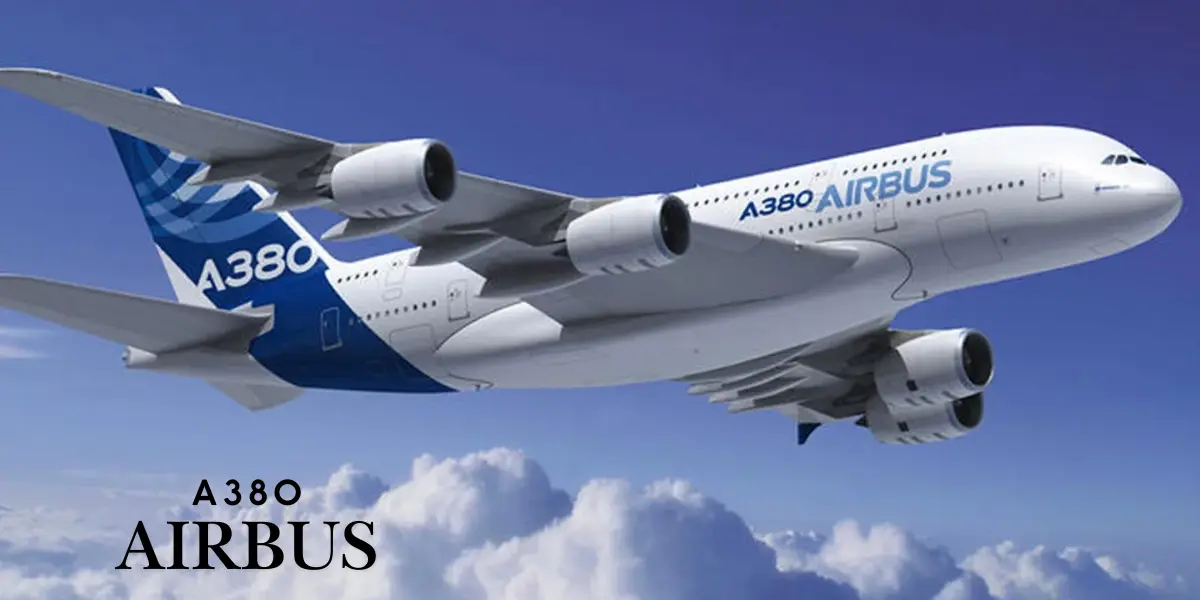
Start with what happens to the symbol of the old era. Production ended in 2021. Many people assumed the fleet would taper off through the 2030s. The opposite has happened.
Emirates already the world's largest A380 operator with around 95 active aircraft is adding A380s back into service. The airline plans roughly 110 active superjumbos by the end of 2026. Tim Clark, Emirates' president, has said publicly that the carrier intends to fly the type into the 2040s, with the youngest airframes still revenue-flying when they're in their 20s.
Other carriers are running in the opposite direction. Air France, China Southern, and Malaysia Airlines have already retired their A380s entirely. Korean Air is scrapping airframes. Qatar wants out as soon as the 777X arrives. Lufthansa stored its A380s in Spain in 2020 and publicly hinted they were finished then quietly reactivated six in 2023 because demand returned faster than 787 and A350 deliveries. They'll likely be retired again around 2030.
The pattern is unambiguous: the A380 becomes a single-airline product held together by Emirates' geography, hub structure, and slot-constrained mega-routes. For everyone else, it's already a museum piece beloved, occasionally reactivated when widebody deliveries slip, but no longer the blueprint anyone is copying. There is no successor. The Boeing 777X, when it finally arrives, is meaningfully smaller. The age of the flying palace had one true believer, and she's based in Dubai.
The new luxury isn't the plane. It's the absence of a connection.
Here's the change most coverage has missed. The unit of premium has shifted from amenity to time.
For decades, premium aviation was an amenity story. Better seats. Better meals. Better lounges. The plane and the lounge were the product, and the connection was just the price you paid to get the long-haul flight you wanted. Three hours in Frankfurt or Dubai or Singapore was an unremarkable cost of doing business even, sometimes, a feature, since it gave you access to lounges the route alone wouldn't have justified.
That equation has inverted. For the most valuable premium travelers the ones airlines actually compete for the real enemy is no longer an average seat. It is wasted time. A bar in the sky is a cost, not a benefit, if the price of that bar is a three-hour connection in a mega-hub. The richest version of luxury is increasingly defined by what isn't there: no connection, no second customs queue, no second boarding process, no terminal change, no meal-cycle disruption, no jet lag compounding from broken sleep across two flights.
This is the conceptual shift behind the route map. Airbus explicitly markets the A321XLR as a "low-risk, long-range route opener" for point-to-point operations, with up to 4,700 nautical miles of range and the ability to link primary and secondary cities nonstop. The marketing is technical. The implication is cultural. When the airframe makes a nonstop possible, the nonstop becomes the premium product even if the cabin is narrower and the galley smaller than a widebody alternative routed through a hub.
There is a meaningful exception worth naming. For some premium travelers, the connection is itself the luxury Cathay's Pier in Hong Kong, Qatar's Al Mourjan Garden in Doha, Lufthansa's First Class Terminal in Frankfurt. These are travelers who connect because they want to, not because the geography forces them to. The shift, more precisely stated, is from forced connection to chosen connection. When you pick Doha for the lounge or Singapore for the layover hotel, the connection is still premium. When the geography picks it for you because no nonstop exists, it's friction.
Once you state the thesis this way, the strange parts of the current market start to make sense. Air Canada's decision to install fourteen lie-flat Aurora suites on a single-aisle A321XLR stops looking like overinvestment by old logic, a narrowbody is a step down from a 787, but a Toronto-to-Toulouse nonstop beats the widebody routed through Frankfurt on the variable that actually matters. Starlux's $2,600 round-trip transpacific business fare stops looking like a marketing stunt and starts looking like real disruption premium-cabin pricing on a routing that strips a connection out of a market that historically had to flow through somebody's hub. The most useful new benchmark for premium travel sharper than seat width or amenity-kit contents becomes a single question: did this route even exist as a nonstop two years ago?
The implication is sharp. The A380 era treated the connection as neutral infrastructure. The new era treats it as a tax and the airlines, aircraft, and routes that eliminate the tax are moving up the luxury ladder fastest.
The actual revolution: a single-aisle flying nine hours
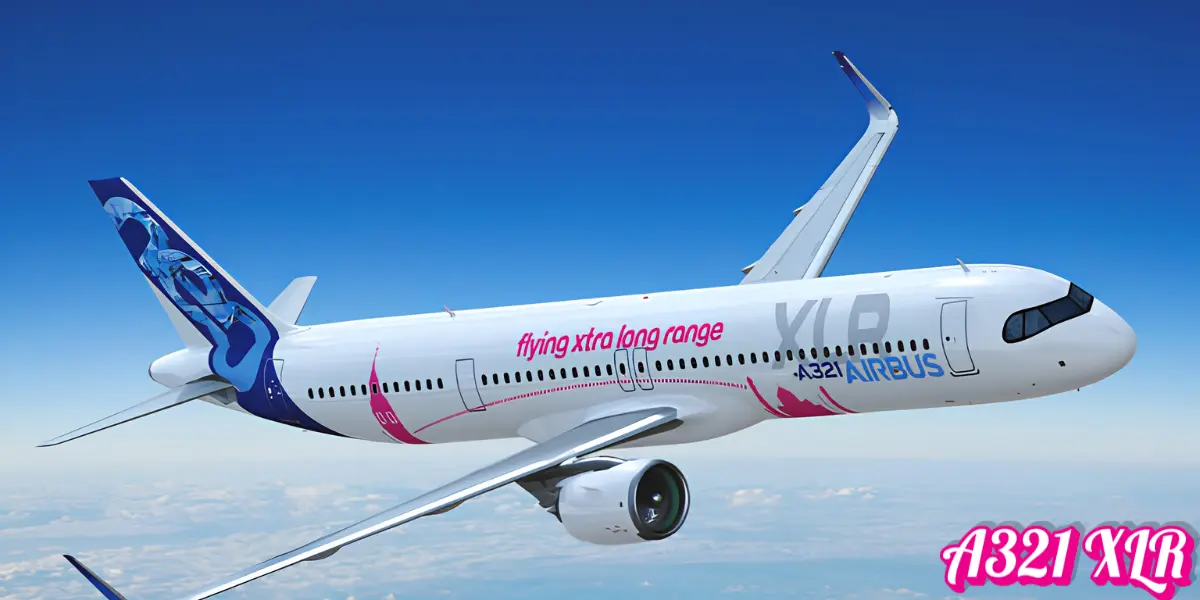
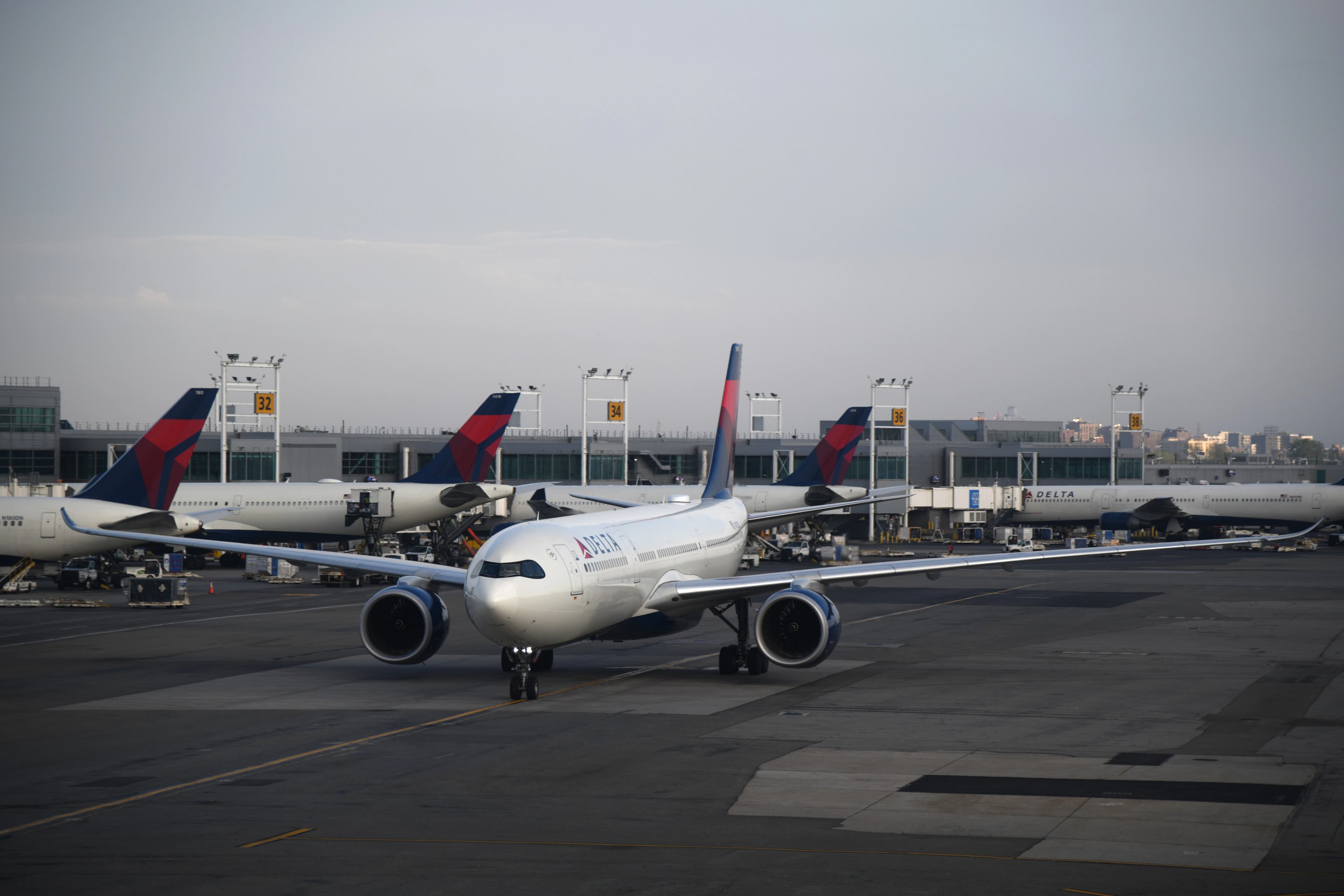
The airframe that delivers on this new definition of luxury is the one almost nobody noticed arrive. The Airbus A321XLR began commercial service with Iberia in late 2024. By April 2026, Air Canada had taken its first delivery, with 30 on order. American has 50 on order. United, JetBlue, IndiGo, Wizz Air, and Aer Lingus are all in the queue. The backlog runs past 500 aircraft and stretches into the 2030s.
Why this matters: the A321XLR can fly up to 4,700 nautical miles, enough for nine to eleven hours in the air. That puts most of the transatlantic, much of Middle East to Europe, intra-Asia long-haul, and ultra-long transcon within reach of a single-aisle aircraft at roughly 30% lower fuel burn per seat than the previous generation of widebodies. The break-even load on a long-haul XLR route is around 180 to 220 passengers. On a 787 or A330, it's closer to 250 to 300.
Translate that into route economics and the picture changes completely. Routes that generate 100 to 180 daily passengers too few to fill a widebody suddenly become commercially viable as nonstop. Aer Lingus has launched Dublin to Nashville. Iberia is flying Madrid to Santo Domingo. American started seasonal JFK to Edinburgh. Air Canada has slotted Toronto to Tenerife, Montreal to Toulouse, Montreal to Lyon, Montreal to Nantes secondary city pairs that have never had nonstop service. Some of these markets carried fewer than 1,500 origin-destination passengers in their entire prior year.
This is the most important sentence in the new map of aviation: the A321XLR is creating routes that did not previously exist.
It's also dragging widebody-quality cabins down to single-aisle aircraft. Air Canada's A321XLRs will carry 14 lie-flat Aurora suites Collins Aerospace's new mini-suite concept built specifically to deliver "widebody business class on a narrowbody." American's XLRs are configured with 20 lie-flat business seats and 12 premium economy. The hard product on a narrowbody flying Boston to Edinburgh now genuinely competes with what you'd get on a 787.
For frequent travelers, this is the deepest structural shift in long-haul flying since deregulation. The unit of luxury is no longer "what's onboard" it's "did the route even exist before?" A nonstop from your secondary city is a feature competitors physically cannot match.
This shift toward secondary city connectivity isn't limited to Western markets. Airports like Baglung Balewa Airport in Nepal represent the kind of regional infrastructure that point-to-point aviation economics are beginning to make viable across emerging markets too.
Why airlines suddenly love the front of the plane
The fleet shift would be interesting on its own. What makes it transformative is that it's happening inside an industry that has, in the same moment, completely reorganized its commercial center of gravity around premium cabins.
The numbers are blunt. Delta's 2025 results showed main-cabin revenue declining 5% to $23.39 billion while premium revenue rose 7% to $22.10 billion putting 2026 on track to be the first full year in commercial aviation history where the front of the plane out-earns the back. United flew a record 27.4 million premium seats in 2025, around 12% of all seats, and has guided to a 75% increase in North American premium seats per short-haul departure versus 2019. American expects lie-flat and premium economy seating to grow 50% by the end of the decade. Even IndiGo the all-economy Indian low-cost giant launched IndiGoStretch in late 2024, its first business-class-style cabin.
The arithmetic that drives this is unambiguous. Lufthansa has called premium economy a "money-generating machine," producing 33% more revenue per square foot than economy and roughly 6% more than even business class. United's own internal math goes further: premium economy passengers pay 278% more than coach passengers while occupying just 43% more cabin space.
This isn't a passing demand spike. Affluent leisure travelers not just corporate kept buying premium after the pandemic. Corporate travel returned in a different shape, with many companies quietly switching long-haul defaults from "business OK" to "premium economy preferred." Meanwhile, economy got brutally commoditized. Travelers sort by price. There's no place for an airline to hide a premium economy story when Google Flights ranks results by cost.
So airlines built their pricing power upstairs. Premium cabins are insulated from direct price comparison because they're sold on comfort, privacy, sleep, lounges, status, route directness variables a search engine can't reduce to a single number. The shift is structural and durable. Airlines now treat premium as the center of the commercial model, not the marketing halo.
Six airlines, six bets
What's striking about the current premium build-out is that there's no single template. The major airlines are all expanding premium cabins, but they're betting on radically different versions of what "luxury" means.
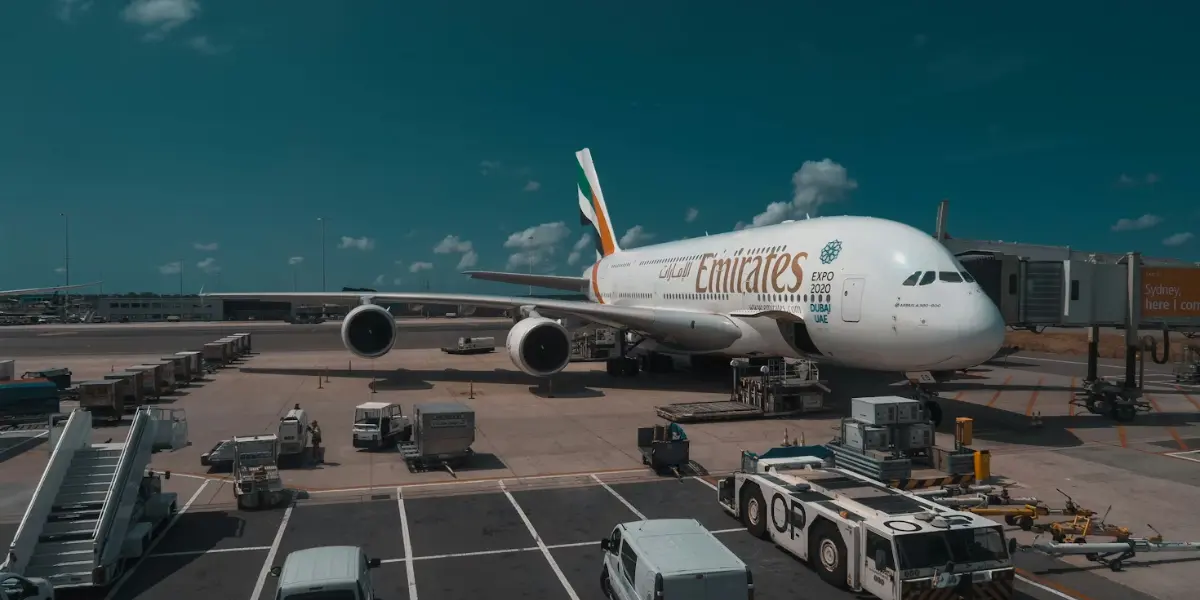
Emirates is the only carrier still running the spectacle play at full volume. Showers, bars, A380s into the 2040s, and a brand identity so dominant that most travelers can't picture the airline without the staircase. The premium economy expansion they're now layering in is almost an afterthought to the main story.
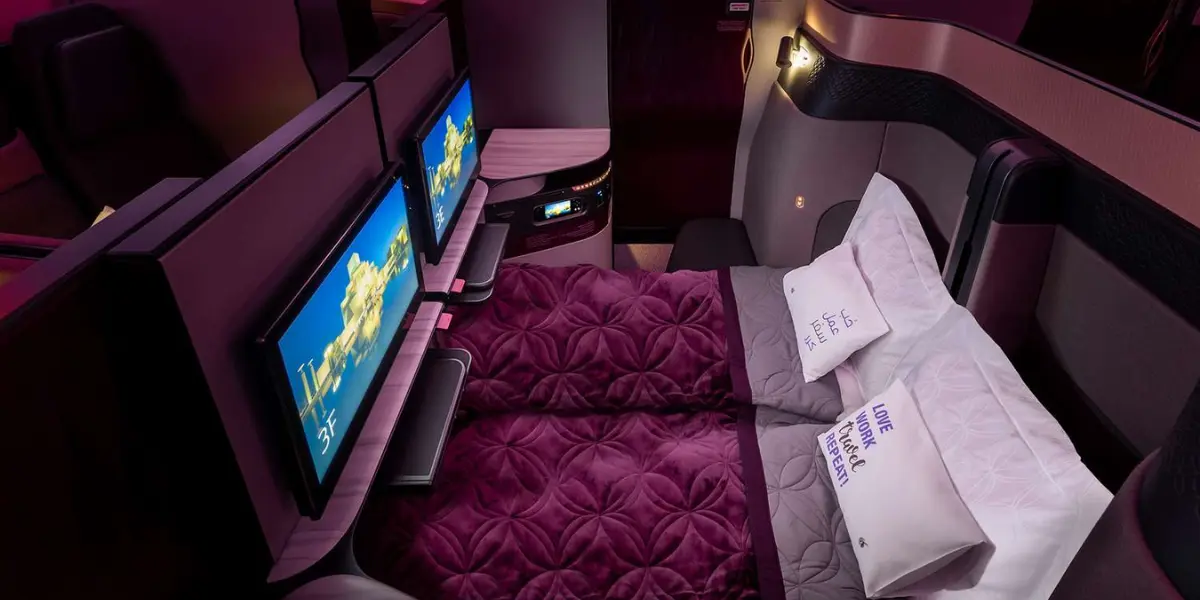
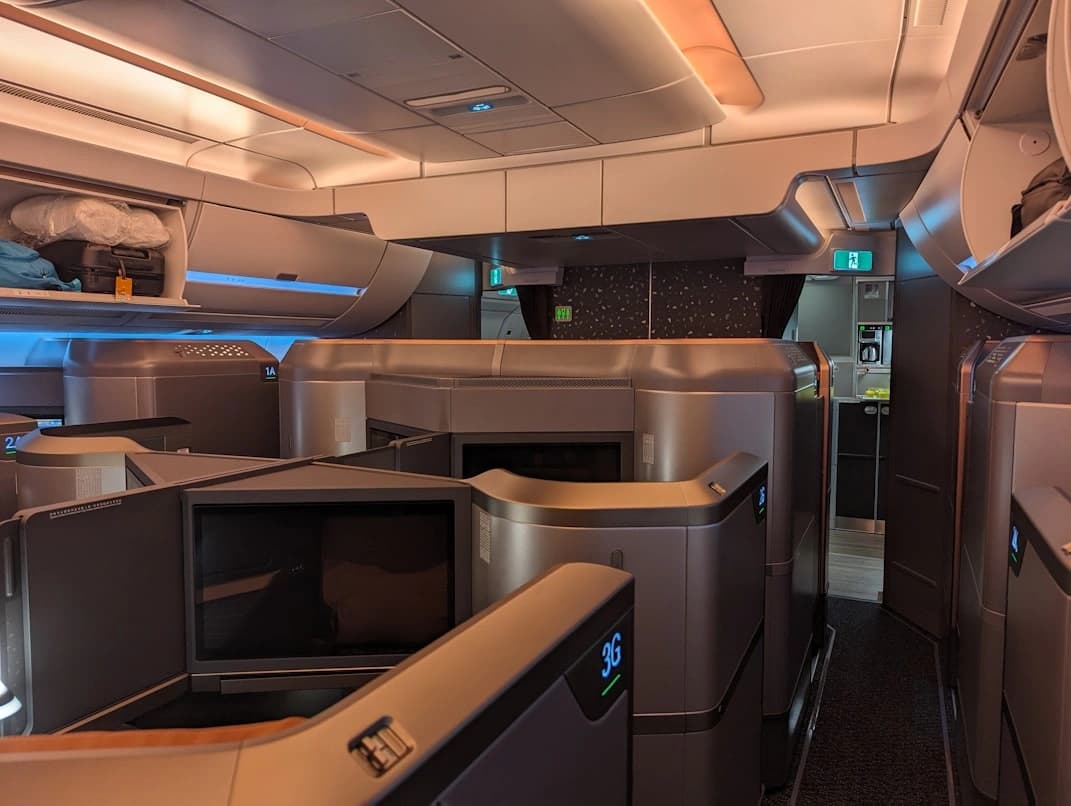
Qatar is the perfectionist. Qsuite, and the upcoming Qsuite Next Gen, are what happens when an airline decides not to win at first class but to make business class so good no one misses it. A Doha–Bangkok Qsuite I flew last spring made the case better than any review could: the door slid shut, the cabin lighting eased into evening tones somewhere over the Gulf of Oman, and the privacy panel between my window suite and an empty middle seat folded down to give me what was effectively a small two-seat cabin to myself. I knocked the welcome champagne over trying to figure out the bed controls, which was annoying, but I still slept seven hours. I have not slept seven hours on a U.S. carrier transatlantic in years. Al Mourjan in Doha is one of the rare lounges where the layover genuinely improves the trip rather than taxing it. The bet behind all of this is that "business that feels like first" is the most profitable square footage in aviation. Qatar is winning that bet.
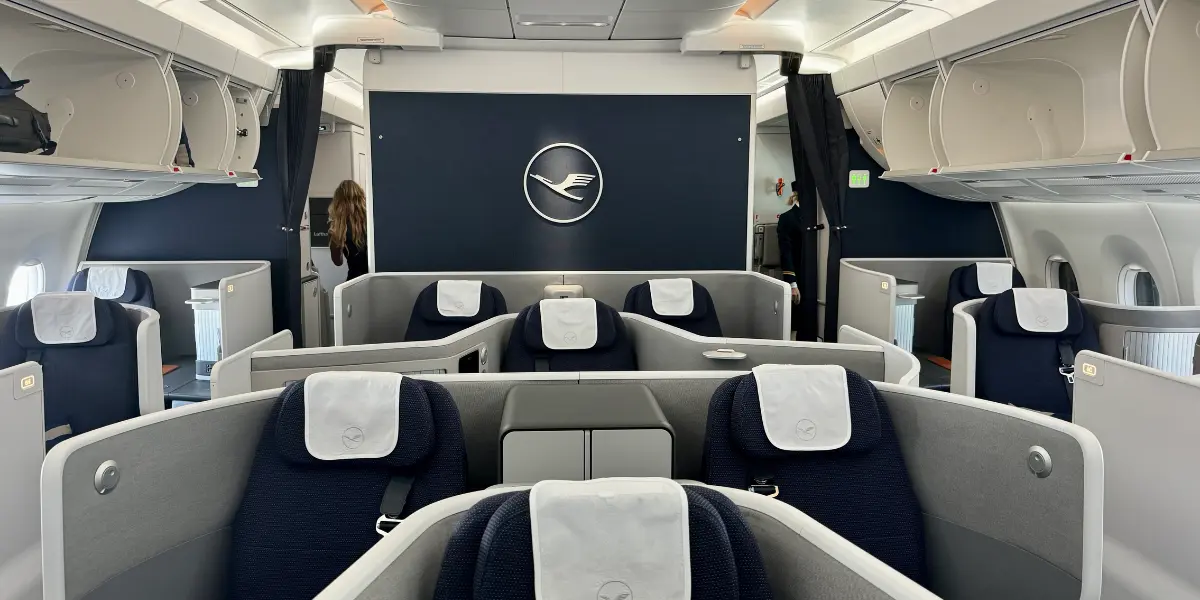
Lufthansa is the legacy carrier in transition. Allegris is more than a seat upgrade it's a full reimagining toward private suites, lockable doors, double rooms, and explicitly hotel-room language. Lufthansa is the cleanest visible case of "keep the iconic aircraft for as long as you can, but rebuild the experience around the cabin, not the airframe."
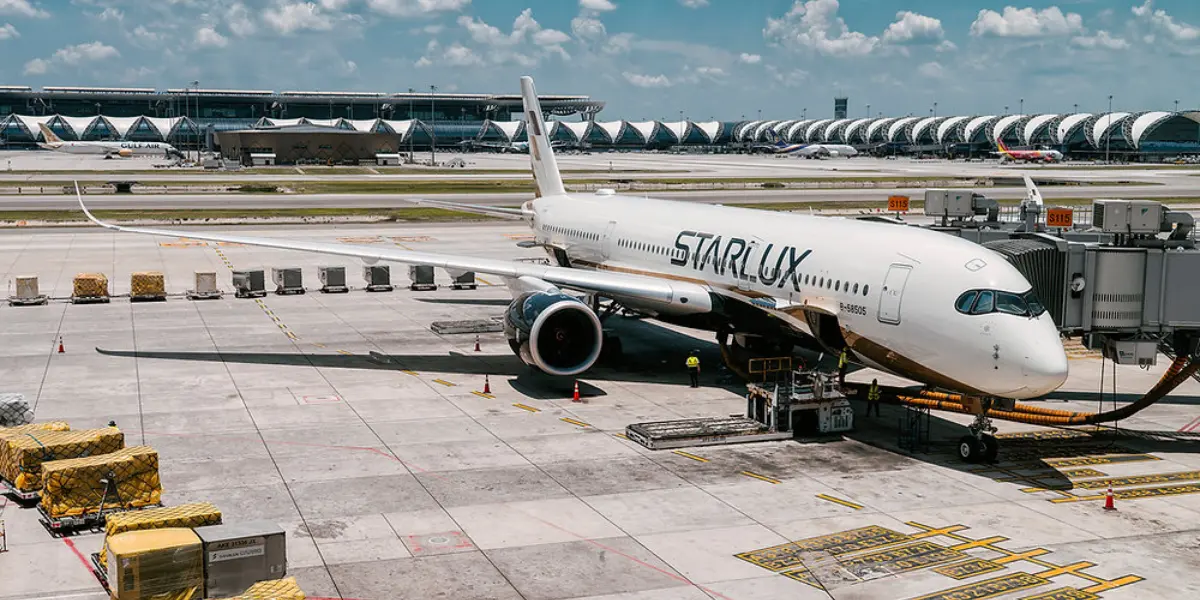
Starlux is the boutique-luxury bet. The Taiwanese carrier was founded in 2020 by EVA Air's former chairman and is now flying the Airbus A350-1000 with 40 business-class seats up sharply from the 26 on its A350-900s plus a four-seat first-class cabin and NASA-inspired "Zero G" recline. It pairs the upscale product with surprisingly competitive transpacific pricing, around $2,600 round-trip business class on some U.S.–Taipei itineraries. Starlux is also the rare new airline that's actually shipped product matching the hype, which distinguishes it from a few of the Gulf greenfield promises that are still mostly renderings and order books.
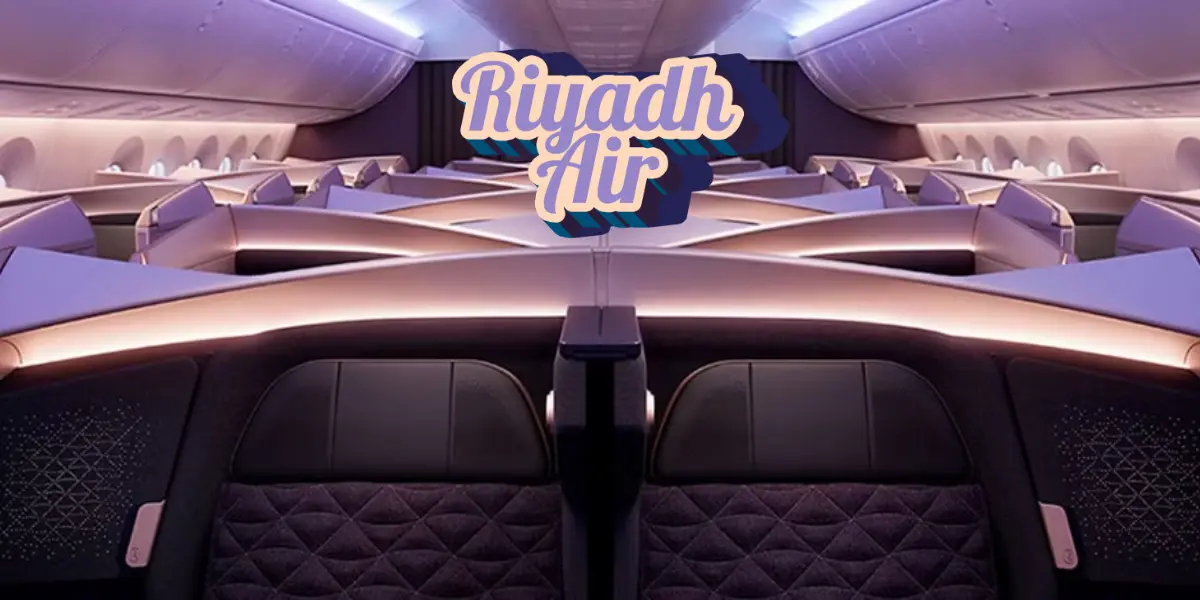
Riyadh Air is the greenfield bet, and the test case for whether a carrier can launch directly into the suite era with no legacy cabins to retire. Its 787s will carry 28 business-class seats including four "Business Elite" seats with 32-inch 4K OLED screens, sliding doors, and 52-inch high walls. The product looks impressive in photos. We'll see what it looks like in service. Greenfield airlines have a long history of shipping less than they promise.
The U.S. carriers United, American, Delta are running the loyalty-monetization play. Polaris Studio, Flagship Suite, and Delta One are respectable hardware, but the moat is the credit-card and points ecosystem behind them. Other carriers can match the seat. None can match the Chase or Amex co-brand machine that pumps billions through these programs. The catch and this is the most consistent pattern in my own bookings is that the U.S. carriers' transatlantic business-class pricing is rarely competitive against the European flag carriers. Last month I priced JFK–Rome for late September. Delta One ran $4,800 round-trip; ITA's A350 in business, same dates, an arguably better cabin, was $3,100. The gap paid for the hotel. I see versions of that comparison most weeks. The U.S. carrier moat is loyalty and credit-card economics, not transatlantic hard-product value, and there's a difference.
Six bets, six futures. The industry is converging on the importance of premium and diverging on the meaning of it which raises the harder question. With everyone betting on premium, who actually wins?
Why now: three forces converging
This shift didn't happen because of any single trigger. Three forces lined up at the same moment, which is why the change feels so total.
The first is fleet. Boeing plans 84 to 96 Dreamliner deliveries in 2026; Airbus is targeting nine A350s a month. Nearly every new widebody now ships with premium economy as standard, and many ship premium-heavy. United's new 787s will carry 99 premium seats per aircraft. Once those configurations enter the fleet, they're locked in for two decades every cabin retrofit cycle bakes the premium tilt deeper.
The second is demand bifurcation. The post-pandemic recovery split the traveling public into two populations: people who treat premium as a baseline and people who treat any travel as discretionary. Higher-income travelers continue to spend; price-sensitive travelers reduce trips or trade down. Airlines are not in the business of fighting this they're in the business of optimizing for it.
You can feel this in the cabins themselves. The new Polaris and Allegris and Flagship Suite are not designed to make economy passengers aspire to upgrade. They're designed to make existing premium passengers feel that the price is justified. The seats are bigger but the cabin is a different room closed off, lit differently, separated from coach by walls and doors. The architecture says: you are not in the same product as those people anymore. That's a deliberate choice, and it's the visual expression of the demand split.
The third is the math everyone now believes. Internationally, premium cabins have historically generated about 20% of passenger revenue from roughly 7% of passenger kilometers. Once that ratio became durable instead of cyclical, every cabin redesign turned into a yield-optimization exercise. Airlines stopped asking "how do we make economy slightly nicer" and started asking "how do we get more passengers to pay premium prices."
The winners won't be luxury airlines. They'll be luxury network designers.
Here's the synthesis the cabin-by-cabin coverage tends to miss. Premium aviation is no longer a cabin product. It's a system. A great seat without a great lounge is half a product. A great lounge without a powerful loyalty program is leakage. A powerful loyalty program without a credit-card ecosystem can't fund the seat. And a credit-card ecosystem without operational reliability ruins everything when something breaks at 4am.
The airlines that win the next decade will optimize the whole stack, not any single component. Call them luxury network designers. They get the variables that actually matter into the same building: direct routes to the cities premium travelers go, cabins that compete on hard product, lounges that function as ground-side cabins, loyalty programs that retain rather than just reward, credit-card economics that subsidize the system, digital infrastructure that handles booking and rebooking competently, and the operational reliability to hold all of it together when something breaks at 4am in Frankfurt and you need to be in Singapore by Tuesday.
Single-variable strength isn't enough. A new entrant with a killer hard product but no credit-card economics can build buzz; it cannot build a moat. A legacy carrier with deep loyalty integration but a tired cabin can't hold premium yields. The winners do all of it mediocrely on most, excellently on a few, and never embarrassingly badly on any of them.
The cohort that fits this description is shorter than airline marketing departments would like you to believe. Emirates, Singapore Airlines, Qatar, Delta, United, Air France-KLM, ANA, JAL, Qantas, and Cathay are the unambiguous incumbents. Lufthansa Group belongs in the conversation despite Allegris implementation friction Frankfurt, Munich, Miles & More, and Star Alliance still constitute a real network-design moat. Turkish Airlines deserves more attention than it gets: Istanbul's slot capacity is the resource Gulf carriers wish they had, the lounge sets a benchmark, and network reach now exceeds any single Gulf hub. Whether Turkish becomes a luxury network designer or just a high-volume one is the open question the hard product is competent but not Qsuite-grade.
Air India is a different case. The transformation is real, the Tata capital is real, the order book is enormous. But operational reliability and digital service were the two places legacy Air India was weakest, and those are the hardest variables to fix. Vistara had the better DNA and got absorbed; whether the merged entity inherits Vistara's discipline or Air India's legacy chaos is genuinely unsettled. Watch the next 24 months but don't price in the transformation yet.
The most interesting tension sits at the heart of the Gulf model. The A321XLR and the broader point-to-point shift are, in a real sense, anti-Gulf-hub technologies. Every nonstop from a U.S. or European secondary city to another secondary city is a passenger who no longer routes through Dubai, Doha, or Abu Dhabi. The very fleet evolution that's globalizing premium aviation is structurally hostile to the geography that built the Gulf majors.
But the Gulf carriers can absorb that hit if they accept what's actually changed. The connection used to be neutral or positive infrastructure that you tolerated for the privilege of long-haul flight. Now it's optional, and the optionality itself is the luxury. When passengers can choose nonstop, the Gulf carriers no longer compete on geography they compete on whether the chosen connection beats the available nonstop. The play is to reposition from "we connect everywhere" to "we deliver the best connection experience in the world." Doha used to be the only realistic way to fly Manchester–Bangkok in business class; now it has to actively earn the routing. Emirates is already executing this with its A380 strategy and lounge investment. Qatar is doing it with Qsuite and Al Mourjan. The Gulf carriers don't need to win on geography. They need to make the connection so much better than the nonstop that travelers choose Doha on purpose.
That repositioning raises the bar for everyone. If Gulf-style chosen connection becomes the premium standard, the legacy hub carriers in Europe and North America face a sharper choice: invest enough in connection quality to compete, or cede the connecting passenger entirely.
What this means for everyone else the new entrants, the boutiques, the greenfield carriers is more sobering. Starlux is a beautiful airline. Riyadh Air will be a beautiful airline. Neither has the credit-card ecosystem, the loyalty depth, the alliance integration, or the operational scale that the network-designer category requires. They can win on cabin product and brand, and that's not nothing Starlux's $2,600 transpacific business fare is real disruption to incumbent yields. But the network-designer category is structurally an incumbents' game, at least for the next decade. The seat is the part you'll post about. The system is the part that determines whether your trip works when a snowstorm hits Frankfurt at 4am and you need to be in Singapore by Tuesday.
For travelers, the practical takeaway is this: when you choose an airline now, you're not choosing a seat. You're choosing a system. The seat is the part you'll remember when the trip goes well. The system is the part you'll remember when it doesn't.
The dark side: monetized misery and a war on loyalty

This is the part the trade press tiptoes around, and frequent flyers should hear plainly.
The premium expansion is not generosity. It's segmentation. Airlines aren't selling luxury they're selling escape from pain. Crowded airports → lounges. Long security lines → fast track. Cramped economy → extra-legroom rows. Long-haul suffering → premium economy. Exhaustion → business class. Lack of privacy → suites with doors. Wasted hours → nonstop routes. Arrival fatigue → wellness-tuned cabins.
The architecture is the same trick at every price point: identify a specific friction in modern travel, then sell the version of your seat that doesn't have it. The line worth memorizing is this:
The more miserable flying becomes, the easier it is to sell relief.
Standard economy hasn't been improving. It's been getting denser, with seat pitches drifting toward the lower end of the 30–33 inch range, and segmentation tools (basic economy, paid extra-legroom, paid carry-on) designed to drive upsell rather than to make the base product coherent.
The same logic now governs the loyalty programs that frequent flyers built their travel lives around and the news there is uniformly bad. In the past 18 months: Lufthansa Group's Miles & More moved to dynamic pricing. United removed its fixed upgrade chart in November 2025; mileage upgrades are now dynamically priced. Delta is expanding AI-set dynamic pricing to both cash and award fares. Air Canada Aeroplan announced a June 2026 award chart update where business-class North America–Europe (4,001–6,000 miles) jumped from 70,000 to 75,000 points and first class went from 100,000 to 120,000 a 20% devaluation. Cathay's Asia Miles devalued in May 2026 the second consecutive year. Singapore's KrisFlyer devalued its Access award rates in March 2026 by up to 10.9% in economy and 3.9% in premium cabins.
The pattern is consistent enough to constitute industry policy: airlines now treat loyalty programs as revenue-management tools, not retention mechanisms. Dynamic pricing nominally increases availability there's no fixed inventory anymore but it also means the price of any given award seat reflects the cash-fare pressure on that exact flight. Peak-time premium-cabin redemptions can run double or triple what an old award chart would have priced. As one experienced redeemer put it: 50,000 miles might book a business-class seat one day and barely cover an economy ticket the next.
What this looks like at ground level: a Virgin Atlantic transfer to ANA last October, 90,000 points one-way for ANA business class JFK to Tokyo, went through at 6:14am on a Wednesday and was gone by lunchtime the same day. Two seats had been on the calendar for weeks. When I happened to refresh, two were available. I transferred and ticketed one inside ten minutes. By the time I checked back to send the link to a friend who was thinking of joining, the inventory had collapsed to nothing, and the next available business-class award on that route was three weeks out at 130,000 points. Five years ago, that kind of redemption sat on the calendar for days. Now it lives in windows of hours.
Two patterns from a portfolio of these bookings still hold. A points portfolio is meaningfully more valuable than any single airline's currency. And the best redemptions are almost always on partner metal, not the issuing airline's own flights. Both patterns are now under pressure. Aeroplan's June 2026 devaluation, the KrisFlyer Access cuts, and Cathay's two consecutive Asia Miles devaluations have narrowed sweet spots that used to feel reliable. The portfolio approach still wins. The margin of victory is smaller every year.
Co-branded credit cards are getting more expensive. Amex Platinum's renewal fee hit $895 in 2026; Sapphire Reserve climbed to $795 in 2025. Both come with $2,700–$3,500 in benefits, but the benefits arrive as monthly statement credits the so-called "coupon book" model. Useful if you can use them. Significantly less valuable if you can't.
The forecast: what frequent travelers should expect through 2030
Here is the most honest version of where this is heading.
More direct routes, especially to secondary cities. A321XLR economics will keep opening city pairs that were previously unviable. Expect more nonstops between mid-sized U.S. and Canadian cities and secondary European destinations, plus emerging market routes that previously required widebodies. The next five years will likely produce more new nonstop city pairs than the previous twenty.
Better business class, more uniformly. The privacy door, the suite walls, the 4K screen, and the wireless charging are becoming table stakes. Expect "business plus" sub-tiers (Polaris Studio, Flagship Suite Preferred, Business Elite) to proliferate as carriers split business class into half-rungs.
Premium economy as the new normal default. Nearly every widebody delivery includes it, and corporate travel policies are quietly anchoring on it. For long daytime flights and self-funded leisure travel where business pricing has detached from any rational anchor, premium economy is the rational sweet spot.
First class becomes rarer and more theatrical. True first class survives at Lufthansa, Emirates, Singapore, ANA, Etihad, Riyadh Air, and a handful of Asian carriers. Most U.S. travelers will never sit in one. The seats will get more lavish; they will not get more democratic.
Economy gets more segmented and harder to navigate. Standard economy is increasingly engineered to drive upsell. The base product is the floor of the ladder, by design.
Free upgrades get harder, not easier. A bigger business cabin means more units to sell through paid upgrades and bid systems. The expansion is happening under monetization pressure, not generosity pressure. Plan accordingly.
Award redemptions get worse on average, with pockets of value. The dynamic-pricing trend will continue. Sweet spots will narrow. The best remaining value lies in: partner redemptions (often the last great-value pocket), off-peak windows on uncompetitive routes, mistake fares for the alert and quick, and shorter intra-region awards (Aeroplan's intra-Europe business actually dropped from 15,000 to 12,500 points in 2026 bright spots exist).
A frequent traveler's playbook for the next five years
The strategic takeaways, condensed:
Hold transferable points (Amex Membership Rewards, Chase Ultimate Rewards, Citi ThankYou, Capital One, Bilt) instead of stockpiling airline-specific miles. When one program devalues, you move. When dynamic pricing punishes a route, you switch programs.
For Asia, the strongest current value plays remain ANA, JAL, and Thai Airways business class booked through partner programs Virgin Atlantic Flying Club for ANA, JAL Mileage Bank or Alaska for JAL, KrisFlyer or Aeroplan for Thai. Most of my long-haul premium bookings still route through that combination, and partner availability outperforms direct redemption almost every time.
For Europe, the pattern in my own bookings has been consistent enough to recommend it as a default: skip the U.S. carriers. Over the past five years, roughly seven of every ten transatlantic business-class trips I've booked have flown KLM, Lufthansa, ITA, Air France, or Virgin Atlantic, almost always for $1,500 to $2,000 less than the equivalent week on United, American, or Delta. The European flag carriers also tend to release more partner award space particularly through Flying Blue and Aeroplan than the U.S. carriers do on their own metal.
Watch shoulder-season deals on competitive routes. Sub-$2,000 round-trip business class to Europe still happens Delta and SAS published $1,600s out of New York to Rome, Milan, Vienna, and Copenhagen as recently as late 2025. The 50-to-179-days-out booking window remains the historical sweet spot, with the strongest pricing around 129 days.
Optimize the secondary city. Brussels and Düsseldorf often run 20–30% below Amsterdam and Frankfurt for the same cabin. Milan and Geneva regularly undercut Paris and Rome. Lisbon, Madrid, and Istanbul are aggressive on transatlantic price thanks to TAP, Iberia, and Turkish using their hubs as discount engines. Adding a one-stop intra-Europe segment can be cheaper and deliver a better business-class hard product.
Use European-origin tickets when the math favors them. Round-trips originating in Europe often price meaningfully below the same itinerary originating in North America, especially in shoulder season.
Always check the aircraft type. The same airline can offer radically different experiences depending on whether your specific tail has the new Polaris, the new Flagship Suite, the new Allegris, or the legacy product. "I'm flying United" no longer tells you what kind of trip you're having.
Be flexible on positioning. The cheapest business-class fare from your home city might be $5,500. The same flight ex-Boston might be $3,200. A $200 positioning flight can unlock $1,500 in savings on the long-haul leg.
Treat alerts and tools as essential infrastructure. Award availability now changes hourly under dynamic pricing. Manual searching alone won't catch the windows.
One honest caveat: the playbook above is the value play. It assumes you have flexibility, time to optimize, and willingness to add a positioning flight or accept a one-stop routing for cost savings. If you're a high-yield business traveler whose enemy is wasted time rather than wasted money, the playbook inverts. Pay full fare. Take the nonstop. Use status, not points. The two games are different and most travel writing pretends they're the same. They're not.
According to IATA's latest passenger demand data, premium cabin growth has consistently outpaced economy recovery globally since 2022 — a trend airlines are now building entire fleet strategies around.
The closing thought
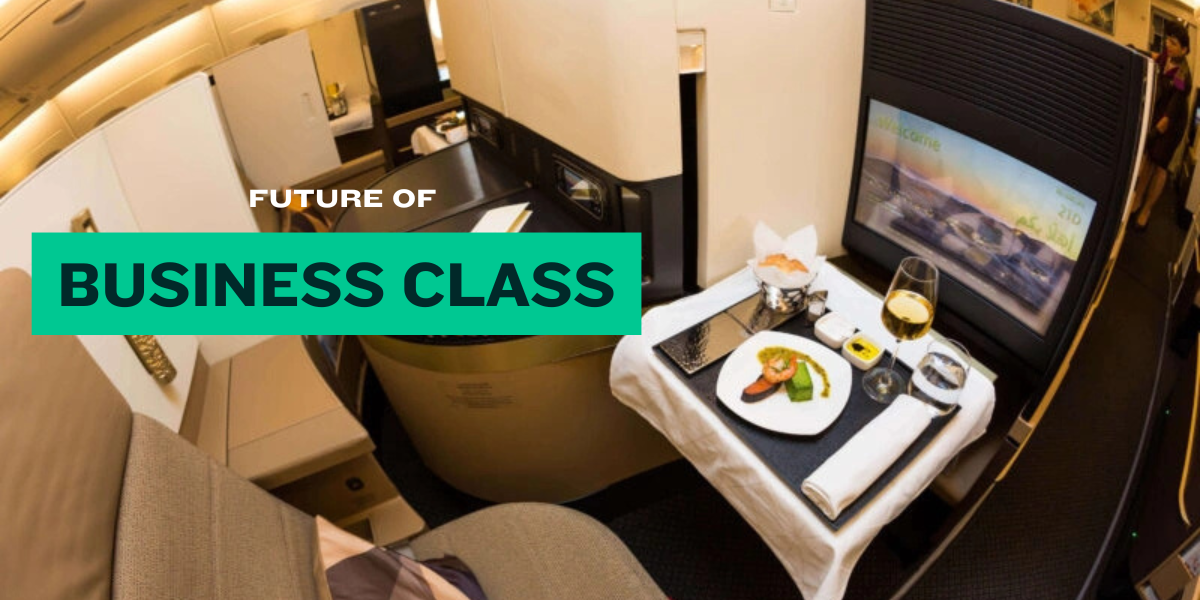
The A380 era made luxury aviation feel like a palace in the sky. The next era is making it feel like a private room inside a global transportation system smaller cabins, more direct routes, better sleep, more privacy, and a class ladder with more rungs than most travelers realize.
That's both exciting and sobering. The best seats really are getting better, the cabins really are getting smarter, and the nonstop from your secondary city to a European capital is a kind of luxury the A380 era never delivered. But the airline knows exactly what your comfort is worth. It's iterating the cabins, the loyalty programs, the credit cards, the upgrade systems, and the dynamic pricing engines toward one outcome: every inch of relief gets monetized, and the price of relief is set by an algorithm that watches you in real time.
The flying palace is over. The class ladder is here. But beneath the cabin redesigns and the new route maps and the loyalty devaluations, the deeper revolution isn't the seat. It's the system. Aviation has become a systems business direct routes plus cabins plus lounges plus loyalty plus credit cards plus digital plus reliability and the airlines that win will be the ones that integrate all of it.
The travelers who do best will be the ones who think the same way. Choose networks, not seats. Hold portfolios of points, not airline currencies. Optimize for flexibility, not loyalty. That, more than any cabin or route, is the actual revolution at the front of the plane.
Every mile you're not using is a seat someone else just booked at 6am. Air Gazette tells you when to move.