Every flight school's website says something different: three months, eight months, "as fast as possible." After cross-referencing FAA regulations and talking to instructors about how training actually unfolds, the real answer is less marketing-friendly but far more useful.
It depends almost entirely on one number: hours. The FAA's rules set hard minimums at every stage, and those minimums are what actually control your timeline, not a school's ad copy.
The Real Timeline, Not the Marketing Version
Flight schools aren't lying when they advertise fast certificates. They're just measuring a different milestone than the one that gets you hired.
Earning your first license can genuinely take three to six months. Getting hired by an airline takes considerably longer, because airlines don't hire on certificates alone they hire on flight hours.
That distinction is where most "how long does it take" answers go wrong. The certificate timeline and the hiring-eligible timeline are two different clocks, and conflating them is how you end up disappointed six months into training.
Private Pilot License: Your First Real Milestone
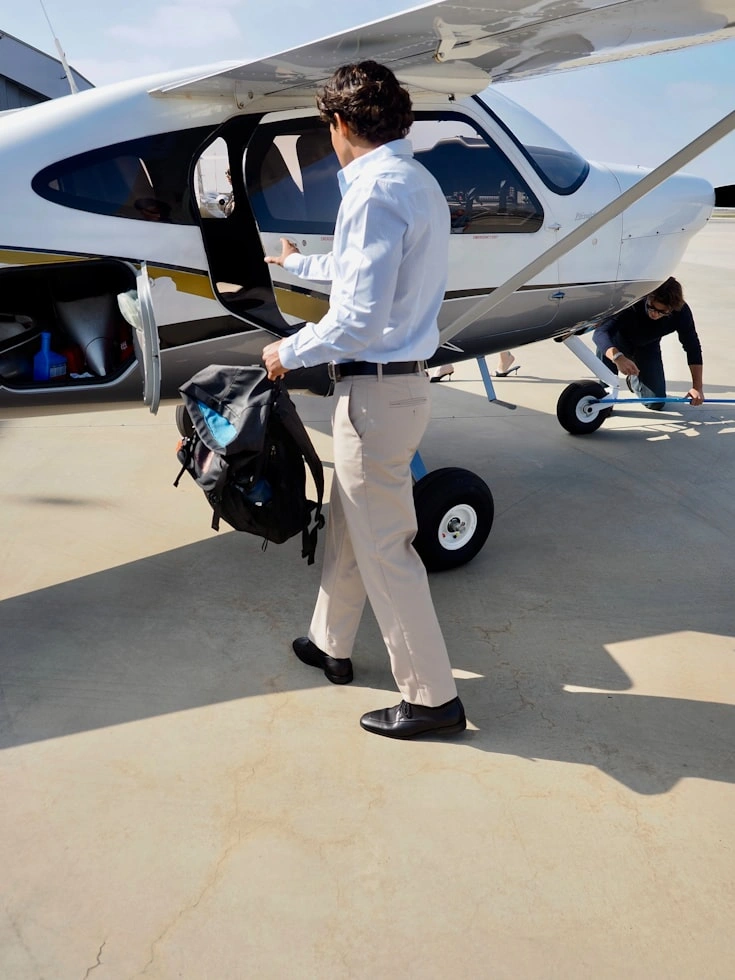
Every path starts here, and the hour requirement depends on which FAA rule your school trains under.
Under 14 CFR Part 61, you need a minimum of 40 flight hours. Under Part 141, an FAA-approved structured curriculum, the minimum drops to 35 hours.
Part 61: 40 hours minimum, more flexible scheduling, no FAA-approved syllabus required
Part 141: 35 hours minimum, structured curriculum, regular FAA oversight
Realistic timeline either way: 3 to 6 months for most students flying part-time
For those exploring the broader career landscape beyond piloting, it's also worth comparing options across other airline careers currently hiring in the US.
The Medical Certificate You'll Need First
Before logging solo hours, every student needs at least a third-class medical certificate from an FAA-designated aviation medical examiner. Flying for compensation later requires upgrading to a second-class medical.
Most healthy applicants clear this in a single appointment, though it's worth scheduling early since any follow-up requests from the FAA, such as additional specialist records, can add weeks to an otherwise on-track timeline.
Commercial Pilot License: Where the Real Hours Start
This is the certificate that legally lets you fly for pay, and it's where the two FAA pathways diverge sharply.
Part 61 requires 250 total flight hours. Part 141 requires only 190, because its structured, FAA-monitored curriculum earns a lower minimum.
Certificate | Part 61 Hours | Part 141 Hours |
Private Pilot | 40 | 35 |
Commercial Pilot | 250 | 190 |
ATP (standard) | 1,500 | 1,500 |
That 60-hour gap between Part 61 and Part 141 commercial training is real money and real time, which is why serious career-track students almost always choose Part 141 schools when one is available.
Why an Instrument Rating Usually Comes First
Most students earn an instrument rating before or during commercial training, even though it's not strictly required under Part 61 commercial rules. Part 141 commercial courses built around the reduced 190-hour minimum typically require instrument training as part of the approved curriculum.
Skipping it isn't realistic anyway, since almost every paying flying job requires instrument competency in practice.
The 1,500 Hour Rule: Why It Exists and What It Means
Most people hear "1,500 hours" and assume it's arbitrary. It isn't.
The rule comes from the Airline Safety and Federal Aviation Extension Act of 2010, passed after the 2009 Colgan Air Flight 3407 crash near Buffalo. It's codified in federal regulation at 14 CFR §61.159, and it applies to anyone flying as a captain or first officer at a Part 121 passenger airline.
Before 2010, first officers could be hired with as few as 250 hours. The 1,500-hour standard was Congress's direct response to concerns about first officer experience levels.
How Pilots Actually Build These Hours
After earning a commercial certificate around 190 to 250 hours, most aspiring airline pilots still need well over 1,000 more hours before they're eligible.
The standard path is becoming a Certified Flight Instructor. Instructing pays while building hours, and most CFIs reach 1,500 hours in roughly two to two and a half years.
Other pilots build hours flying charter, banner towing, aerial survey, or skydive-jump operations instead of instructing. All of these count toward total flight time, though instructing remains the most common route since flight schools are usually hiring, and the pay while building hours helps offset training debt along the way.
The ATP Certification Training Program: The Final Step
Reaching 1,500 hours doesn't automatically make you eligible for an ATP certificate. Every candidate, whether pursuing a standard or Restricted ATP, must first complete the ATP Certification Training Program.
The ATP-CTP course includes at least 30 hours of ground training and 6 to 10 hours of full-motion simulator time, typically covering multi-crew, high-altitude, and adverse-weather operations. Only a limited number of FAA-approved training centers offer it.
Most pilots schedule this course in the final months before their hours target, since it's a prerequisite for taking the ATP knowledge exam rather than something to complete early.
The Restricted ATP: How a Degree Can Cut Years Off This
Not everyone needs the full 1,500 hours, and this is the detail most "how long" articles skip entirely.
The Restricted ATP, created under 14 CFR §61.160, lets qualifying pilots fly as a first officer with fewer hours. Military-trained pilots qualify at 750 hours, and graduates of FAA-approved university aviation programs qualify at 1,000 or 1,250 hours depending on degree type.
Pathway | Hours Required | Minimum Age |
Military pilot (US Armed Forces) | 750 | 21 |
Bachelor's degree, aviation major (60+ credit hours) | 1,000 | 21 |
Associate's degree, aviation major (30+ credit hours) | 1,250 | 21 |
Standard ATP, any other path | 1,500 | 23 |
The catch is that R-ATP holders can't act as pilot-in-command at a Part 121 airline until they reach the full 1,500 hours and convert to a standard ATP.
What Actually Counts Toward These Hours
Not all flight time counts equally toward every requirement. Cross-country time, night time, and instrument time each have their own sub-minimums buried inside the larger hour totals.
A pilot who only flies local pattern work, for example, can rack up total hours quickly while still falling short of the cross-country or night minimums needed for a given certificate.
Where Students Actually Earn R-ATP Eligibility
Not every college aviation program qualifies. The school needs specific FAA authorization to certify graduates for reduced-hour eligibility.
Purdue University and Embry-Riddle Aeronautical University are among the most established programs offering FAA-approved bachelor's degree pathways to the 1,000-hour R-ATP. Both require the full 60 credit hours of aviation coursework alongside flight training completed through the school's own Part 141 program.
Full Realistic Timeline: Two Common Paths
Someone changing careers with no aviation background is looking at a meaningfully longer timeline than someone earning an aviation degree along the way, largely because of how the R-ATP hour reductions stack up.
Career-changer, no degree program: roughly 3-6 months for a private license, another 6-9 months to commercial, then 2 to 2.5 years instructing to reach 1,500 hours. Total: about 3 to 3.5 years from zero experience to airline-eligible.
University aviation degree with R-ATP: similar 9-12 months to commercial certificate, but only 750-1,000 additional hours needed afterward instead of 1,500. Total: often 2 to 2.5 years from start to airline-eligible, roughly a year faster.
Prior military pilot: commercial certificate and instrument rating are typically already complete through military flight training. Total: often airline-eligible within months of separation, once the 750-hour R-ATP threshold and ATP-CTP course are satisfied.
What This Signals for the Next 6-12 Months in the Industry
The timing of all this matters more than usual right now. Oliver Wyman's global pilot shortage forecast projects the supply-demand gap will peak around 2026 at roughly 24,000 pilots, the widest gap since the post-pandemic travel recovery began.
Regional airlines are actively hiring, with pathway programs from major carriers now letting pilots secure a conditional job offer at a major airline while still building hours at a regional partner, a career accelerator that barely existed a decade ago.
Why the Timing Favors Starting Now
For anyone starting training now, that timing works in your favor. A three-year timeline that starts today lines up with a hiring environment that's still tight rather than one that's already cooled off.
You can review the FAA's own regulatory text on airline transport pilot certification directly, since the specific hour and age requirements are federal law, not industry convention.
What Delays This Timeline in Practice
The hour minimums are fixed, but almost nobody finishes exactly on schedule. Weather is the most common culprit, since flight training simply can't happen in low visibility or high winds regardless of how motivated a student is.
Aircraft and instructor availability compound the problem. A single-aircraft flight school with one instructor creates scheduling bottlenecks that a larger Part 141 operation with multiple aircraft typically avoids.
Designated Examiner Backlogs
Every certificate requires a checkride with an FAA-designated pilot examiner, and in many regions these examiners are booked weeks or months in advance. Students who finish their flight hours on schedule can still lose several weeks simply waiting for an available test slot.
Building in buffer time for this specific bottleneck is one of the more realistic adjustments students can make to their own personal timeline expectations.
Who Benefits and Who Pays the Cost of This Timeline
Military veterans and university aviation graduates benefit most directly from the current rules, since the Restricted ATP shaves a year or more off their path to a paycheck.
Career-changers without either background absorb the full cost: the complete 1,500 hours, the years of instructor pay before reaching it, and the tuition for every certificate along the way.
Regional airlines also benefit indirectly, since R-ATP graduates from partner university programs give them a faster, more predictable pipeline of new first officers during a supply-constrained hiring environment.
The Pipeline Partnerships Behind This
Several regional carriers have formal partnerships with FAA-approved university aviation programs specifically to lock in R-ATP-eligible graduates ahead of competitors. These pipeline programs are a direct response to the tightening hiring environment projected through 2026.
For students without access to a partner university, the practical takeaway is that the standard 1,500-hour path remains fully viable, just slower and without a guaranteed regional airline seat waiting at the end of it.
What This Means for Your Career Planning
If you're weighing whether this career path is worth the time investment, it helps to look at what the job actually pays once you clear these hour requirements.
Reviewing current pilot salary data across the major US carriers is a reasonable next step before committing to a specific training path, since first officer pay varies more by carrier than most career-changers expect.
What Happens After You're Hired
Reaching 1,500 hours and landing a first officer job isn't the end of the timeline, since airline seniority systems add another layer entirely.
Captain upgrade timelines at regional airlines vary widely depending on hiring demand, ranging from as fast as 18 to 24 months during strong growth periods to considerably longer when hiring slows.
The path to a major carrier typically runs through several years as a regional first officer or captain first, since majors weight both flight hours and multi-crew jet experience heavily in their own hiring decisions.
Why Seniority Matters More Than Hours at This Stage
Once hired, seniority number, not flight hours, determines schedule, route, and upgrade timing at almost every US airline. A pilot who joins during a hiring surge can sometimes upgrade to captain faster than one who joined during a slower period with more hours already logged.
That's a meaningful planning consideration for anyone timing their training around the current 2026 hiring peak, since joining now could mean both a faster path to the airlines and a faster path to the left seat.
Age Considerations for Career-Changers
There's no upper age limit for starting flight training, and no upper limit for holding a commercial certificate either. The relevant age rule only applies at the airline transport level.
A standard ATP requires the applicant to be at least 23 years old, while the Restricted ATP allows candidates as young as 21 through the military or degree pathways.
On the other end, FAA regulations require airline pilots flying for Part 121 carriers to retire at age 65. Someone starting training at 45 or 50 still has a full career runway ahead of them, provided the 1,500-hour timeline and airline hiring windows line up.
The Bottom Line
The honest timeline is three to three and a half years for most career-changers, or closer to two to two and a half years for those coming through a university aviation program with R-ATP eligibility.
Neither number is what flight school marketing usually leads with, but both are grounded in the actual federal hour requirements rather than a best-case advertising scenario. The regulations themselves haven't changed in over a decade, which means these timelines are a reliable planning baseline rather than a moving target.
Explore more aviation career coverage like this at Air Gazette.
Frequently Asked Questions
How many flight hours do you need to become a commercial pilot?
A commercial pilot certificate requires 250 total flight hours under Part 61, or 190 hours under an FAA-approved Part 141 program.
Why does becoming an airline pilot require 1,500 hours?
The 1,500-hour rule comes from the Airline Safety and Federal Aviation Extension Act of 2010, passed after the 2009 Colgan Air Flight 3407 crash, and is codified at 14 CFR §61.159.
Can you become an airline pilot with fewer than 1,500 hours?
Yes, through the Restricted ATP pathway, which allows 750 hours for military pilots, 1,000 hours for qualifying bachelor's degree graduates, and 1,250 hours for qualifying associate's degree graduates.
What's the difference between Part 61 and Part 141 flight training?
Part 141 schools follow an FAA-approved structured curriculum and require fewer flight hours; Part 61 offers more flexible scheduling but requires more total hours for the same certificates.
How long does it take to get a private pilot license?
Most students earn a private pilot license in three to six months, depending on whether they're training full-time or part-time.
Is now a good time to start pilot training given the 2026 pilot shortage?
Oliver Wyman's global forecast projects the pilot supply-demand gap to peak around 2026 at roughly 24,000 pilots, meaning a multi-year training timeline started now would likely finish during a period of continued strong hiring demand.
Does a college aviation degree actually save time becoming a pilot?
Yes, graduates of FAA-approved aviation degree programs can qualify for a Restricted ATP at 1,000 to 1,250 hours instead of the standard 1,500, typically saving about a year compared to a non-degree career-changer path.