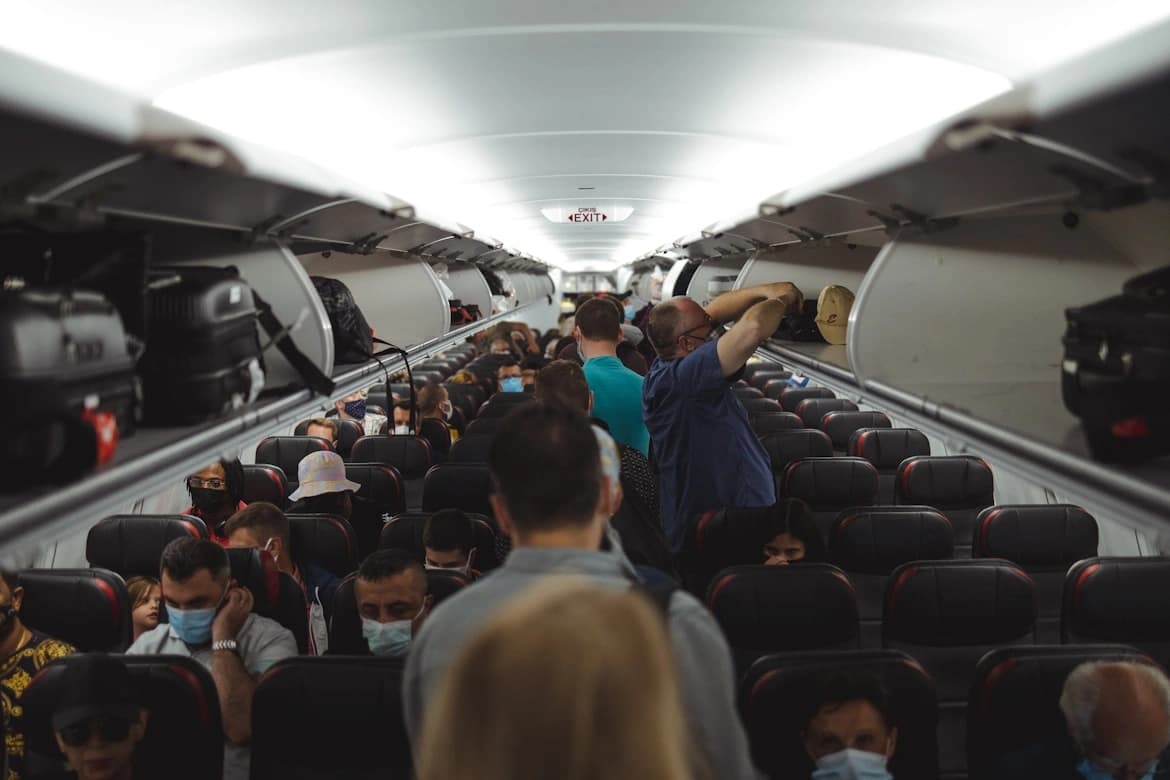
Economy seats have lost roughly 2 to 5 inches of pitch and up to 2 inches of width since the 1990s. Meanwhile, the average American now stands 5 feet 9 inches tall and weighs 194 pounds and nobody in federal government has set a single binding minimum for how much space he gets in row 24.
This is not an accident. It is the direct result of a 1978 deregulation decision, decades of lobbying, and a regulatory framework that treats seat size as a business issue rather than a safety one.
How Airline Seats Got Smaller And Why It Accelerated
The 1978 Airline Deregulation Act removed government control over routes and fares. Carriers competed on price. The fastest way to lower price was to add more rows. More rows meant less pitch. The logic was simple and relentless.
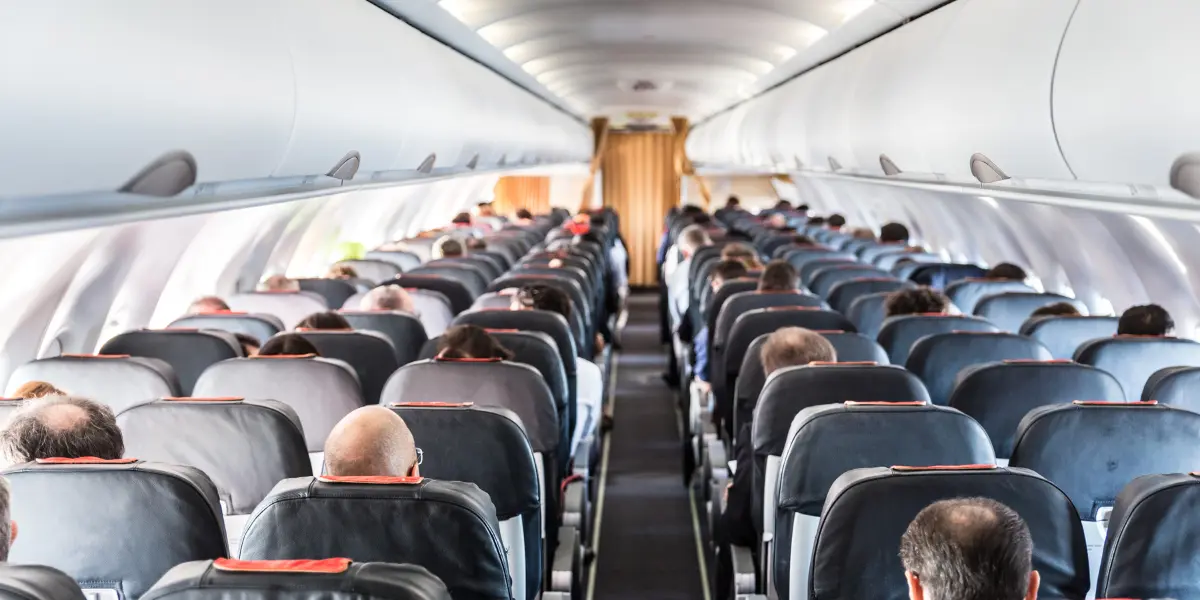
Through the 1980s and 1990s, the industry standard seat pitch sat at around 34 to 35 inches. By 2010, most domestic economy seats had dropped to 31 or 32 inches. Today, ultra-low-cost carriers like Frontier and Spirit operate seats at just 28 inches of pitch a reduction that would have been considered unacceptable on a US carrier 30 years ago.
The Numbers That Changed Everything
Seat pitch is the distance from one point on a seat to the same point on the seat directly in front of it. It is the most honest measure of legroom available.
Era | Industry Average Pitch | Industry Average Width |
1980s | 34–35 inches | 18.5 inches |
2000s | 32–33 inches | 17.5 inches |
2026 | 28–31 inches (economy) | 16.6–18.5 inches |
At 28 inches of pitch, a passenger's knees physically press into the seat in front of them if they are over 5 feet 10 inches tall. The math is not complicated. A standard human thigh from hip socket to knee measures approximately 23 to 25 inches. Add the seat back depth of around 4 to 5 inches, and 28 inches of pitch leaves zero clearance.
Seat Width Has Shrunk Too
Pitch gets most of the attention, but width reduction is equally significant for tall passengers with broader shoulders. Airlines have quietly removed inches here as well.
American Airlines economy seats on the Boeing 737-800 now measure 16.6 to 17.8 inches wide down from an 18.5-inch standard that was common two decades ago. United's 737-800 economy seats measure 16.3 to 17.3 inches wide. At those dimensions, two average-shouldered adult men seated side by side are sharing armrests whether they want to or not.
2026 Economy Seat Size Comparison: Every Major US Airline
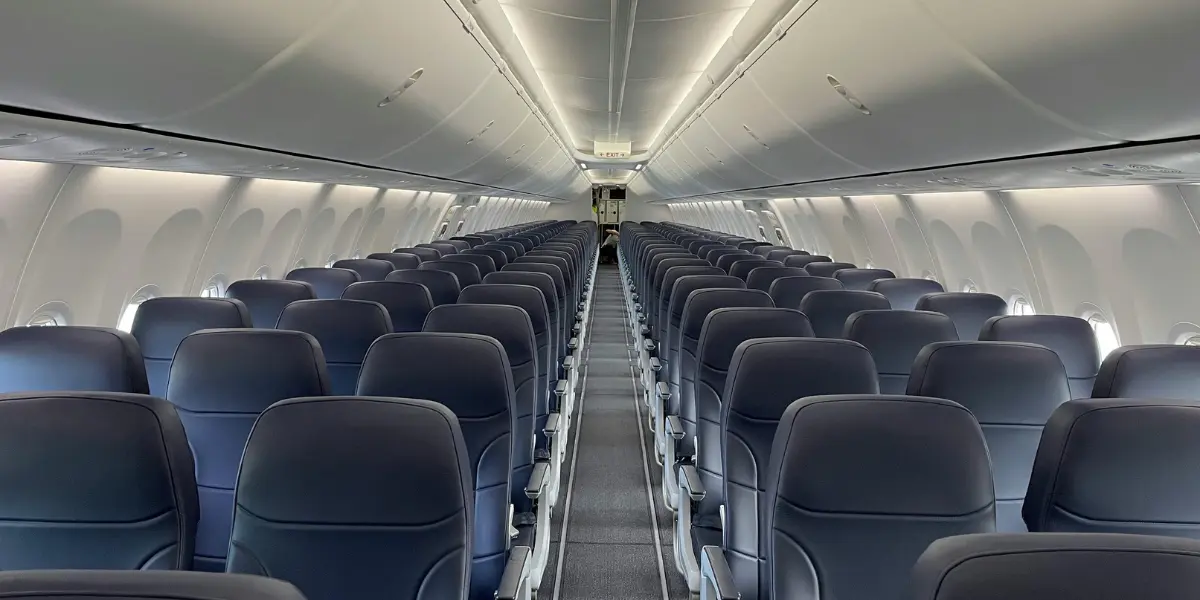
Here is how the four major US carriers compare on economy seat dimensions as of 2026, using their most commonly operated narrowbody aircraft.
Airline | Aircraft (Reference) | Economy Pitch | Economy Width | Extra Legroom Option |
American Airlines | Boeing 737-800 | 30 inches | 16.6–17.8 in | Main Cabin Extra: 34–39 in |
Delta Air Lines | Boeing 737-800 | 31–32 inches | 17.3–18.5 in | Delta Comfort+: 34 in |
United Airlines | Boeing 737-800 | 30 inches | 16.3–17.3 in | Economy Plus: +3–4 in |
Southwest Airlines | Boeing 737 (fleet-wide) | 31 inches | 17–18 inches | Exit row: up to 39 in |
JetBlue Airways | Airbus A320 | 32 inches | 18 inches | Even More Space: 37–39 in |
Spirit Airlines | Airbus narrowbody | 28 inches | 17.75 inches | Go Big (rows 1–2): 22 in wide |
Frontier Airlines | Airbus narrowbody | 28 inches | 17.8 inches | Stretch seats: 36–38 in |
Delta and JetBlue lead the legacy and low-cost tiers respectively on standard economy pitch. Spirit and Frontier sit 3 to 4 full inches below every other carrier a gap that is physically significant over a three-hour domestic flight.
What 28 Inches Actually Feels Like
For a passenger who is 6 feet tall, 28 inches of seat pitch means their knees are in contact with the seat back in front of them before that seat reclines at all. If the passenger in front reclines, the knee-to-seatback contact becomes pressure. On a three-hour flight, that pressure causes discomfort. On a five-hour flight, it becomes a documented health risk.
Medical literature on deep vein thrombosis consistently identifies restricted leg movement and confined seating as contributing factors for blood clot formation during long flights. This is not a marginal or disputed finding. It is the reason the FAA comment letter submitted by Senator Blumenthal in 2022 specifically cited DVT as a health consequence requiring regulatory consideration not just evacuation speed.
Which Airlines Are Best for Tall Passengers in 2026
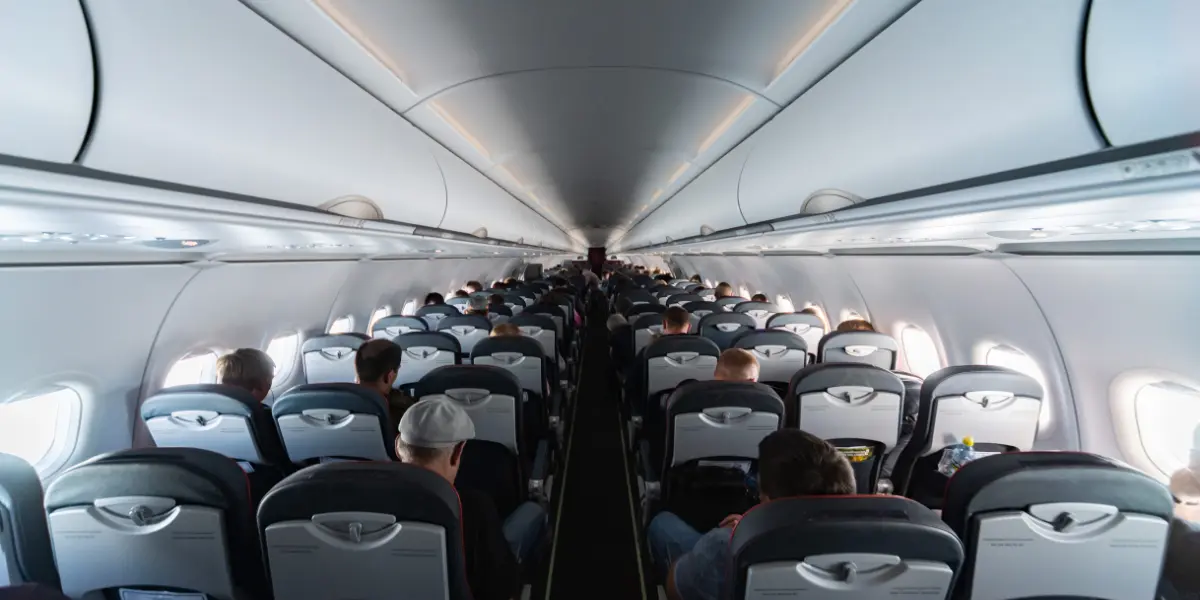
Tall passengers generally defined as those over 5 feet 11 inches need at minimum 32 inches of pitch to sit without knee contact. Exit row and bulkhead seats at 36 to 39 inches offer genuine comfort. However, those seats now carry fees ranging from $25 to over $100 on most carriers.
Ranking US Airlines for Tall Passengers
Airline | Tall Passenger Rating | Best Available Standard Pitch | Fee-Free Option? |
JetBlue | Best in class | 32 in standard | Yes standard seats |
Delta | Strong | 31–32 in standard | Partial some routes |
Southwest | Good | 31 in standard | Exit rows, no fee |
United | Acceptable | 30 in standard | No Economy Plus charged |
American | Acceptable | 30 in standard | No MCE charged |
Spirit | Poor | 28 in standard | No Go Big charged |
Frontier | Poor | 28 in standard | No Stretch charged |
JetBlue stands out because its standard economy pitch of 32 inches is the highest among US carriers across its primary fleet. That one-inch advantage over Delta and Southwest translates directly to a measurable difference for passengers over 6 feet tall.
Southwest is the hidden value option. Its standard fleet-wide pitch of 31 inches is competitive, and exit row seats which offer up to 39 inches are not pre-sold as a premium product. Tall passengers who board early under the A-List or A-List Preferred programs can claim those rows at no extra cost. As of early 2026, however, Southwest is transitioning to assigned seating, which may change this dynamic.
If you are comparing carriers on a route where both JetBlue and a legacy airline operate, the seat difference alone justifies the JetBlue choice for anyone over 5 feet 11 inches. For passengers considering whether a paid upgrade is worth it on longer domestic routes, the full breakdown at Air Gazette's Delta Premium Select review covers exactly what extra money buys and when it doesn't.
The Washington Problem: Why the FAA Has Not Set a Minimum
Congress told the FAA to set minimum seat size standards in 2018. It is now 2026. No binding rule exists.
This is the core of the story that most travel publications skip. The regulatory failure here is not a bureaucratic oversight. It is a documented, multi-stage process in which the FAA conducted inadequate tests, received 26,000 public comments demanding action, and still produced no enforceable standard.
The 2018 SEAT Act and Its Aftermath
The Seat Egress in Air Travel Act the SEAT Act was authored by Congressman Steve Cohen and included in the FAA Reauthorization Act of 2018. It required the FAA to establish minimum seat dimensions for passenger safety after a public comment period.
The FAA's response was to commission a simulated emergency evacuation study through its Civil Aerospace Medical Institute. The study found that seat size and spacing did not adversely affect evacuation success. Critics, including 25 members of the House of Representatives, immediately identified a fatal flaw: the study used only able-bodied adults between the ages of 18 and 60. No children, no elderly passengers, no passengers with disabilities, no hand luggage, no service animals. The test population bore no resemblance to the actual flying public.
The FAA opened a public comment period in the fall of 2022. More than 26,000 comments were submitted, as documented in the FAA's official minimum seat dimensions docket. The Consumer Federation of America and the advocacy group FlyersRights both formally argued that seat dimensions should be increased not just held steady based on health and safety evidence.
What the 2024 FAA Reauthorization Actually Did
The FAA Reauthorization Act of 2024 the most significant aviation legislation in a decade, according to Senator Tammy Duckworth addressed refunds, family seating fees, and disability accommodations. It did not establish binding minimum seat dimensions.
The 2024 Act required the Department of Transportation to issue rules on family seating, ensuring that children under 14 are seated adjacent to a traveling adult at no extra charge. That rule is a meaningful consumer protection. However, it does nothing for the 6-foot adult in row 24 paying $30 for the privilege of not having his knees crushed.
The structural reason no seat size minimum exists comes down to lobbying power and legislative framing. Airlines have consistently argued successfully that seat dimensions are a commercial product decision, not a safety issue. As long as that framing holds, the FAA has no statutory mandate to act. The SEAT Act tried to shift that framing toward safety. The FAA's flawed study gave Congress a reason to defer action rather than force one.
For context on how regulatory failures have shaped aviation safety outcomes in other areas, the investigation into the Turkish Airlines emergency landing in Kathmandu illustrates how quickly commercial and regulatory pressures intersect with passenger welfare.
The Health Argument the FAA Has Not Resolved
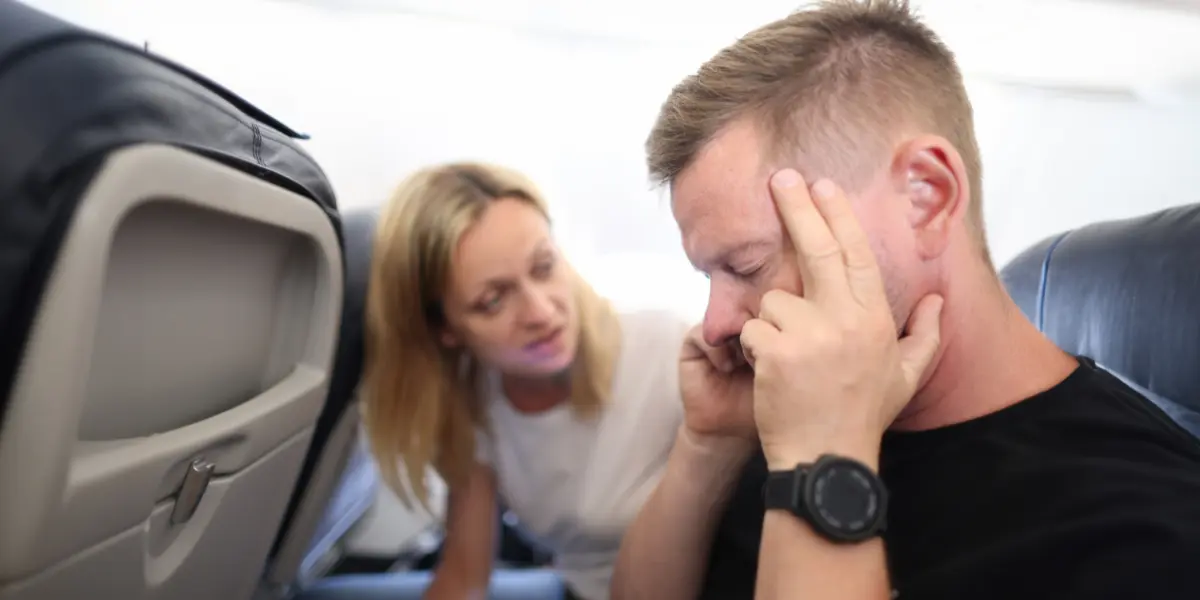
The evacuation framing is only one part of the health case. Deep vein thrombosis is the other.
DVT occurs when blood clots form in deep veins, most commonly in the legs. Extended immobility in a cramped seated position is a well-established contributing factor. Airlines and aviation regulators have known this for decades. A formal comment letter to the FAA, filed jointly by Senator Blumenthal and colleagues, explicitly cited DVT as a health consequence requiring consideration before any minimum seat dimension rule is finalized.
DVT Risk by Flight Duration
Flight Duration | DVT Risk Level | Notes |
Under 3 hours | Low | Movement possible, risk minimal |
3–6 hours | Moderate | Restricted movement elevates risk |
6–10 hours | Elevated | Medical guidance recommends movement every 2 hours |
10+ hours | High | Compression socks and movement protocols advised |
At 28 inches of pitch, a passenger cannot straighten their legs, shift their seating position, or cross their legs in the standard economy configuration. The practical effect is extended immobilization in a position that compresses the popliteal veins behind the knee. That compression is precisely the mechanism that elevates DVT risk.
The FAA has not issued guidance tying seat pitch minimums to DVT risk. The Department of Transportation has not required airlines to disclose DVT risk in the context of seat configuration. The gap between what the medical literature shows and what federal policy requires remains unaddressed.
What Passengers Can Do Right Now
Regulatory change is slow. The practical reality for tall passengers flying in 2026 is that the most effective strategies are route-level and booking-level decisions, not policy ones.
Strategies That Actually Work
Book JetBlue on competitive routes. Its standard 32-inch pitch costs nothing extra. On routes where JetBlue competes with American or United, the pitch advantage is free.
Target exit rows on Southwest before assigned seating fully rolls out. Board early, take the exit row, and 39 inches of pitch is yours at no extra charge.
Use SeatGuru or similar tools at the aircraft level, not the airline level. Pitch varies significantly by aircraft within the same airline. A United 767-400ER economy seat measures 18.5 inches wide nearly 2 full inches wider than the same carrier's 737-800.
Avoid basic economy fares entirely. Basic economy on American, Delta, and United removes seat selection entirely. A 6-foot passenger assigned middle seat 31E on a 30-inch pitch 737 has no recourse.
Book extra-legroom seats directly. On American, Delta, and United, extra-legroom seats in the 34 to 39-inch range cost $25 to $65 depending on route. That cost is real, but it is cheaper than the back pain treatment that follows four hours in a 28-inch pitch seat.
The broader point is that the burden has been entirely shifted to passengers. The airlines charge extra for adequate space, and the FAA has provided no regulatory floor below which that space cannot fall. Until a binding minimum exists, the market will continue to price legroom as a luxury rather than a baseline.
For a detailed look at how the major US carriers compare on salary, staffing, and overall operational quality factors that drive the service experience beyond the seat the complete breakdown is at Air Gazette's pilot salary comparison for United, American, and Delta.
The Future of Economy Seat Regulation: What Could Change

The political conditions for a seat size rule have not improved since 2022. The current regulatory environment under the 2025-2026 administration has prioritized deregulation broadly. The FAA is still working through the mandates of the 2024 Reauthorization Act. A new minimum seat dimension rule making is not currently on the agency's published agenda.
The most realistic path to change is not a new federal rule. It is consumer pressure driving airline-level product differentiation which is already happening, slowly. JetBlue's standard pitch adva
ntage and Delta's Comfort+ tier both reflect that passengers will switch airlines for legroom. As more carriers recognize that seat comfort is a competitive differentiator rather than a cost center, market pressure may accomplish what Congress and the FAA have not.
The alternative is a catastrophic evacuation event in which restricted seat dimensions demonstrably contribute to injuries or fatalities. That is not a forecast it is an observation about how aviation safety regulation has historically moved. The FAA's own 2022 evacuation study was criticized precisely because it did not reflect real-world conditions. A real-world event that does would be harder to dismiss.
For those interested in the broader trajectory of cabin product development through 2030, Air Gazette's full analysis on the future of business class covers how airlines are investing premium cabin dollars while economy remains stagnant.
Conclusion
Economy seats in the United States are narrower, shorter, and more densely packed than at any point in modern aviation history. The average American adult is bigger than they were when most of those seat configurations were designed. Federal regulation has produced 26,000 public comments, a flawed evacuation study, and no binding minimum standard.
The result is a system where adequate legroom has been reclassified as a premium product something passengers pay extra for rather than something airlines are required to provide. That is a policy outcome, not an accident of the market.
Until the FAA sets a binding floor, tall passengers are on their own. The best strategy is to treat seat dimensions as a primary booking criterion, not an afterthought. Book by aircraft first, airline second.
For more aviation reporting, analysis, and booking intelligence, explore everything at Air Gazette.
Frequently Asked Questions
What is the average economy seat pitch in the US in 2026?
Standard economy seat pitch on US carriers ranges from 28 inches on ultra-low-cost carriers like Spirit and Frontier to 32 inches on JetBlue. The three major legacy carriers American, Delta, and United operate their most common narrowbody aircraft at 30 to 32 inches of pitch. The 34-inch standard common in the 1980s no longer exists in standard economy on any major US carrier.
What is the minimum seat size required by the FAA?
As of 2026, the FAA has not established any binding minimum seat size for commercial airline passengers. Congress directed the FAA to do so in the 2018 FAA Reauthorization Act. The agency conducted a flawed study, collected over 26,000 public comments in 2022, and has not issued an enforceable rule. The 2024 FAA Reauthorization Act did not include a minimum seat dimension mandate.
Which US airline has the most legroom in economy class?
JetBlue offers the most legroom in standard economy among US carriers, with a fleet-wide pitch of 32 inches that does not require an upgrade fee. Southwest is the closest competitor at 31 inches, with exit row seats available at no extra charge for early boarders. Delta and United offer competitive extra-legroom products Delta Comfort+ and Economy Plus but charge separately for them.
How do airlines charge for extra legroom seats?
Extra-legroom seats in the 34 to 39-inch pitch range are sold as a separate fare category on most US carriers. Prices range from approximately $25 to over $100 per segment depending on the airline, route length, and how far in advance the seat is purchased. Basic economy fares on American, Delta, and United do not permit seat selection at all, meaning tall passengers on basic fares have no guarantee of extra-legroom availability.
Is seat pitch a safety issue or just a comfort issue?
The FAA has treated seat pitch primarily as a comfort issue, not a safety one which is the central reason no binding minimum has been established. However, advocates and several members of Congress have argued that seat pitch affects both emergency evacuation speed and health outcomes, specifically deep vein thrombosis risk on longer flights. The FAA's own 2022 evacuation study was criticized for using a test population that did not reflect real passengers, leaving the safety question unresolved.
What is a good seat pitch for tall passengers?
Aviation health guidance and passenger experience data consistently indicate that 32 inches of pitch is the minimum for a passenger over 5 feet 11 inches to sit without knee contact with the seat in front. For flights over four hours, 34 to 36 inches is recommended to allow for leg movement and reduce DVT risk. Exit row and bulkhead seats, which commonly measure 36 to 39 inches, are the most effective option available in economy class.
Did the 2024 FAA Reauthorization Act improve economy seat sizes?
The 2024 FAA Reauthorization Act did not set minimum seat dimensions. It addressed passenger refund rights, family seating fees, and disability accommodations. The family seating provision requiring airlines to seat children under 14 next to a traveling adult at no extra charge was the most directly consumer-facing measure. Economy seat pitch and width were not included in the final legislation.