Delta just opened a second Delta One Lounge at Los Angeles International Airport, and it comes stocked with showers, cabana-style bathrooms, and a menu built around California-grown ingredients. The catch is access: this space was never built for the average Delta flyer.
Getting past the door requires meeting one of a short list of conditions, and most passengers flying Delta out of LAX today do not meet any of them. Here is exactly what the lounge offers, who actually qualifies, and why Delta is drawing this line right now.
What's Actually Inside Delta's New LAX Lounge
The Space and Location
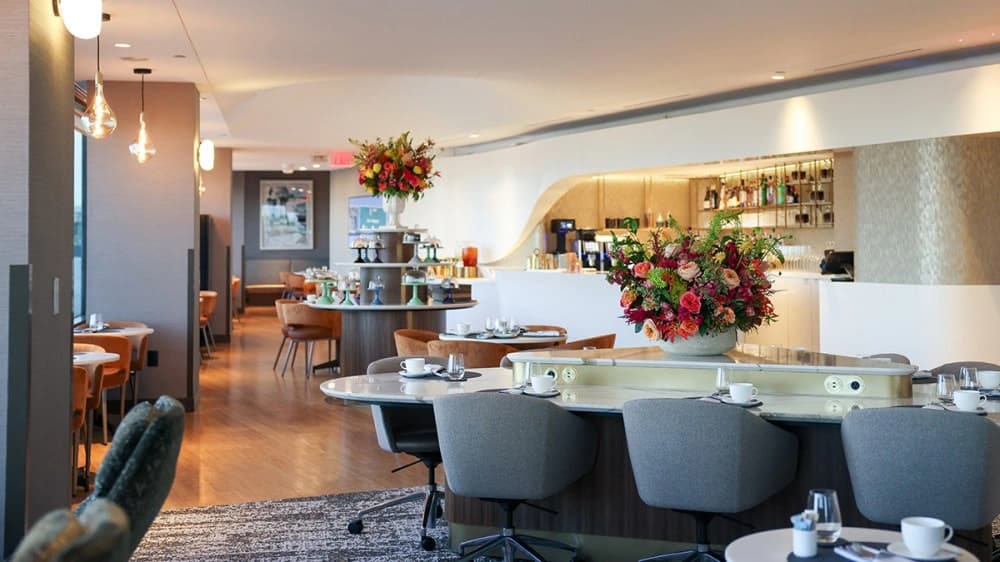
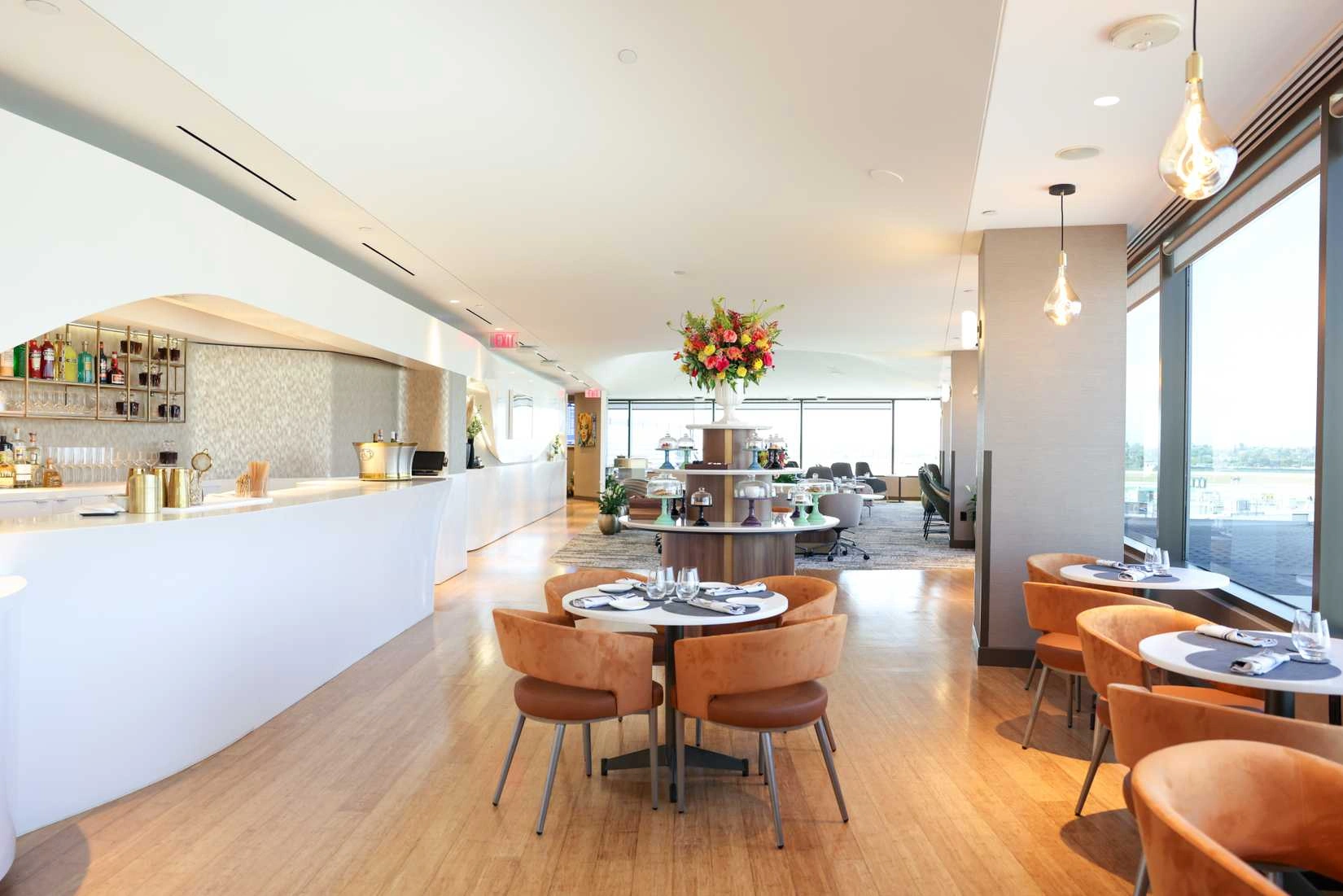
The new Delta One Lounge sits on the Mezzanine Level of Terminal 2, a compact 4,000-square-foot space with seating for 75 guests. It opened in the final days of June 2026 as Phase 1 of a larger renovation, joining Delta's original Delta One Lounge across the airport in Terminal 3.
Guests arriving through the Delta One check-in at Terminal 3 can reach the new space by a private golf cart transfer across the tarmac-side mezzanine. Delta is marketing the whole sequence, from curbside drop-off to lounge seating, as a single "curb-to-cloud" experience, and the airline clearly wants that phrase to stick with premium flyers booking future trips.
Compared with the airline's larger lounges elsewhere, this space is intentionally intimate rather than sprawling. Delta appears to be treating it as a proof of concept for LAX rather than a finished flagship, with the real showpiece still years away.
Dining, Wellness, and Amenities
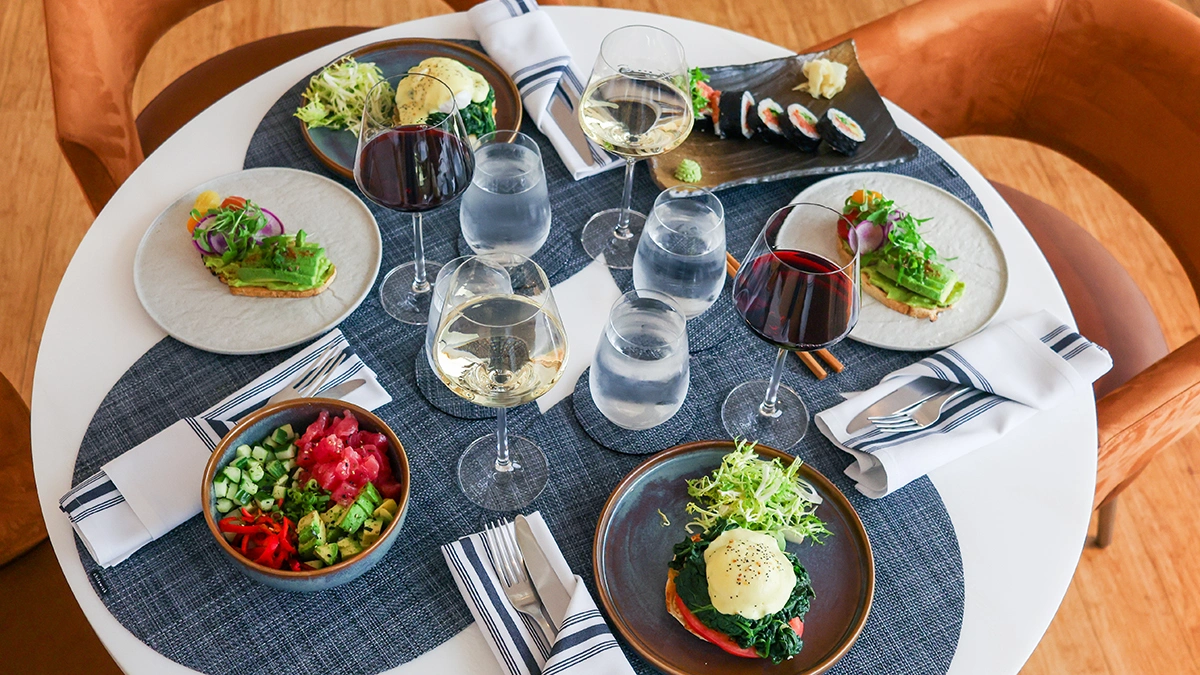
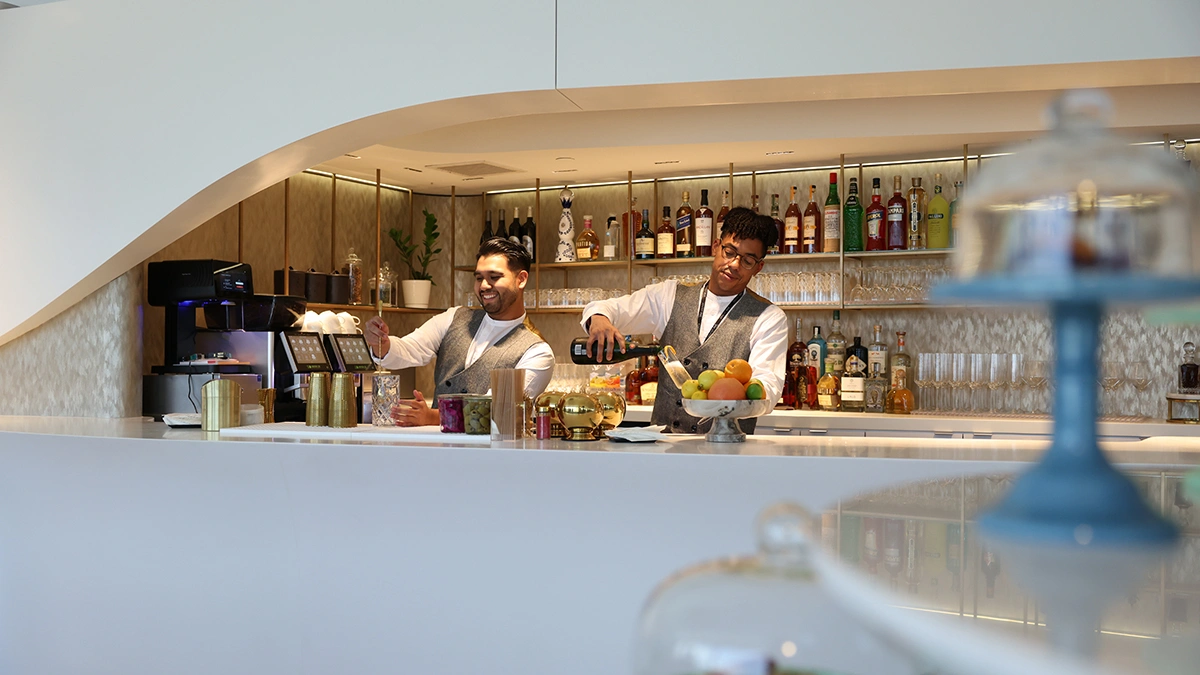
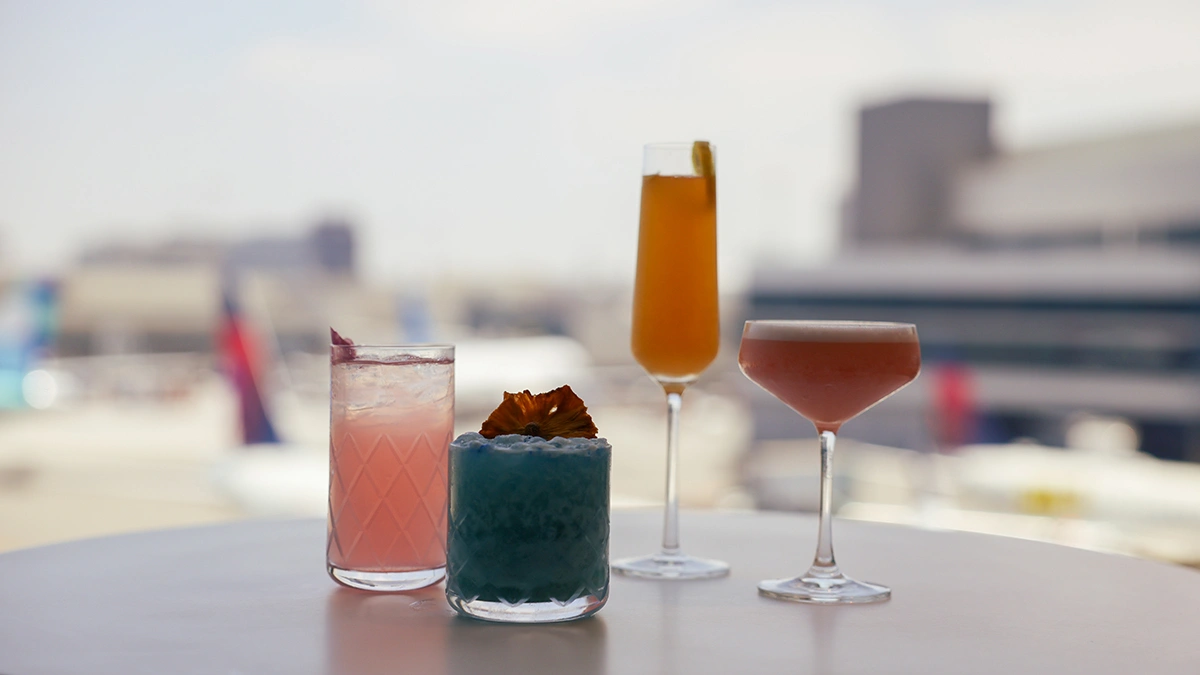
Inside, the lounge runs on full table-service dining rather than a self-serve buffet, with a menu built around California-sourced ingredients under Culinary Director Michael Rouleau. A dedicated bar pours specialty cocktails alongside the food program, and guests can plug in with portable monitors and wireless chargers scattered throughout the seating areas.
For wellness, the lounge includes three shower suites and four cabana-style bathrooms tucked down a side hallway from the main dining room. None of this comes cheap to build or staff, which is exactly why Delta has drawn such a tight circle around who gets to use it.
The emphasis on food and drink over spa-style amenities is a deliberate choice for this particular location. Delta appears to be positioning the Terminal 2 space as a fast, high-quality stopover rather than a destination lounge meant for hours-long visits.
The Basic Business Exclusion Coming in 2027: Delta has confirmed that customers traveling on Basic Business fares will lose Delta One Lounge access entirely for travel on or after January 19, 2027.
Why Delta Is Building a Second Lounge at LAX Right Now
LAX as Delta's Growing Transpacific Gateway
LAX has become one of Delta's most important international gateways, and the airline has been expanding its long-haul network out of the airport accordingly. New nonstop service to Hong Kong launched in June 2026, and Delta has since confirmed a nonstop LAX-Manila route beginning March 28, 2027, both aimed squarely at the kind of business-class demand this lounge is designed to protect.
Both routes lean heavily on Delta One revenue to be profitable, since narrowbody transcon routes cannot support the same premium fare mix. A dedicated ground experience for transpacific business-class passengers is Delta's way of reinforcing that revenue before the passenger even boards a plane.
Learning From How Other Hubs Handle Premium Transit
Ground experience has become a bigger differentiator across the industry, not just for Delta. Airports built around long connection times, such as Incheon's Terminal 2, have shown how much a well-designed lounge and transfer process can shape a traveler's choice of carrier on a long-haul itinerary.
Delta is effectively importing that logic to LAX, treating the ground experience as part of the product rather than an afterthought bolted onto the ticket. LAX also sits in an unusually competitive market compared with Delta's dominant hubs in Atlanta or Salt Lake City, which makes winning loyalty through ground experience a more attractive lever than winning it through fares alone.
Who Actually Gets Into Delta's New Delta One Lounge
The Full Eligibility List
According to Delta's own Delta One Lounge access policy, admission is limited to a specific set of ticket types, not to lounge membership or elite status. The table below breaks down exactly who qualifies for entry.
Passenger Type | Access Granted? |
Same-day Delta One ticketed passenger | Yes |
Delta 360° Member in Delta First Class (non-Basic) | Yes |
Air France La Première or long-haul Business Class | Yes |
KLM Business Class, Korean Air First/Prestige, Virgin Atlantic Upper Class, LATAM Premium Business | Yes |
Delta Sky Club member without a qualifying ticket | No |
SkyMiles credit cardholder without a qualifying ticket | No |
The list is deliberately narrow, and Delta has confirmed that Sky Club membership alone will not open the door. Even premium credit cards that unlock Sky Club access carry no weight at this particular lounge.
What Won't Get You Through the Door
Delta has been explicit that American Express cardholder credentials, which typically grant Sky Club access, do nothing for Delta One Lounge admission. A confirmed upgrade to Delta One at check-in does qualify a passenger, but a request still sitting on the waitlist does not.
This distinction matters for anyone hoping to talk their way in based on loyalty tenure or a co-branded card alone. The lounge is built around the ticket actually in hand at security, not the passenger's history with the airline.
Delta 360° Members traveling in Delta One or First Class can also bring limited companions through, either immediate family or up to two guests, for a $100 fee or 10,000 miles per person. That option, however, is only available to members who already meet the base eligibility requirement themselves.
Who Gets Locked Out and Who Pays for It
The Basic Business Exclusion Coming in 2027
Delta has confirmed that customers traveling on Basic Business fares will lose Delta One Lounge access entirely for travel on or after January 19, 2027. That change is separate from Delta's broader rollout of basic fare bundles across all cabins, which took effect for tickets booked as of July 8, 2026.
The two dates are easy to conflate, but they describe different milestones. One marks a fare-structure change across the airline; the other is the specific date the cheapest version of a business-class ticket stops buying lounge access at all.
The Cost Falls Hardest on the Middle of the Cabin
Passengers who pay full Delta One fares, or who hold Delta 360° status, absorb none of this cost and gain a materially better ground experience for it. Passengers who book the discounted Basic Business fare instead get the seat but lose the lounge, shifting the premium ground experience toward those willing to pay for flexibility.
This mirrors a pattern showing up across the cabin more broadly, where the space between premium and economy keeps getting squeezed from both directions. Coach passengers have already absorbed years of shrinking seat pitch, and now even business-class buyers are discovering that the cheapest version of their fare no longer includes what used to come standard.
Delta is betting that enough transpacific and transcon travelers will pay up rather than downgrade, since the lounge itself becomes part of the sales pitch for the higher fare. That bet has not yet been tested against a full holiday travel season, so its real effect on booking behavior remains unproven for now.
Delta's Two LAX Lounges, Compared
Feature | Terminal 3 (Original) | Terminal 2 (New) |
Size | 10,000 sq ft | 4,000 sq ft |
Seating | Larger capacity | 75 guests |
Hours | 4:15 a.m. – 11:30 p.m. | 7:00 a.m. – 11:00 p.m. |
Showers | Yes | Yes, 3 suites |
Renovation status | Established | Phase 1 of 2, full buildout by 2028 |
The Terminal 3 lounge remains the larger of the two, but the new Terminal 2 space is purpose-built around Delta's transpacific growth at that end of the airport. Once Phase 2 finishes in 2028, Delta expects its total lounge footprint at LAX to reach 60,000 square feet across more than 1,000 seats between the two locations.
Splitting premium guests across two terminals also creates a genuine operational question for Delta. Passengers may simply default to whichever lounge sits closer to their gate, which means Delta will need to manage crowding carefully rather than assuming demand splits evenly.
Why the Cabin Itself Still Matters as Much as the Lounge
Ground Product Is Only Half the Premium Equation
A striking lounge does little to compensate for a mediocre seat once the passenger actually boards, and airlines with strong long-haul business-class products know this well. ANA's long-haul business class, for example, varies meaningfully by aircraft type, and the gap between its best and weakest configurations can be worth thousands of dollars in comfort on an overnight flight.
Delta's own Delta One cabin has generally kept pace with that standard across its widebody fleet, which is part of why the airline can credibly sell a premium ground experience to match it. A gorgeous lounge attached to an underwhelming seat would undercut the entire pitch Delta is making with this investment.
Why the Combination Is the Real Differentiator
Airlines increasingly compete on the full journey rather than any single touchpoint, and Delta's LAX buildout reflects that shift directly. The lounge, the cabin, and the check-in experience are being sold as one connected product, which raises the stakes for Delta if any single piece underperforms.
Who Is Actually Funding This Kind of Investment
The Ancillary Fee Model Behind Airline Economics
Premium ground investments like this lounge do not exist in isolation from how airlines make money elsewhere in the cabin. Budget carriers have leaned hard into ancillary fees to fund their operations, and even a carrier like Frontier now generates more than 60 percent of its revenue from fees rather than base fares alone.
Full-service airlines like Delta run a different model, but the underlying logic is similar in spirit. Segmenting the cabin into more precisely priced tiers, from Basic Business up through Delta 360°, lets the airline extract more value from passengers willing to pay for comfort while keeping headline fares competitive for everyone else.
What This Means for Fare Shopping Going Forward
Flyers comparing fares across airlines increasingly need to look past the sticker price to understand what they are actually buying. A Basic Business fare and a standard Delta One fare might show a similar price gap today, but after January 2027 they will represent two very different travel experiences at LAX specifically.
That gap is likely to widen further as Delta rolls out more lounge and cabin investments tied to full-fare tickets. Shoppers who only compare base prices risk missing the access differences that increasingly separate one fare class from another.
What This Signals for Premium Travel at LAX Over the Next Year
Phase 2 and the Four-Lounge Future
The current Terminal 2 space is explicitly temporary, occupying a former airline lounge on a short-term basis while Delta plans a full renovation of the site. That renovation is scheduled to close the space again in the second half of 2027, reopening with the finished Phase 2 buildout in 2028.
A new Terminal 2 Delta Sky Club is also planned for 2027, adding a third premium space to Delta's LAX footprint alongside the two Delta One lounges. Taken together, these moves suggest LAX is becoming a long-term strategic priority for Delta rather than a one-off project tied to a single route launch.
Timing Around the 2028 Games
Los Angeles is scheduled to host the Olympic Games in 2028, and Delta's lounge and terminal investments line up closely with that broader timeline. Airlines with strong infrastructure in place ahead of a global event like this stand to capture a disproportionate share of premium demand once the Games arrive, and flyers booking premium travel through LAX across 2027 and 2028 should expect continued construction along the way.
What Flyers Booking Through LAX Should Do Now
If You Already Hold Delta One or Delta 360°
Passengers who already book Delta One tickets on transpacific or premium transcon routes gain immediate access to both LAX lounges without needing to change anything about how they fly. The bigger decision is timing: arriving early enough to enjoy the Terminal 2 space is worth planning around, especially on Hong Kong departures where the flight itself runs long.
Delta 360° Members traveling in First Class should also factor in the companion guest option if traveling with family. At $100 per person or 10,000 miles, bringing a spouse or child into the lounge is a relatively small add-on next to the cost of the ticket itself.
If You're Considering Basic Business
Anyone comparing a Basic Business fare against a standard Delta One fare for travel after January 19, 2027 needs to weigh lounge access as part of that decision, not as an afterthought. The fare difference may look small at checkout, but it now determines whether a passenger gets a shower and a sit-down meal before boarding or waits at the gate like everyone else.
For travelers who value the ground experience as much as the seat itself, that gap is likely reason enough to pay up. For those simply trying to get from LAX to a connecting hub as cheaply as possible, the lounge exclusion may be an acceptable trade-off worth taking.
The Bottom Line for LAX Flyers
Delta's new Delta One Lounge is a genuinely impressive space, but it was built for a narrow slice of Delta's passenger base. Same-day Delta One ticket holders, qualifying Delta 360° Members, and a short list of partner premium cabins are the only travelers getting through that particular door.
Everyone else, including plenty of loyal Delta customers, will keep waiting outside it, at least until their next fare upgrade changes that equation. For more coverage on how premium air travel is changing at America's biggest hubs, explore the latest reporting at The Air Gazette.
Frequently Asked Questions
Who is allowed to use Delta's new Delta One Lounge at LAX?
Access is limited to same-day Delta One ticketed passengers, Delta 360° Members traveling in Delta First Class (excluding Basic First), and passengers flying same-day in a qualifying partner premium cabin. That partner list includes Air France La Première and long-haul Business Class, LATAM Premium Business, KLM Business Class, Korean Air First and Prestige Class, and Virgin Atlantic Upper Class.
Where in LAX is Delta's second Delta One Lounge located?
The new lounge sits on the Mezzanine Level of Terminal 2. It complements Delta's original Delta One Lounge in Terminal 3, located across from the food court.
Does a Delta Sky Club membership get you into the Delta One Lounge?
No. Delta has confirmed that Sky Club membership does not grant access to the Delta One Lounge on its own, regardless of tenure or membership tier.
What amenities does the new LAX Delta One Lounge have?
The space includes full table-service dining built around California-sourced ingredients, a premium cocktail bar, three shower suites, and four cabana-style bathrooms. Guests also have access to portable monitors and wireless chargers throughout the seating area.
When did Delta's second Delta One Lounge at LAX open?
Phase 1 opened in the final days of June 2026. A full Phase 2 renovation is scheduled to begin in the second half of 2027, with completion expected in 2028.
How is this different from Delta's original Delta One Lounge at LAX?
The Terminal 3 lounge is larger at 10,000 square feet and keeps longer daily hours, running from 4:15 a.m. to 11:30 p.m. The new Terminal 2 space is smaller at 4,000 square feet with seating for 75 guests, open from 7:00 a.m. to 11:00 p.m., and was built specifically to support Delta's growing transpacific routes out of that side of the airport.
Can Delta SkyMiles credit cardholders access the Delta One Lounge?
No. Delta has stated explicitly that American Express cardholder credentials, including ones that normally unlock Sky Club access, do not grant entry to the Delta One Lounge.