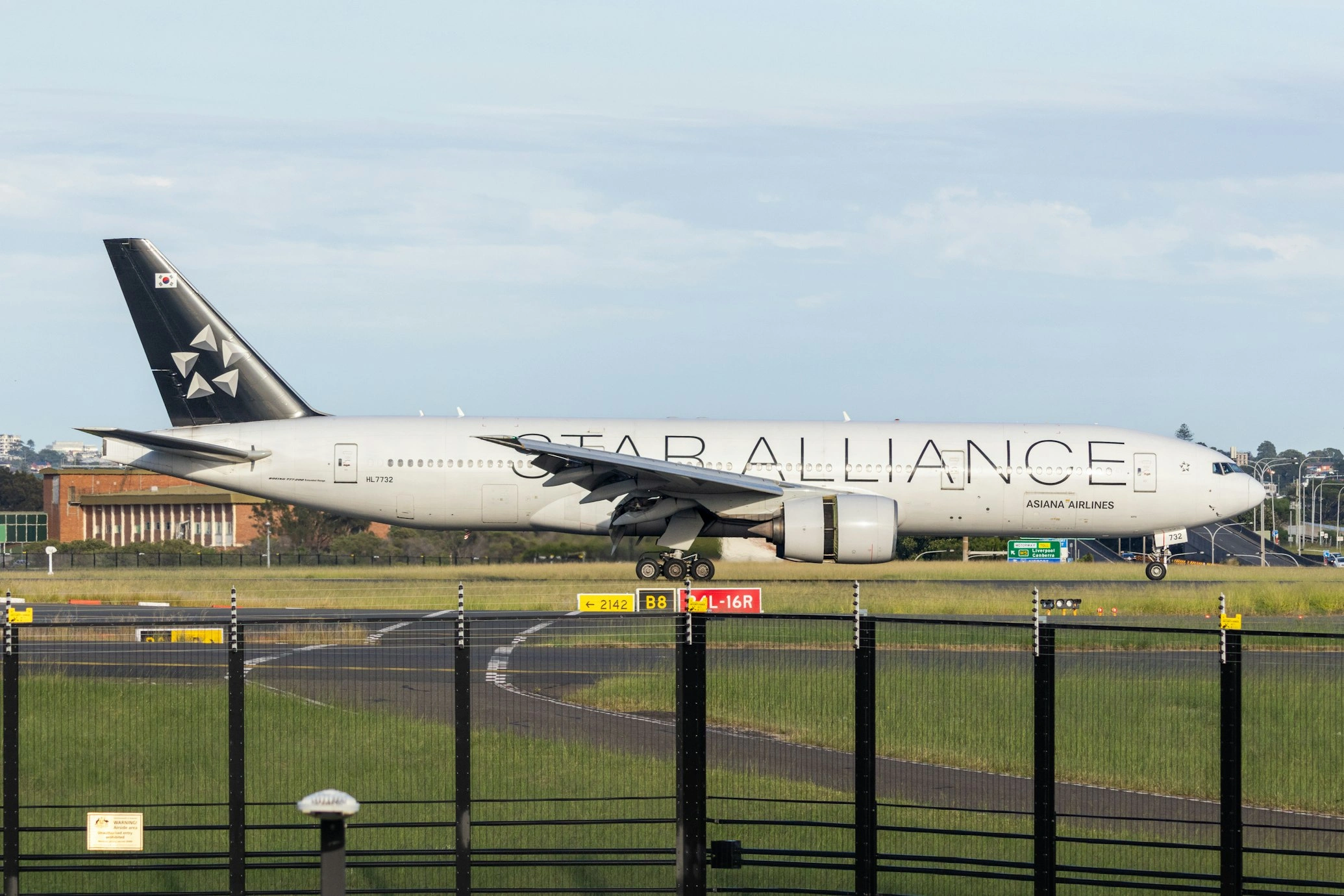
Since January 14, 2026, every Asiana Airlines flight at Seoul Incheon Airport has departed from Terminal 2 the same building Korean Air has operated from
since 2018. On December 17, 2026, the Asiana brand disappears entirely and every remaining Asiana passenger becomes a Korean Air passenger. The terminal is already unified. The lounge access rules have already changed. The inter-terminal trap that is catching Star Alliance transits off guard is already active.
Most travel sites have not updated for this. The airport has changed. The lounge rules have changed. The codeshare terminal assignments have changed. This guide covers what actually happens at ICN right now, what changes again in December, and what every traveler with an Asiana booking or an onward Star Alliance connection needs to verify before arriving at the airport.
The Geography Has Broken: Why This Is Unlike Any Previous Terminal Change
For 25 years, Incheon Airport ran one of the cleanest alliance divides of any major hub in the world. Terminal 1 was Star Alliance territory Asiana, Singapore Airlines, Lufthansa, ANA, Air Canada, EVA Air, Turkish Airlines. Terminal 2, which opened in January 2018, was built specifically for SkyTeam: Korean Air, Delta, Air France, KLM.
That architecture was not accidental. It was a deliberate hub design alliance partners in the same terminal, shared check-in zones, lounge access that worked on a single walk from gate to door. A traveler arriving on ANA from Narita and connecting onto Asiana to Bangkok never left the same building.
That split ended on January 14, 2026, when Asiana completed its relocation to Terminal 2. The move was announced in October 2025 and communicated by email to Asiana Club members in Korean first, English second, and not at all to the millions of travelers who booked Asiana through Star Alliance partner programs like United MileagePlus, Air Canada Aeroplan, or Singapore Airlines KrisFlyer. Travelers booking through ANA Mileage Club or KrisFlyer received no proactive terminal correction notice from their booking carrier. That communication failure is still producing missed flights in 2026.
The result is what could be called a terminal alliance fracture the first time in Incheon's history that a Star Alliance member has been housed in a SkyTeam terminal while every other Star Alliance carrier at the same hub remains in the original alliance building. Asiana is now the only Star Alliance carrier operating from Terminal 2. Every other Star Alliance airline at Incheon ANA, Singapore Airlines, Lufthansa, Air Canada, EVA Air, Turkish Airlines still operates from Terminal 1. The two terminals are not connected internally. They are 15 kilometers apart.
Alliance | Carrier | Terminal at ICN (from January 14, 2026) |
Star Alliance | Asiana Airlines (OZ) | Terminal 2 |
SkyTeam | Korean Air (KE) | Terminal 2 |
SkyTeam | Delta, Air France, KLM | Terminal 2 |
Star Alliance | ANA, Singapore Airlines, Lufthansa, Air Canada, EVA Air | Terminal 1 |
Star Alliance | Turkish Airlines | Terminal 1 |
Budget / LCC | Jin Air, Air Busan, Air Seoul | Terminal 2 |
Source: Incheon International Airport Corporation terminal assignment records, January 2026; Asiana Airlines official Terminal 2 migration notice, October 2025.
Any itinerary that previously combined a T1 Star Alliance arrival with an onward Asiana departure in the same terminal no longer works that way. That connection now requires a physical transfer between two separate buildings with no internal airside route between them.
The broader context matters here too. Asiana's terminal move is part of a sweeping consolidation reshaping Asian aviation. The future of premium cabin access across the region is being redrawn by exactly these kinds of alliance and merger decisions and frequent flyers who understood Korean Air's strategy saw this terminal fracture coming before most travel sites did.
The Inter-Terminal Gap: What It Costs You in Time
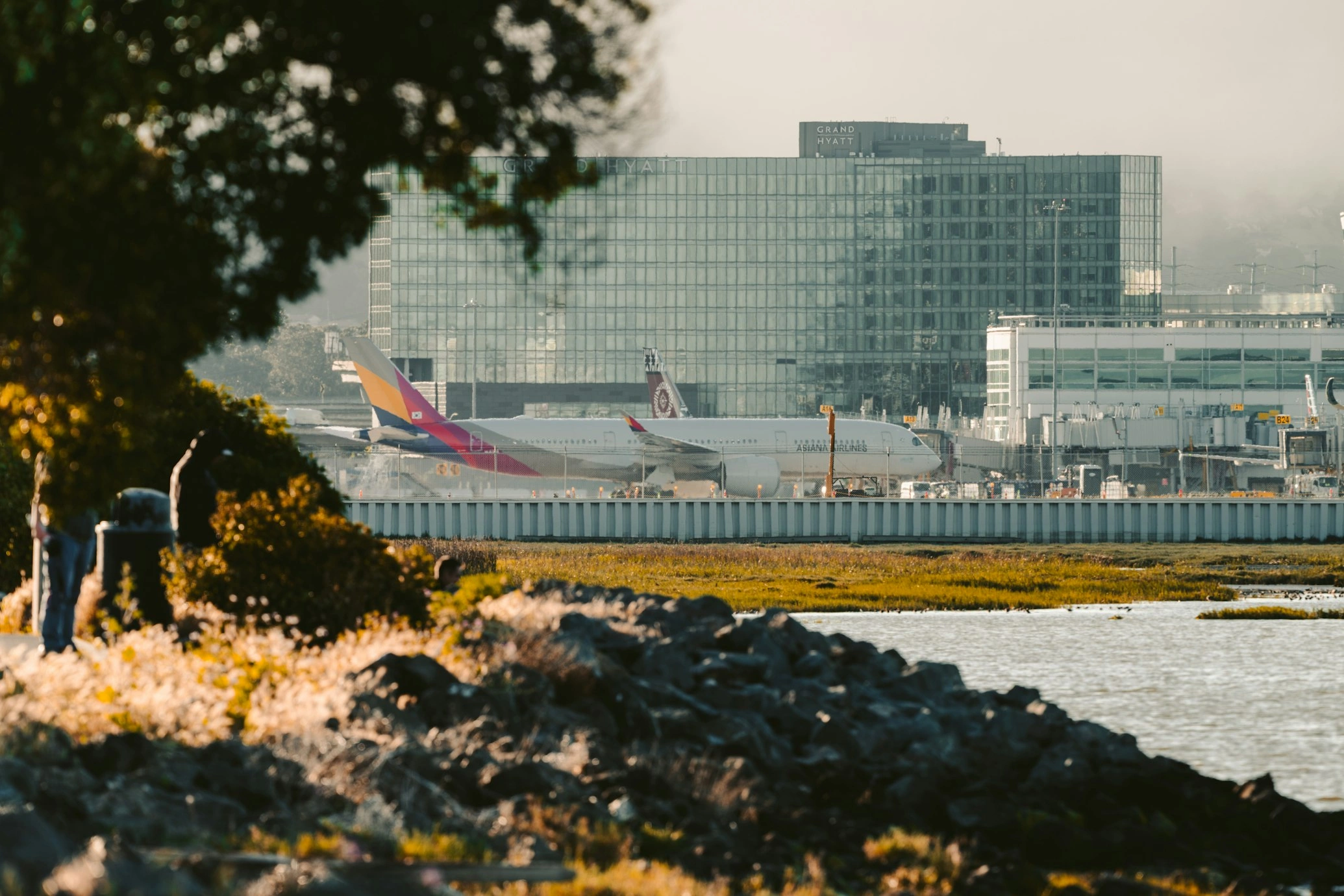
There is no airside walkway between T1 and T2. No tunnel, no connector, no internal transit corridor. Moving between the terminals means leaving the secure area, covering 15 kilometers of road, and re-entering security at the other building.
The AREX airport train is the fastest option and the one this guide recommends above all others. The ride itself takes 6 minutes. Door-to-door exiting T1 arrivals, walking to the platform, waiting for the train, riding, and joining the T2 security queue runs approximately 20–22 minutes under normal conditions, consistent with Incheon Airport's own published inter-terminal transfer guidance and verified against post-relocation transfer conditions in February 2026. The AREX platform is well-signed from both terminals' arrivals halls and the walk from T1 arrivals to the platform takes under five minutes at a normal walking pace.
Transfer Method | Total Journey Time | Operating Hours | Cost | Notes |
AREX airport train | ~20–22 min door-to-door | 05:23–00:08, every 15 min | ₩1,200–1,600 (~$1) | Recommended. Fastest verified option. |
Free shuttle bus | ~35 min total incl. walk and wait | 05:00–00:00, every 12 min | Free | Ground floor outside arrivals |
Taxi / Kakao | ~18 min drive | 24 hours | ₩27,000–33,000 (~$20–25) | Only option after midnight |
Source: Incheon International Airport Corporation inter-terminal transfer guide, 2026. ₩ = South Korean won. Fares current as of February 2026.
After midnight, both the shuttle and AREX stop running. If an inbound flight lands late and the connection requires reaching T2 from T1 after midnight, a taxi is the only option. Budget ₩30,000 and 20 minutes minimum. The Darakhyu transit hotel operates inside both terminals for travelers who need to overnight before a connection rather than risk it.
The Only Safe Minimum Connection Times By Transfer Type
This is the part most airport guides get wrong by giving a single figure. The correct answer depends entirely on how the tickets are structured.
Transfer Type | Minimum to Book | Why |
Single itinerary, bags checked through (interline) | 90 min ( published MCT); 120 min recommended | Still requires physical terminal move and T2 re-security. Peak window (09:00–11:00) builds queues. |
Two separate tickets, self-transfer | 4 hours, no exceptions | Requires immigration, baggage reclaim, exit, transfer, re-check-in, T2 security, gate walk. |
After midnight, any type | Add 20 min for taxi + contingency | No shuttle, no AREX. Taxi only. |
Source: Incheon International Airport Corporation published Minimum Connecting Times (MCT), January 2026.
The 4-hour minimum for self-transfers is not conservative padding. Immigration queue times at ICN T1 during peak morning arrivals can vary by 45 minutes or more depending on flight wave composition. Four hours covers both the fast scenario and the slow one. Booking tighter is a risk a separate-ticket traveler absorbs entirely alone the airline owes nothing if a self-transfer misconnects.
What Happened to the Asiana Lounges: A Phase-Down That Most Travelers Haven't Mapped
The lounge situation is the least understood part of this change including among frequent flyers who follow aviation news closely. The short version: Asiana is not operating any branded lounge at Terminal 2. The four lounges it ran at Terminal 1 are closing on staggered timelines. The replacement product is Korean Air's Prestige Garden, which is a different facility, a different access policy, and a materially different experience to what Asiana Club members built their habits around.
Lounge | Terminal | Status as of May 2026 |
Asiana Business Lounge West | T1 | Renamed Star Alliance Lounge (Jan 14, 2026) |
Asiana Business Lounge East | T1 | Closed (March 2026) |
Asiana Business Lounge Central | T1 | Open until December 2026, then repurposed as SkyTeam facility |
Asiana Business Suite Lounge East | T1 | Open until December 2026 |
T2 lounge access for Asiana passengers | T2 | Korean Air Prestige Garden (from Jan 14, 2026) |
Source: Asiana Airlines official Terminal 2 migration notice, October 2025; Korean Air lounge access policy, January 2026; Korean Air lounge expansion press release, April 2026.
The Prestige Garden is a genuinely better product than Asiana's former Business Lounge East at T1 larger footprint, stronger food programme, more shower suites. Korean Air has invested heavily in T2 lounge capacity ahead of the full merger: the west wing Prestige and First Class Lounges completed renovation in April 2026, and Korean Air now operates six lounges at ICN Terminal 2 in total. Combined seating capacity is roughly double what existed at T2 before the Asiana integration, per Korean Air's published lounge expansion announcements.
One practical observation from post-relocation visits: access verification at the Prestige Garden door runs slower than Asiana's T1 lounges did. Staff are checking alliance status against Korean Air's system rather than Asiana's, and the door queue can run 2–3 minutes during peak morning departure windows. Not a serious problem worth knowing if the departure is close.
Who Gets In: The New Lounge Access Matrix
Before January 14, 2026, a Star Alliance Gold card admitted a traveler to any Asiana lounge at Terminal 1 regardless of which airline they were flying. That blanket rule is gone. The access logic now splits cleanly by terminal and by date.
Traveler Type | Terminal | Lounge Access | Valid Until |
Asiana business class passenger | T2 | Korean Air Prestige Garden | December 17, 2026 |
Asiana Club Diamond member | T2 | Korean Air Prestige Garden | December 17, 2026 |
Star Alliance Gold on Asiana-operated OZ flight | T2 | Korean Air Prestige Garden | December 17, 2026 |
Star Alliance Gold on ANA / SQ / LH / AC / BR | T1 | Carrier's own lounge / SilverKris / Star Alliance Lounge | Ongoing |
Priority Pass holder | T1 or T2 | Independent pay lounges only (see FAQs) | Ongoing |
Any passenger on Korean Air | T2 | Korean Air Prestige Garden (per KE entitlements) | Ongoing post-merger |
Source: Asiana Airlines Star Alliance lounge access notice, January 2026; Korean Air Terminal 2 lounge access policy, January 2026.
After December 17, 2026, Asiana exits Star Alliance entirely. Star Alliance Gold recognition on Asiana-operated flights ends on that date. T2 lounge access for former Asiana passengers reverts fully to SkyTeam entitlements under Korean Air. A United Premier Gold card that previously opened Asiana lounge doors at T1 will carry zero lounge entitlement on a former Asiana flight after December 17.
The practical test: if the operating carrier on the boarding pass is OZ and the date is before December 17, Star Alliance Gold applies. If the date is after December 17, or the operating carrier has already shifted to KE, SkyTeam rules govern entirely.
The Codeshare Problem Nobody Has Addressed: Wrong Terminal, Missed Flight
This is the scenario causing the most documented disruption since the January 2026 relocation and it is the one that virtually no major travel outlet has addressed directly.
ANA operates NH codes on Asiana's ICN–NRT route. Singapore Airlines markets SQ codes on Asiana's ICN–SIN route. A traveler who booked one of those flights through ANA's website or Singapore Airlines' website and received an NH or SQ flight number may find their booking confirmation references Terminal 1 check-in procedures because those procedures were accurate until January 13, 2026. The actual flight departs Terminal 2, on Asiana aircraft, operated under OZ.
Since the January relocation, the Air Gazette inbox has received multiple reader reports of travelers who arrived at T1 for an NH-coded departure, were turned away at the check-in counter, and scrambled to T2 under time pressure. Several missed their flights. All held valid tickets. All had checked in online. None received a proactive terminal correction notice from their booking carrier.
This is not hypothetical. It is a documented operational failure that booking carriers have not resolved cleanly, and it will persist until the NH and SQ codeshares on Asiana metal dissolve on December 17, 2026.
Codeshare | Marketing Code | Operating Carrier | Correct Terminal | Codeshare Ends |
ANA on Asiana ICN–NRT | NH | OZ (Asiana) | Terminal 2 | December 17, 2026 |
Singapore Airlines on Asiana ICN–SIN | SQ | OZ (Asiana) | Terminal 2 | December 17, 2026 |
Any flight where operating carrier = OZ | Any code | OZ (Asiana) | Terminal 2 | Until Dec 17, then KE |
Source: ANA codeshare agreement disclosure, October 2025; Singapore Airlines codeshare schedule, 2026; Incheon Airport terminal assignment tool, airport.kr.
The rule is simple and absolute: the operating carrier determines the terminal, not the marketing flight number.
To verify before travel: check the operating carrier field on the e-ticket (not the flight number). Confirm the terminal using Incheon Airport's official flight search tool at airport.kr enter the flight number and it returns the correct departure terminal. This step takes 30 seconds and prevents the problem entirely.
December 17, 2026: What the Merger Completion Actually Changes
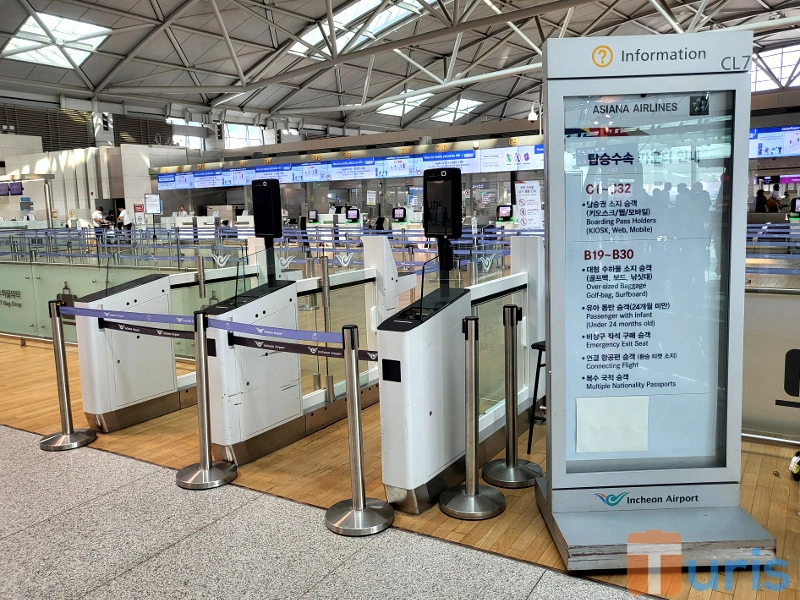
The physical terminal move already happened in January. December 17 changes the legal and commercial layer branding, codes, alliance membership, mileage accrual, and codeshare agreements. The building does not move. The system does.
Element | Now (Before December 17, 2026) | After December 17, 2026 |
Check-in counters at T2 zones G, H, J | Asiana branding, OZ flight codes | Korean Air branding, KE codes |
Asiana Club mileage accrual | Active on all Asiana-operated flights | Programme closes SKYPASS only |
Star Alliance Gold lounge access on OZ flights | Applies under Star Alliance reciprocity | Ends SkyTeam entitlements only |
NH / SQ codeshare codes on Asiana metal | Active | Dissolved |
Existing Asiana bookings | Operate as ticketed under OZ codes | Honored, flight operates under KE banner |
T1 Asiana Business Lounge Central | Asiana-branded | Repurposed as SkyTeam facility |
T1 Asiana Business Suite Lounge East | Asiana-branded | Closes / repurposed |
Source: Korean Air–Asiana merger completion announcement, 2025; Korean Air SKYPASS conversion terms, published at koreanair.com.
Asiana Club miles should be redeemed before December 17. After that date, the programme closes. Korean Air has published SKYPASS conversion terms for unredeemed Asiana Club miles, but the conversion is not one-to-one across all award types. Travelers holding a significant Asiana Club balance should check the Korean Air conversion guide at koreanair.com before the deadline.
This kind of airline consolidation has knock-on effects beyond the lounge and the loyalty programme. Global route disruptions from the Iran conflict driving up flight costs across Asia in 2026, to the collapse of Spirit Airlines reshaping the US low-cost market are all part of the same unstable aviation landscape that makes knowing your terminal and your mileage deadline more important than it has ever been.
The Practical Checklist: Six Scenarios, Six Clear Answers
Find the scenario that matches the itinerary. These are the only steps that apply.
Scenario 1 Departing Asiana outbound from Seoul Check in at Terminal 2, zones G, H, or J, 3rd floor departure hall. Lounge access is through Korean Air Prestige Garden at T2. Bring both boarding pass and Star Alliance Gold card both are required for lounge entry verification under Korean Air's access system. Terminal 1 is the wrong building entirely.
Scenario 2 Arriving on a Star Alliance carrier (ANA, Lufthansa, Singapore Airlines, Air Canada) at T1, connecting onto Asiana at T2 Inbound lands at T1. Asiana departure is at T2. Take the AREX train 6 minutes, ₩1,200, fastest verified option. On a single itinerary with confirmed through-baggage: 90 minutes minimum, 120 minutes preferred. On two separate tickets: four hours minimum, no exceptions.
Scenario 3 Booked Asiana via a Star Alliance partner programme, holding Star Alliance Gold Lounge access through Korean Air Prestige Garden at T2, not any Asiana-branded facility. Entry requires boarding pass and Star Alliance Gold card. After December 17, Star Alliance Gold recognition on these flights ends entirely.
Scenario 4 Holding an NH or SQ codeshare ticket on an Asiana-operated ICN route Check the operating carrier on the e-ticket. If it shows OZ, the departure is at Terminal 2 regardless of the NH or SQ flight number. Verify the terminal at airport.kr before traveling. These codeshares dissolve December 17, 2026.
Scenario 5 Arriving after midnight, needing to transfer between T1 and T2 Shuttle and AREX both stop running after midnight. Taxi only: budget ₩30,000 and 20 minutes minimum. The Darakhyu transit hotel is inside both terminals for travelers who prefer to overnight rather than risk a tight post-midnight transfer.
Scenario 6 Self-transfer on two separate tickets, T1 arrival and T2 Asiana departure Sequence: clear immigration, reclaim baggage, exit arrivals, take AREX or shuttle to T2, re-check in, clear T2 security, reach gate. Four hours between flights is the minimum worth booking. Immigration queue variability alone can consume 45 minutes of that window during peak waves.
For what this merger means for frequent flyer programme strategy and premium cabin access across Asian carriers more broadly including how SKYPASS stacks up against ANA Mileage Club and JAL Mileage Bank for regional redemptions see the Air Gazette guide on the future of business class.
Existing Asiana Bookings for Travel After December 17: What Actually Changes
Korean Air has confirmed it will honor all existing Asiana bookings through the ticketed travel date. No rebooking is required. Three things will be operationally different at the airport:
The flight operates under a Korean Air KE code, not OZ.
Check-in is at Korean Air counters at T2, not Asiana-branded desks.
Lounge access follows Korean Air and SkyTeam entitlements, not Asiana Club or Star Alliance rules.
For itineraries involving a Star Alliance partner redemption through MileagePlus, Aeroplan, or KrisFlyer, the underlying ticket remains valid. What changes is that the flight now operates on Korean Air metal and Star Alliance-specific benefits (lounge access, upgrade priority, Gold recognition) no longer apply from December 17 forward.
For more aviation guides, transit breakdowns, and airline strategy, visit Air Gazette.
Frequently Asked Questions
Which terminal does Asiana Airlines use at Incheon Airport now?
As of January 14, 2026, Asiana Airlines operates entirely from Terminal 2 at Incheon International Airport. Check-in counters are in zones G, H, and J on the 3rd floor departure hall. This applies to all Asiana-operated flights regardless of the marketing carrier code on the ticket.
Are Terminal 1 and Terminal 2 at Incheon connected internally?
No. The two terminals are separate buildings approximately 15 kilometers apart with no internal airside connection. Transfer requires exiting the terminal and using the free shuttle bus (every 12 minutes, 05:00–00:00), the AREX airport train (6 minutes, ₩1,200–1,600), or a taxi (18 minutes, ₩27,000–33,000). After midnight, only taxis run.
Where is the Asiana lounge at Incheon Terminal 2?
Asiana does not operate its own branded lounge at Terminal 2. Eligible Asiana passengers business class, Asiana Club Diamond, and Star Alliance Gold members on Asiana-operated flights use Korean Air Prestige Garden Lounges at T2. After December 17, 2026, access reverts fully to SkyTeam entitlements under Korean Air.
My ticket shows an ANA or Singapore Airlines flight number on an Asiana route. Which terminal am I at?
If the operating carrier on the e-ticket is OZ (Asiana), the departure is from Terminal 2 regardless of the NH or SQ marketing code. Check the operating carrier column on the e-ticket or confirm at airport.kr. These codeshares dissolve on December 17, 2026.
What is the minimum connection time for a T1 to T2 transfer at Incheon?
For a self-transfer on two separate tickets: four hours minimum. For a protected interline transfer on one itinerary with confirmed baggage check-through: Incheon Airport's published MCT for inter-terminal transfers is 90 minutes. Based on post-relocation transfer conditions observed in February 2026, 120 minutes is the more reliable working threshold during peak morning departure windows between 09:00 and 11:00.
What changes at Incheon on December 17, 2026 when the merger completes?
All Asiana branding at T2 is replaced by Korean Air branding. OZ codes shift to KE. Star Alliance Gold reciprocity on Asiana-operated flights ends. Asiana Club mileage accrual ends. NH and SQ codeshare agreements dissolve. Existing Asiana bookings are honored but operate under Korean Air metal and SkyTeam entitlements.
Does Priority Pass work at Incheon Terminal 2?
Yes, at independent lounges. At Terminal 2: Matina Lounge and SKY HUB Lounge West (4th floor) accept Priority Pass. At Terminal 1: SKY HUB Lounge near Gate 42 is open 24 hours and accepts Priority Pass. Korean Air Prestige lounges at T2 do not accept Priority Pass.
What happens to Asiana Club miles after December 17, 2026?
The Asiana Club programme closes on December 17, 2026. Unredeemed miles transfer to SKYPASS under conversion terms published by Korean Air at koreanair.com. The conversion is not one-to-one across all award types. Any Asiana Club balance worth redeeming should be actioned before December 17