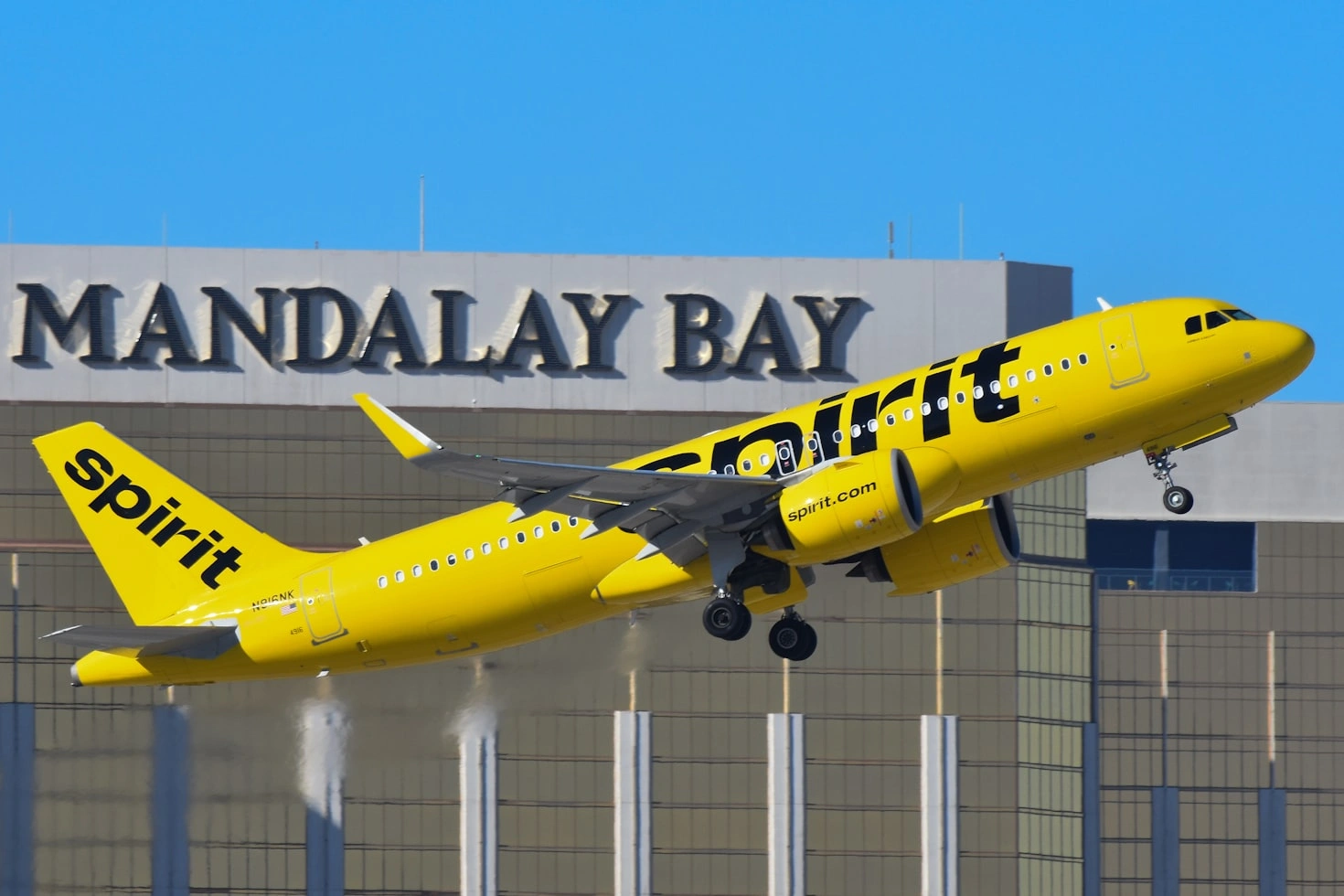
Thirteen days ago, Spirit Airlines stopped flying. No farewell tour. No warning email to most passengers. Just empty counters, canceled boards, and a terse statement landing in the middle of the night on May 2, 2026.
It has been quiet since. Too quiet, if you fly on a budget.
The Night Spirit Airlines Died
Most people who flew Spirit did not love it. The fees were aggressive, the legroom was tight, and jokes about the airline were practically a travel rite of passage. However, none of that matters now because Spirit is gone, and the gap it leaves behind is already hitting travelers in the wallet.
At 3:00 AM Eastern on May 2, the airline sent out a statement that read, in part, that it had started "an orderly wind-down of operations, effective immediately." All flights were cancelled. Customer service was shut off. Passengers were told, bluntly, not to go to the airport.
By sunrise, thousands of travelers had shown up at airports anyway. One woman at LaGuardia told CNN she found out from other passengers standing outside the terminal. She had not checked her email. Her Mother's Day trip to Florida was gone.
What vanished in those early-morning hours was bigger than one airline's schedule:
353 routes across 65 airports cancelled
300 daily flights and roughly 60,000 daily passengers grounded
1.8 million seats removed from the May calendar overnight
17,000 workers 14,000 Spirit employees plus thousands of contractors suddenly without income or healthcare
Spirit was the largest ultra-low-cost carrier in North America. Its closure is the first time a major US airline has gone under due to financial failure in 25 years. The scale of that matters for everyone who flies, not just the people who booked on Spirit.
Three Things That Killed Spirit Airlines
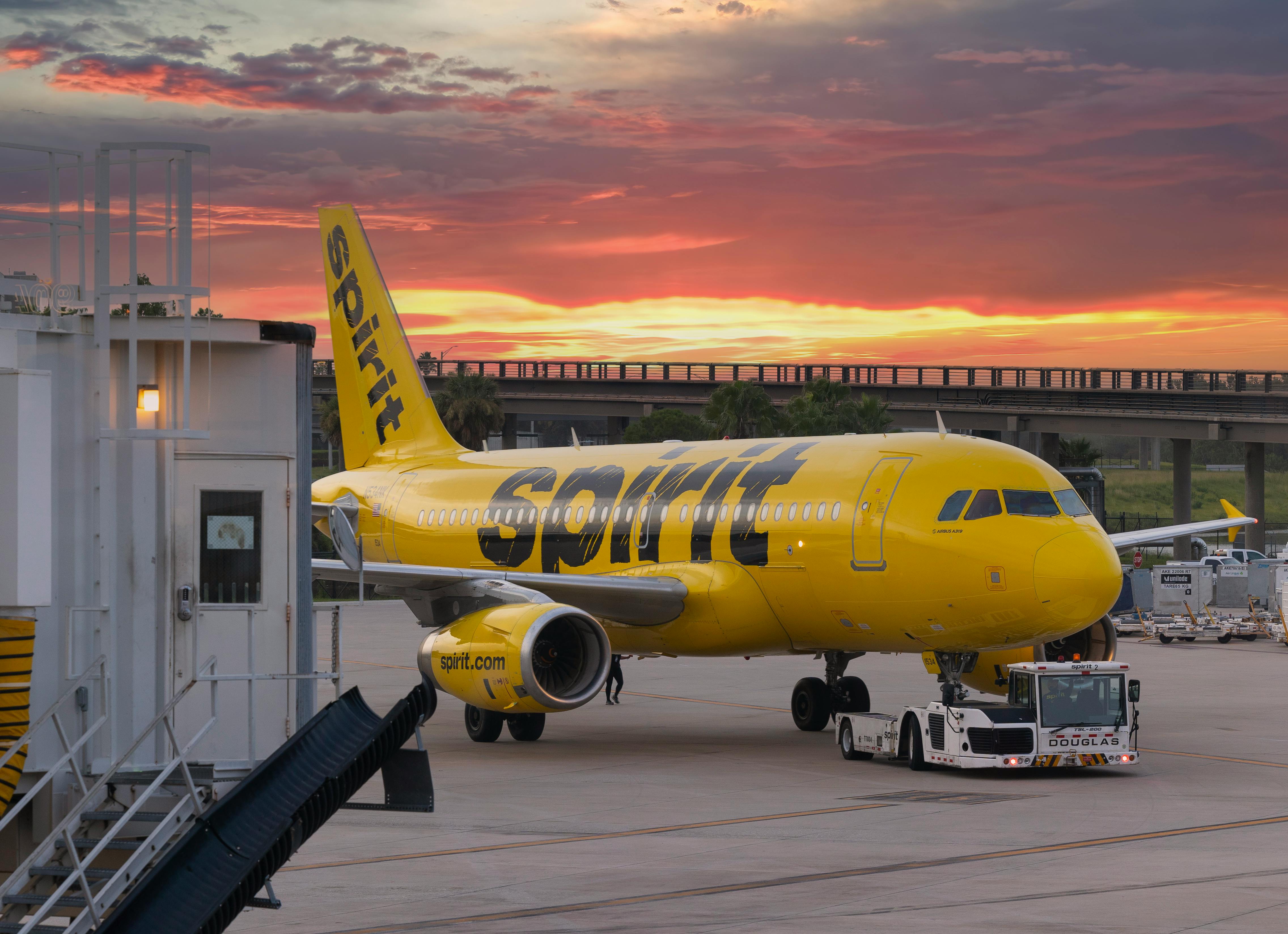
The collapse did not happen in a week. It took years of accumulating pressure, and then one external shock that pushed the whole structure over.
The JetBlue Deal That Never Happened
In 2024, a federal court blocked Spirit's merger with JetBlue on antitrust grounds. That ruling removed the capital lifeline Spirit was counting on. Without it, the airline had no credible path forward. It entered bankruptcy within months.
Bankruptcy, Then Bankruptcy Again
Spirit filed Chapter 11 in November 2024, emerged in March 2025, then filed again in August 2025. By the final shutdown, the fleet had shrunk from 214 aircraft to a planned base of 76. Over 1,800 flight attendants and 365 pilots had already been furloughed.
The Fuel Bill No One Could Pay
The killing blow came from outside aviation entirely. The 2026 Iran war doubled jet fuel prices in weeks. Spirit's court filings show the airline absorbed nearly $100 million in additional fuel costs between March 1 and April 30 alone unsurvivable for a carrier built on razor-thin margins.
A $500 million government rescue package brokered by the Trump administration collapsed at the last moment when bondholders rejected the terms. Operations ended within hours of that rejection.
What Broke Spirit | When | What It Did |
JetBlue merger blocked by federal court | 2024 | Removed the only viable long-term capital path |
Second Chapter 11 filing | August 2025 | Fleet shrinks from 214 to 76 aircraft |
Iran war jet fuel spike | March–April 2026 | $100M in unexpected fuel costs in 60 days |
Government bailout rejected by bondholders | May 1, 2026 | Operations ended within hours |
The "Spirit Effect" Why This Matters Even If You Never Flew Spirit
Most coverage focuses on Spirit's passengers. Here is what the rest of the market is losing.
Economists called it the "Spirit Effect." On routes where Spirit operated, fares across all carriers fell by as much as 17% Delta, United, and American included. The mere possibility of Spirit entering a new market was enough to push legacy carriers to hold prices down, even on routes it never flew.
The DOJ used this effect as a central argument when it blocked the JetBlue merger in 2024. Federal court documents documented fare drops every time Spirit entered a route, and fare rises every time it left. It is the same dynamic that plays out whenever any major carrier suddenly loses access to a market as seen when the Turkish Airlines fire at Kathmandu forced an abrupt halt to service and left passengers scrambling for alternatives on short notice.
Spirit has now left every route. For good.
The Fare Numbers Two Weeks In
The data coming in from Cirium, Kayak, and Google Flights over the past 13 days is not subtle:
Average fares on former Spirit routes are up roughly 14% in the days since the shutdown, according to analyst Parag Amin
On routes where Spirit held more than 20% market share, increases of 15% to 25% have already been recorded
A CBS News analyzsis of Cirium aviation data found average fares historically jumped 23% on average when Spirit exited any market. That pattern is now playing out in real time
On Spirit's busiest individual routes, some fares spiked as high as 218% within 48 hours of the May 2 liquidation
One detail that confirms this is Spirit-specific, not just a fuel price effect: the biggest jumps are concentrated specifically on Spirit's former corridors. Routes with no Spirit presence did not move on the same timeline.
Where Fares Are Rising | Estimated Increase | Driving Factor |
Routes where Spirit held 20%+ capacity share | 15–25% | Direct seat removal from market |
Fort Lauderdale routes across the board | 18–25% | Spirit was FLL's largest carrier, holding 29% of capacity |
Caribbean and Latin America leisure routes | 20%+ | No low-cost alternative available before summer |
Routes Spirit never flew | 5–10% | Loss of the competitive pressure the Spirit Effect created |
US domestic market average | ~14% | Combined effect of fewer seats and higher fuel surcharges |
The Airports That Got Hurt the Most
Spirit's network was built around leisure hubs. Those hubs are now absorbing the biggest damage.
Fort Lauderdale: The Hardest Hit
Spirit's headquarters sat in Dania Beach, steps from Fort Lauderdale-Hollywood International Airport. FLL was its largest gateway 54 outbound routes, nearly 29% of total airport capacity. No other carrier was close.
FLL built its identity as a budget alternative to Miami on the back of Spirit's presence. JetBlue has announced 20 new routes there and its CEO called this "a generational opportunity." Frontier is also expanding. Neither is filling a 29% capacity gap before Memorial Day.
Orlando and the Family Traveler Problem
Orlando was Spirit's second-largest hub with 32 outbound routes, many serving Caribbean and Central American destinations. Those are exactly the routes families book for summer, and exactly the passengers who feel fare increases hardest. They are now either paying more or traveling less.
Detroit, Las Vegas, and Houston
Detroit was Spirit's founding city. Las Vegas was one of its busiest leisure corridors. Houston Bush Intercontinental had 12 Spirit nonstop routes at shutdown time Cancún, Newark, Los Angeles among them. All 12 are now without a ULCC option. The route gap problem is not unique to large US hubs smaller markets that rely on a single budget carrier face the same structural vulnerability, as covered in the Baglung Balezwa Airport piece on what happens when underserved airports lose their primary air link.
Airport | Spirit Routes | Share Lost | Gap Coverage |
Fort Lauderdale (FLL) | 54 outbound | ~29% of capacity | JetBlue, Frontier not before summer |
Orlando (MCO) | 32 outbound | Caribbean/leisure gateway | No ULCC replacement confirmed |
Las Vegas (LAS) | High-frequency leisure | Significant ULCC share | Allegiant partial overlap |
Detroit (DTW) | Founding hub | Meaningful domestic | Legacy carriers, higher fares |
Houston Bush (IAH) | 12 nonstops | Budget leisure anchor | Frontier and Allegiant partial |
Refunds, Rescue Fares, and What Actually Happened to Passengers
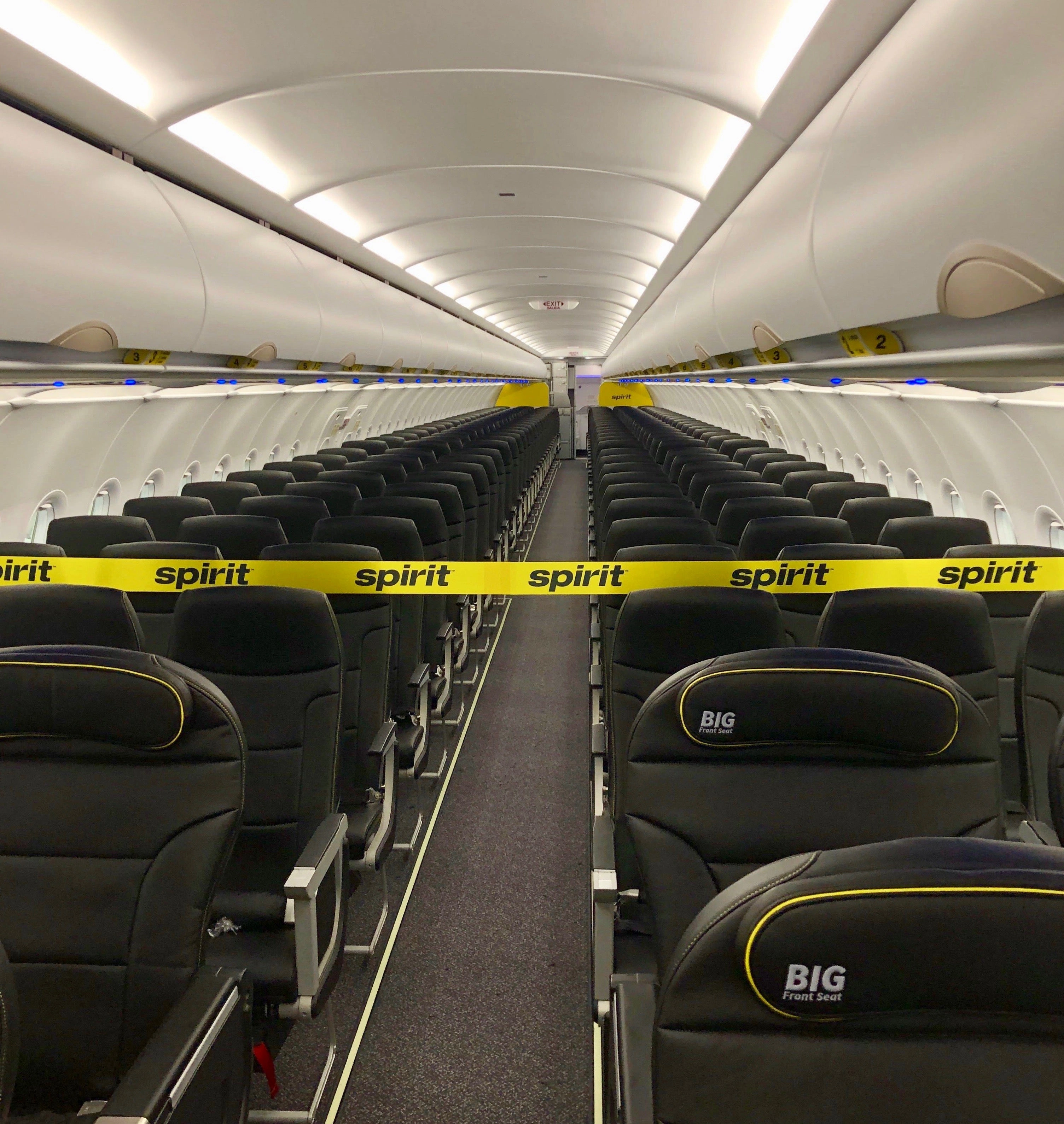
At Fort Lauderdale, Orlando, and LaGuardia, passengers arrived for hours after the shutdown unaware anything had changed. Shuttle buses dropped travelers at dark terminals.
agents were gone. People found out at curbside.
The US Department of Transportation moved quickly. Secretary Sean Duffy announced capped fares for Spirit passengers, and airlines responded within hours. The DOT published a full consumer advisory for Spirit Airlines passengers outlining refund rights, rebooking options, and carrier commitments:
United Airlines capped one-way rescue fares at $199 on most routes, $299 on longer hauls. Within 12 hours of the shutdown, United had rebooked 14,000 displaced Spirit passengers.
JetBlue offered $99 rescue fares for 72 hours for travelers with immediate travel needs.
American Airlines capped Main Cabin fares on all nonstop routes it shared with Spirit.
Southwest Airlines made special fares available at ticket counters through May 6.
Frontier Airlines cut base fares 50% across its entire network through May 10.
Allegiant Air froze prices on overlapping routes.
These offers were genuine for passengers who needed to travel within that first week. Anyone with a June, July, or August Spirit booking missed the rescue window entirely.
Getting a Refund: What the Situation Is Right Now
The refund picture splits cleanly in two.
Passengers who paid by credit or debit card directly through Spirit received automatic refunds, processed within days of the May 2 shutdown. If yours has not arrived, dispute the charge through your card company now do not wait on Spirit.
Anyone who paid using Free Spirit loyalty points, Spirit travel vouchers, or a third-party booking platform will not receive automatic refunds. Those claims go through bankruptcy court, which takes months and may not produce full recovery. Loyalty point balances are likely to receive partial reimbursement at best. If you used a credit card on a third-party platform, file a chargeback immediately it is the fastest recovery path available.
What This Means for Summer 2026 Fares
Spirit was scheduled to operate about 2% of all domestic US flights this summer. That sounds modest until you realize that 2% was concentrated entirely on leisure corridors and price-sensitive routes where budget travelers had no strong fallback.
Frontier, Avelo, Breeze, and Allegiant will eventually expand into some of Spirit's former routes. "Eventually" is not this summer. Schedules were set months ago. Meaningful capacity backfill is three to six months out October or November at the earliest.
For travelers planning summer trips right now:
Book now. Supply is contracting. Waiting produces higher prices, not better ones.
Consider nearby airports. Fort Lauderdale travelers should compare Miami (MIA). Orlando travelers should check Tampa (TPA) for the same leisure destinations. Choosing a secondary airport to access affordable routes is a strategy that travelers in capacity-constrained markets know well the Gulmi Resunga Airport piece covers exactly how travelers navigate limited air access when a primary route disappears.
Budget carriers are not gone. Frontier, Avelo, Breeze, and Allegiant still operate. Where they have presence, some fare competition exists.
Caribbean routes need the most attention. Spirit held outsized share to Puerto Rico, the Dominican Republic, Cancún, and Costa Rica. American, United, and JetBlue absorb those passengers at meaningfully higher prices.
On the question of who actually fills Spirit's routes: no single carrier can. Frontier is constrained by fleet size. JetBlue absorbs Spirit's passengers at FLL, but not at Spirit's prices. Allegiant has orders for up to 50 Boeing 737 MAX 8-200s through 2028 and a pending merger with Sun Country but that plays out over 18 to 24 months. Avelo posted deep discounts quickly, though its network is too small to fill Spirit's high-volume corridors.
The market will find equilibrium at higher average fares than the Spirit era produced.
Conclusion: The Tab Is Coming Due
Two weeks out from the shutdown, the shape of the damage is clear.
Spirit was the airline that made it possible for a family of four in Detroit to fly to Orlando for less than what some passengers pay in bag fees on a legacy carrier. It kept Delta and United honest on routes they would have preferred to price without competition. It was the reason Fort Lauderdale was a budget hub and not just Miami's satellite.
All of that ended overnight.
The 17,000 workers who lost their jobs on May 2 did not get a gradual transition. Flight attendants got a union email between 6 and 7 PM. Pilots heard from the chief pilot around the same time. By 3 AM, the airline was gone.
The fare increases are already measurable. The route gaps are already visible. The summer season is already being booked without Spirit's prices in the market. For anyone traveling in the next three months, these are the new conditions.
Spirit was easy to complain about. Replacing what it actually did for air travel affordability is turning out to be much harder.
For travelers now weighing their options in a tighter, pricier domestic market, understanding where the full-service carriers are heading matters the future of business class breaks down how legacy airlines are repositioning their cabin tiers as ULCC competition permanently shrinks.
For real-time aviation news, airline coverage, and travel guides, visit AirGazette.
Frequently Asked Questions
Why did Spirit Airlines shut down in 2026?
Spirit collapsed from three converging failures. A 2024 federal court blocked its JetBlue merger, removing its only capital lifeline. Two Chapter 11 bankruptcies followed within a year, shrinking the fleet from 214 to 76 aircraft. Then the 2026 Iran war doubled jet fuel prices, adding nearly $100 million in extra fuel costs in just 60 days. A $500 million government rescue package was rejected by bondholders on May 1. Operations ended within hours of that rejection.
Can I still get a refund from Spirit Airlines?
It depends on how you paid. Direct bookings with a credit or debit card received automatic refunds, which Spirit confirmed were processed within days. Anyone who paid using Free Spirit loyalty points, Spirit travel credits, or a third-party booking platform faces a longer process those claims go through bankruptcy court. If you paid any portion through a credit card, file a chargeback now rather than waiting on the court timeline.
No single airline is absorbing Spirit's 353-route network. Frontier has expanded at Spirit's core hubs. JetBlue has launched 20 new routes at Fort Lauderdale. Allegiant and Avelo have entered selected corridors. None operate at Spirit's fare levels, and meaningful full-network replacement is not expected before late 2026.
Will airfares go up because Spirit Airlines is gone?
They already have. Cirium, Kayak, and Google Flights data shows fares up 14% to 25% on former Spirit routes in the two weeks since shutdown. Historical data from CBS News and Cirium shows a 23% average fare increase when Spirit has previously exited markets. Summer 2026 fares were already elevated Spirit's closure compounds that on the exact leisure routes budget travelers most depend on.
What was the "Spirit Effect" and does it matter that it's gone?
The Spirit Effect was the downward pressure Spirit applied to airfares across the US market including on routes it never flew. Fares dropped as much as 17% on routes where Spirit operated, because legacy carriers adjusted pricing to stay competitive. The DOJ cited this effect when blocking the JetBlue merger in 2024. With Spirit gone, Delta, United, American, and Southwest have more pricing power across their networks. Every traveler feels that, not just the ones who flew Spirit.
What happened to Fort Lauderdale airport after Spirit shut down?
FLL was hit harder than any other US airport. Spirit held nearly 29% of total passenger capacity there and operated 54 outbound routes. Dozens of gates are now empty. JetBlue and Frontier are expanding at FLL but cannot replace that volume before summer.
Is Spirit Airlines going to come back?
No credible indication exists that it will. Spirit filed a court motion on May 4 seeking authorization to wind down and liquidate assets aircraft, engines, parts, and non-fleet property. The company retained approximately 150 employees to manage the process, reducing to 40 over subsequent months. The brand and route network are not expected to re-emerge. The legal entity still exists as of May 15, 2026, solely to complete bankruptcy proceedings.