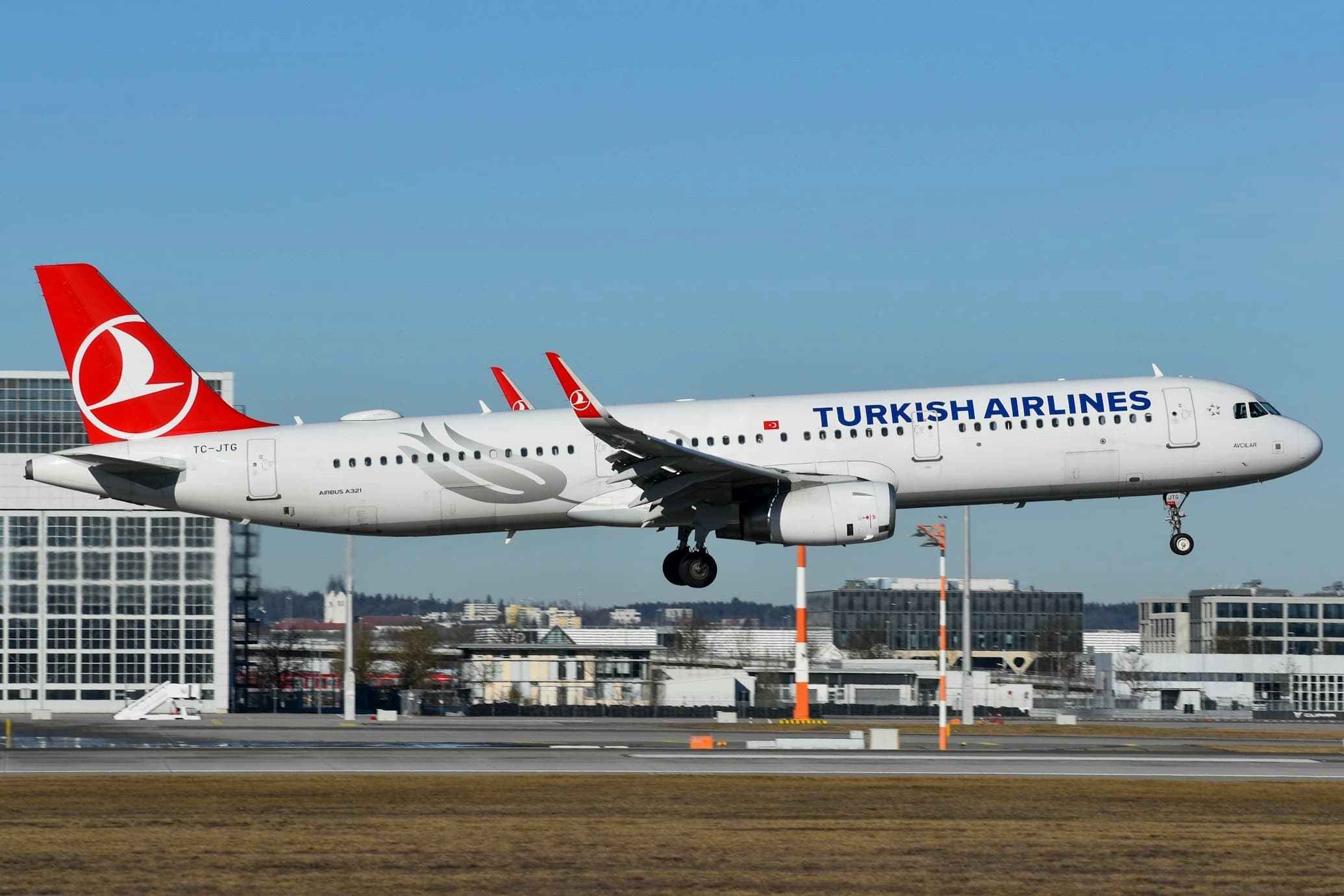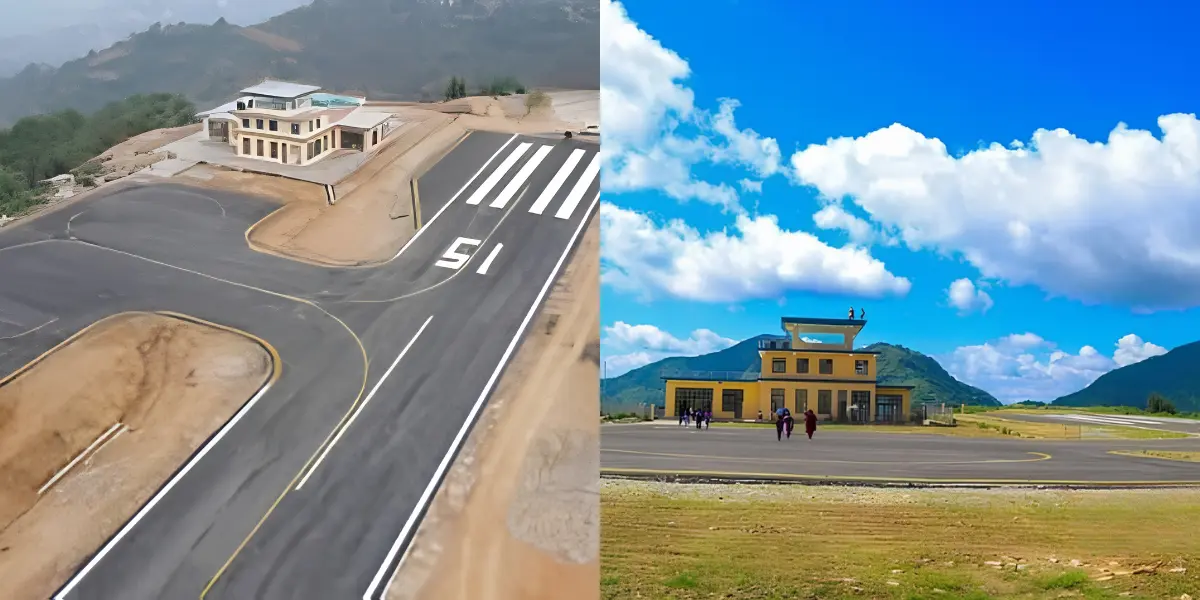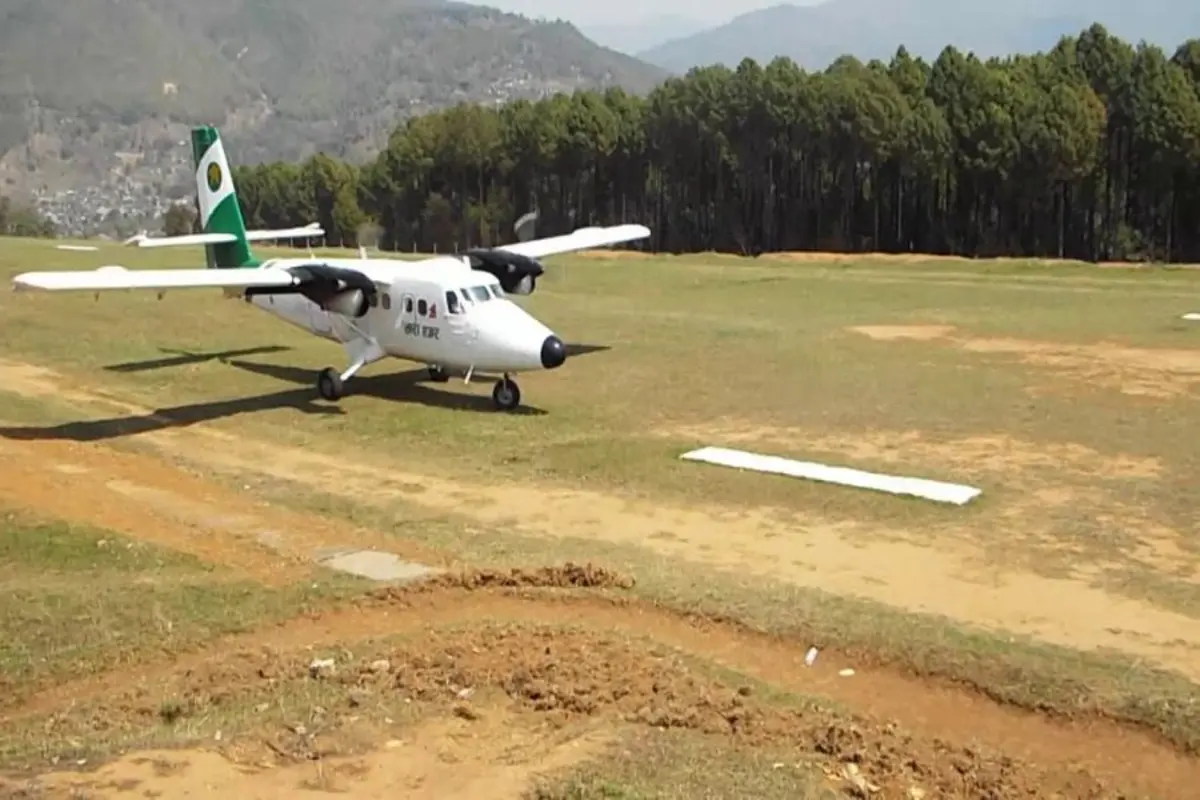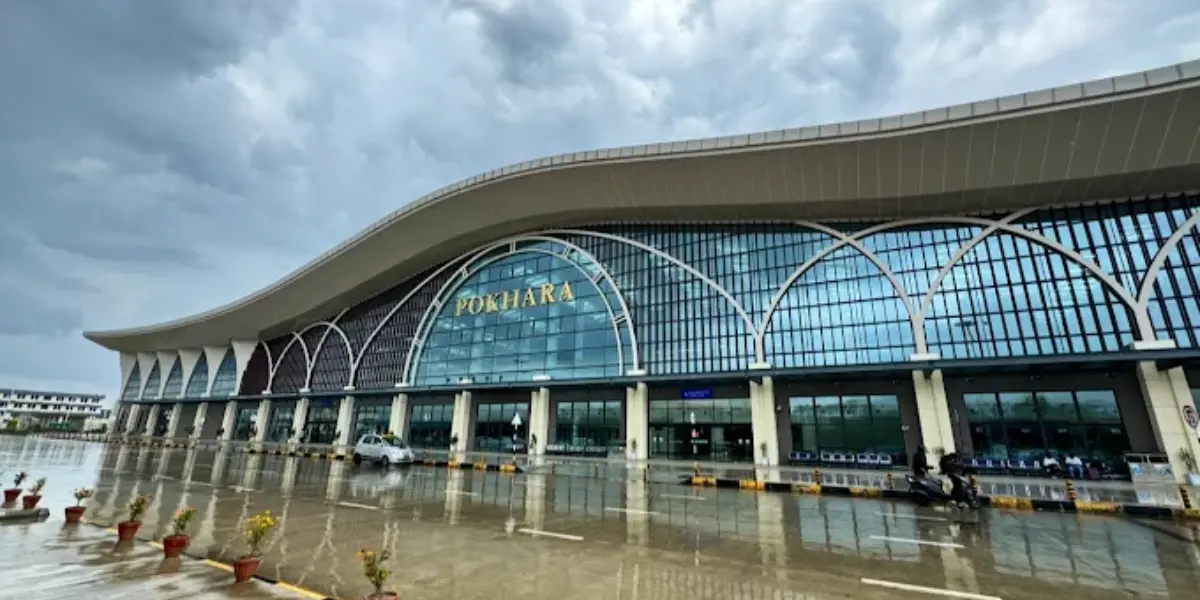
Did you know that Druk Air flew into Pokhara International Airport in September 2023? Eight months after the $216 million facility opened and carried three passengers. Yes, Three!! That flight was the first commercial service the airport had ever seen. It tells you almost everything.
More than two years on, no international airline operates a regular scheduled service to Pokhara. The city is Nepal's most popular tourist destination. I'm from Kathmandu, so I've made the Pokhara trip more times than I can count. And every time I land there, it feels like I'm flying through a domestic airport, not an international one. The gap between what this airport was built to do and what it actually does is not a bureaucratic delay. It is a structural failure baked in from the beginning.
What the Numbers Say About Pokhara's Traffic
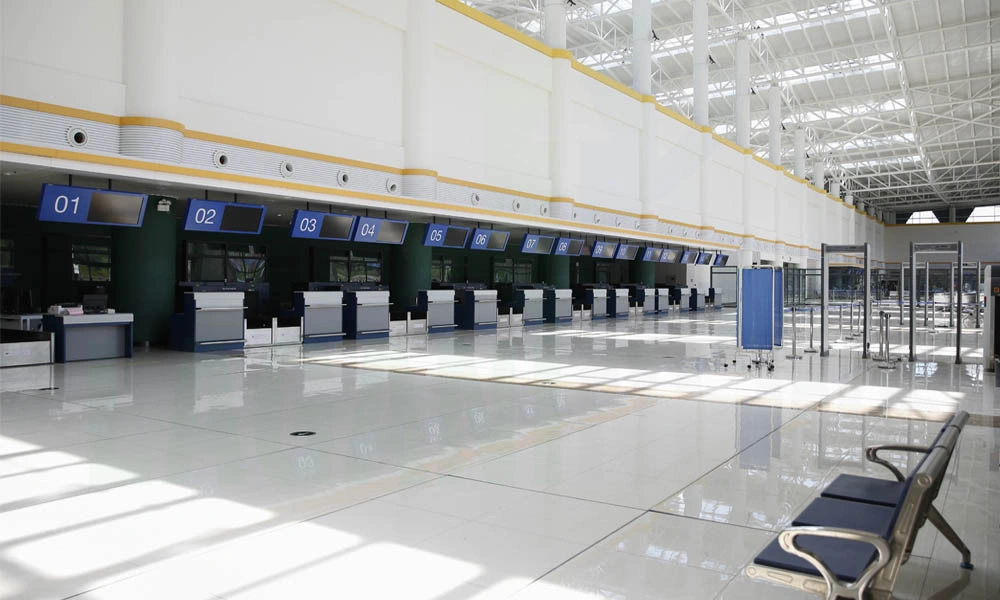
Pokhara is not a fringe destination. It is Nepal's second city, the gateway to the Annapurna Circuit, and consistently among the top adventure destinations in Asia. According to Nepal Tourism Board estimates, roughly 40 percent of all foreign tourists who enter Nepal make their way to Pokhara. In 2024, Nepal recorded 1.147 million international arrivals a 13.1 percent increase over 2023. That puts Pokhara's foreign visitor base at approximately 400,000 to 460,000 people annually.
Metric | Figure |
Nepal international arrivals (2024) | 1,147,567 |
Estimated Pokhara foreign visitor share (40%) | ~460,000 |
Pokhara airport total passengers (2024) | 1,023,000 |
Of which: foreign nationals | 176,000 |
Scheduled international flights (2024) | 0 |
Total international flights since January 2023 opening | ~42 (charter and trial combined) |
Sources: Nepal Tourism Board, CAAN / Pokhara Regional International Airport spokesperson Jashoda Subedi (January 2025), Tourism Mail airport records.
Those 176,000 foreign nationals passing through Pokhara airport in 2024? Every single one arrived on a domestic connection from Kathmandu. They flew into Tribhuvan International Airport first, cleared customs and immigration there, then boarded a 25-minute domestic hop west. That extra leg adds transfer risk, increases cost, and generates no direct revenue for Pokhara's tourism ecosystem.
The airport is labelled international. It just is not behaving like one.
The Airport's History Goes Back to 1971
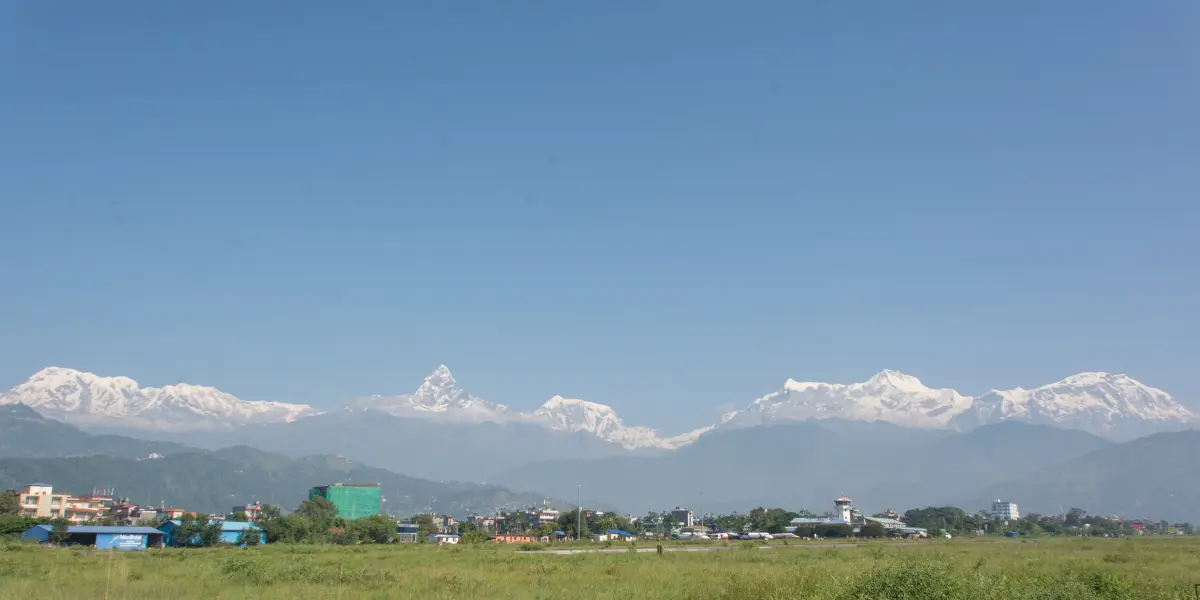
Here is what most coverage misses: the idea of an international airport in Pokhara was first proposed in 1971. Late King Birendra Shah floated it. In 1976, the government acquired land. In 1989, the Japan International Cooperation Agency conducted a feasibility study. The Asian Development Bank reviewed the project and withdrew its support citing financial inviability before construction ever began.
That ADB withdrawal should have been a hard stop. Instead, the project accumulated political momentum across five decades and at least a dozen governments. No administration felt able to cancel it. Each one found reasons to keep it alive.
Timeline Milestone | Year |
Airport concept first proposed by King Birendra Shah | 1971 |
Land acquired by Government of Nepal | 1976 |
JICA feasibility study completed | 1989 |
ADB withdraws support, cites financial inviability | Pre-construction review |
Contract signed with China CAMC Engineering | 2014 |
China Exim Bank loan agreement signed | March 21, 2016 |
Original projected opening | 2020 |
COVID-related delays push deadline | 2022 |
Actual inauguration date | January 1, 2023 |
First commercial flight (Druk Air, 3 passengers) | September 2023 |
First scheduled international service (Himalaya Airlines, Lhasa) | March 31, 2025 |
Lhasa route suspended due to low occupancy | Mid-2025 |
Sources: Wikipedia / Pokhara International Airport history, AidData project record #71852, Nepal News explainer (May 2026), CAAN.
The 2014 feasibility study commissioned by Chinese contractor CAMC Engineering projected 280,000 international passengers traveling through Pokhara by 2025. The actual scheduled international figure for all of 2024 was zero.
The $216 Million Loan and What It Bought
Nepal financed construction through a China Exim Bank loan of 1.37 billion Chinese yuan approximately $215.96 million. The structure was a blend: 25 percent interest-free from China's Ministry of Commerce, 75 percent at 2 percent annual interest from China Exim Bank, with a seven-year grace period and a 20-year repayment window.
The grace period has ended. Nepal is now in active repayment, with installments estimated at approximately $5.6 million annually on a facility that generates almost no international revenue. Nepal has formally asked Beijing to convert the loan into a grant. China has refused. As of late 2024, a framework cooperation agreement was signed to address funding modalities, but no decision has been made on Pokhara specifically.
Nepal's pattern of building airports that never reach their potential is not unique to Pokhara. The story of Baglung Airport built, abandoned, rebuilt with an $82 million renovation, and still sitting empty shows the same gap between infrastructure ambition and operational reality running through Nepal's aviation policy for decades.
Why Airlines Will Not Fly There
Every piece of coverage about Pokhara asks why airlines stay away. Almost none of it answers from an operations standpoint. The reasons are specific and structural.
The Runway Payload Penalty
Pokhara's runway measures 2,500 meters. For domestic operations that is workable. For medium-haul international routes, it imposes a serious payload restriction. The maximum permissible takeoff weight for an Airbus A320 departing Pokhara is approximately 68 tonnes, against the type's standard maximum of 77 tonnes. That is a 9-tonne deficit on every single departure.
For a route from Delhi to Pokhara approximately 1,000 km that payload gap translates to roughly 30 to 40 fewer revenue passengers per flight, or a significant fuel reduction that limits range options. Before an airline models demand, the route economics have already collapsed. Wide-body aircraft are not in the conversation. Pokhara's infrastructure cannot support them.
Route | Direct distance | Barrier |
Delhi to Pokhara | ~1,000 km | Indian airspace restriction on western corridors |
Dubai to Pokhara | ~3,600 km | Must route east via Kathmandu airspace, adds ~400 km |
Bangkok to Pokhara | ~2,000 km | Viable distance; restricted approach paths and no ASA |
Lhasa to Pokhara | ~600 km | The only route attempted; suspended mid-2025, low loads |
Mumbai to Pokhara | ~1,500 km | Blocked by same western airspace restriction as Delhi |
Sources: The Diplomat (April 2025), Nepal News explainer (April 2025), Travel and Tour World (November 2025), CAAN.
The Indian Airspace Problem
This is the single largest barrier and the one Nepal's tourism marketing never addresses honestly. Nepal is landlocked between India and China. Its most natural international markets are India (Mumbai, Delhi, Kolkata), the Gulf (Dubai, Doha, Abu Dhabi), and Southeast Asia.
All of those routes pass through or adjacent to Indian airspace. India has not granted Nepal the western air corridors that would allow aircraft to approach Pokhara directly from the west. Planes must instead travel east into established Kathmandu-area airspace before turning, adding significant fuel burn and operating cost to every flight.
The geopolitics compound this. When China's ambassador Chen Song publicly linked Pokhara airport to the Belt and Road Initiative in October 2023 even though the loan agreement predated Nepal's formal BRI membership in 2017 New Delhi's reluctance to facilitate western corridor access hardened further. India is not a BRI participant, and Chinese involvement in Nepali airport infrastructure has made it unwilling to give Nepal the airspace access Pokhara requires.
This connection between Chinese financing and Indian airspace restriction is analysed in detail in The Diplomat's April 2025 investigation.
The Certification and Infrastructure Gap
European and American aviation authorities have not certified Pokhara International Airport for operations by carriers under their oversight. Until they do, no EU or US carrier can schedule flights there. For airlines in regulated markets this is not a commercial decision it is a legal one.
Additionally, there are no dedicated cargo facilities and no maintenance infrastructure at PIA. An international carrier needs diversion options, ground handling at international standards, and technical support capacity. Pokhara currently offers none of these. Aviation analyst Dipendra Khanal, who has covered CAAN's regulatory failures for over a decade, described the situation plainly in a 2025 interview: "It was a classic case of putting the cart before the horse. There were no confirmed airline partners, no bilateral agreements, and no infrastructure to support international tourism at the scale envisioned."
What Actually Happened With International Flights
In over two years of operation, Pokhara International Airport recorded approximately 42 total international movements. Nearly all were charters or trial operations.
The most significant event was Himalaya Airlines a Nepal-Tibet joint venture launching a weekly Pokhara-Lhasa service on March 31, 2025. The inaugural A319 carried 107 passengers: 32 Chinese and 75 Nepali travelers. The airport gave it a water cannon salute. By mid-2025 the route was suspended. Airport General Manager Jagannath Niraula confirmed it directly: "Himalaya Airlines suspended the Pokhara-Lhasa service citing low occupancy."
That is the entire scheduled international flight history of a $216 million airport: one weekly route, discontinued within months due to low demand.
Sichuan Airlines operated 11 flights and carried 1,127 tourists. Druk Air's September 2023 inaugural commercial service carried three passengers to Pokhara. Three.
The Corruption Investigation That Changed Everything
If the operational failure was already uncomfortable, the corruption cases filed from late 2025 onward turned this into Nepal's largest public procurement scandal on record.
On December 7, 2025, Nepal's Commission for the Investigation of Abuse of Authority filed a landmark chargesheet against 55 individuals and China CAMC Engineering the Chinese state-owned enterprise that built the airport. The alleged financial damage: approximately $74 million, with the CIAA claiming government officials colluded with CAMC to inflate construction costs from the outset. The CIAA stated directly: "CAMC acted with malafide intent to secure and influence the project."
The defendants span all three of Nepal's main political parties, implicating decisions made across multiple governments between 2011 and 2024. Former Finance Minister Ram Sharan Mahat, four other former ministers, nine former secretaries, former CAAN Director General Rati Chandra Lal Suman, and senior CAMC representatives are all named. A second case followed in March 2026. A third, filed in May 2026, targeted former Finance Minister Gyanendra Bahadur Karki and 13 others over approximately $24 million in alleged illegal tax exemptions granted to CAMC in violation of the original contract.
Case | Filed | Defendants | Alleged Damage |
Case 1 Inflated construction costs | December 7, 2025 | 55 individuals + CAMC Engineering | ~$74 million (official CIAA figure) |
Case 2 CAAN regulatory failures | March 22, 2026 | 21 individuals including CAAN directors | Under investigation |
Case 3 Illegal tax exemptions to CAMC | May 2026 | 14 individuals + CAMC | ~$24 million |
Sources: The Kathmandu Post (December 2025, May 2026), Fiscal Nepal (December 2025), Nepal News corruption explainer (May 2026). Full case documentation filed at Nepal's Special Court.
China's response was direct. Outgoing Ambassador Chen Song whose departure from Kathmandu was described by Nepali foreign ministry officials as a premature recall paid a farewell call on Prime Minister Sushila Karki specifically to voice Beijing's concerns about Chinese entities being implicated. CAMC has denied all wrongdoing.
The CIAA chargesheet noted that advisory committees were formed on September 12, 2013 and September 9, 2014 with no legal basis under Nepal's Public Procurement Act specifically to award the contract to CAMC at an inflated rate. Nepal ranks 107th out of 180 countries in Transparency International's Corruption Perceptions Index, and the airport case has become a defining test of whether the country's anti-graft machinery can sustain prosecutions against multi-party political defendants.
For a full breakdown of the legal timeline, Nepal News has published a comprehensive explainer: Everything You Need to Know About the Pokhara Airport Corruption Case.
What Travelers Actually Experience Today
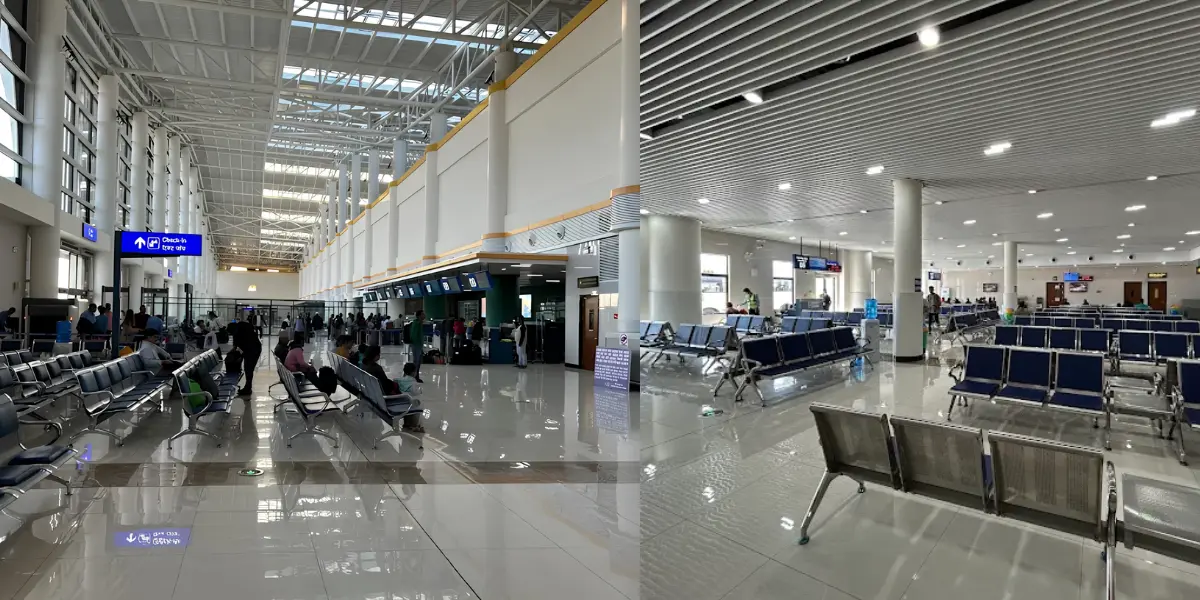
If you are planning a trip to Pokhara right now, this is the practical reality no softening.
There are no international flights. Your only option is to fly into Kathmandu's Tribhuvan International Airport, which handled 9.5 million passengers in 2024 significantly above its designed 8 million annual capacity and connect onward domestically.
From TIA, Kathmandu to Pokhara takes roughly 25 minutes by air. Buddha Air and Yeti Airlines operate this route multiple times daily. Economy fares historically ranged from roughly $27 to $53. However, fuel cost surges driven by the 2026 Iran conflict have pushed the Kathmandu-Pokhara domestic fare to approximately $124 one-way as of mid-2026 a 50 percent increase over early-2025 levels. For the full picture on how the fuel crisis is affecting Nepal domestic pricing, see How the Iran War Is Making Your Flights More Expensive in 2026.
The road alternative the Prithvi Highway connects Kathmandu to Pokhara in approximately 6 to 8 hours under good conditions. Highway expansion is ongoing and incomplete, making journey times inconsistent, particularly through monsoon season.
Once at Pokhara airport, the new terminal sits roughly 23 km from Lakeside the main tourist district on the shores of fewa Lake. The old domestic airport was significantly closer to the city center. Budget 30 to 45 minutes for the transfer. Negotiate taxi fares before you get in: the going rate from PIA to Lakeside runs $5 to $10.
Practical Travel Tips for Pokhara in 2026
Book the Kathmandu-Pokhara domestic leg at least two weeks ahead during peak trekking season (October-November and March-April) loads are consistently high and fares spike
Mountain weather can cancel or delay flights with almost no notice; build at least one buffer day into any onward trekking itinerary. That's why I advise you to check the weather a day before you book the flight.
The new airport handles late-night operations, which the old airport could not; this became significant during the September 2024 floods and landslides when aircraft operated until 2 am
Factor the current fuel-driven fare increase into your Nepal travel budget; the Kathmandu-Pokhara leg now costs more than many regional international flights
Nepal's regional airport network offers interesting parallels to the Pokhara situation. Gulmi Resunga Airport serving the mid-hills on four Nepal Airlines flights per week at around $73 one-way represents the other end of the spectrum: modest, functional, appropriately sized for its market.
For a complete picture of air travel across Nepal and which domestic routes to prioritize based on your trekking itinerary, explore the full collection at airgazette.
Can Pokhara Airport Still Be Fixed?
Nepal's government policy program for fiscal year 2083/84 pledges diplomatic initiatives to attract international airlines. Foreign Minister Arzu Deuba has personally appealed to Indian private operators. Landing and parking fee discounts have been offered. None of it has produced a single committed regular service.
For PIA to function as a genuine international gateway, Nepal would need to resolve five distinct structural problems simultaneously:
Western airspace corridors from India without these, most viable international routes cannot operate at commercially sustainable costs
Runway payload restrictions extending the runway to approximately 3,000 meters or securing a formal regulatory payload exemption framework
EASA and FAA-equivalent certifications required before EU and US-regulated carriers can operate
Cargo and maintenance infrastructure no international carrier will base operations at an airport with no technical support
Air Service Agreements Pokhara requires bilateral ASAs with India, Gulf states, and Southeast Asian markets that Kathmandu's existing agreements do not automatically extend to cover
None of these are fast. Most require years of diplomatic work and coordination across multiple governments that have competing interests. The loan repayment clock, however, does not pause while that work happens.
Conclusion
Pokhara International Airport is a $216 million facility that carries roughly 42 international flights over two-plus years of operation. Its one scheduled international route lasted less than six months before it collapsed from lack of demand. Its construction is now the subject of three separate corruption investigations involving 90-plus defendants across all of Nepal's major political parties.
The paradox is not that Pokhara lacks visitors. It does not. The paradox is that the airport built to connect those visitors directly to the world was designed without securing the airspace access, route agreements, or technical certifications that would allow any airline to actually fly there. The planning failures were visible before construction started. The ADB said so in its withdrawal. The JICA study raised the same doubts. Every warning was overridden by political momentum and, it now appears, deliberate corruption.
The airport is open. The terminal handles over a million domestic passengers a year. The corruption cases are moving through Nepal's Special Court. Whether any international airline ever commits to Pokhara depends on India opening its western corridors a decision that Beijing's entanglement in the project has made considerably harder to obtain.
Frequently Asked Questions
Does Pokhara International Airport have international flights?
As of mid-2026, there are no regular scheduled international flights at Pokhara International Airport. The only scheduled service Himalaya Airlines' weekly Lhasa route launched March 31, 2025 and was suspended within months due to low occupancy. Occasional charter flights operate, but no airline currently offers bookable international tickets to or from Pokhara.
How do I get from Kathmandu to Pokhara by air?
Buddha Air and Yeti Airlines operate multiple daily domestic flights on the route. The flight takes approximately 25 minutes. Fares have increased significantly in 2026 due to global fuel cost pressures and now sit at approximately $124 one-way up roughly 50 percent from the $27–$53 range of early 2025. Book at least two weeks ahead during peak trekking season.
Why won't international airlines fly to Pokhara?
Three interlocked structural reasons: the 2,500-meter runway imposes a 9-tonne payload penalty on A320-class jets, making route economics difficult before demand is even modeled; India has not granted the western airspace corridors that most viable routes require; and Pokhara lacks EASA/FAA certifications, cargo facilities, and maintenance infrastructure that international carriers require to commit to a destination.
How far is Pokhara Airport from Lakeside?
Approximately 23 km from the main Lakeside tourist district on Phewa Lake. Allow 30 to 45 minutes by taxi. The fare to Lakeside typically runs $5 to $10 negotiate before entering the vehicle. This is considerably further from the city center than the old domestic airport, which adds real transfer cost and friction for every arriving visitor.
Is Pokhara International Airport part of the Belt and Road Initiative?
This is disputed. The loan agreement was signed March 21, 2016 before Nepal formally joined the BRI in 2017. However, China's then-ambassador publicly designated the airport a BRI project in October 2023. Nepal has not formally adopted that designation. The BRI label has made India significantly less willing to facilitate the western airspace access that Pokhara needs most.
What is the corruption case involving Pokhara Airport?
Nepal's CIAA has filed three separate corruption cases. The first (December 7, 2025) names 55 individuals and CAMC Engineering, alleging approximately $74 million in inflated construction costs Nepal's largest public procurement corruption case by amount. A second case (March 2026) targets CAAN regulatory officials. A third (May 2026) alleges approximately $24 million in illegal tax exemptions granted to CAMC by former Finance Minister Gyanendra Bahadur Karki and 13 others. All cases are before Nepal's Special Court.
Will Pokhara ever get regular international flights?
Not without Indian government cooperation on western airspace corridors and that cooperation has become harder to secure because of China's involvement in the airport's financing and construction. Nepal's government continues diplomatic outreach, and fee incentives remain on the table. However, without resolving the five structural barriers (airspace, runway payload, certifications, infrastructure, and ASAs), no carrier faces an incentive to commit.