A war that started 8,000 kilometres away is now showing up in your airline booking. Since the US and Israel attacked Iran on February 28, 2026, fuel costs for airlines have nearly doubled. And airlines are passing that cost straight on to you.
If you have flown recently or tried to book you already felt it. The Kathmandu to Pokhara ticket that cost $124. Flights to Europe and North America are pricier, less frequent, or simply gone. This post explains exactly what happened, who is affected most, and what you should do before prices go any higher.
What You Should Do Right Now
Stop waiting for prices to drop. Every travel expert, airline boss, and fuel analyst quoted in major news outlets in May 2026 says the same thing: book now.
"We do not see prices dropping anytime soon," said Nick Ewen, editor in chief of The Points Guy. Even if the Strait of Hormuz opened tomorrow, prices would stay high for weeks. Oil wells, refineries, and fuel tankers all need time to get back to normal. That process takes months, not days.
Here is what to do before it gets worse:
Book all summer travel this week. Prices are not coming down before September. Waiting costs you money.
Do not book basic economy. Basic economy tickets cannot be changed or refunded. Book a standard fare instead, so you can get a credit if prices somehow drop later.
Pay with points and miles instead of cash. Award seats are priced in miles. Fuel crises do not inflate miles. Air India Flying Returns, United MileagePlus, and Turkish Miles&Smiles all still have seats available on South Asia routes where cash prices have jumped.
On Nepal domestic flights, book directly through Buddha Air or Yeti Airlines. The fuel surcharge is the same everywhere by law, but direct booking cuts out any agency markup on top.
If your Air India route was cancelled, try Gulf carrier connections through Doha or Abu Dhabi. Those airlines have also cut flights, but they still have more options. For India to North America, European connections through London or Frankfurt have better seat availability right now.
Add 90 minutes of buffer to any connecting flight. Airlines are running thinner schedules. A missed connection in June 2026 is much harder to recover from than it was a year ago.
For the latest route updates and travel advisories as this crisis develops, follow Air Gazette.
Nepal Hit Hard: Kathmandu to Pokhara Is 50% More Expensive

For Nepali travelers, this crisis arrived fast and hit immediately.
On April 1, 2026, Nepal Oil Corporation raised the price of aviation fuel for domestic airlines by 97.63% in a single move from $0.82 per litre to $1.63 per litre. That is not a typo. The price of fuel for domestic airlines nearly doubled overnight. A second increase followed on April 9, pushing it to $1.66. By mid-April it sat at $1.70 per litre three increases in two weeks.
Manoj Kumar Thakur, spokesperson for Nepal Oil Corporation, called it exactly what it was: "This is the biggest hike in aviation fuel prices in history."
For international airlines flying into Kathmandu, Pokhara, and Bhairahawa, the numbers were even more dramatic. At Tribhuvan International Airport, the international fuel price jumped 84.7% to $1,716 per kilolitre, up from $966. At Pokhara International, it jumped 116.2% from $801 to $1,732 per kilolitre. Both prices now exceed the previous record set in June 2022, according to Nepal Oil Corporation.
Why Your Kathmandu to Pokhara Ticket Now Costs $124
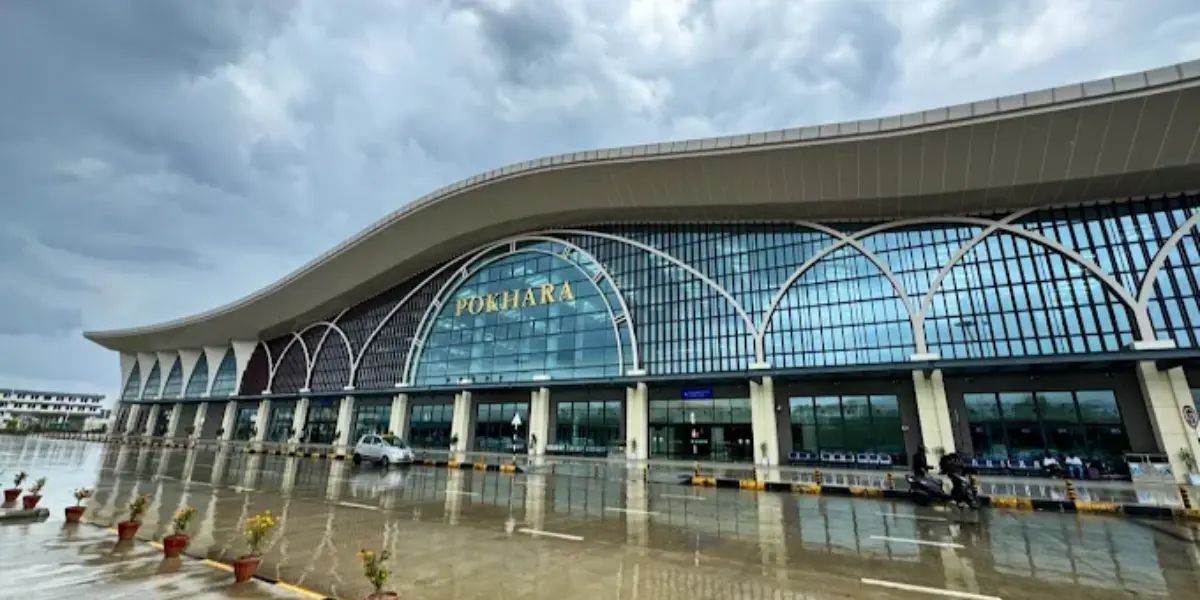
Nepal's busiest domestic route has felt the full force of this. Before the crisis, a standard Kathmandu to Pokhara ticket cost around $27.91. Under Civil Aviation Authority of Nepal rules, airlines must revise their fuel surcharge every time fuel prices shift by more than $0.026 per litre. With prices jumping by more than $0.84 per litre, airlines had no choice but to pass it on. Fares on the route are now around $38.86 a 50% increase.
Nepal cannot absorb shocks like this the way bigger countries can. The country buys all of its fuel from Indian refineries, trucked in by road. There is no backup, no strategic reserve, and no way to shop around. The Airlines Operators Association of Nepal pointed out that carriers were already struggling with a weak rupee against the US dollar before this hit. The fuel crisis landed on top of an existing problem.
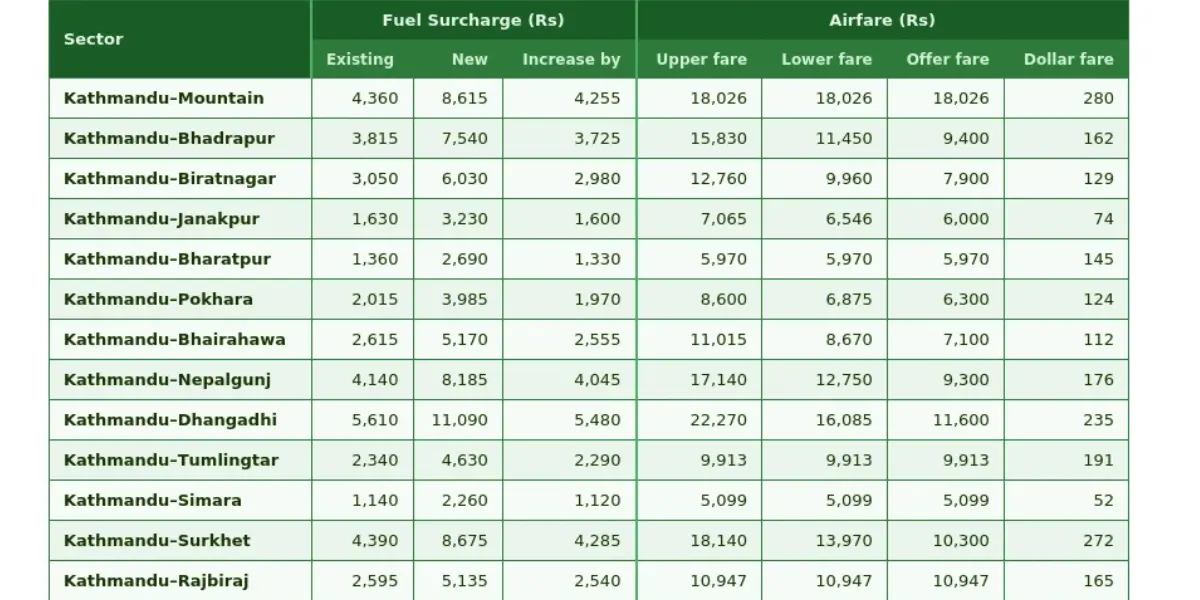
Sources: Airlines
A Turkish Airlines fire incident at Tribhuvan International Airport earlier this year had already disrupted operations at Kathmandu's main hub before the fuel crisis hit. You can read more about how that incident affected flights in and out of Kathmandu.
What Actually Caused This
One waterway is at the center of everything. The Strait of Hormuz is a narrow sea passage between Iran and Oman. About 20% of the world's oil passes through it every single day. When the US and Israel struck Iran on February 28, 2026, Iran closed that passage to commercial shipping. The world's biggest oil highway shut down overnight.
The International Energy Agency called it the "largest energy crisis we have ever faced." Iea head Faith Birol said in April that Europe could face jet fuel shortages within weeks if supply did not recover.
As of mid-May 2026, the situation is still unresolved. A ceasefire was agreed on April 7–8, but the Strait has stayed mostly closed. Trump called the ceasefire "on massive life support" on May 12, after rejecting Iran's latest proposal. Both sides have continued firing at each other near the strait. The crisis is not over.
Why Fuel Prices Jumped Even More Than Oil Prices
Jet fuel is made from crude oil, but it goes through a refinery first. When Gulf refineries were damaged or shut down, the supply of finished jet fuel collapsed even faster than crude oil supply. Energy analysts at Rystad Energy estimated that oil and gas facilities across the region suffered up to $50 billion in damage.
On top of that, China, which supplies much of Southeast Asia's jet fuel, restricted its own exports to protect domestic supply. Australia, which gets 90% of its jet fuel from China, now has only about 30 days of fuel in reserve. South Korea, which turns Gulf crude into jet fuel for regional export, is considering limiting its own exports too. The supply chain broke in multiple places at once.
What Changed | Before the War | At the Peak (April 2026) | Now (May 2026) |
Global jet fuel price (IATA) | ~$100/barrel | $200+/barrel | $162.89/barrel |
US jet fuel price (EIA) | $2.50/gallon | $4.88/gallon | $4.05/gallon |
Nepal ATF Kathmandu (international) | $966/kilolitre | $1,838/kilolitre | ~$1,785/kilolitre |
Nepal ATF domestic carriers | $0.82/litre | $1.66/litre | $1.70/litre |
Sources: IATA Jet Fuel Price Monitor; EIA (St. Louis Fed, May 8, 2026); Nepal Oil Corporation.
How Much More You Are Paying for Flights
US airlines alone spent $5.06 billion on fuel in March 2026. That was up from $3.23 billion the month before and 30% higher than March 2025, according to Department of Transportation data. One month. A 56.4% jump.
Fuel is the second-biggest cost an airline has, after paying its staff. When it nearly doubles, something has to give. Airlines cannot absorb the difference. They also cannot raise ticket prices by the full amount, because most people will simply stop flying. So they are doing two things at once: cutting the routes that lose money and raising prices on the routes they keep.
The results in late April and early May 2026, according to travel search company Kayak:
Average US domestic fares are up 24% year-on-year
Average US international fares are up 16% year-on-year
The average international fare from the US hit $1,101 in the last week of April
Airlines worldwide cut two million seats from May 2026 schedules alone, according to Cirium. From April 10 to April 21, global seat capacity fell from 132 million to 130 million, and over 13,000 planned flights were removed.
The Airlines That Have Cut the Most
Gulf carriers were hit hardest because the conflict is literally in their backyard. Qatar Airways alone cut two million seats scheduled for June through October. Emirates cut 700,000 seats. Etihad cut 450,000. Together that is 3.15 million fewer Gulf seats for summer travel.
Lufthansa cancelled 20,000 short-haul flights through October, cutting routes from Frankfurt and Munich. United Airlines cut over 18,200 flights from Chicago O'Hare alone for June through August. Spirit Airlines shut down entirely on May 2, 2026 the fuel crisis was one of several problems that ended the airline for good. Read the full story of what Spirit's shutdown means for budget travelers.
Air India's Summer 2026 Cancellations: The Full List
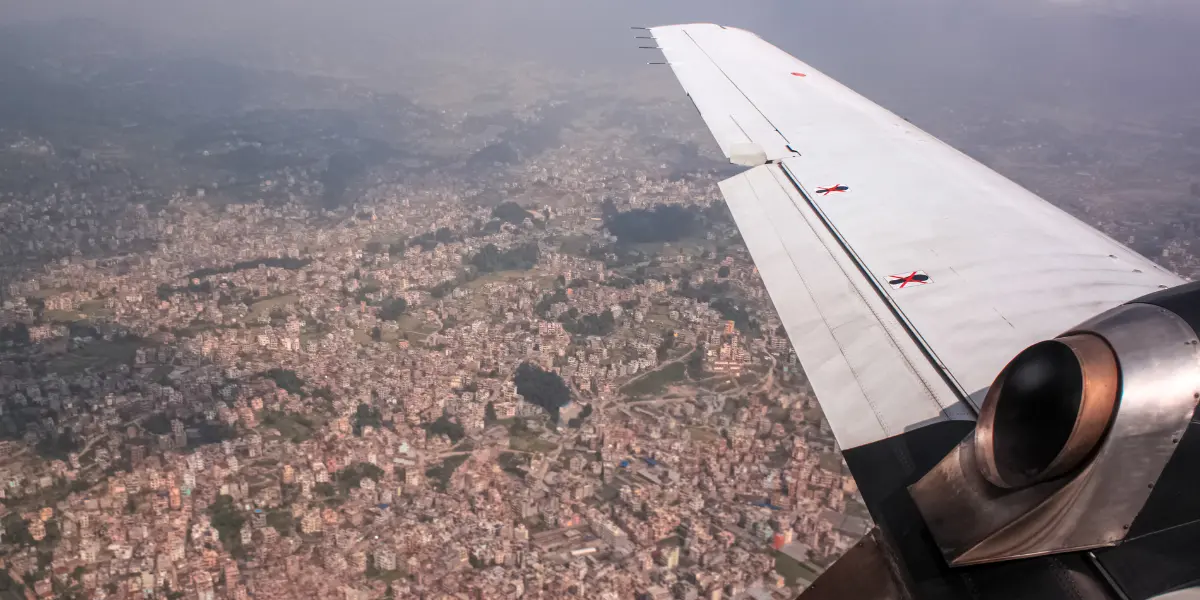
On May 13, 2026, Air India announced it is suspending or cutting back 29 international routes between June and August. Two things are hitting the airline at the same time: record fuel prices and the fact that airspace over both Iran and Pakistan is closed, forcing every westbound flight to take a longer, more expensive route.
Think about what that means in practice. A Delhi to London flight that used to fly over Pakistan and Iran now has to go around both. That adds flight time, burns more fuel, and means each plane can make fewer trips per day. For an airline already short on aircraft due to delayed Boeing deliveries, this has been severe.
Routes suspended or reduced include:
Delhi–Chicago O'Hare: Fully suspended through August
Delhi–Newark and Mumbai–Newark: Multiple cancellations June–July
Delhi–Paris: Cut from twice daily to once daily
Delhi–San Francisco: Down from 10 flights a week to 7
Delhi and Mumbai to Australia: Cut from daily to 4 times a week
Delhi–Shanghai: Suspended
Chennai–Singapore: Suspended June through August
Mumbai–Dhaka: Temporarily stopped
Delhi–Maldives: Suspended
Route | Before | June–August 2026 |
Delhi–Chicago | Daily | Suspended |
Delhi–San Francisco | 10x weekly | 7x weekly |
Delhi–Paris | 2x daily | 1x daily |
Delhi–Melbourne | Daily | 4x weekly |
Delhi–Toronto | Regular | 5x weekly through July |
Air India is offering free rebooking, free date changes, and full refunds for passengers on affected routes. The airline says it will still run more than 1,200 international flights per month during this period. Check status only through Air India's official website or app a lot of wrong information has spread on social media overstating how many flights were cancelled.
Which Airlines Are Struggling Most and Which Are Holding Up
Not every airline is in the same position. Where an airline buys its fuel, and which routes it flies, makes a big difference.
Airlines under the most pressure:
European carriers Lufthansa, Air France, British Airways. They bought a lot of their fuel from the Gulf. That supply is now severely constrained.
South and Southeast Asian carriers Air India, IndiGo. Fuel is sourced regionally, and their routes over Pakistan and Iran are now closed, making every westbound flight longer and more expensive.
Budget airlines everywhere budget carriers run on thin margins. There is almost no cushion to absorb a fuel doubling. Spirit's collapse is the clearest proof. Nepal's own carriers Buddha Air, Yeti Airlines, and Saurya Airlines sit in this same exposed group.
Australia imports 90% of jet fuel from China, which has cut exports. Qantas has already changed aircraft types on some long-haul routes to save fuel.
Airlines in a stronger position:
US carriers America exports more fuel than it imports. US airlines have faced higher prices but not the physical shortage hitting Asia and Europe.
Chinese domestic carriers China kept fuel reserves and restricted exports to protect its own airlines.
One shift is already visible in traveler behavior. People across Southeast Asia who used to book budget airlines are switching to full-service carriers this summer, worried that low-cost flights will be cancelled at short notice. That switch is pushing full-service prices up further.
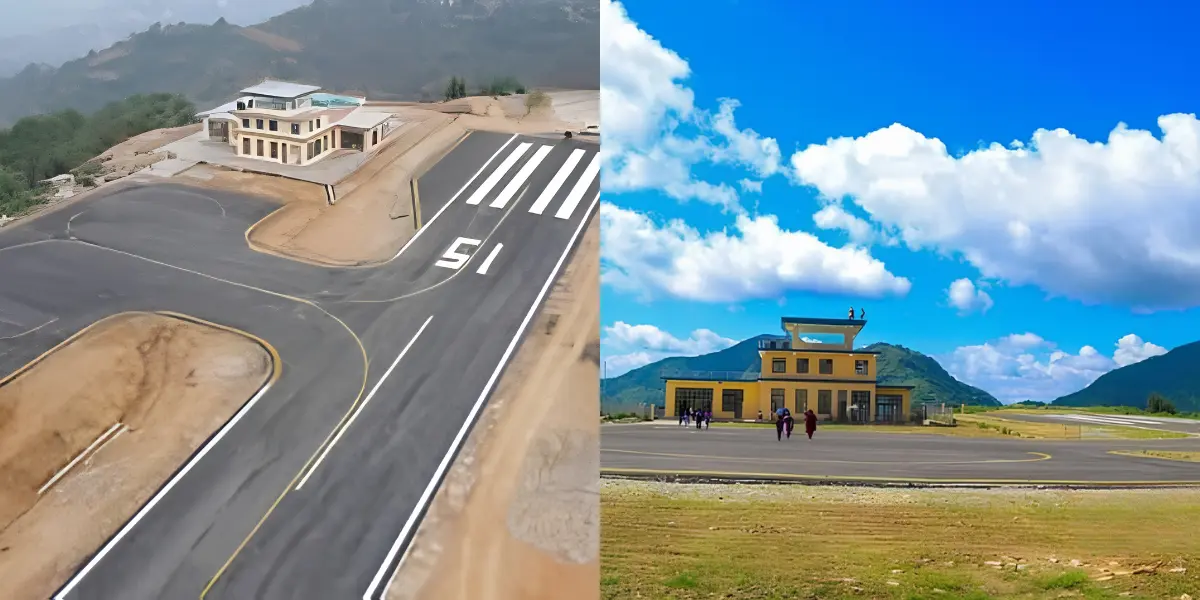
Nepal's more remote airports are at particular risk when fuel costs force airlines to focus on their busiest routes. Smaller airstrips that rely on infrequent services could see those services reduced or paused. Read more about how Gulmi Resunga Airport is navigating the crisis and the longer history of airport funding and abandonment in Nepal.
Conclusion
The 2026 Iran war fuel crisis is the biggest single hit to global aviation since the COVID-19 pandemic. Fuel prices nearly doubled in weeks. Airlines have pulled millions of seats from summer schedules. Air India has cut 29 international routes. Nepal's domestic fares are up 50% on key routes. And with the ceasefire still fragile and the Strait of Hormuz still mostly closed as of mid-May, there is no clear end in sight.
For anyone planning to fly this summer, the window to act is now. Prices may ease slightly if the conflict settles, but every expert covering this story says that meaningful relief is still months away. Booking today means locking in prices before the next round of increases.
Frequently Asked Questions
Why did the Iran war make flights more expensive?
When the US and Israel attacked Iran on February 28, 2026, Iran closed the Strait of Hormuz the sea passage that carries about 20% of the world's oil. That shut off the main supply of jet fuel to Europe and Asia at the same time. Refineries in the region were also damaged, making the shortage even worse. Jet fuel prices nearly doubled within weeks, and airlines passed those costs on through higher fares and fewer flights.
How much more expensive are flights because of the Iran war?
US domestic fares are up 24% year-on-year and international fares from the US are up 16%, according to Kayak data from late April 2026. In Nepal, fares on the Kathmandu to Pokhara route have gone up roughly 50% from around $124 after Nepal Oil Corporation nearly doubled the price of aviation fuel for domestic carriers in April 2026.
Which airlines have cut the most flights?
Qatar Airways cut two million seats for June through October 2026. Emirates cut 700,000 seats and Etihad cut 450,000. Air India suspended or reduced 29 international routes for June through August. Lufthansa cancelled 20,000 short-haul flights through October. Spirit Airlines shut down entirely on May 2, 2026. Globally, airlines removed two million seats from May schedules alone, according to Cirium.
Will flight prices come down after the war ends?
Not right away. Even if the Strait of Hormuz fully opened today, it would take weeks for fuel supply chains to recover. Oil fields, refineries, and tankers all need time to restart. NPR reported that airline executives expect some of these price increases to last into 2027. The IEA head Faith Birol described this as the largest energy crisis the world has ever faced that kind of damage does not fix itself quickly.
How has this affected Nepal's domestic flights specifically?
Nepal Oil Corporation raised aviation fuel prices by 97.63% for domestic carriers on April 1, 2026 the biggest single increase in the corporation's history. This pushed Kathmandu to Pokhara fares from around $124. Nepal imports all of its fuel from India by road and has no fuel reserve, which means global price shocks hit Nepal's airlines directly and immediately.
Should I book my flight now or wait?
Book now. Every travel analyst and airline industry expert cited in coverage from April and May 2026 gives the same advice. The structural damage to fuel supply chains means relief is months away at best. Airline bosses have said some of the price increases will last into 2027. Waiting for a price drop before summer is very likely to cost you more, not less.
What can I do if my Air India flight has been cancelled?
Air India is offering three options: free rebooking on another Air India flight, a free date change, or a full refund. Go through Air India's official website or app only. A lot of incorrect information has spread on social media claiming far more flights were cancelled than is actually the case always check your specific flight through official channels.