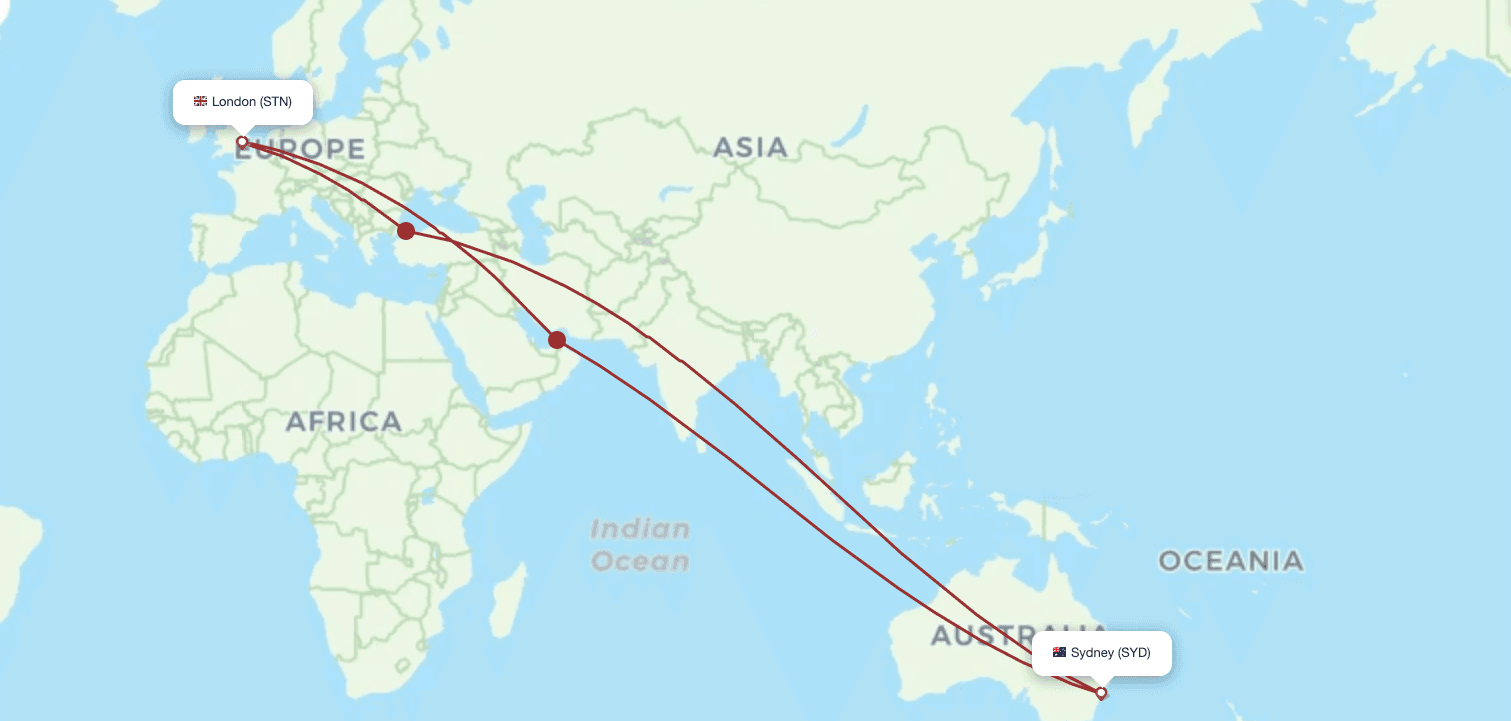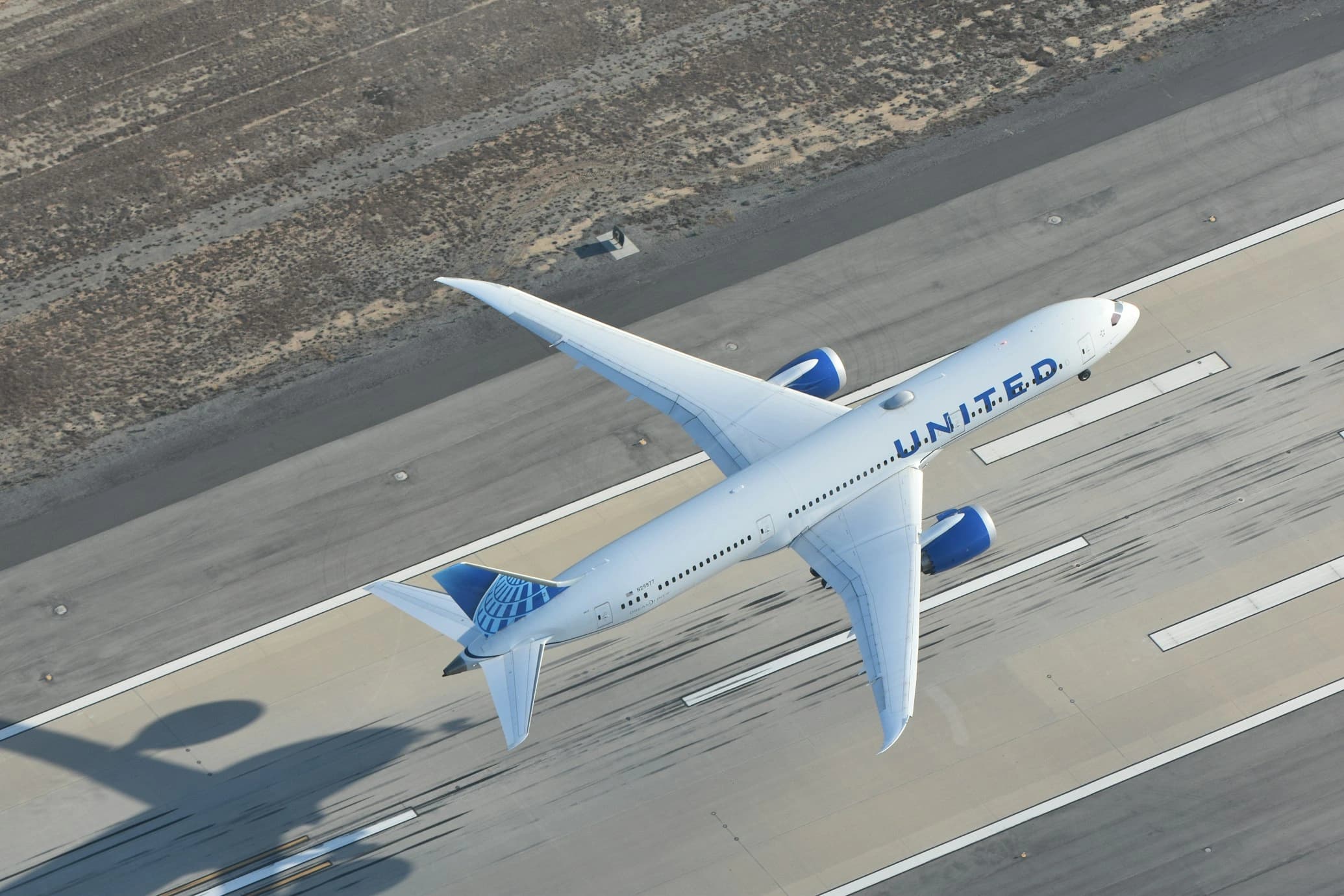
United's nonstop from San Francisco to Singapore covers roughly 7,340 nautical miles, one of the longest scheduled routes in the world. A 777-200ER can technically fly that far. United still built the entire route around the smaller 787-9.
That's not a certification story. It's a fuel-cost story, and it explains why airlines keep retiring capable aircraft long before they're worn out.
The Route That Only Makes Sense on One Aircraft
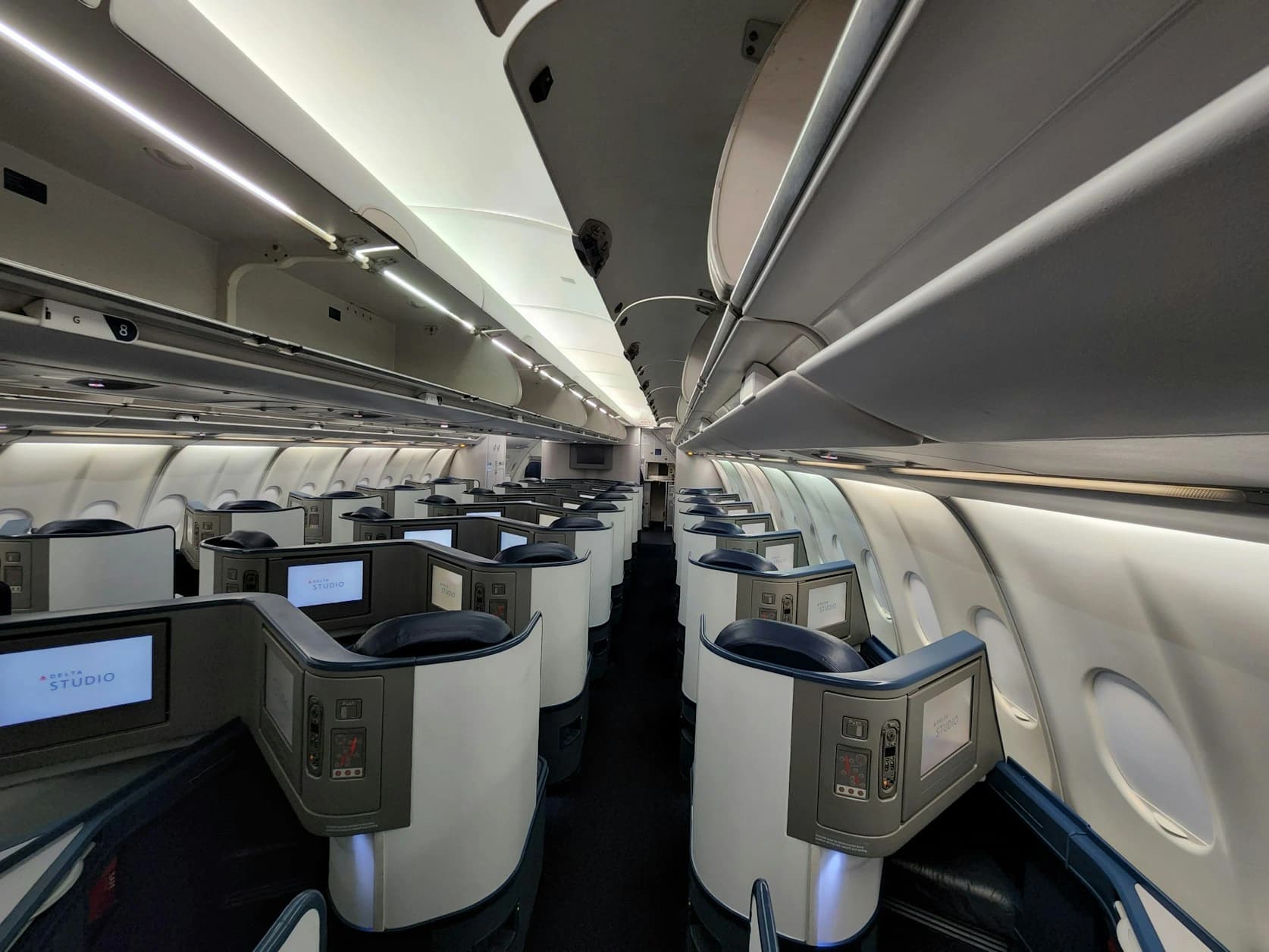
United flies SFO–Singapore daily as UA1/UA2, entirely on the Boeing 787-9, a route that launched in 2016 and now carries the airline's newest Polaris 2.0 business class cabin. On paper, a 777-200ER's published range of roughly 7,700 to 7,730 nautical miles clears this distance with room to spare.
So why has United never flown a 777 here. The answer isn't range. It's what filling that range with passengers actually costs per seat.
Route distance, SFO–SIN: ~7,340 nautical miles
777-200ER published range: ~7,700–7,730 nautical miles
787-9 published range: ~7,565–7,635 nautical miles
Both aircraft can make the trip. Only one of them makes the trip worth flying.
The Real Constraint Is Cost Per Seat, Not Distance
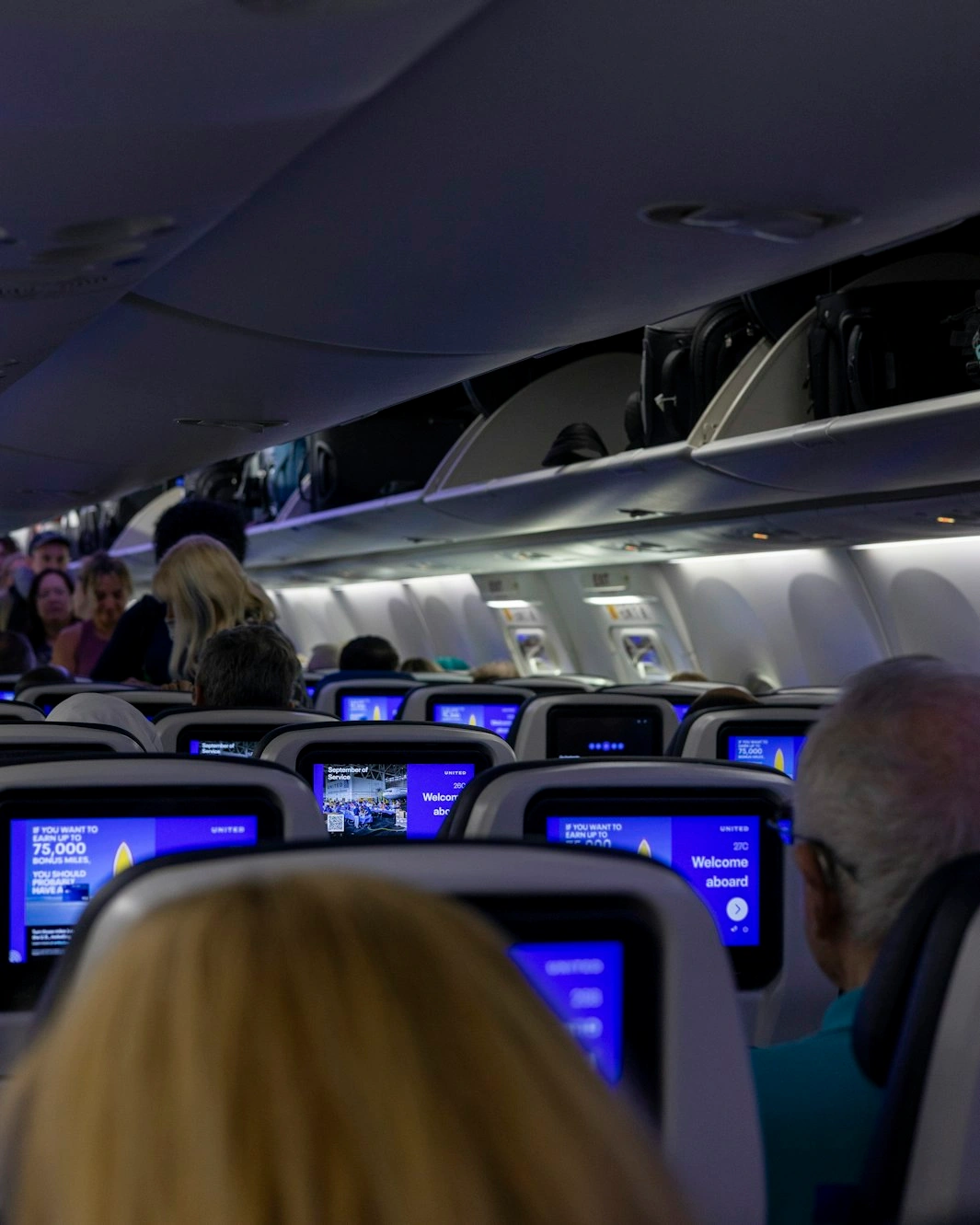
Boeing's own "787 By Design" materials credit the Dreamliner's engine and composite-airframe combination with roughly a 25% fuel burn reduction compared with the older aircraft it typically replaces, including earlier 777 variants. That's not a rounding error at ultra-long-haul distances.
Air New Zealand made this trade-off explicit when ordering the 787-10. The airline's own CEO stated the aircraft represented a 25% fuel efficiency improvement over its existing 777-200 fleet, and named that gap as the deciding factor in the order.
A 25% fuel-burn gap, held over a 17-hour flight, is the difference between a route that fills every premium seat profitably and one that only breaks even at unrealistic load factors. That's the actual constraint shaping United's fleet assignment here, not a hard performance ceiling.
Why "Can Fly It" and "Should Fly It" Are Different Questions
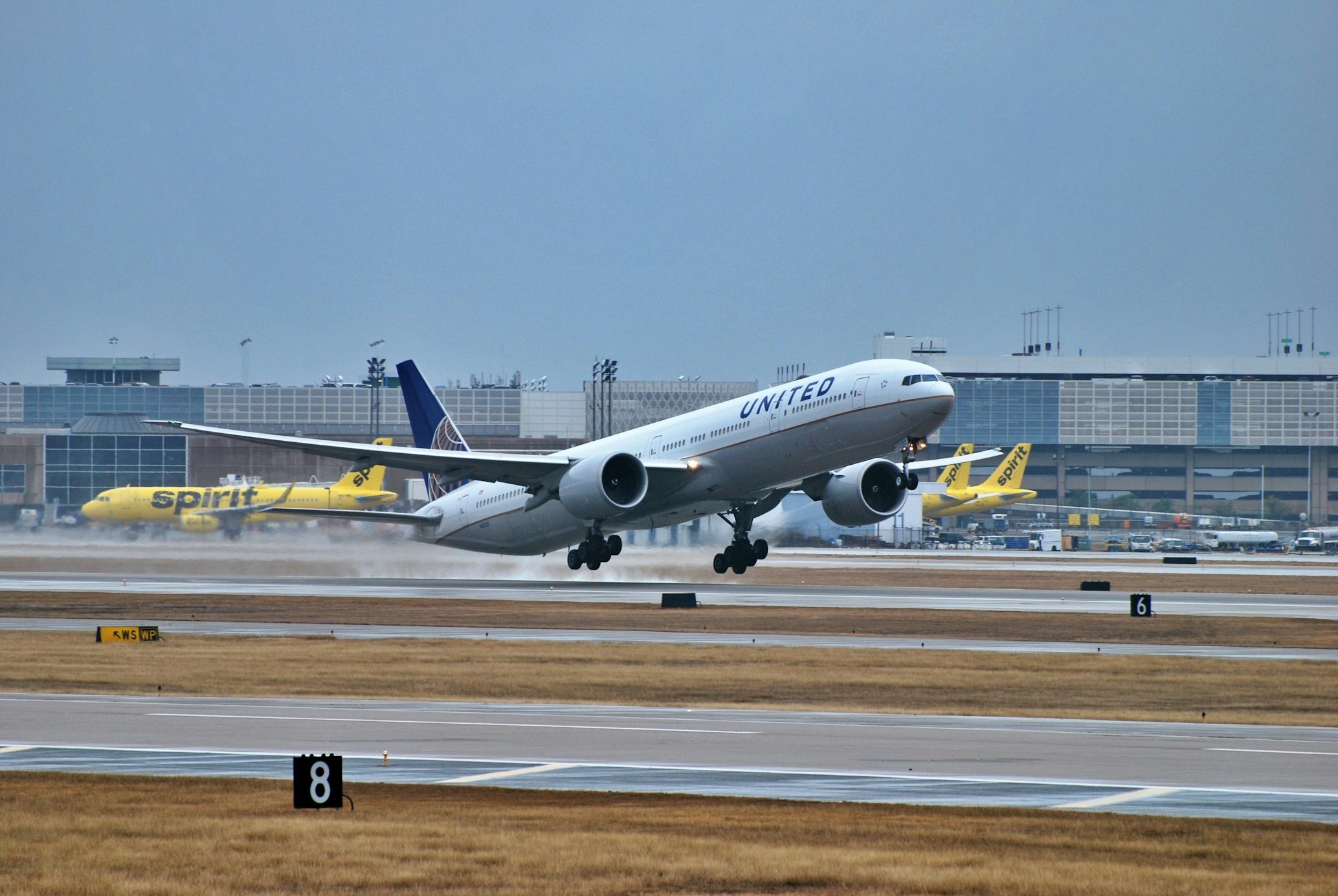
Every aircraft's certified payload-range performance, published in its FAA type certificate, sets the outer boundary of what a route can physically support. That boundary matters, and it's real. But it isn't the boundary that decided this particular route.
For thinner, longer city pairs like SFO–Singapore, the deciding factor sits below that ceiling: which aircraft can carry a full load profitably at the fuel burn a specific fare structure can absorb. The 787 and A350 both compete on exactly this basis against older twin-aisle jets, not on raw distance capability.
This is also why the story keeps repeating itself across the industry. Airlines aren't retiring 777-200ERs because the jets can't reach far enough. They're retiring them because a newer aircraft can reach the same distance for meaningfully less fuel per seat.
What This Means for the Fare You're Paying
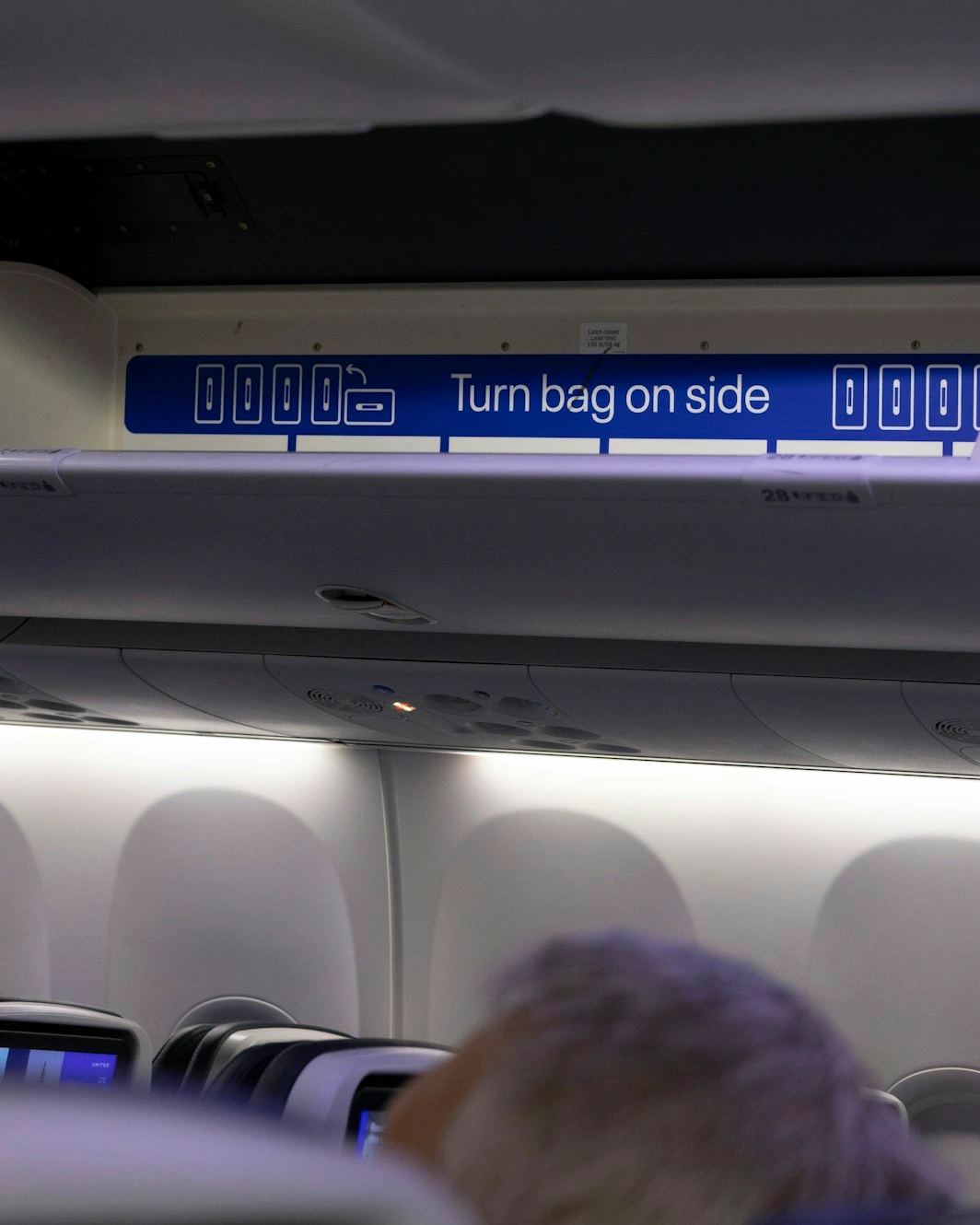
Ultra-long-haul flying is expensive to operate regardless of aircraft, and airlines price that into premium cabins especially, where business class keeps evolving specifically to make 17-hour flights survivable for high-yield travelers. A 25% fuel-cost gap between aircraft types is a meaningful share of what determines whether that premium pricing pencils out at all.
Passengers benefit from the nonstop itself, which on a route this long can save four to six hours door to door compared with a connection. That convenience is available specifically because the 787's economics made the route viable to fly daily rather than as a marginal, occasional service.
Boeing benefits too. The fuel-efficiency gap is precisely what lets United sell a route that a 777-heavy competitor would find harder to run profitably at the same frequency.
The Next Aircraft Already Rewriting This Math
The 777X is moving through certification toward a targeted entry into service around 2027, built specifically to close this efficiency gap on higher-capacity routes. Its GE9X engines and composite wing borrow directly from 787-era technology, aimed at letting Boeing's largest twinjet compete on cost per seat rather than just cost per flight.
Once certified, expect airlines to revisit some of today's aircraft assignments again, the same way United settled on the 787-9 here instead of a 777. The same efficiency math is already reshaping smaller categories of aircraft too, including early electric passenger planes designed around the same cost-per-seat logic driving this Boeing decision.
For travelers, the practical takeaway is that today's aircraft assignment on a given nonstop is an economic decision, not a fixed fact about what's technically possible. It's worth expecting it to change again within a few years, the same way it changed here.
For more coverage of the aircraft decisions behind your next booking, visit Air Gazette.
Frequently Asked Questions
Can a 777-200ER physically fly from San Francisco to Singapore nonstop?
Yes. Its published range of roughly 7,700 to 7,730 nautical miles comfortably covers the route's 7,340-nautical-mile distance.
If a 777 can fly the route, why doesn't United use one here?
Fuel cost per seat, not range. The 787-9 burns meaningfully less fuel per seat than a 777-200ER, which makes a thin, ultra-long-haul route like this one profitable to fly daily.
How much more fuel-efficient is the 787 than the 777?
Boeing credits the 787 with roughly a 25% fuel burn reduction versus the older aircraft it typically replaces, a figure airlines like Air New Zealand have cited directly when choosing the 787 over 777 variants.
Will the 777X change which aircraft flies routes like this?
Likely yes, over time. It's built to close much of the current efficiency gap with the 787, using composite wing technology derived from the Dreamliner program.
Does a more fuel-efficient aircraft always mean a cheaper fare?
Not directly. Fuel savings affect what a route can support profitably, but pricing also depends on demand, competition, and cabin mix on that specific route.
How often do airlines reassign aircraft on ultra-long-haul routes?
Fairly often. A new aircraft variant with a meaningful efficiency edge can make an existing route uneconomical on the older type within a few years of entering service.