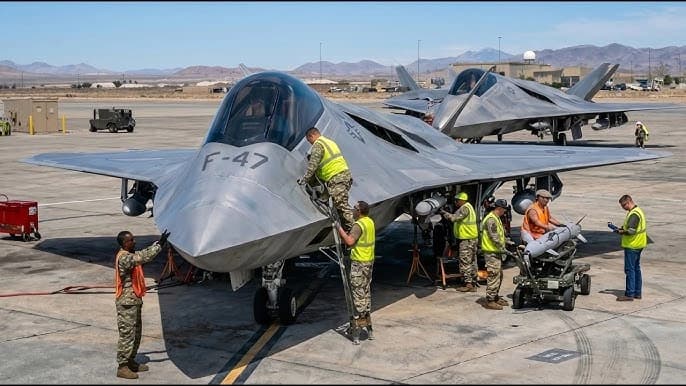
The US Air Force is building its first sixth-generation fighter jet, and Boeing is the one building it. The F-47 is meant to replace the F-22 Raptor, fly farther, hide better, and eventually operate alongside drone wingmen.
Here is what the aircraft can actually do, based on what the Air Force and Boeing have confirmed so far.
What Is the Boeing F-47?
The F-47 is a crewed, stealth fighter built for the Air Force's Next Generation Air Dominance program, known as NGAD. Boeing won the contract on March 21, 2025, in a deal worth more than $20 billion. The program's roots trace to a 2014 DARPA study on air dominance, which led DARPA to launch its Aerospace Innovation Initiative in 2015 to build X-plane demonstrators. Both Boeing and Lockheed Martin flew demonstrators under that effort, logging several hundred hours each, years before the production contract was decided.
The Air Force separately named its own aircraft concept "Penetrating Counter-Air" in its 2016 Air Superiority 2030 flight plan, a label that later gave way to the NGAD name. The jet's actual name carries deliberate symbolism, too. Officials say "47" honors the Republic P-47 Thunderbolt's World War II legacy, nods to the year the Air Force was founded, and references the current president's number in office an unusually political naming choice.
Why the F-47 Almost Didn't Happen
This was not a smooth rollout. In May 2024, then-Secretary Frank Kendall paused the entire NGAD effort after its projected per-unit cost climbed to roughly three times that of an F-35. That pause triggered an internal study into whether a crewed sixth-generation fighter was still the right answer at all, and for nearly a year the program's future was genuinely unclear.
The study concluded in March 2025. Major General Joseph Kunkel said the service had tried a wide range of alternatives and found none more viable than NGAD for achieving air superiority in a contested environment. That conclusion cleared the way for the contract weeks later, and it's why officials have leaned so hard on cost messaging ever since.
President Trump personally announced the contract award, rather than leaving it to a routine Pentagon release, echoing how directly he has also weighed in on other Air Force aircraft decisions, including the presidential fleet's own aircraft transition. That visibility has helped keep funding attention on the program, but it also means any future schedule slip will draw more public scrutiny than a quieter program would face.
F-47 vs. F-22 Raptor: What Actually Changes
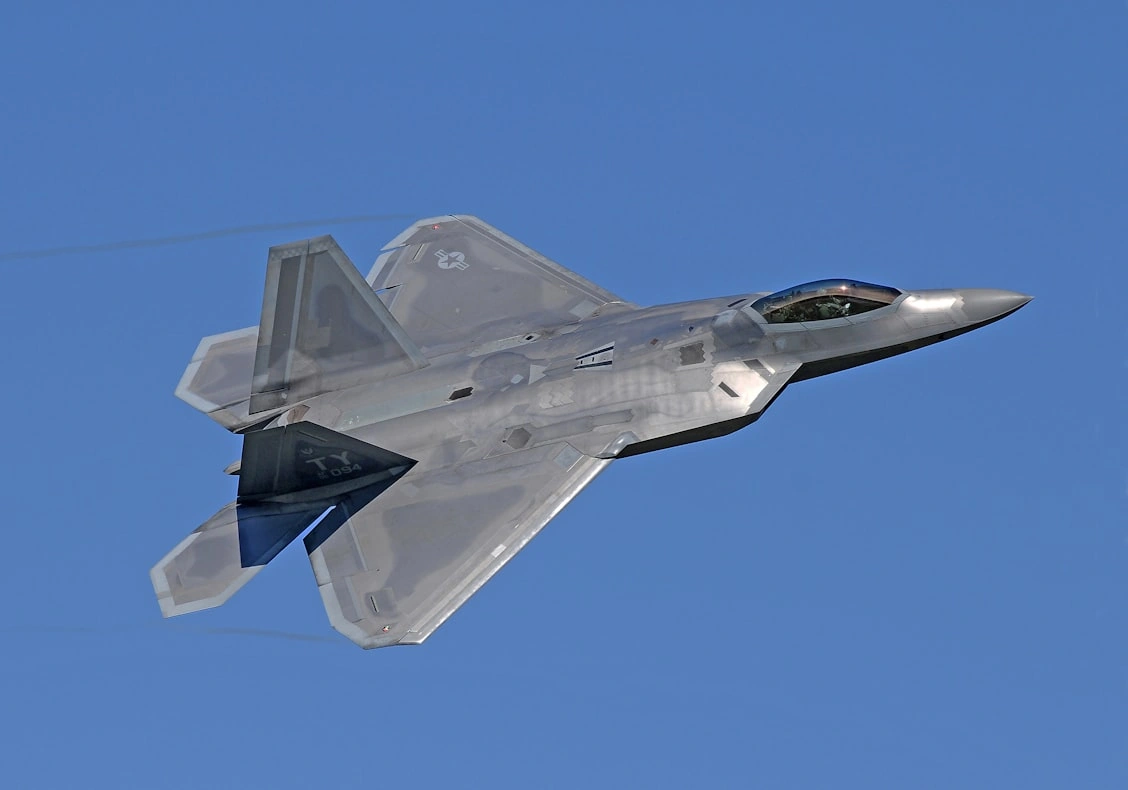
The F-22 has been the Air Force's top air superiority fighter since 2005, but it's a fixed fleet production ended in 2011 after only 187 jets. Range is the clearest F-47 improvement: officials say the new jet will have roughly 70% better combat radius, built for Pacific distances the F-22 was never designed to cover.
Gen. David Allvin has said the F-47 is meant to cost less per unit than the F-22, built in larger numbers, with less manpower needed to deploy it. Those figures come directly from Air Force and Boeing statements no independently audited unit cost has been finalized yet, so "cheaper" is a projection, not a confirmed number. The pilots who eventually crew it will still be among the most highly trained aviators anywhere, and the pay gap with civilian flying remains real see how major US airline pilot pay stacks up against military service.
The two jets will fly differently, too. The F-22 operates alone or alongside other crewed fighters, while the F-47 is designed from the outset to fly with semi-autonomous drone wingmen. As Allvin put it in his statement on the award: "For the past five years, the X-planes for this aircraft have been quietly laying the foundation for the F-47."
F-47 Specs: Speed, Range, and Stealth
Officially confirmed numbers are limited, since much of the design remains classified. What the Air Force has released centers on three figures: speed, range, and fleet size.
Metric | F-47 (Confirmed Target) | F-22 Raptor (Current) |
Top speed | Mach 2+ | Mach 2.25 |
Combat radius | 1,000+ nautical miles | ~590 nautical miles |
Planned fleet size | 185+ aircraft | 187 built, 178 remain |
Generation | Sixth | Fifth |
Status | In development, first flight 2028 | Operational since 2005 |
Top speed sits above Mach 2 near the F-22, not dramatically faster. Speed was never really the priority; stealth, sensor fusion, and range were. Air Gazette's breakdown of the fastest military aircraft ever built shows how far modern fighters sit below Cold War-era experimental jets, since stealth trades away raw speed on purpose.
Combat radius is the standout figure: more than 1,000 nautical miles unrefueled, nearly double the F-22, which matters in a Pacific theater where US airbases sit far from contested airspace. Stealth details remain the most guarded part of the program a patch that circulated in September 2025 suggested the nickname "Phoenix," though an Air Combat Command spokesperson confirmed it was only an early design concept, not a formal name.
The F-47 and Its Drone Wingmen
The F-47 was never designed to fly alone. It is the crewed centerpiece of what the Air Force calls a "family of systems," built around Collaborative Combat Aircraft semi-autonomous drones meant to fly ahead of and alongside it.
In 2023, then-Secretary Frank Kendall outlined a rough force structure of roughly 200 next-generation fighters paired with about 1,000 CCA drones, each able to carry extra weapons or sensors into contested airspace. That ratio has shaped how officials talk about fleet numbers ever since, even as the confirmed F-47 target settled at 185-plus jets.
The CCA program is funded and managed separately from the F-47 contract. A delay or cost increase on the drone side would not necessarily show up in F-47 reporting at all, even though the jet's stated mission depends on those drones arriving on schedule.
When Will the F-47 Enter Service?
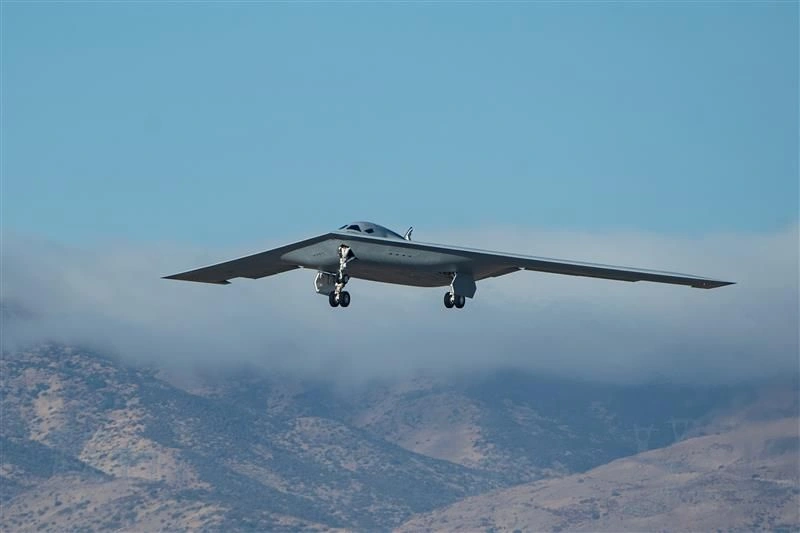
First flight is now targeted for 2028, shifted slightly from an earlier goal of flying before the end of the current presidential term in early 2029. Allvin confirmed in September 2025 that manufacturing of the first jet had begun and the 2028 date was firm.
As of mid-2026, defense reporting indicates the program remains on schedule, with test aircraft in production at Boeing's St. Louis facility. Operational service is expected to begin around 2029, with broader fielding continuing through the 2030s.
The next 6 to 12 months matter more than the headline dates suggest. Engine integration and the shift from demonstrator to production-representative hardware are historically where sixth-generation timelines slip, and this program has already paused once over cost before recovering. Test programs at this stage also carry real operational risk, something underscored by how often training and experimental aircraft accidents shape procurement decisions, as seen in a recent military training aircraft crash in Taiwan that grounded an entire aging fleet.
F-47 vs. China's J-36 and J-20
Part of the urgency behind the F-47 traces back to China. Chinese state media released footage of the J-36, a large tailless aircraft widely believed to be an early sixth-generation prototype, before the US had even committed to its own program. General Kenneth Wilsbach of Air Combat Command has said the US needs crewed sixth-generation aircraft specifically to counter emerging Chinese designs.
Neither the F-47 nor the J-36 has flown in a disclosed form, so direct comparison remains speculative on both sides. The J-20 is different China's fifth-generation stealth fighter has been operational since 2017, giving its air force a combat-ready jet the US must plan around today, not in 2028.
Who benefits from this race is layered. Boeing gets a badly needed win for a struggling defense division, the Air Force gets a longer-range jet suited to Pacific operations, and taxpayers absorb a contract already exceeding $20 billion before a single jet has flown, on a program with a documented history of cost overruns.
Conclusion
The F-47 fighter jet is not a speed play. It is a range, stealth, and fleet-size play built around a Pacific scenario the Air Force considers increasingly plausible, on a program that already survived one near-cancellation over cost.
I'll admit the line from a World War II fighter to a jet partly named for a sitting president is easy to miss on a first read, but it says something about how differently this rollout has been marketed compared to past fighter programs.
What remains genuinely uncertain is whether 2028 holds as a real first-flight date, or slips the way most sixth-generation timelines have before. Much of that answer traces back to the same DARPA-led X-plane testing that quietly built the foundation for this program in the first place, and its next round of results will speak louder than any announcement has so far.
If stories like this one interest you, Air Gazette covers the rest of military and commercial aviation with the same level of detail.
Frequently Asked Questions
What is the F-47 fighter jet?
The F-47 is the US Air Force's planned sixth-generation stealth fighter, built by Boeing under the Next Generation Air Dominance program. It is designed to replace the F-22 Raptor with significantly longer range and more advanced stealth technology, at a lower target cost per aircraft.
Has the F-47 flown yet?
No. Experimental demonstrator aircraft related to the program have flown since 2019, logging hundreds of hours of risk-reduction testing. The actual F-47 has not yet flown, with first flight currently targeted for 2028.
Is the F-47 better than the F-22?
The F-47 is designed to have roughly 70% more combat radius than the F-22, along with more advanced stealth and lower operating costs per aircraft. Its top speed of Mach 2+ is similar to, rather than faster than, the F-22's Mach 2.25, since range and stealth were prioritized over raw speed.
When will the F-47 enter service?
The Air Force expects the F-47 to become operational around 2029, following its planned 2028 first flight. Broader fleet fielding is expected to continue through the 2030s as production ramps up.
How fast is the F-47?
The Air Force has confirmed a top speed of Mach 2 or greater, roughly in line with existing fifth-generation fighters rather than substantially faster. Officials have said this reflects a deliberate trade-off favoring stealth and range.
Who makes the F-47 fighter jet?
Boeing is building the F-47 under a US Air Force contract awarded in March 2025. That win followed earlier demonstrator work supported by DARPA dating back to 2019, and revitalizes Boeing's fighter production line in St. Louis.
What does NGAD stand for?
NGAD stands for Next Generation Air Dominance, the US Air Force program encompassing the F-47 fighter along with a planned fleet of Collaborative Combat Aircraft drones. The two are designed to operate together as a single "family of systems."