Most passengers board a flight and assume flight attendants are there to serve drinks and stow bags. That assumption is legally wrong and it causes more in-flight conflict than almost anything else.
Flight attendants are federally designated safety personnel. Their primary duties under US law have nothing to do with beverage service.
What Federal Law Actually Says About Flight Attendant Duties
The foundation of every flight attendant's role is 14 CFR Part 121.391. Under this Federal Aviation Administration regulation, all Part 121 air carriers which covers every major US commercial airline must staff one flight attendant per 50 passenger seats.
The regulation defines the position explicitly as a safety role, not a service role. The law identifies flight attendants as the primary crew responsible for emergency evacuation, cabin safety compliance, and hazardous materials oversight.
Service duties drink carts, carry-on assistance, meal service are defined not by federal law but by each airline's own Operations Specifications and union contracts. This distinction is not a technicality. It determines what a flight attendant can legally be held accountable for.
The Core Safety Obligations Under 14 CFR Part 121
Every flight attendant on a US carrier must, by federal requirement:
Conduct pre-departure safety equipment checks on exits, oxygen systems, and flotation devices
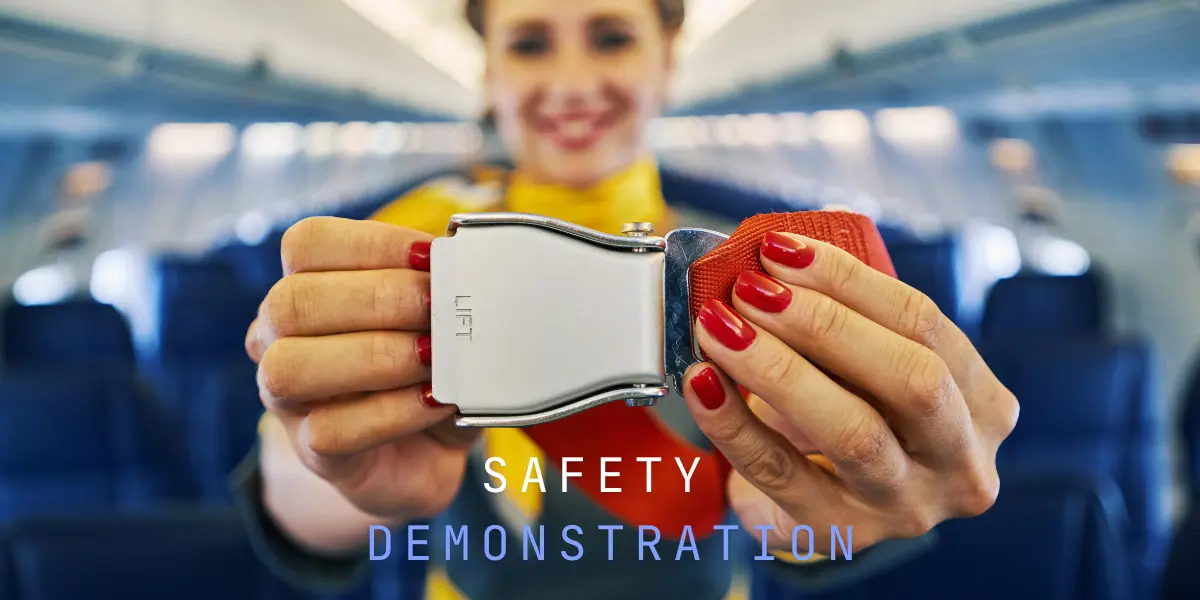
Demonstrate emergency procedures and ensure passenger compliance with safety briefings
Enforce FAA rules on seatbelt use, electronic device restrictions, and carry-on stowage
Respond to medical emergencies using onboard equipment including defibrillators
Execute emergency evacuation procedures in coordination with the flight deck
Oversee hazardous materials identification and compliance among passengers
None of these duties are optional or airline-specific. They apply on every Part 121 flight operating in US airspace.
Flight Attendant Duties vs Passenger Expectations: Where the Conflict Starts
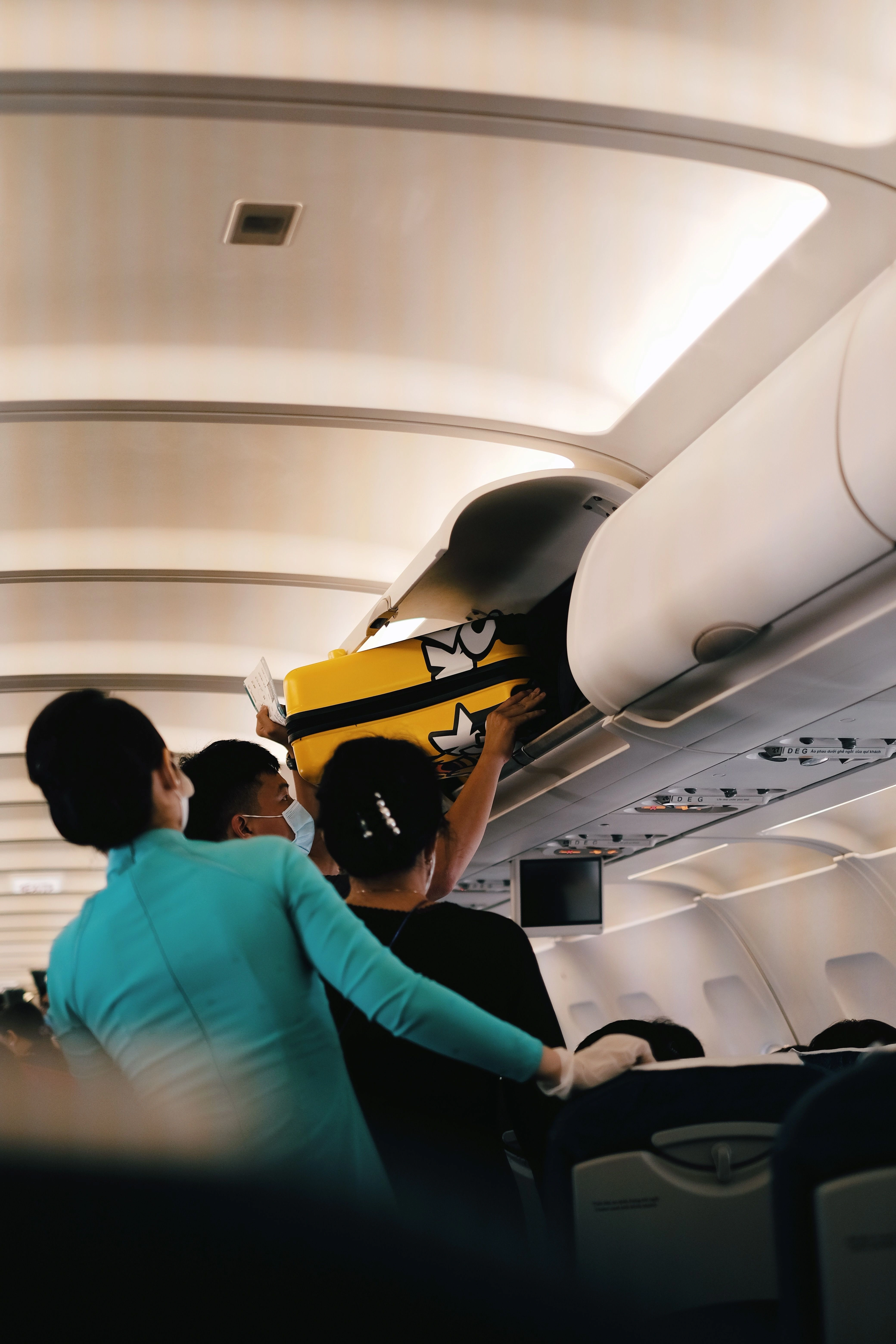
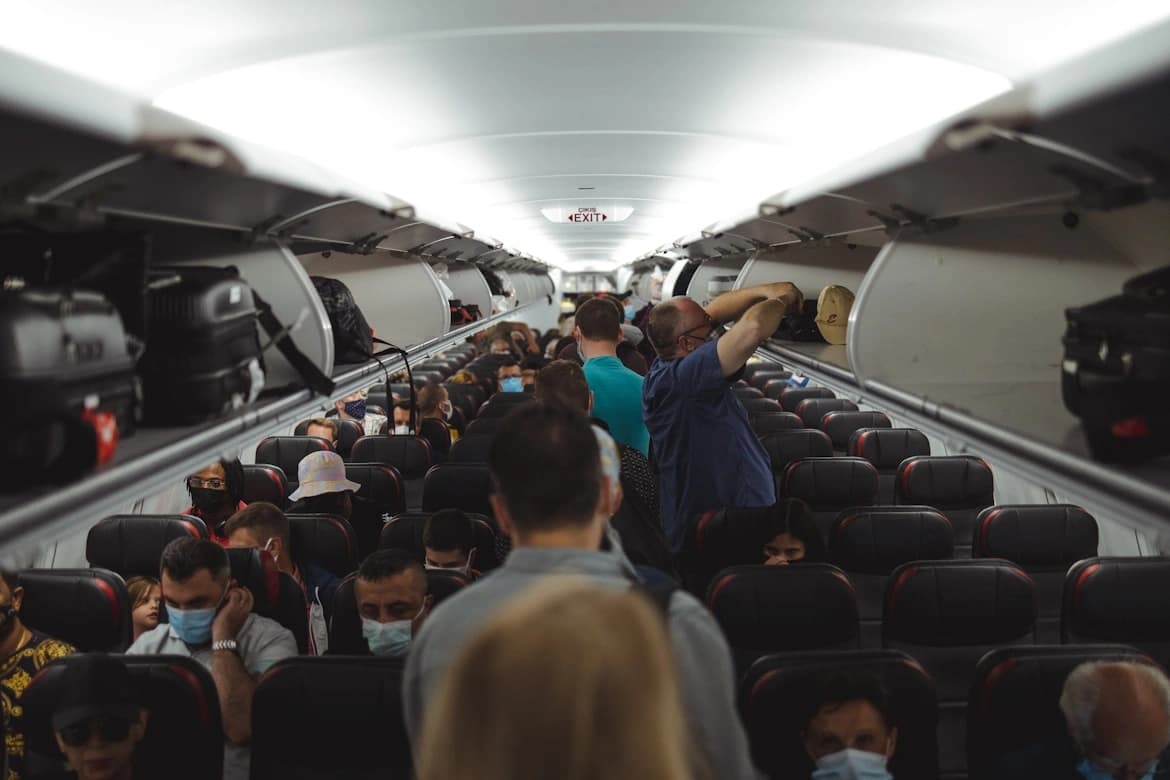
The gap between what passengers expect and what flight attendants are legally required to do is widest when it comes to carry-on bags. Passengers routinely ask flight attendants to lift, rearrange, or stow their luggage overhead. Flight attendants routinely say no.
This refusal is not a service attitude problem. It is a liability management decision backed by documented workers' compensation claims.
Airlines have faced legal exposure when flight attendants injured their backs assisting passengers with heavy bags. The FAA's safety mandate carries no requirement to accept that physical risk. Many carriers have now formalized the declined carry-on assistance language in boarding scripts precisely to limit that exposure.
What Airlines Actually Require in Their Operations Specifications
Duty Category | Governed By | Examples |
Emergency evacuation readiness | 14 CFR Part 121 (federal law) | Exit checks, evacuation drills, emergency commands |
Hazardous materials oversight | FAA / TSA regulation | Identifying prohibited items, reporting violations |
Passenger safety compliance | FAA regulation | Seatbelt enforcement, electronic device rules |
Beverage and meal service | Airline Operations Specs / union contract | Drink service, snack distribution |
Carry-on assistance | Airline policy (not federal law) | Varies by carrier many formally opt out |
Passenger comfort requests | Airline discretion | Blankets, pillows, seat changes |
The key column is the middle one. Service duties sit under airline discretion. Safety duties sit under federal law. These are not equivalent.
Understanding this matters before you board. If you're researching the best fare or redemption strategy for an upcoming trip as many frequent flyers redeeming AAdvantage miles for major event travel already do knowing what crew members are and aren't obligated to do on your flight is practical information, not trivia.
The Legal Consequences Passengers Don't Know About
Most passengers who push back on a flight attendant's refusal have no idea they are one step away from a federal interference charge. Under 49 U.S.C. 46504, interfering with a flight crew member in the performance of their duties is a federal offense carrying up to 20 years in prison.
The statute does not require physical contact. Verbal obstruction arguing, threatening, refusing repeated instructions qualifies.
A passenger who escalates a carry-on disagreement after a flight attendant has said no is no longer in a customer service dispute. They are potentially in a federal criminal situation.
How Cabin Safety Enforcement Has Changed
Federal prosecutions under 49 U.S.C. 46504 have risen steadily over the past several years. The FAA now tracks unruly passenger reports in the thousands annually, and the Department of Justice has pursued criminal referrals in a growing share of cases involving repeated non-compliance with crew instructions. The FAA has also escalated civil penalty enforcement, levying millions of dollars against unruly passengers in recent years a pattern that reflects both the volume of incidents and the agency's stated intent to use financial enforcement more aggressively than it historically has. A significant share of those incidents involved passengers who escalated disputes over seating, bin space, or device rules not physical confrontations.
Airlines including Southwest and JetBlue have updated pre-boarding communications to explicitly identify cabin crew as federal safety officers. Other carriers have moved in the same direction, and the industry-wide shift toward formal crew authority language in passenger communications is ongoing.
The practical implication: a flight attendant who tells you to sit down, stow your bag, or end a phone call is issuing an instruction that carries federal authority. The enforcement apparatus behind it is not theoretical.
What Flight Attendants Are Not Required to Do
Clarifying the limits of the duty list is as important as the list itself. These are common passenger expectations that have no basis in federal regulation:
Lifting or stowing carry-on bags. No federal rule requires this. Many airlines explicitly prohibit it under injury liability policies. If you need overhead bin assistance, ask a gate agent before boarding.
Providing extra legroom or seat upgrades. Seat assignments are controlled by the airline's passenger management system, not cabin crew.
Resolving disputes between passengers. Flight attendants can address safety-relevant behavior. They are not arbiters of personal space disagreements.
Delivering food or drink on tight turnarounds. On short-haul flights under 2.5 hours, some carriers' Operations Specifications allow reduced or no beverage service entirely.
Guaranteeing overhead bin availability. Gate-checked bags are an airline operations decision. Flight attendants do not control bin policy.
For context on what airlines are actually responsible for providing in terms of onboard space, the breakdown of overhead bin space policies by carrier is worth reviewing before you pack.
Flight Attendant Duties and Responsibilities by Phase of Flight
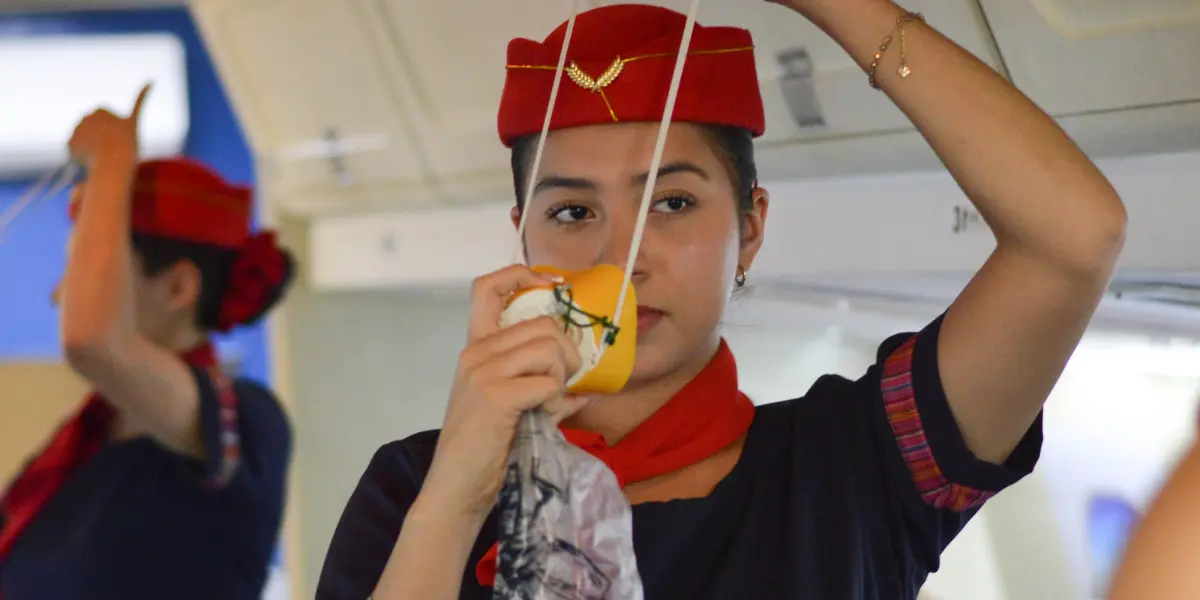
Flight attendant obligations shift as the flight progresses. Understanding which phase triggers which duties helps passengers interpret crew behavior accurately.
Pre-Departure: The Safety-Critical Window
The pre-departure phase is the highest-stakes period for flight attendant duties. Federal regulations require:
Verification that all emergency exits are unobstructed and functional
Confirmation that emergency equipment is stowed and accessible
Passenger compliance check seatbelts fastened, seats upright, tray tables stowed, carry-ons secured
Safety demonstration completed or video verified
During this window, flight attendants are executing a federally mandated checklist. Requests for drinks, seat changes, or bin help during the pre-departure phase are interruptions to a safety procedure.
Cruise Phase: When Service Duties Apply
Once the aircraft reaches cruising altitude and the seatbelt sign is deactivated, service duties begin. This is when airline Operations Specifications govern crew behavior not federal law. Drink service, snack distribution, and passenger assistance requests fall here.
Flight Phase | Primary Governing Standard | Flight Attendant Priority |
Pre-departure (gate to pushback) | 14 CFR Part 121 | Emergency equipment checks, passenger compliance |
Taxi and takeoff | FAA regulation | Cabin secure, crew seated |
Climb (below 10,000 ft) | FAA regulation | Safety monitoring, no service permitted |
Cruise | Airline Operations Specifications | Service duties, passenger requests |
Descent and approach | FAA regulation | Cabin secure, safety checks |
Landing and taxi-in | FAA regulation | Crew seated, passenger compliance |
The service window is shorter than most passengers realize. On a 90-minute domestic flight, the actual cruise phase may be under 45 minutes after accounting for climb and descent restrictions.
What This Means for Frequent Travelers
If you fly 15 or more segments a year, this regulatory framework has direct practical implications for how you manage your travel.
First, the carry-on strategy matters more than ever. If you regularly board with a large bag expecting crew assistance, adjust that expectation now. The formal policy direction at US carriers is away from crew lifting obligations, not toward them. Plan your overhead bin approach before you board standby flight situations and irregular operations already create enough friction at the gate without adding a carry-on conflict onboard.
Second, know when a refusal is procedure versus a genuine service failure. A flight attendant who declines to help stow your bag during pre-departure is following policy. A flight attendant who refuses to provide a booked meal service during cruise without explanation may represent an actual service failure worth addressing through the airline's customer relations channel. These are not the same situation, and treating them the same way wastes your time and creates unnecessary conflict.
Third, understand that the enforcement environment is tightening. The combination of increased federal prosecutions, updated airline passenger conduct language, and flight attendant union advocacy for clearer safety officer status means the regulatory and social context around crew authority is shifting. Frequent travelers who understand this framework are less likely to inadvertently cross a line that has real legal consequences.
Fourth, adjust your timing expectations by flight phase. If you need something from a flight attendant a seat adjustment request, a question about your connection, a meal substitution the cruise phase is the appropriate window. Approaching a flight attendant during pre-departure or the descent phase with a non-safety request puts them in a position of having to choose between their federal checklist and responding to you. Most will choose the checklist. That is not poor service. That is the job working correctly.
The FAA's public guidance on passenger conduct and crew authority outlines these standards in plain language and is worth bookmarking if you want the direct regulatory source. For a cross-industry comparison on how passenger rights are structured relative to crew authority, the DOT's air travel consumer resources cover the federal passenger protection framework in comparable depth.
The flight attendant job itself is undergoing structural change too. For readers interested in how aviation careers are evolving in parallel including the staffing pipeline that affects crew availability on the routes you fly most the airline jobs landscape in the US provides useful context on where the industry is heading.
Where Crew Authority Rules Are Heading
The regulatory direction on flight attendant authority has been moving in one way for several years toward stronger formal recognition of the safety officer role, not weaker.
The FAA has signaled ongoing review of whether existing passenger conduct regulations are sufficiently clear about the consequences of interfering with crew safety duties. Advisory circulars and policy clarifications in this area tend to reinforce crew authority rather than limit it. That direction is unlikely to reverse.
Flight attendant unions including the Association of Flight Attendants-CWA, the Association of Professional Flight Attendants, and the International Association of Machinists and Aerospace Workers have consistently pushed for pre-flight safety briefing language that explicitly identifies crew members as federal safety officers rather than service workers. As union contracts at major carriers come up for renegotiation, this language is increasingly likely to become standard across the industry.
The practical effect for passengers is straightforward. The framing of crew authority in boarding communications, onboard scripts, and federal enforcement will continue to shift away from the service-worker model that many passengers still carry in their heads. Understanding the regulatory baseline now puts you ahead of that shift.
Conclusion
Flight attendants are not service workers who also do some safety checks. They are federally designated safety officers who also provide service when time and Operations Specifications permit.
That distinction changes how every passenger should interpret crew instructions, refusals, and corrections. A carry-on declined is a liability call. A sit-down command is a federal safety instruction. An escalation past that point is a potential federal offense.
Frequent travelers who understand this framework fly with less friction, fewer misunderstandings, and no risk of an avoidable federal interference charge. For more coverage on how aviation regulations affect the passenger experience across every part of your journey, explore Air Gazette at Air Gazette.
Frequently Asked Questions
What are the primary duties of a flight attendant under FAA regulations?
Under 14 CFR Part 121, flight attendants are required to perform emergency equipment checks, enforce safety compliance, manage hazardous materials oversight, and execute evacuation procedures. Service duties like beverage delivery are governed by each airline's Operations Specifications and union contracts, not federal law.
Are flight attendants required to help passengers with carry-on bags?
No federal regulation requires flight attendants to lift or stow carry-on bags. Many US carriers have formally removed this from crew obligations due to documented injury liability. If you need overhead bin assistance, request help from a gate agent before boarding.
What happens if a passenger refuses a flight attendant's instructions?
Refusing or interfering with a flight crew member's instructions can constitute a federal offense under 49 U.S.C. 46504, which carries a maximum penalty of up to 20 years in prison. The statute covers verbal interference, not just physical confrontation.
How many flight attendants are required on a US commercial flight?
14 CFR Part 121.391 requires one flight attendant per 50 passenger seats on Part 121 commercial aircraft. A Boeing 737-800 configured for 162 seats requires a minimum of four flight attendants under this standard.
Can a flight attendant deny boarding to a passenger?
Flight attendants do not make boarding decisions those rest with the gate agent and airline operations. However, once aboard, a captain has authority to remove a passenger if crew determines that passenger poses a safety risk. Flight attendants can and do recommend removal to the captain.
What is the difference between a flight attendant's safety duties and service duties?
Safety duties are defined by federal regulation and are non-negotiable on every Part 121 flight. Service duties are defined by airline Operations Specifications and union contracts, which vary by carrier, route, and flight duration. Service duties can be reduced or eliminated on short routes. Safety duties cannot.
Are flight attendant rules and regulations changing?
The FAA periodically reviews passenger conduct regulations, and the consistent direction has been toward clearer, stronger crew authority not weaker. Flight attendant unions are also pursuing contract language that formally designates crew as federal safety officers in pre-flight briefings. As contracts at major carriers are renegotiated, this language is becoming more standard across the industry.