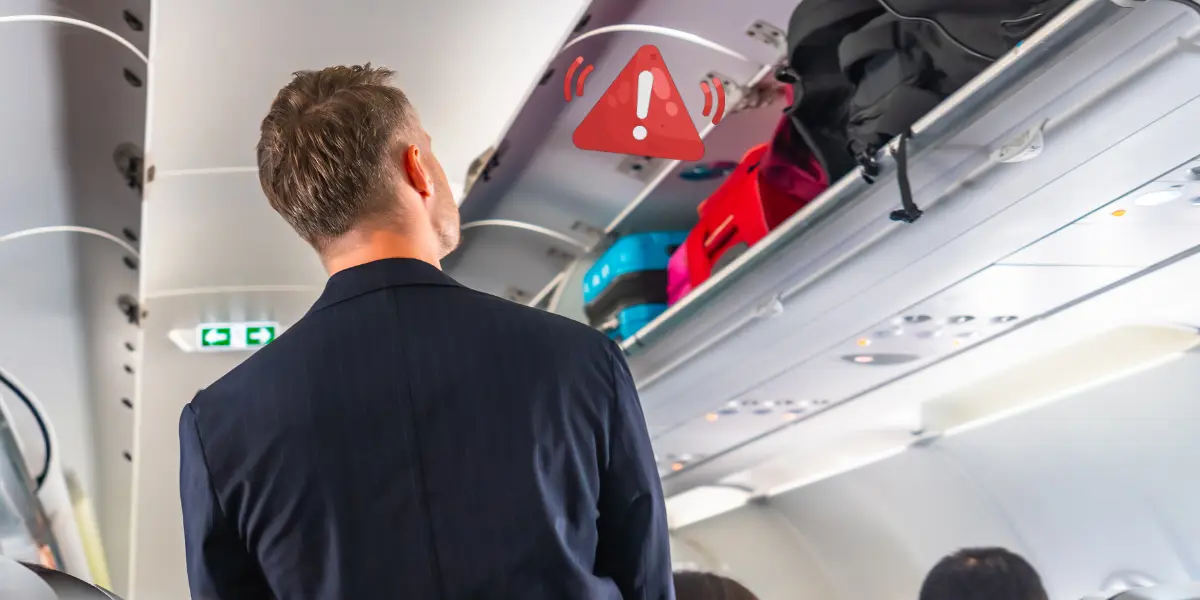
Every frequent flyer knows the feeling. You board the plane, drag your bag down the aisle, and find every bin slammed shut. The overhead bin space above your seat is gone and so is your patience.
This is not a coincidence. It is a system designed to produce exactly this outcome.
Why Overhead Bin Space Is Running Out on Every Flight
The root cause is straightforward: more passengers are carrying bags on board than the aircraft was ever designed to accommodate.
In 2024, global passenger traffic grew 8.6% to 4.6 billion passengers, according to IdeaWorksCompany. Airlines have responded not by expanding cabin storage, but by charging more for checked bags pushing travelers to bring everything on board instead. The result is a structural mismatch between overhead compartment capacity and the volume of bags now competing for it.
Checked bag fees reached a record $7.27 billion in 2024 across thirteen US carriers alone. American, Delta, and United each crossed the $1 billion mark individually. That revenue comes directly from travelers who chose not to check bags. Most of those bags went into the overhead bin.
How the Aircraft Layout Makes It Worse
Modern narrowbody aircraft the Boeing 737 and Airbus A320 family that operate the majority of US domestic routes carry between 150 and 186 passengers. The overhead bins hold roughly one bag per two passengers when packed efficiently. That math only works if passengers bring correctly sized bags and stow them wheels-first.
In practice, neither condition holds reliably. Passengers bring oversized bags. Bags go in lengthwise instead of wheels-first. Personal items that fit under the seat end up in the bins instead. Each of these habits consumes space meant for someone else's compliant carry-on.
The Overhead Bin Size Standards Nobody Reads
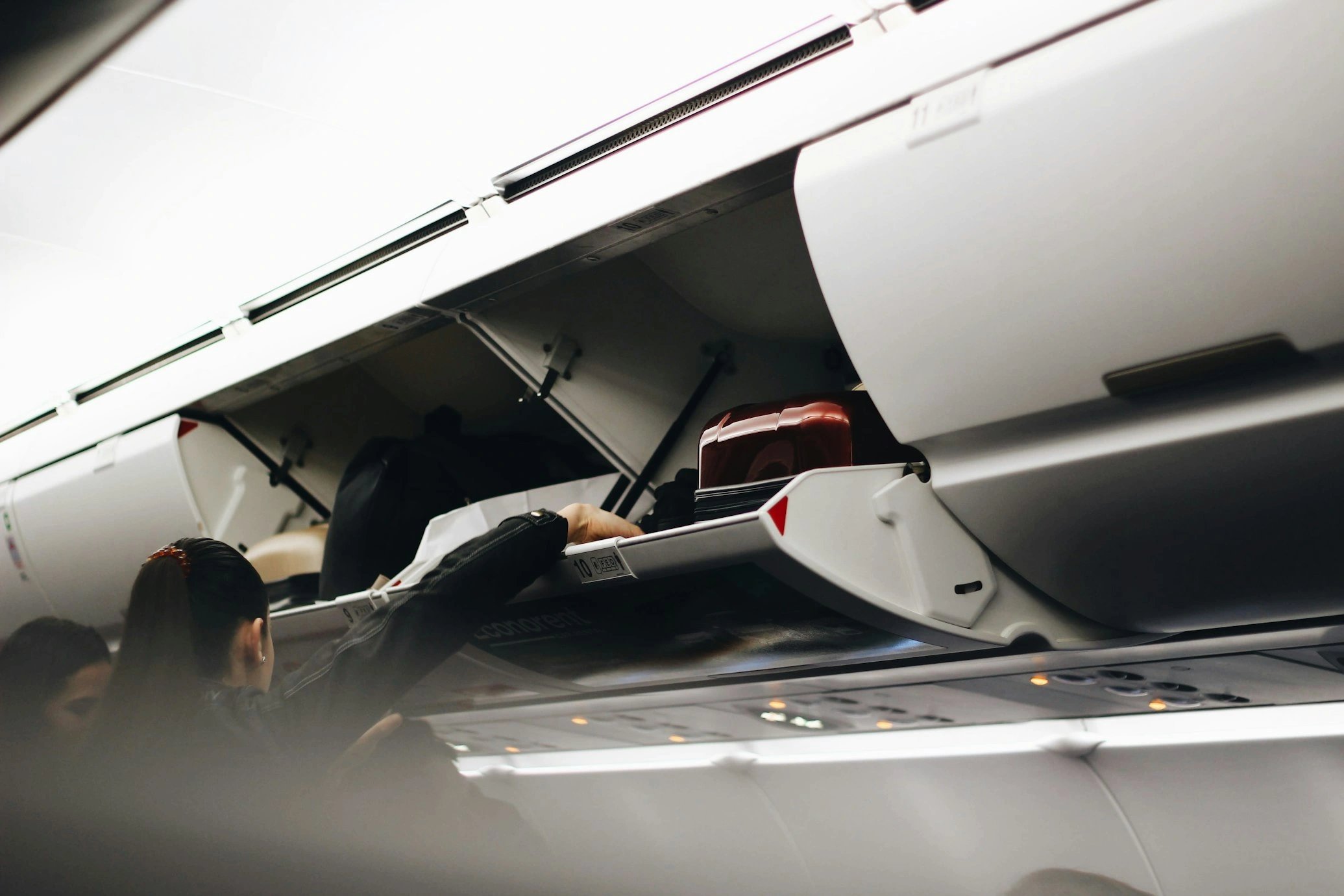
Every major US airline publishes carry-on size limits. Most passengers ignore them and until recently, most airlines did not enforce them either.
The standard that American, Delta, and United all publish is 22 × 14 × 9 inches, inclusive of wheels and handles. Southwest allows a marginally larger 24 × 16 × 10 inches. These figures trace back to IATA's Cabin Baggage Resolution 1577, adopted by 290 or more airlines in 2015, though consistent enforcement lagged by nearly a decade.
Airline | Max Carry-On Size | Personal Item | Basic Economy Bin Access |
22 × 14 × 9 in | 18 × 14 × 8 in | Yes (overhead bin included) | |
22 × 14 × 9 in | 17 × 10 × 9 in | No (under-seat only) | |
22 × 14 × 9 in | 17 × 10 × 9 in | No (international routes: yes) | |
24 × 16 × 10 in | 16.25 × 13.5 × 8 in | Yes (all fares) |
The Delta column is the one that surprises most travelers. Delta Basic Economy passengers cannot place a bag in the overhead compartment at all. Only a personal item that fits under the seat is permitted. That restriction turns an ordinary 22-inch roll aboard into a checked bag the moment a Basic Economy passenger tries to board.
American Airlines Overhead Bin Size vs. What People Actually Bring
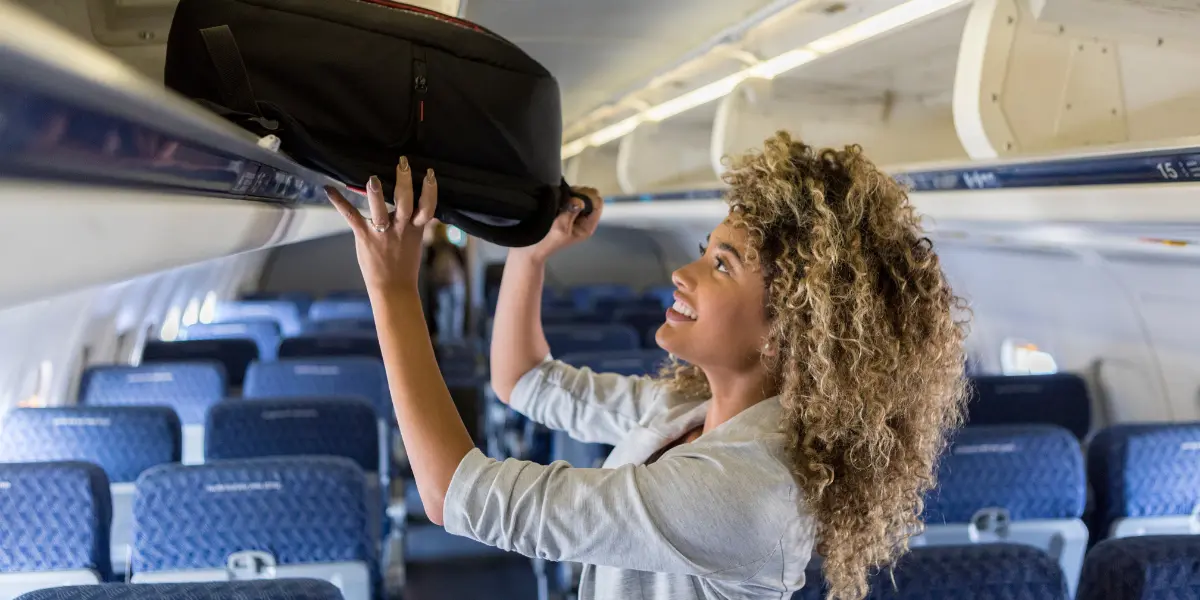
The American Airlines overhead bin size limit of 22 × 14 × 9 inches is measured with the bag standing upright. A standard carry-on marketed as "22-inch" often reaches 23 or 24 inches when wheels and handles are included. The measurement most bag manufacturers print on their products refers to the main compartment only.
In October 2025, American removed carry-on bag sizers from boarding gates a move the airline said would reduce boarding stress. In practice, it shifted enforcement from a physical check to
gate-agent discretion, which means compliance depends entirely on who is working that flight.
How Boarding Order Became the Real Battleground
The size of the bag matters less than when it arrives at the bin. A perfectly legal 22-inch roll aboard carried onto a full flight in Group 9 will almost certainly be gate-checked. The same bag, carried in Group 2, goes straight into the overhead compartment.
This dynamic has turned boarding position into the most valuable commodity in economy class and airlines know it.
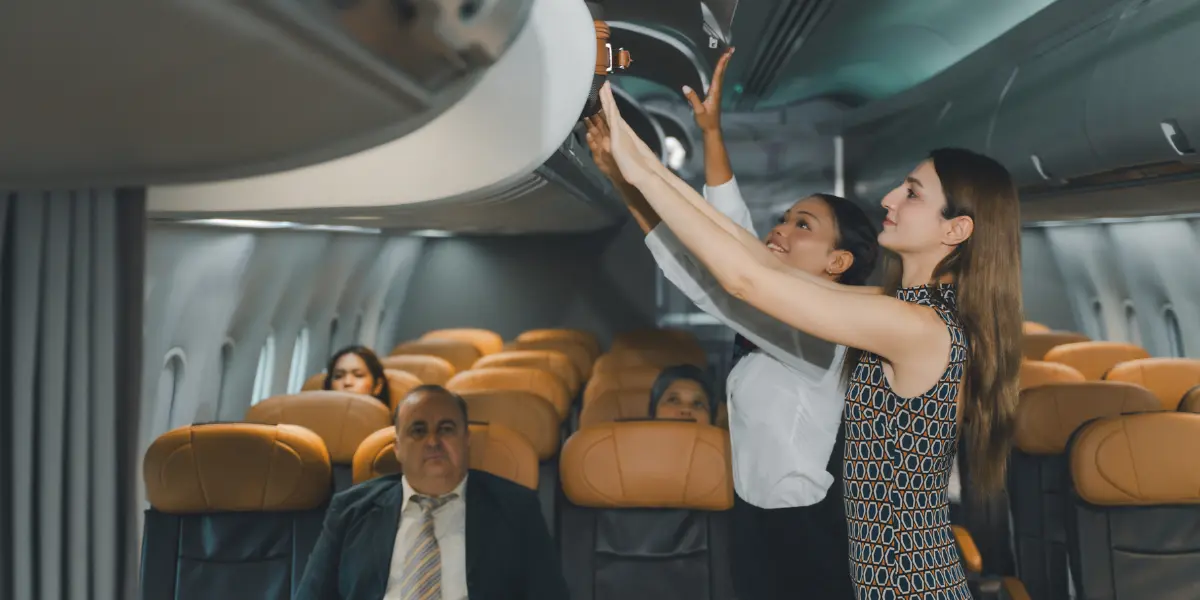
American Airlines now runs a nine-group boarding system as of May 2025. Groups 1 through 4 use a priority lane. Groups 5 through 9 queue in the main lane. The critical threshold is the Group 5 to 6 boundary. Passengers in Groups 1 through 4 board with reliable overhead bin access on most flights. Those in Groups 7 through 9 are boarding into a cabin where bin space is largely allocated.
Basic Economy passengers on American board in Group 9the last group before the door closes. They have overhead bin access in theory. In practice, on any full narrow body aircraft, the bins are full before Group 9 begins.
Boarding Group | Who Qualifies | Bin Availability (Full Flight) |
Pre-board / Group 1 | ConciergeKey, First/Business Class | Guaranteed |
Groups 2–4 | Executive Platinum, Platinum Pro, credit card holders | High |
Groups 5–6 | Gold members, paid priority | Moderate |
Groups 7–8 | Standard economy with seat assignment | Low |
Group 9 | Basic Economy | Near zero |
United's approach offers a useful contrast. United uses a window-middle-aisle (WILMA) boarding sequence for economy passengers, grouping window seats in Group 3, middle seats in Group 4, and aisle seats in Group 5. The method saves up to two minutes per flight by reducing in-aisle collisions but it does not change the fundamental bin math. Basic Economy passengers still board last.
The Revenue Model Behind the Space Shortage
Understanding why overhead bin space is so contested requires understanding the financial architecture airlines have built around it.
Global airline ancillary revenue hit $148.4 billion in 2024, representing 15.7% of total airline revenue, up from 9.1% in 2016, according to the IdeaWorksCompany 2025 Ancillary Revenue Yearbook. Baggage fees are the primary driver. Airlines discovered that restricting bin access at the low-fare end pushes a percentage of those passengers to either upgrade their fare or pay à la carte fees. Both outcomes improve yield.
Delta Basic Economy passengers who want overhead bin access must either upgrade to Main Cabin or check their bag at $35. Whether that upgrade is worth the cost depends on the route and seat products question covered in depth in the Delta Premium Select review. United Basic Economy passengers face the same constraint on domestic routes. The carry-on restriction is not an operational policy it is a revenue partition.
Southwest moved in the same direction when it ended its Bags Fly Free policy on May 28, 2025, introducing a $35 first bag fee for most fares. Southwest's Q2 2025 earnings showed the new fees generated roughly $350 million in a single quarter, with annual projections near $1.5 billion. As of April 2026, industry sources report Southwest is studying whether to extend that model further by restricting overhead bin access on its own Basic Economy fares.
Why Checked Bag Fees Make the Bin Problem Worse, Not Better
The logic airlines use that bag fees offset revenue lost from lower base fares creates an unintended consequence in the cabin. When passengers face a $35 to $45 checked bag fee, a meaningful share choose to carry everything on instead. That choice transfers the bag from the cargo hold, where it costs the airline almost nothing to carry, into the overhead bin, where it competes with everyone else's carry-on.
The US Department of Transportation's Aviation Consumer Protection Division tracks baggage-related complaints. Bin crowding and gate-checking of compliant bags consistently appear in traveler feedback as top sources of flight dissatisfaction. According to IdeaWorksCompany's 2025 Ancillary Revenue Yearbook, the airlines generating the most ancillary revenue deliberately limit larger carry-on bags through policies and fees as a core strategy. The same algorithmic pricing tools driving seat fees and bag surcharges are explored in the Air Gazette breakdown of airline dynamic pricing and AI revenue management. The bin shortage is, in part, a designed feature.
What Each Airline Is Actually Doing About It
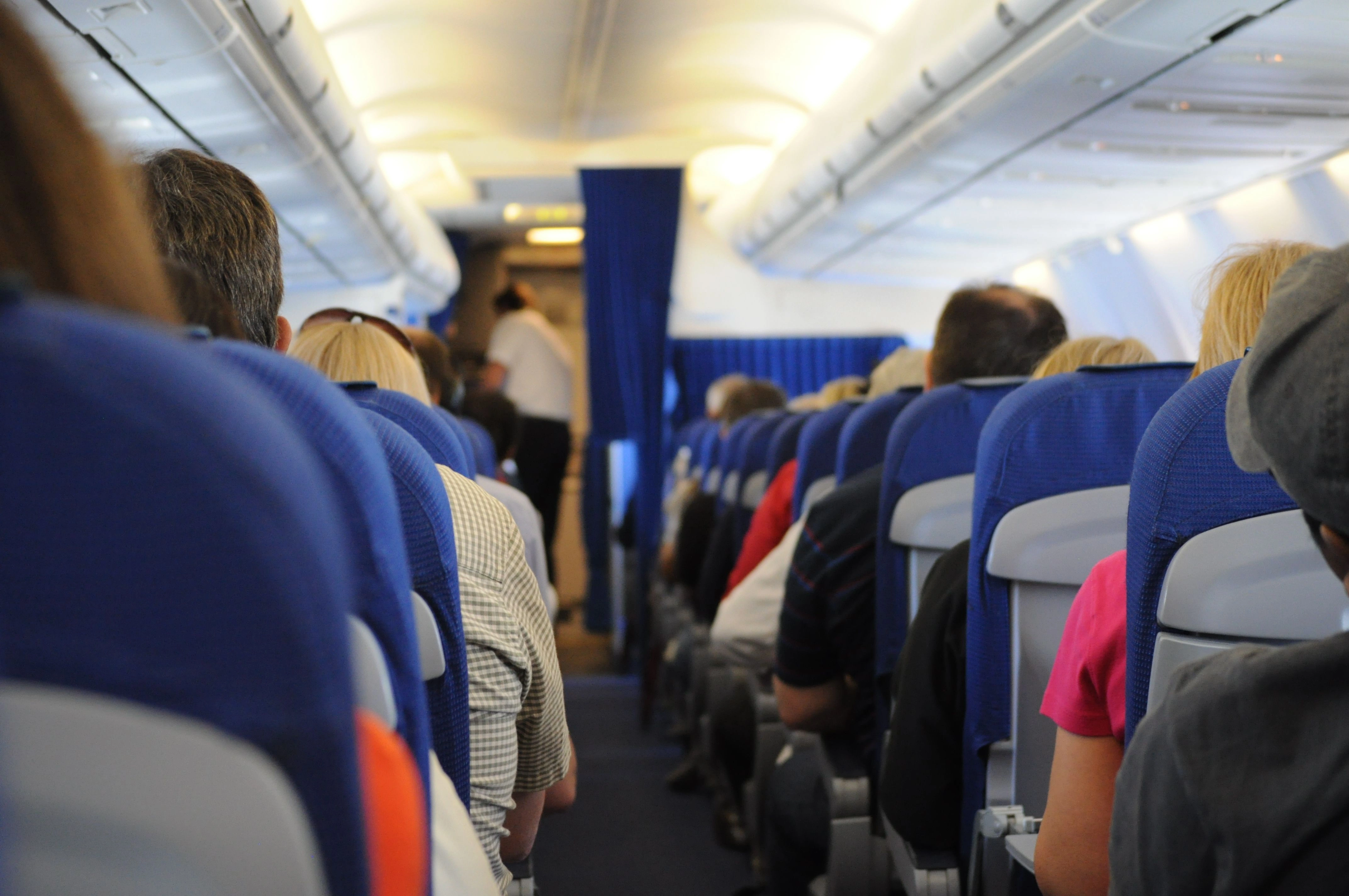
The gap between published policy and real-world enforcement defines how crowded any given bin actually gets.
Delta deployed automated bag sizer scanners at major hubs in 2025. These flag oversized bags at the boarding gate before entry, with no gate-agent discretion involved. United expanded automated scanners to 35 or more airports in late 2025 and has targeted 80 or more locations by end of 2026. American and Southwest are testing similar systems.
Low-cost carriers apply a different model. According to a 2024 IATA Cabin Baggage Compliance Study, low-cost carriers physically check 89% of passengers' bags before boarding, compared to 22% for full-service legacy airlines. That gap reflects the revenue model: LCCs derive 30% to 40% of total revenue from ancillary fees, which makes dimensional compliance a direct profit center.
Airline | Enforcement Method | Enforcement Rate |
Spirit | 100% gate sizer check | 100% |
Delta | Automated gate scanners at major hubs | Selective by load factor |
United | Automated scanners at 35+ airports | ~20% (hub-to-hub routes) |
American | Visual / agent discretion (sizers removed Oct 2025) | Variable |
Southwest | Visual / agent discretion | ~25% |
For travelers flying premium cabins or booking business class on carriers like ANA or JAL where overhead luggage is handled with far greater consistency the bin problem largely disappears. The overhead bin war is a feature of high-density economy cabins on full domestic flights. It rarely surfaces in the same way on international long-haul premium products. For a broader look at how the business class experience differs by airline, see our detailed breakdown in The Future of Business Class: A 2026–2030 Forecast for Frequent Travelers.
How to Guarantee Overhead Bin Space on Your Next Flight
The bin problem is not random,it is predictable. Travelers who understand the system can navigate it reliably.
Book your fare class carefully. Delta and United Basic Economy restrict overhead bin access by design. On those fares, either pay for a seat upgrade, check a bag, or bring only a personal item. American Basic Economy still includes overhead bin access, but that could change. Always verify the current policy before booking.
Earn or buy early boarding. Co-branded airline credit cards typically come with Group 4 boarding or better on their home carrier. For infrequent travelers, purchasing priority boarding at $9 to $30 per flight is cheaper than a gate-check fee. Boarding in Groups 1 through 4 is the reliable answer on any full narrow body.
Know the actual overhead compartment size. The standard bin accommodates a bag of 22 × 14 × 9 inches placed wheels-first or sideways depending on the bin layout. Bags marketed as "cabin-approved" by luggage brands may be measured without handles and wheels. Measure the bag fully packed, wheels down, handle extended.
Use soft-sided bags on tight connections. Soft-sided duffel bags compress to fit available space. On regional jets operated by American Eagle or similar subsidiary carriers, bins are significantly smaller than on mainline aircraft. A hard-sided 22-inch roll aboard that fits in a mainline 737 bin may not fit in a regional jet bin.
Understand the bulkhead trade-off. Bulkhead rows offer extra legroom but have no under-seat storage. Any bag you bring must go in the overhead bin which means if the bins fill before you board, you have fewer options than a passenger three rows back.
For travelers who check bags frequently and want to understand what the full picture of airline fees and routes looks like in 2025 and beyond, the airline jobs and compensation landscape is one indicator of where carriers are investing operationally.
The Honest Answer: Who Is Actually to Blame
The overhead bin shortage has five contributing causes. Each one shares partial responsibility.
Airlines created the financial incentives that moved bags from the hold to the cabin. Checked bag fees pushed passengers to avoid checking bags. Basic Economy tier structures then restricted bin access for the cheapest fares while selling bin access as a premium feature. The bin space that used to be adequate became a scarce commodity the moment checked bags were monetized.
Aircraft manufacturers have improved bin capacity incrementallyBoeing's 737 MAX features larger bins than earlier 737 variants but the improvement has not kept pace with the increase in passenger load factors or the shift in bag behavior driven by fee structures.
Passengers bring bags that are technically within size limits but consume more space than they need to. Stowing bags lengthwise instead of wheels-first, placing personal items in the overhead bin instead of under the seat, and gaming boarding groups all reduce available space for others.
Boarding systems at most carriers still allow premium credit card holders and status passengers to board 10 minutes ahead of the general cabinmnot because they need more time, but because overhead bin access is the implicit reward. That reward structure depends on bin scarcity existing in the first place.
Inconsistent enforcement means that on any given flight, a passenger with an oversized bag may face no consequences while a compliant passenger boards late and finds no space. The absence of systematic gate-level enforcement at most carriers outside of Delta and United's scanner rollouts makes the bin a first-come, first-served resource regardless of who has the right to it.
The situation is unlikely to improve on its own. As long as checked bag fees remain in place and basic fare tiers strip overhead access as a differentiator, the structural incentive to pack the bin stays intact. For travelers planning routes where load factors run consistently high such as during major events like the World Cup 2026 flights from the US understanding the boarding tier system and booking accordingly is now a practical necessity, not an optional upgrade.
For more travel guides and aviation insights, explore the full collection at Air Gazette.
Frequently Asked Questions
Why is there never overhead bin space on flights?
Checked bag fees introduced since 2008 pushed a large share of travelers to carry bags on board rather than check them. More passengers now board with carry-ons than the bins were designed to hold. Airlines have also tiered overhead bin access so that Basic Economy passengerswho board lastface full bins on virtually every full flight.
What is the standard overhead bin size on major US airlines?
American, Delta, and United all publish a maximum carry-on size of 22 × 14 × 9 inches, inclusive of wheels and handles. Southwest allows a slightly larger 24 × 16 × 10 inches. These measurements apply to the main carry-on only. Bags must be placed wheels-first or sideways depending on the aircraft bin layout.
Can Delta Basic Economy passengers use the overhead bin?
No. Delta Basic Economy passengers are restricted to a personal item that fits under the seat in front of them. Any bag larger than personal item dimensions must be checked, at the standard $35 fee. This is a deliberate fare-tier restriction, not an operational limitation.
Does boarding group affect whether you get overhead bin space?
Yes, significantly. On full narrow
body flights operated by American, Delta, and United, bins are effectively full by the time Groups 7 through 9 board. Boarding in Groups 1 through 4 provides reliable bin access on most flights. Group 9 where Basic Economy passengers are assignedalmost always means gate-checking a bag on a full flight.
How are airlines enforcing carry-on size limits in 2025 and 2026?
Delta deployed automated bag sizer scanners at major hubs in 2025, with no gate-agent override. United expanded scanners to 35 or more airports in late 2025, targeting 80 or more by end of 2026. American removed physical sizers in October 2025, shifting to agent discretion. Spirit checks 100% of passengers at the gate.
Is Southwest changing its overhead bin policy?
Southwest ended its Bags Fly Free policy on May 28, 2025, introducing a $35 first checked bag fee. As of April 2026, industry sources report the airline is studying whether to restrict overhead bin access on Basic Economy fares, following the model Delta and United already use. No official announcement has been made.
What is the best way to guarantee overhead bin space on a domestic flight?
Book a fare that includes overhead bin access. Earn or purchase early boarding (Groups 1 through 4 on American; equivalent tiers on Delta and United). Carry a bag that is within the published dimensions when fully packed, measured with wheels and handles. On regional jet routes, verify that your bag fits the smaller bins specific to those aircraft before traveling.