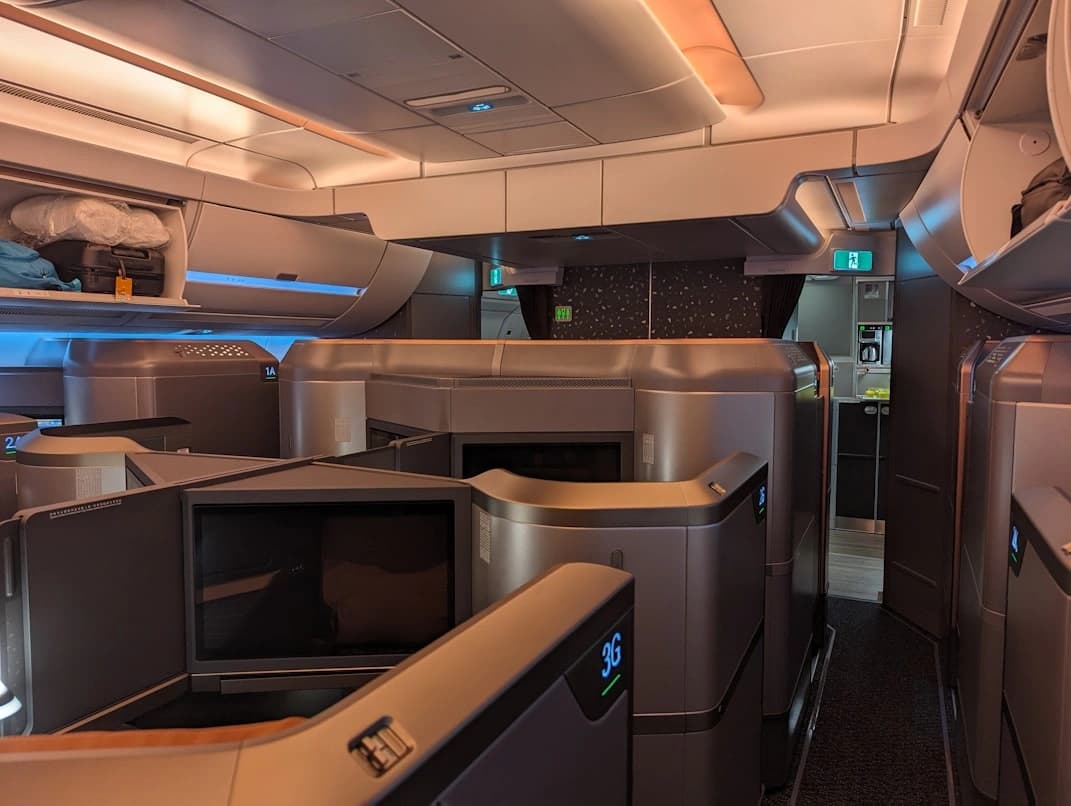
My first real lie-flat business class seat was ANA's 787 out of Tokyo, booked on transferred Amex points. I made two mistakes before the seatbelt sign even switched off. Nobody in the safety briefing mentions business class etiquette, but the cabin runs on rules nonetheless.
Most of them are never spoken aloud. You learn them by watching, or by getting them wrong in front of a flight attendant who is too polite to correct you directly.
This isn't about looking rich or acting a certain way. It's about knowing a set of small, specific habits that regulars follow without thinking, and that first-timers usually break without realizing it.
The Business Class Etiquette Mistakes First-Timers Make Before They Even Board
Boarding group still matters in business class, even though it feels like it shouldn't. Your ticket buys you a seat, not a queue exemption, and regulars know the difference.
The bigger mistake happens the moment you sit down. First-timers treat the seat like a hotel room immediately kicking off shoes, piling bags everywhere, leaving the pre-stacked bedding in place instead of stowing it when regulars wait until the door closes and simply settle in.
That patience signals something to the crew. It tells them you know what you're doing, which tends to earn small favors later in the flight.
Why Your Boarding Group Still Matters More Than You Think
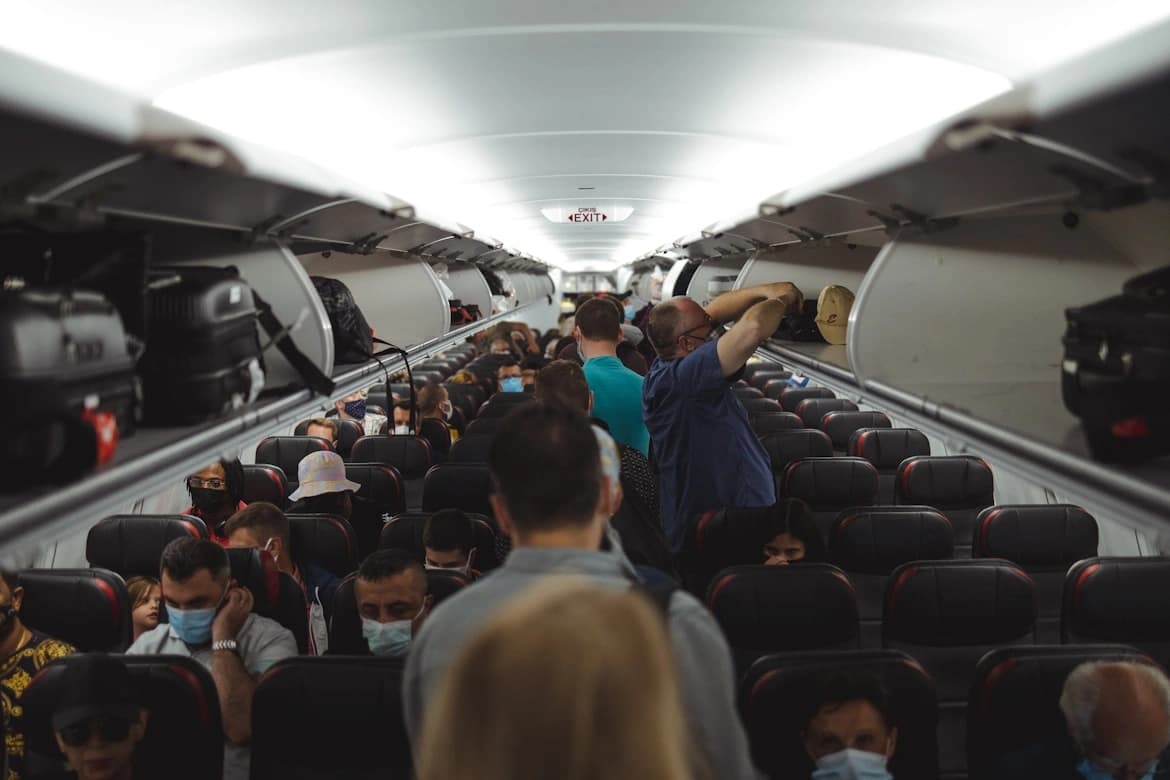
Business class boards first, but "first" is a narrow window, not an open invitation. Boarding early and then blocking the aisle to organize bags is one of the fastest ways to get quietly noticed by a flight attendant.
Regulars stow one bag, sit down, and organize once the cabin is settled. It sounds minor, but it is one of the clearest tells that separates someone who flies this cabin often from someone who booked it once with points.
The Curtain Etiquette Nobody Explains
Most widebody business class cabins have a curtain separating them from economy behind, and that curtain is a courtesy divider, not a locked door. Economy passengers occasionally cross it to reach a closer bathroom, and the correct response is simply to ignore it rather than treat it as a boundary to defend.
Business Class Etiquette During Meal Service
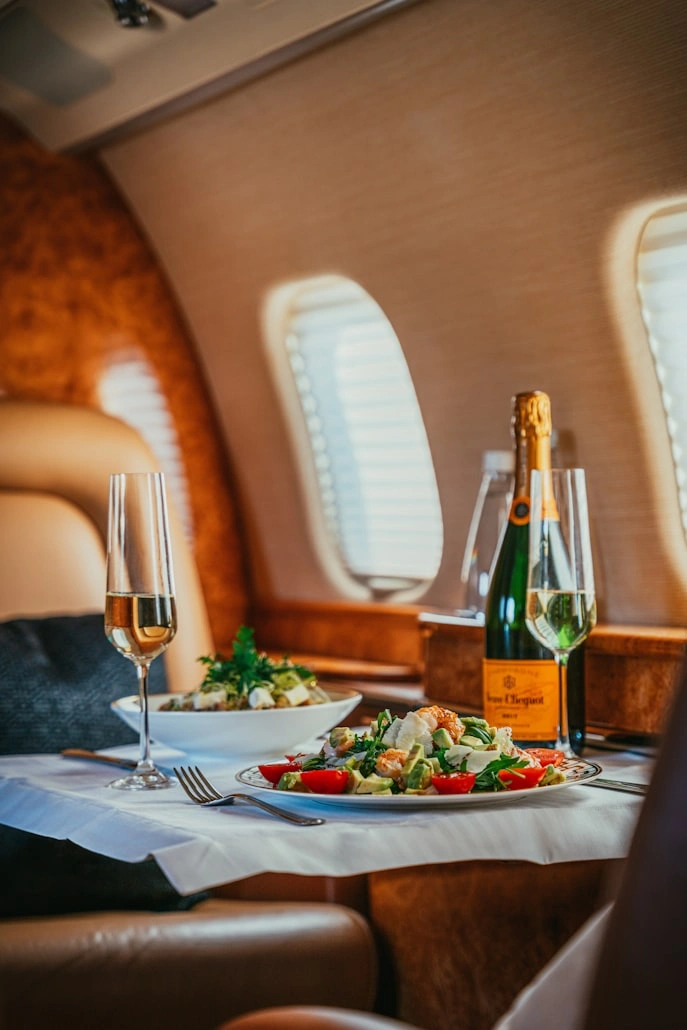
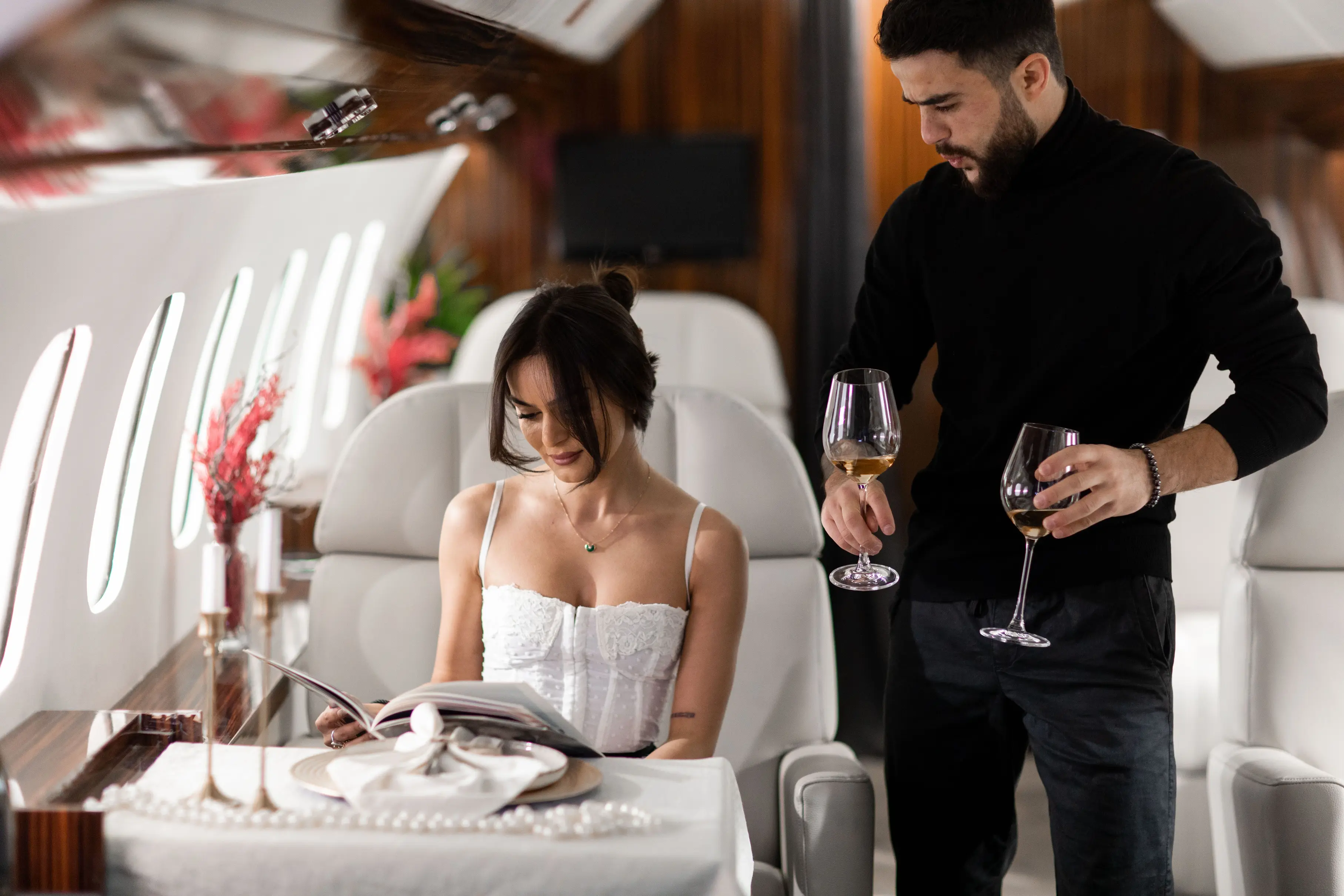
Meal service in business class runs on a rhythm most first-timers don't expect. A tablecloth goes down first, then courses arrive one at a time on individual trays rather than a single set tray like economy.
That single detail causes more first-timer confusion than anything else in the cabin. On a JAL business class sector to Bangkok, I watched a passenger two rows up hand an entire tray back to the flight attendant after the appetizer, visibly unsure what to do next.
The flight attendant took it graciously. But the tray, plate, and utensils are meant to stay with you between courses; only the used plate gets cleared and replaced.
The Tray Hand-Back Mistake Every First-Timer Makes
The pattern is simple once you've seen it once. Keep your tray and utensils in place, and let the crew swap out only the plate itself as each course finishes.
Handing back the full tray isn't rude, but it does mark you as new to the cabin. Regulars barely notice they're doing anything differently, and the gap only widens if you're weighing whether a premium cabin upgrade is worth it in the first place the service format is part of that calculation.
The Bread Basket Rule Nobody Explains
A bread basket usually comes around early in the meal sequence with several options inside it. The instinct to reach in and grab one is understandable, but it isn't how the cabin works.
Crew members use tongs to serve from the basket, and reaching in yourself is one of the small habits that reads as unfamiliarity with the format. Point to what you want and let the tongs do the work.
How to Order Drinks Without Sounding Like a First-Timer
Business class typically carries a small selection of spirits rather than a full bar menu. Ordering a spirit with a simple mixer a vodka and soda, a rum and cola gets a fast, confident pour, while an elaborate custom order usually gets an apologetic no.
The pre-departure beverage is a smaller version of the same idea: typically water or sparkling wine, and usually collected before takeoff, so it's better treated as a slow sipper than downed early.
Why Regulars Don't Rush to Deplane
Business class passengers get off first by design, but sprinting up the aisle the moment the seatbelt sign turns off reads as impatience, not efficiency. Regulars gather their things calmly and let the door open before standing, since the jet bridge and immigration lines even things out within minutes regardless of who exits first.
The Mattress Pad Scarcity Nobody Warns You About
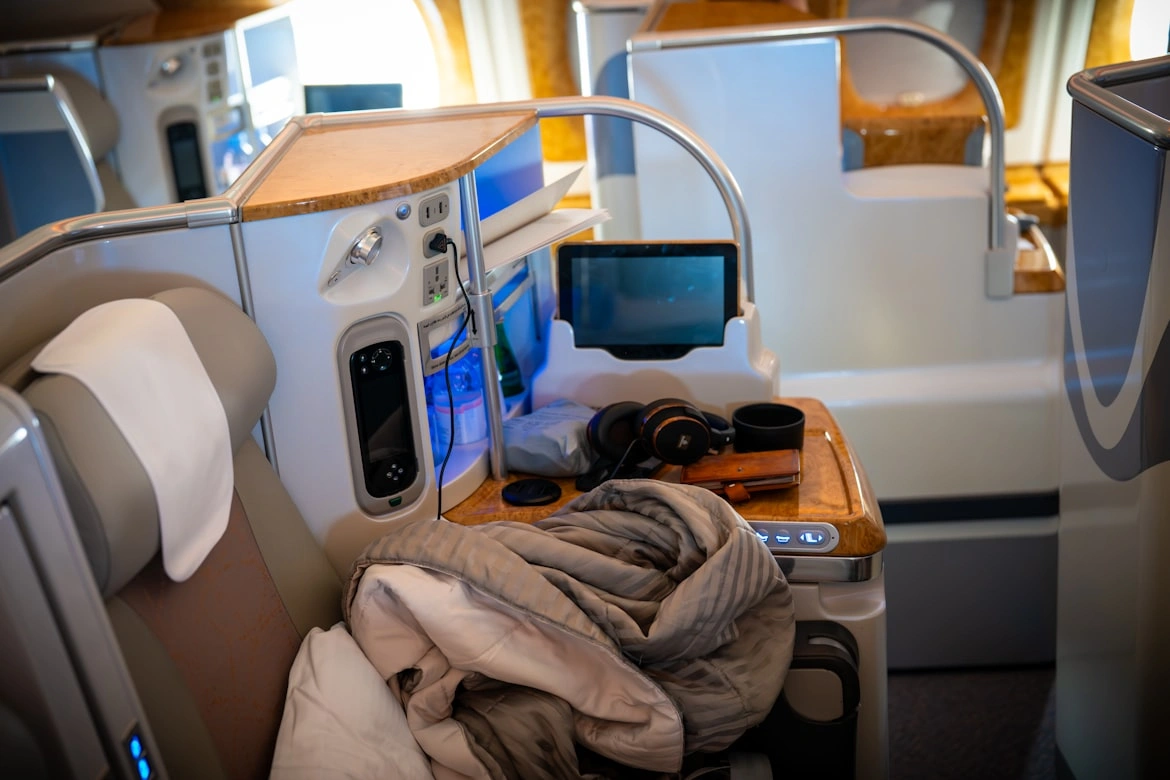
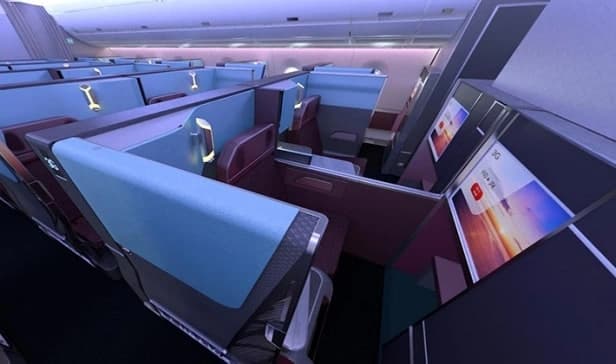
Long-haul business class seats often come with a mattress pad meant to soften the lie-flat bed, but most cabins don't carry one for every seat. They're usually stored in a rear overhead bin in a clear bag, and once they're gone, they're gone.
Asking the moment you board can catch crew mid-service, while asking too late often means hearing the supply already ran out. A polite request once the cabin has settled after takeoff is the better window.
Why Overhead Bin Space Isn't the Real Issue in Business Class
Overhead bin space is rarely the fight in business class that it is in economy, where far fewer bins serve far more passengers. The real scarcity in this cabin is soft goods mattress pads, extra pillows, blankets not bin space itself.
That distinction matters because it changes what's worth asking for early. Bin space will sort itself out; the mattress pad might not.
What to Do When the Amenities Run Short
Mattress pads aren't the only limited item on a long-haul flight slippers, extra pillows, and specific meal choices can run out too, especially in a smaller cabin. The etiquette here is simple: ask early, ask once, and accept a graceful no rather than pressing the same request again.
Flight Attendant Etiquette in Business Class
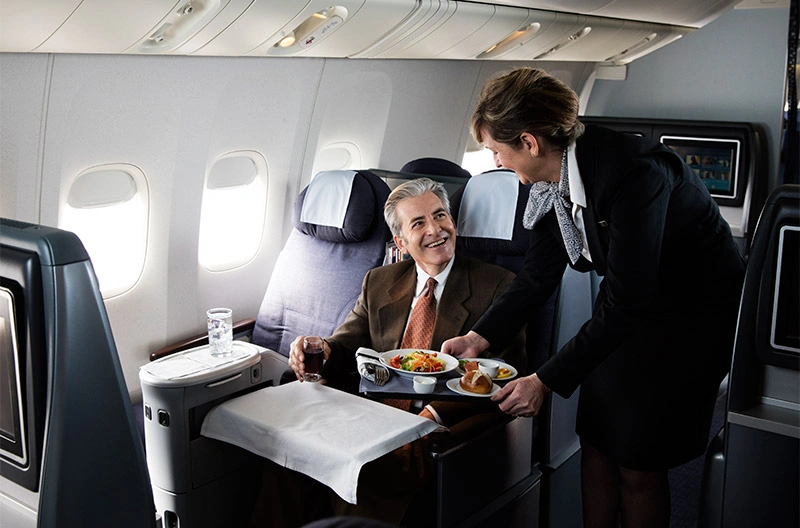
Crew members in business class handle a smaller cabin with a higher service standard, and they notice patterns fast. Passengers who say thank you, remove headphones when speaking to a flight attendant, and use the call button sparingly tend to get more attentive service throughout the flight.
None of this is a transaction. It's simply how the relationship between crew and passenger works best in a cabin this size, and it's worth remembering that flight attendants are onboard first as safety officers, not service staff, which shapes how their instructions should be treated.
The lounge, not the cabin, is where tipping questions come up most. The FAA recommends keeping your seatbelt buckled whenever seated, since turbulence can occur without warning even when the sign is off, which matters for a detail regulars rarely skip: fastening the shoulder strap over the blanket before sleeping, so a mid-flight check doesn't require waking you.
Tipping Norms in the Lounge vs. Onboard
Onboard, cash tips aren't standard practice and crew members generally can't accept them. In premium lounges United's Polaris Lounges, for example a small cash tip for restaurant-style table service is common, though never required since everything is already complimentary.
The distinction confuses a lot of first-timers who assume the same etiquette applies everywhere on the journey. It doesn't the lounge behaves more like a restaurant, and the cabin behaves more like a shared space with its own quieter rules, a distinction covered in more depth in our review of ANA's long-haul business product.
Departure and Arrival Lounges Aren't All the Same
International departure lounges sometimes sit before passport control rather than after it, particularly at European hubs with Schengen and non-Schengen sections using one without enough buffer time is a common first-timer mistake. Some international routes also include an arrival lounge at the destination for a shower or breakfast, though access rules are often tied to specific alliances or fare classes, so it's worth checking in advance.
Business Class Dress Code and Personal Space Rules
There's no written dress code in business class, but there's a strong unwritten one. Smart casual is the safe default collared shirts, real shoes, nothing that reads as sleepwear until the flight itself begins.
Personal space etiquette matters more here than in economy, since the cabin is smaller and more visible. Loud phone calls, bare feet outside your own footwell, and reclining abruptly without a glance backward are the three fastest ways to draw quiet irritation from your row neighbor.
What "Smart Casual" Actually Means in This Cabin
Smart casual in business class means put-together, not formal a clean button-down or quality knit with tailored pants, not a suit and not gym clothes. The goal is looking like you belong without looking like you're heading to a boardroom off the jet bridge.
Pajamas, Slippers, and When to Wear Them
Many long-haul flights provide pajamas meant to be worn onboard, and changing after the meal service is completely normal. Changing immediately at boarding tends to look presumptuous, and walking to the lavatory in socks instead of the provided slippers is worth avoiding for hygiene as much as etiquette.
The Seat-Swap Rule Regular Business Class Flyers Follow
Seat-swap requests happen more often in business class than most first-timers expect, usually from someone hoping to sit with a travel companion. Regulars tend to accommodate reasonable requests when the trade is equal business seat for business seat, nothing downgraded.
A request to trade your premium seat for an economy one, even framed sympathetically, is not an obligation, and no flight attendant expects you to accept it. Overbooking dynamics also shape who ends up asking, since passengers bumped from economy sometimes hope for a premium swap rather than a rebooking.
Politely declining an unequal trade isn't bad etiquette. It's simply protecting what you paid for or redeemed points to earn.
When a Seat Swap Request Is Reasonable
A request from a parent hoping to sit next to a young child, or a couple hoping to sit together, is generally reasonable, and most regulars accommodate it without hesitation. The requests worth declining politely are the ones asking you to give up the cabin itself, not just your seat within it there's a real difference between moving three rows and moving three cabins.
Why Some of These Rules Depend on Your Fare Tier Now
Most of this etiquette assumes every business class ticket comes with the same perks, but that assumption is starting to break down. In April 2026, CNBC reported that United had introduced a tiered fare structure for Polaris business class, splitting the cabin into Base, Standard, and Flexible fares with different amenities attached to each.
The Base tier keeps the lie-flat seat and full meal service, but strips out Polaris Lounge access, charges extra for advance seat selection, and drops the checked bag allowance from two to one. Base fare passengers get the United Club instead of the Polaris Lounge, which means the lounge etiquette covered earlier in this piece simply doesn't apply to every business class ticket anymore.
This isn't a cosmetic repackaging. Premium cabin seats generate several times more revenue per seat than economy while taking up only modestly more space, so unbundling the fare lets an airline advertise a lower entry price to price-sensitive premium buyers while still charging separately, and profitably, for the perks a full-fare passenger expects. Delta's own president has described the logic in similar terms: the same seat priced lower without seat choice or refundability, and higher with everything included.
United frames this as giving travelers more choice over what they pay for. In practice, it means the airline captures more revenue from passengers willing to pay for the full experience, while passengers who book the cheapest business fare absorb the cost in the form of a smaller bag allowance and a lounge downgrade they may not expect until they're standing at the wrong door.
The bigger signal is where this heads next, and the timeline so far is fast rather than speculative. Delta confirmed its own Basic Business and Basic First fares launched July 8, 2026 just over three months after United's announcement meaning two of the three major US carriers unbundled premium cabin perks within a single quarter. American Airlines has not announced a matching move for business or first class as of this writing, though international carriers including Qatar Airways, Emirates, and Air France-KLM already sell stripped-down business fares, so the US is catching up to an established global pattern rather than inventing a new one. If the US pace holds, the assumption that "business class" means one fixed set of perks will keep eroding through the rest of 2026, and checking your specific fare tier before a flight will matter as much as knowing the etiquette itself.
Conclusion
None of these rules appear on a boarding pass or a safety card, yet they shape how smoothly a business class flight actually goes. Learning them before you fly, rather than mid-flight in front of a full cabin, is the difference between blending in and standing out for the wrong reasons.
Most regulars didn't learn this etiquette from a guide. They learned it the same way most people do: by making one of these mistakes once, and remembering it for every flight after.
For more of what's actually changing behind the scenes in air travel not just the etiquette, but the fare rules reshaping it Air Gazette covers the why behind every shift before it hits your boarding pass.
Frequently Asked Questions
Is there a dress code for business class?
There's no official dress code, but smart casual is the unwritten standard. Collared shirts, real shoes, and put-together outfits are typical; overly casual sleepwear-style clothing tends to stand out.
Do you tip flight attendants in business class?
Onboard tipping isn't standard practice, and many crew members aren't permitted to accept cash tips during the flight. Lounges are different, and a small cash tip for table service is common there.
What is proper etiquette in the business class lounge?
Treat the lounge more like a nice restaurant than a waiting area. Keep feet off furniture, use headphones for calls, and consider a modest tip if you receive table service, even though everything is complimentary.
Can you ask someone to switch seats in business class?
You can ask, but regulars generally only accept a like-for-like swap. Declining a request to trade a premium seat for an economy one is completely normal and not considered rude.
Do you keep the amenity kit in business class?
Yes, the amenity kit is yours to keep after the flight. Noise-canceling headphones provided onboard, however, typically need to be returned before deplaning.
Is it rude to skip the meal service in business class?
No, skipping a course or the full meal is fine and happens often. A polite heads-up to the flight attendant when they come by helps them plan the rest of service around you, especially on longer overnight flights where many passengers sleep through a course entirely.
What should first-time business class flyers avoid doing?
Avoid handing back your full meal tray, reaching into the bread basket by hand, and requesting a mattress pad the instant you board. Each is a small habit that quietly signals unfamiliarity with the cabin, even though none of them will draw an actual correction from the crew.
Is there a difference between business class etiquette on domestic and international flights?
Yes. Domestic business or first class is usually closer to a slightly better economy experience, while international long-haul business class involves a full meal service, lie-flat seating, and lounge access with its own separate etiquette expectations.