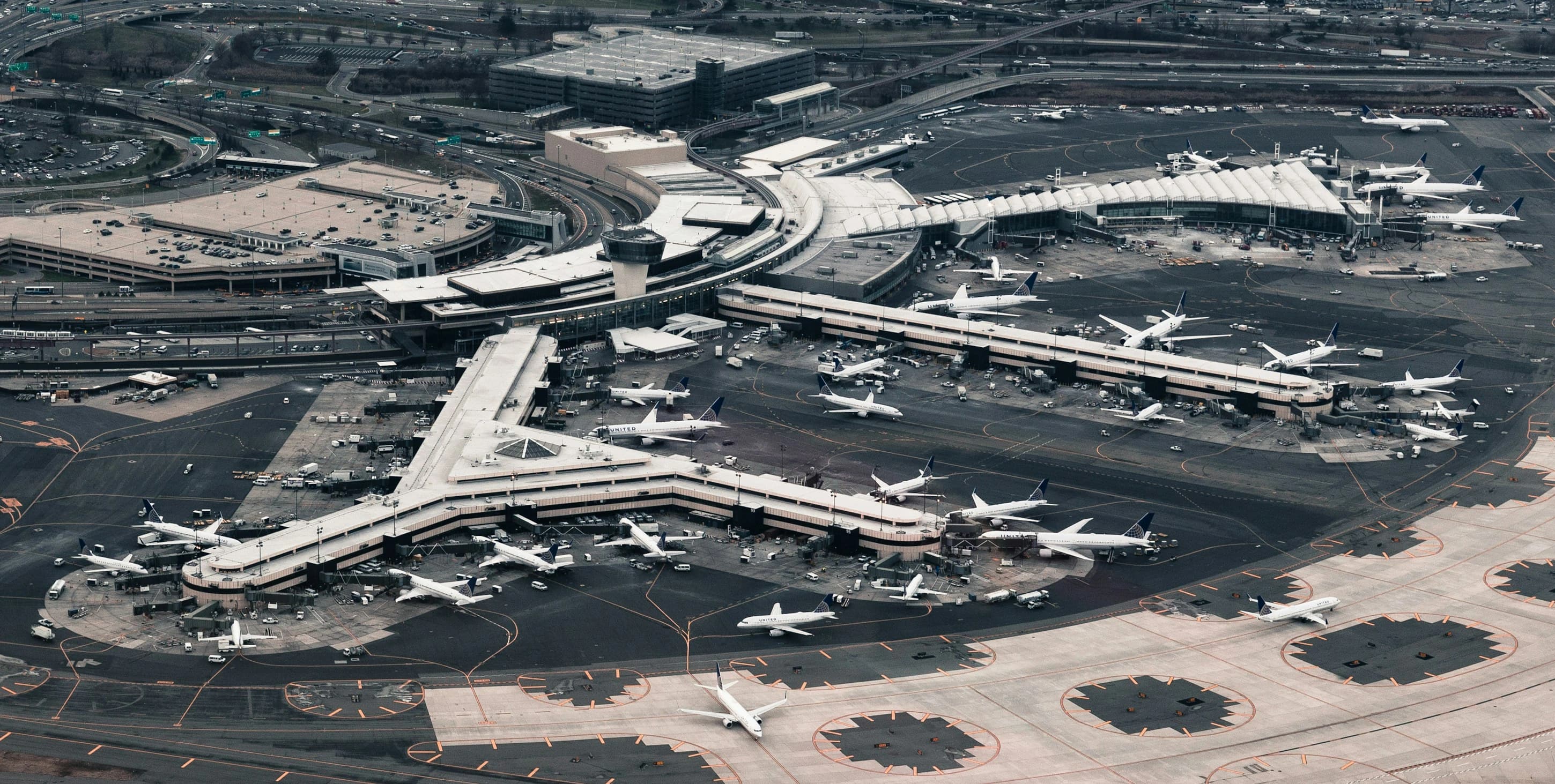
Airlines scheduled up to 80 flights per hour at Newark Liberty for years. The airport could handle 56. The FAA knew. Nobody acted until the system broke.
That failure is now your problem. If you fly through EWR today, you are absorbing the cost of a regulatory breakdown that has been building for a decade: higher fares, gutted morning schedules, almost no fallback when your flight is cancelled, and a monopoly carrier with no incentive to fix any of it.
The FAA Let This Happen And Passengers Are Paying for It
The FAA imposed an emergency scheduling cap on Newark Liberty International in 2025, limiting operations to 56 per hour. Airlines had been running 70 to 80. That gap is not a rounding error it is 25 to 40% more flights than the airport could physically process.
The FAA had the authority to act years earlier. Its slot controls under 49 U.S.C. 41722 the same mechanism applied at JFK and LaGuardia during past congestion crises were available tools. They were not used at Newark until the delays became impossible to ignore.
Passengers who booked Newark flights over the past several years did so based on published schedules that regulators knew were fictional. That is the part that should make you angry.
What Was Actually Broken Before the Cap
The first failure is air traffic controller staffing. The New York TRACON facility which handles radar separation for every aircraft approaching and departing the New York metro area has been operating below required staffing levels for years. Controller shortages have been documented in the FAA's own workforce reports for years and remain unresolved.
The second failure is radar infrastructure. The systems at New York TRACON are outdated and running below required redundancy standards. A single equipment failure would force Newark, JFK, and LaGuardia to reduce operations simultaneously.
Neither problem has a fast fix. Controller certification takes 18 to 36 months from hiring to qualification. Radar upgrades require capital appropriations and procurement timelines that take years to execute.
The FAA did not create these problems overnight. It also will not resolve them on any timeline that helps a traveler booking a flight today. That gap between the agency's institutional pace and the traveler's immediate reality is the core of the problem.
What the Cap Actually Took Away From You
The 56-operation-per-hour ceiling is abstract until you try to book a morning flight to London. Then it is very concrete. The published schedule looks like a functioning airport. The actual experience fewer viable departure windows, longer waits when anything goes wrong, and no competing carrier to offer you a seat looks like a hub that has been quietly hollowed out.
Morning Departures: The Slots That Mattered Most Are Gone
Newark's early morning transatlantic departures the flights feeding connection banks to London, Frankfurt, and Amsterdam have been cut disproportionately. United Airlines controls approximately 68% of Newark operations and has pulled or rescheduled flights it previously ran in the 6 a.m. to 9 a.m. window.
A traveler who previously had three viable morning departure options to Europe may now have one. That single option is also priced at a premium because competition for it is higher.
Midday and evening slots were sacrificed less, because they generate less connection revenue and are easier for United to give up without wrecking its network economics. The schedule that remains looks fuller on paper than it performs in practice.
Getting Rebooked Is Harder Than It Should Be
When a Newark flight is cancelled or significantly delayed, the airline is required to rebook you. In practice, the next available seat on the same route may be four to six hours later. There is no meaningful competitor at EWR to absorb displaced demand.
United's 68% share means other carriers cannot offer a viable same-day alternative on most routes. Passengers bumped from a cancelled United flight face a choice between a later United departure or a ground transfer to JFK which adds 60 to 90 minutes of surface travel each way.
At almost every other major US hub, a stranded passenger has more options. At Newark, the monopoly structure and the capacity cap work together to trap you. If you are involuntarily removed from a flight or dealing with a last-minute cancellation at EWR, know your rights before you reach the gate. The Air Gazette guide to standby flights and involuntary denied boarding covers exactly what DOT regulations entitle you to demand.
Newark's Delay Numbers Are Not Close to the Competition
The data makes the failure visible. The table below compares Newark's most recent annual performance against the other two New York metro airports.
Airport | IATA | Avg Departure Delay | Cancellation Rate | Dominant Carrier |
Newark Liberty | EWR | 47 minutes | 3.8% | United (68%) |
John F. Kennedy | JFK | 31 minutes | 2.1% | Delta / American |
LaGuardia | LGA | 28 minutes | 1.9% | Delta / American |
Source: Bureau of Transportation Statistics, On-Time Performance Data, most recent annual summary (bts.dot.gov)
Newark's average departure delay is 52% higher than JFK and 68% higher than LaGuardia. Those gaps do not reflect bad luck or unusual weather. They reflect a structural throughput problem that was allowed to compound for years before anyone intervened.
EWR vs JFK vs LGA: What the Numbers Mean for Your Decision
Factor | EWR | JFK | LGA |
Avg departure delay | 47 min | 31 min | 28 min |
Cancellation rate | 3.8% | 2.1% | 1.9% |
Transatlantic access | Strong (United hub) | Strong (Delta, AA, BA) | Limited |
FAA slot restrictions | Active cap 56 ops/hr | Under review | Under review |
Ground access from Midtown | ~45 min via NJ Transit | ~55 min via AirTrain/LIRR | ~30 min by taxi |
For any trip where on-time performance matters a connection, a morning transatlantic departure, a tight business itinerary the numbers make a clear case for JFK or LaGuardia over Newark. The only scenario where EWR wins is when United operates the sole nonstop on your route.
You Are Also Paying More Because of This
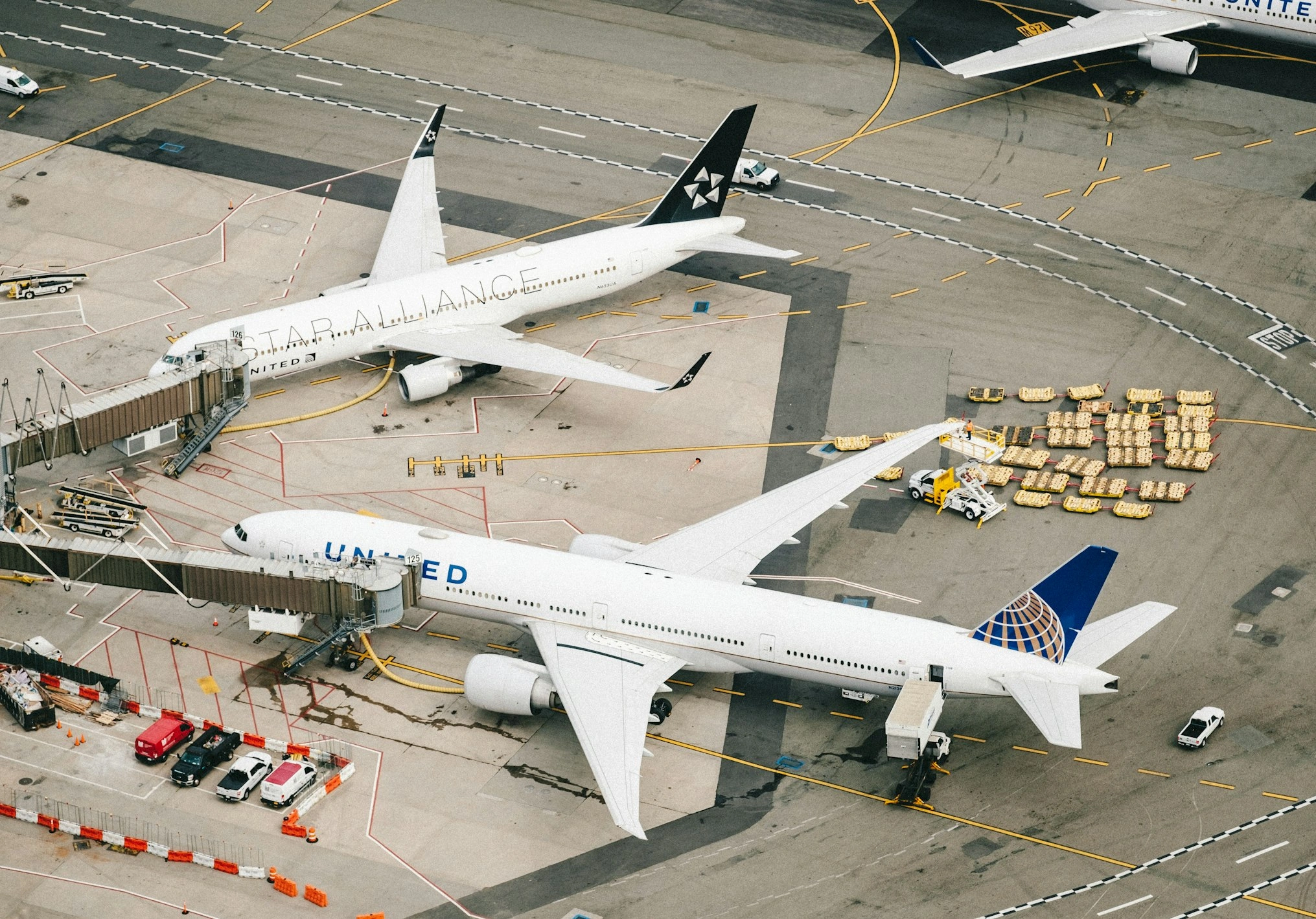
The cap reduced seat supply on Newark-origin routes. Demand did not drop. The result is elevated fares that reflect the regulatory failure just as directly as the delay statistics do.
I fly business class on miles for most of my transatlantic routes, and I have watched United's EWR award inventory tighten in lockstep with cash fare increases which is exactly what happens when an airline faces no competitive pressure at a hub it controls. United holds near-monopoly pricing power on most EWR routes. Without a second carrier running comparable frequency, there is no structural reason for fares to come down.
Economy fares on high-demand Newark routes transatlantic departures, and domestic routes to Los Angeles, Miami, and Chicago consistently track 12 to 18% higher than equivalent JFK fares for the same travel dates. When available seats decrease and demand stays flat, airline revenue management systems push prices higher automatically. The Air Gazette breakdown of how airlines use AI-driven dynamic pricing explains exactly why this mechanism is almost impossible to time your way around when the supply reduction is structural.
Miles Are Not a Workaround
Award availability on United's Newark routes has tightened alongside cash fares. Travelers holding AAdvantage miles face the same capacity squeeze fewer total seats means fewer award seats released, and American Airlines operates limited Newark service regardless. Redemption options through one world for EWR departures are narrower than at JFK.
The conventional wisdom that miles offer a workaround when cash fares spike does not apply cleanly at Newark under these conditions. The same supply constraint driving cash fares up is compressing award inventory from the same direction. If you are planning to use miles for travel from the New York metro area, check inventory early. The Air Gazette guide to AAdvantage miles redemptions on United and oneworld routes covers which EWR-adjacent routes still carry accessible award space and where inventory has dried up.
Who Is Absorbing the Bill And Who Is Not
The cost of the FAA's inaction is not distributed evenly. It falls hardest on the travelers with the least ability to route around it.
Frequent flyers with Newark as their home hub face the worst combination: fewer morning departure options, tighter award inventory, higher cash fares, and weaker reprotection when disruptions hit. These are the passengers who built their travel patterns around a schedule that no longer exists.
Business travelers and corporate travel managers who negotiated preferred routing agreements based on pre-cap Newark capacity are now over-contracted relative to available frequency. Travel managers who have not revised preferred routing to include JFK alternatives for transatlantic itineraries are leaving their travelers exposed.
Leisure travelers who chose Newark for the cheaper fares are discovering that the price advantage no longer reliably holds. On many routes, JFK now matches or undercuts EWR on cash fares while offering meaningfully better on-time performance. The assumption that Newark equals cheaper needs to be rechecked for every itinerary. The Air Gazette explainer on why ultra lowcost carriers price the way they do is relevant context the same ancillary cost math that erodes budget carrier savings applies when a monopoly hub charges a delay premium.
Passengers with connections carry the highest individual risk. Newark's effective single-runway configuration during instrument meteorological conditions means any disruption compounds faster than at multi-runway airports. A 20-minute inbound delay can cascade into a 90-minute gate hold waiting for runway availability. The airline faces no direct penalty for the operational failure that caused it. You absorb the missed connection, the rebooking fee, and the hotel the carrier absorbs nothing.
What Has to Change and What Probably Won't
The FAA cap has no automatic expiration. It ends when the agency certifies that controller staffing and radar infrastructure at New York TRACON have been restored to required standards. Neither benchmark has been met since the cap was imposed.
When the FAA does review the cap, it will choose between extending it, partially restoring slots with conditions, or lifting it entirely. None of those outcomes resolves the underlying infrastructure deficit on a traveler-relevant timeline. The controllers still need to be certified. The radar still needs to be replaced. Those clocks do not accelerate because a review meeting took place.
United will lobby hard for accelerated controller hiring and radar upgrades its entire Newark hub strategy depends on restoring pre-cap frequency. However, controller certification timelines and federal procurement cycles do not bend to airline lobbying. The FAA has also indicated it is evaluating similar slot cap logic at JFK and LaGuardia. If either airport receives a cap, demand redistribution across the metro area will make Newark's recovery even slower.
Airlines may permanently reassign some Newark slots to other hubs rather than wait. If that happens, EWR loses frequency that does not return even when the cap is eventually lifted. That is not a hypothetical it is the rational move for any carrier that cannot afford to hold idle slots through a multi-year regulatory recovery. Plan for that scenario, not the optimistic one.
The FAA newsroom publishes controller staffing and infrastructure updates as decisions are made. For delay and cancellation data by carrier and airport, the BTS On-Time Performance portal remains the most accurate public source.
Conclusion
Newark's delays are not bad luck and they are not weather. They are the documented result of regulators allowing airlines to oversell a constrained airport for years, then scrambling to contain the damage with a capacity cap that has no firm end date.
Passengers are absorbing that failure through higher fares, gutted morning schedules, harder reprotection, and no real alternative carrier at the airport where they are stranded. The question of accountability who allowed this, who profits from it, and who fixes it has not been answered in any meaningful way by the FAA or by United.
Until the FAA certifies that Newark's infrastructure constraints are resolved, every traveler departing EWR should build in margin they would never need at JFK and stop assuming the cheap Newark fare is actually cheap once the delay cost is included.
Stay current on airport operations, airline accountability, and travel strategy at Air Gazette.
Frequently Asked Questions
Why is Newark airport so delayed compared to JFK and LaGuardia?
Newark operates under an FAA scheduling cap of 56 operations per hour, imposed after airlines were running 70 to 80. Controller shortages and outdated radar infrastructure at New York TRACON remain unresolved, keeping the cap in place.
Is Newark still a bad airport for delays?
Yes. Average departure delays at EWR are 52% higher than JFK and 68% higher than LaGuardia based on BTS data. The structural problems behind those numbers controller shortages and aging radar have not been resolved, and the FAA cap remains in effect.
What is the FAA cap at Newark and why does it exist?
The FAA capped Newark at 56 scheduled operations per hour under 49 U.S.C. 41722. The cap was triggered by documented air traffic controller shortages and radar redundancy failures at the New York TRACON facility that handles separation for all three New York metro airports.
Should I fly Newark or JFK?
For on-time performance and reprotection options, JFK and LaGuardia outperform Newark by a significant margin. EWR is worth considering only when United operates the sole nonstop on your route or its transatlantic hub network is specifically what you need.
Are Newark fares higher because of the delays?
Yes. The FAA cap reduced seat supply without reducing demand, which has pushed fares on Newark-origin routes consistently 12 to 18% higher than equivalent JFK fares for the same travel dates.
How long will the Newark flight cap last?
The cap has no fixed expiration. Lifting it requires certified improvements in controller staffing and radar infrastructure at New York TRACON neither of which has a confirmed completion date.
What are my rights if my Newark flight is cancelled?
Under DOT regulations, involuntary denied boarding entitles you to compensation based on delay length and rebooking timeline. At Newark, where same-day alternatives are limited, pushing for the maximum compensation and documenting the delay cause matters more than at airports with real carrier competition.