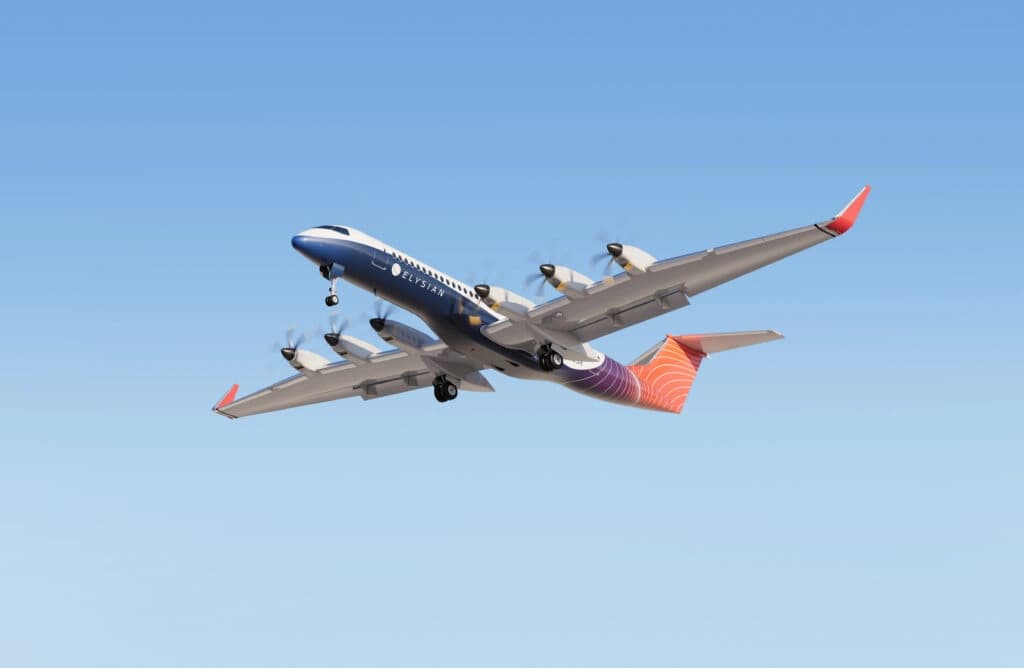
For years, the rule in aviation was simple: batteries are too heavy for anything bigger than a tiny aircraft. A Dutch startup just designed a 90-passenger plane that runs almost entirely on batteries and engineers say the old rule was wrong all along.
It is called the E9X, and it should not work. Here is why it does.
The Plane That Wasn't Supposed to Exist
For more than a decade, the consensus among aerospace engineers was straightforward. Bat
tery-electric planes could carry a handful of passengers a short distance, full stop. Anything bigger, and the batteries became too heavy to lift off the ground. Larger aircraft, in other words, were considered a dead end for electric flight. Most research and investment in the space focused on tiny aircraft carrying nine to nineteen passengers at most, flying routes barely longer than a daily commute.
Then a small Dutch company called Elysian, working with researchers at Delft University of Technology, designed something that broke that assumption completely. The E9X carries 90 passengers and flies up to 500 miles on battery power numbers that most experts in the field would have called impossible for an all-electric aircraft. The design has continued evolving since it was first unveiled, with newer iterations boosting both the wingspan and total weight allowance based on further testing.
The story of how they did it is more interesting than the plane itself.
Why Everyone Thought This Was Impossible
Here's the obvious way to build an electric plane: take a small regional turboprop, rip out the fuel tank and engine, and bolt in a battery instead. Simple, right?
Reynard de Vries, Elysian's co-founder, says that instinct is exactly the trap. If you build an electric plane that way, the range collapses to around 60 miles. That is barely enough to get from Boston to Providence. For a commercial aircraft meant to connect cities, 60 miles is a joke, not a flight plan.
The problem is weight. Batteries store far less energy per pound than jet fuel. A typical commercial battery holds about 50 times less energy per pound than aviation fuel. So if you shrink the plane to save weight, you also shrink how much energy it can carry, and the range disappears almost instantly.
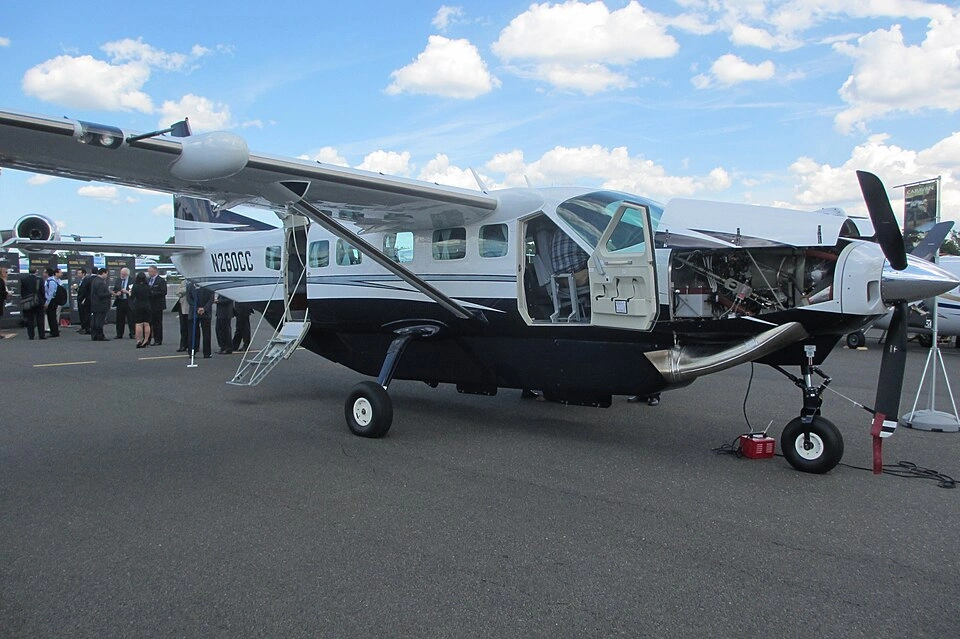
This is the exact tradeoff that has limited every electric aircraft built so far. Small electric planes carrying four to nine passengers already exist and fly short test routes, but their range rarely exceeds 250 miles even in optimal conditions. Scaling that same design philosophy up to a 90-seat aircraft using conventional engineering logic would require a battery pack so heavy the plane could never lift off the runway in the first place. According to industry estimates, a wide-body aircraft built using older assumptions about battery placement would need roughly 20 times the battery capacity of current technology just to match a fraction of its jet-fueled range.
The Backwards Idea That Actually Worked
Instead of starting with a small plane, the Elysian team did something that sounds completely wrong at first: they made the plane bigger.
The E9X has a wingspan of nearly 138 feet, even wider in early renders, and later design updates pushed it past 164 feet. For context, a Boeing 737 has a wingspan of about 117 feet and carries more than double the passengers. On paper, that looks backwards. A smaller passenger load with a bigger wingspan seems like bad design.

However, the math behind it makes sense once you understand where the batteries actually sit. Instead of stuffing batteries into the body of the plane, Elysian placed them inside the wings themselves. As de Vries puts it, batteries represent a huge chunk of the total weight, and you want that weight positioned exactly where the lift is being generated. A bigger wing means more room for batteries, distributed evenly, which actually makes the whole aircraft lighter and more efficient overall.
There's a second benefit to this approach that most coverage misses. Spreading the battery weight along the wingspan reduces what engineers call bending moment essentially, the stress that builds up at the point where the wing connects to the plane's body. Less stress at that connection point means the wing structure itself can be built lighter, which then frees up even more weight allowance for batteries elsewhere. It's a compounding advantage, not just a single design trick.
Aircraft | Wingspan | Passenger Capacity | Power Source |
Elysian E9X | ~138–164 feet | 90 | Battery-electric with backup generator |
Boeing 737-800 | ~117 feet | Up to 189 | Jet fuel |
Embraer E175 (regional jet) | ~85 feet | Up to 88 | Jet fuel |
The result is a plane that looks like nothing else in the sky. It has a thinner body than a typical jet, fewer seats than a standard 737, and wings that stretch out further than aircraft carrying twice as many people. Every choice that looks strange from the outside exists for one reason: to put battery weight exactly where it helps the plane fly, instead of where it just slows things down. The same logic of "what looks wrong on paper can be right in the air" comes up often when comparing widebody aircraft like the Boeing 787 vs A350, where cabin pressure and humidity differences aren't obvious from outside the plane either.
Is It Really 100% Battery-Powered?
Mostly, yes but not entirely, and that distinction matters.
The E9X runs on eight electric motors, all powered by batteries built into the wings. For everyday flying, there is no jet fuel involved at all. However, the design also includes a small backup gas-turbine generator in the tail. That generator does not power the plane during normal flight. It exists purely as a safety reserve, kicking in only if the aircraft needs to divert to another airport or circle while waiting to land.
Think of it like a spare tire in your car. You are not driving on it most of the time. It is there in case something goes wrong and you need a backup option that batteries alone cannot reliably provide. Elysian made this tradeoff deliberately, because building enough extra battery capacity for every possible emergency scenario would have made the plane too heavy to be practical.
This kind of hybrid safety margin is actually common across aviation, even on conventional aircraft. Commercial jets carry reserve fuel well beyond what a flight actually needs, precisely for situations like weather diversions or holding patterns near a busy airport. Elysian's small turbogenerator solves the same problem using a fundamentally different propulsion type, while keeping the bulk of every normal flight entirely electric.
If you are booking a flight to research how long-haul economy seating compares across aircraft, the airplane seat size guide breaks down what cabin width actually means for comfort useful context, since the E9X's thinner fuselage will likely mean a tighter cabin than current regional jets.
What This Plane Can Actually Do and What It Can't
The E9X is designed for regional routes, not transcontinental flights. Its current range tops out around 500 miles, with future battery improvements potentially stretching that closer to 620 miles.
To put that in perspective, an Embraer E175 regional jet currently in service covers roughly 2,200 nautical miles, or about 2,530 miles on a full load. That is more than four times the range the E9X is designed to achieve. This is not a plane built to replace long regional jets. It is built for shorter hops the kind of routes connecting nearby cities where flight time runs under two hours.
That distinction matters because it shapes exactly who will fly on this plane first, and when. Airlines tend to introduce new aircraft types on their most predictable, highest-frequency routes first, where any operational hiccups affect the fewest passengers and where ground crews can build familiarity with new procedures quickly. Expect the E9X, if it reaches commercial service on schedule, to debut on short regional hops well before it ever appears on a route stretching across multiple states.
Route Type | Distance | Could the E9X Fly It? |
New York to Boston | ~190 miles | Yes, comfortably |
Chicago to Detroit | ~240 miles | Yes |
Los Angeles to San Francisco | ~340 miles | Yes |
New York to Atlanta | ~760 miles | No, exceeds current range |
Chicago to Denver | ~900 miles | No |
When Will You Actually Fly on One?
Elysian has set a target of 2033 for commercial service, with a scale model and a full-size prototype by 2030 planned as milestones along the way.
That timeline matters because aviation moves slowly by design, and for good reason. New aircraft need years of testing, certification, and safety review before regulators allow them to carry paying passengers. Even after a plane is approved, airlines typically order new aircraft years in advance of actually flying them. The certification process alone for a genuinely new aircraft category, rather than a minor update to an existing model, routinely takes five years or longer once a prototype is flying reliably.
This is not unusual for the industry. Boeing's 787 Dreamliner, a conventional jet-fueled aircraft, took roughly six years from program launch to first commercial flight, and that involved technology far more familiar to regulators than an all-new battery-electric category. A genuinely new propulsion system, tested and certified from scratch, reasonably needs even longer.
Elysian's own design process and the engineering rationale behind it were detailed in an interview with CNN shortly after the E9X was first unveiled, including the company's own explanation of why batteries belong in the wings rather than the fuselage.
It is also worth understanding how regional aviation economics already work before betting on what replaces them. The why is Frontier so cheap breakdown explains how current airlines manage costs on short routes the same economic pressures that will eventually decide whether airlines actually adopt planes like the E9X at scale.
Why This Actually Matters Beyond One Plane
Engineers have spent over a decade telling each other that big electric planes simply could not work. The E9X does not prove every assumption about electric aviation was wrong. But it does prove one specific, widely repeated rule was wrong: that bigger planes need exponentially more battery weight than the available technology allows.
According to aviation analysts, there are more than 5,000 aircraft in service within this same 70 to 100 seat category, and they tend to remain in service for decades once airlines buy them. That is the real challenge ahead for the E9X. Even a genuinely better design has to compete against thousands of jets that already work, that pilots already know how to fly, and that airports already know how to service.
The bigger story here isn't really about one Dutch startup. It's about what happens when an entire industry's working assumption turns out to be backwards. The same pattern shows up in how airlines price seats today the airline dynamic pricing breakdown covers how algorithms quietly upended decades of fixed-fare logic the same way the E9X is upending battery-electric design assumptions.
The Bottom Line
The E9X will not be carrying passengers for years, and even then, it will only handle short regional hops, not the long-haul routes most travelers think about when they imagine flying. However, it has already done something more important than flying anywhere: it proved that a widely accepted rule in aviation engineering was simply wrong.
That matters because the rule wasn't just an opinion. It shaped a decade of industry thinking about what electric aviation could and could not do, steering research funding, startup investment, and academic attention almost entirely toward small aircraft that could never scale into something a major airline would actually want to fly. One backwards-looking design just rewrote that thinking, batteries in the wings and all.
It also raises a genuinely open question worth sitting with: if one widely accepted assumption in aviation engineering turned out to be backwards, how many others are waiting to be challenged the same way? The E9X may end up mattering less for what it specifically builds, and more for proving that nobody should treat "this is impossible" as the final word, especially in an industry that has barely begun seriously rethinking propulsion in over half a century.
For more breakdowns on where aviation technology is actually headed, and what it means for the routes you fly, explore the full coverage at Air Gazette.
Frequently Asked Questions
What is the Elysian E9X?
The E9X is a battery-electric regional aircraft designed by Dutch startup Elysian, in collaboration with Delft University of Technology. It is designed to carry 90 passengers up to 500 miles on battery power alone, with a small backup generator reserved for emergency situations.
Is the E9X actually flying yet?
No. The E9X exists only as a design concept right now. Elysian has outlined a roadmap that includes a scale model, a full-size prototype by 2030, and a target of commercial passenger service by 2033.
Why does the E9X have such big wings?
The bigger wings allow Elysian to place batteries directly inside the wing structure instead of the plane's body. This positions weight where lift is generated, making the aircraft more efficient overall, even though the wingspan ends up larger than aircraft carrying far more passengers.
How far can the E9X actually fly?
Currently, up to 500 miles on a single charge. Future improvements to battery technology could extend that range to roughly 620 miles, according to Elysian's own projections.
Does the E9X use any fuel at all?
It includes a small gas-turbine generator in the tail, but that generator only activates as an emergency backup for example, if the flight needs to divert or hold before landing. During normal operation, the aircraft runs entirely on battery power.
Will this replace regional jets like the Embraer E175?
Not in the near term. Current regional jets like the Embraer E175 fly more than four times farther than the E9X is designed to manage. The E9X is built for shorter regional routes, not as a direct replacement for existing aircraft with significantly longer range.
Why did experts think a plane like this was impossible?
The common assumption was that electric planes should be built like smaller, lighter versions of regional turboprops. Following that logic limits range to around 60 miles, which is far too short to be commercially useful. Elysian's research showed that designing a larger aircraft from scratch, with batteries built into bigger wings, produces dramatically better results.