Most American travelers want the opposite of risk right now. Comfort, familiarity, and a lounge chair rank above adventure in nearly every 2026 travel survey.
However, a specific group of Americans is doing the opposite. They are booking flights into airports built on cliff edges, melting permafrost, and valleys ringed by 18,000-foot peaks, and the numbers keep climbing.
Because of that, these are not casual weekend trips. Getting to any of these three airports takes planning, money, and a tolerance for delay that a beach vacation never demands.
Three airports capture this shift better than any others: Nepal's Lukla, Bhutan's Paro, and Norway's Svalbard. Each one forces pilots to fly at the edge of what modern aviation training allows, and each one still keeps drawing American travelers.
Why More Americans Are Skipping the Beach for Extreme Flights
Adventure and outdoor travel made up just 14% of trips among frequent American travelers last year. In contrast, beach getaways led at 15%, and visiting friends or family topped the list entirely at 41%.
Even so, that makes the outlier group more interesting, not less. Tourism researchers have found that adventure travelers are driven less by danger itself and more by mastery, the satisfaction of controlling something genuinely difficult.
There is a status angle too. For example, younger travelers say they would do something completely out of the ordinary on a trip simply because it makes a good story, according to American Express Travel survey data.
Additionally, sensation-seeking is a documented personality trait, not just a marketing phrase. Researchers have linked it directly to the pursuit of novel, high-intensity experiences that standard travel cannot replicate.
Lukla, Nepal: The Gateway to Everest Base Camp
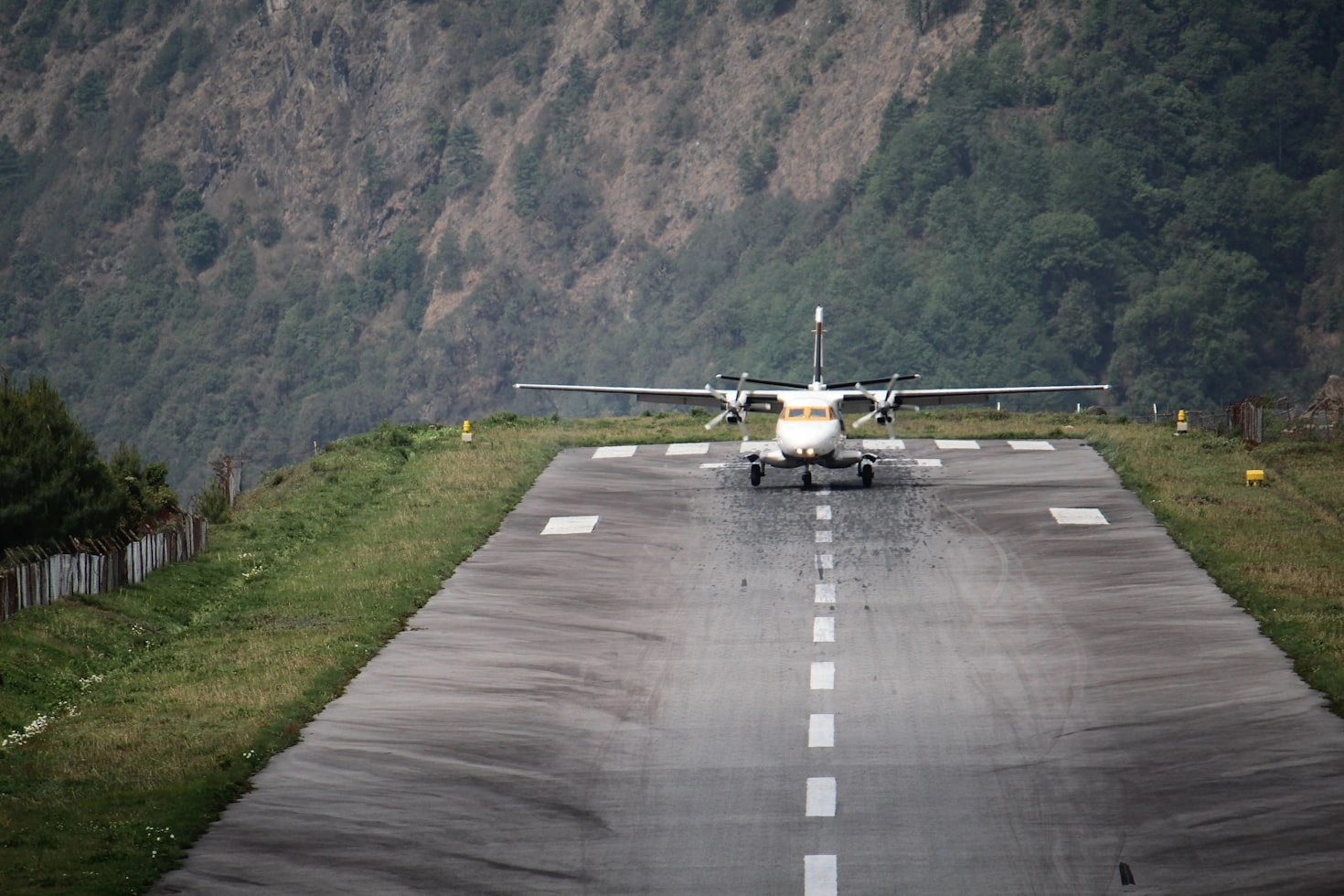
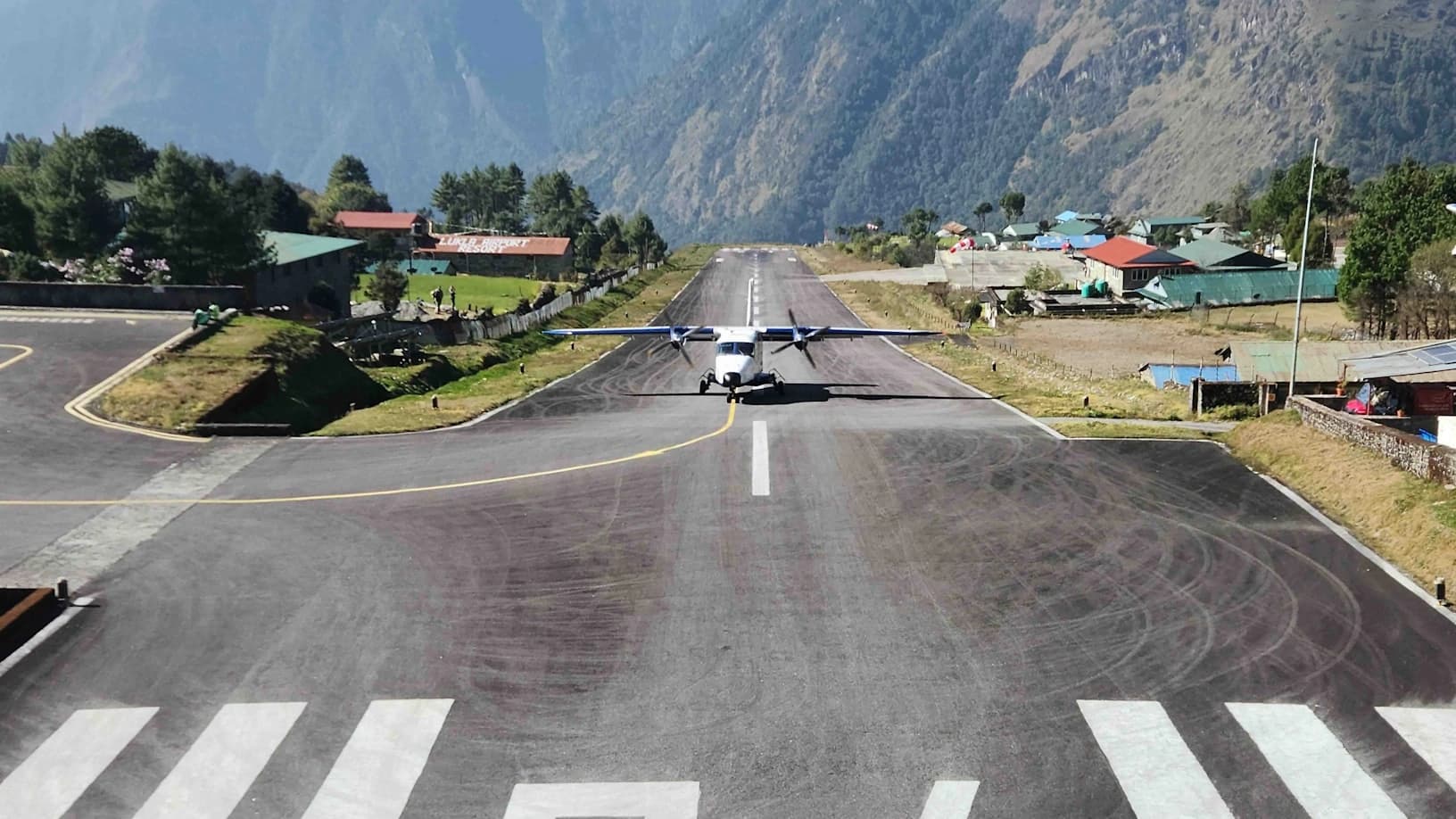
Tenzing-Hillary Airport, better known as Lukla airport, sits at 9,334 feet in Nepal's Khumbu region. Its runway measures just 1,729 feet, roughly one-sixth the length of a typical international runway.
The runway also slopes uphill at an 11.7% gradient. This grade helps planes slow down on landing and speeds them up on takeoff, using gravity to compensate for thin mountain air.
Furthermore, there is no go-around procedure. Once a pilot commits to final approach, a wall of rock sits at one end of the runway and a steep drop waits at the other, so the landing has to work the first time, according to Forbes, which has covered Lukla's reputation as the world's most dangerous airport in detail.
Lukla is not an isolated case, either. Nepal's mid-hill regions depend on dozens of similar STOL airstrips, including Gulmi Resunga Airport, because there are no roads connecting these towns to the rest of the country.
Why Pilots Need 100 Flights Before They Can Land Here
Nepal's Civil Aviation Authority does not let just any pilot fly this route. Instead, a pilot needs at least 100 prior short-takeoff-and-landing flights and one year of Nepal-specific experience before attempting Lukla.
Even then, a new pilot flies 10 supervised landings with an instructor before going solo. Meanwhile, weather closes the airport roughly half the time during monsoon season, so flights are scheduled almost exclusively for early morning, before mountain winds pick up.
I have flown into short mountain airstrips before, and the fear in the cabin never fully goes away, no matter how many times the pilot has done it.
The Crash That Rewrote Lukla's Safety Rules
In 2008, a Yeti Airlines flight lost visual contact in heavy fog during final approach and crashed short of the runway, killing sixteen passengers and two crew. As a result, Nepal's aviation authority tightened the pilot certification rules that now govern every Lukla landing.
Incidents still happen occasionally, but the volume of successful flights, often 20 to 30 in a single peak-season morning, rarely gets the same attention.
What It Actually Costs to Fly Into Everest Country
A round-trip flight between Kathmandu and Lukla typically runs $340 to $400, though prices climb during peak trekking seasons. Many trekkers now route through Ramechhap airport instead, since Kathmandu's air traffic congestion pushes flights later into the day, when Lukla's afternoon winds make landing riskier.
Fares have also become less predictable lately. As regional jet fuel costs spiked in 2026, Nepal's domestic routes absorbed some of the sharpest increases of any market in the world, and Lukla-bound fares moved with them.
Altogether, with lodging, permits, and a guide included, a full Everest Base Camp trek typically costs American travelers $1,500 to $3,000 for two to three weeks on the ground.
Paro, Bhutan: The Airport Only a Few Dozen Pilots Can Land
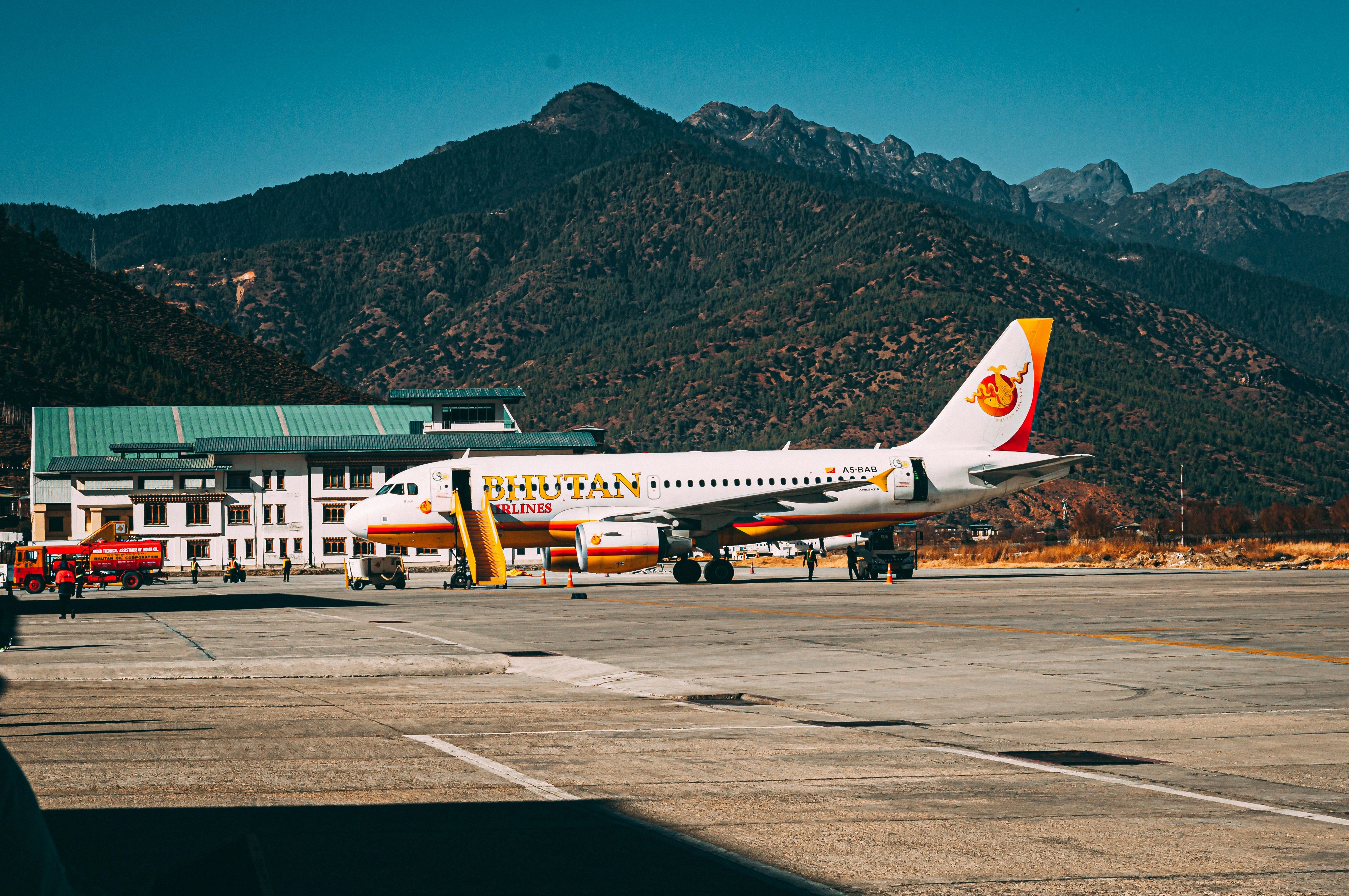
Paro International Airport sits in a valley surrounded by Himalayan peaks that rise above 18,000 feet. Only a small number of pilots worldwide, cited across sources as somewhere between two and five dozen, hold the certification required to land here, according to Bhutan's Department of Air Transport, which manages the airport directly.
The runway itself is not the problem, since at 7,431 feet it is comparable to a runway at LaGuardia. Instead, the approach is the problem: there is no instrument landing system, so pilots fly the final descent entirely by sight, turning sharply between ridgelines just seconds before touchdown.
Flying by Hand Through an 18,000-Foot Valley
Paro allows no night flights and no flights in poor weather, full stop. Consequently, Bhutan's tourism industry builds flight schedules around narrow morning windows when visibility is clearest.
Bhutan also caps overall tourist volume through a Sustainable Development Fee, currently $100 per person daily, on top of standard trip costs. As a result, visitor numbers, and therefore American arrivals, stay small compared to Nepal, and Paro sees far fewer daily flights than Lukla.
Svalbard, Norway: Landing at the Edge of the Arctic
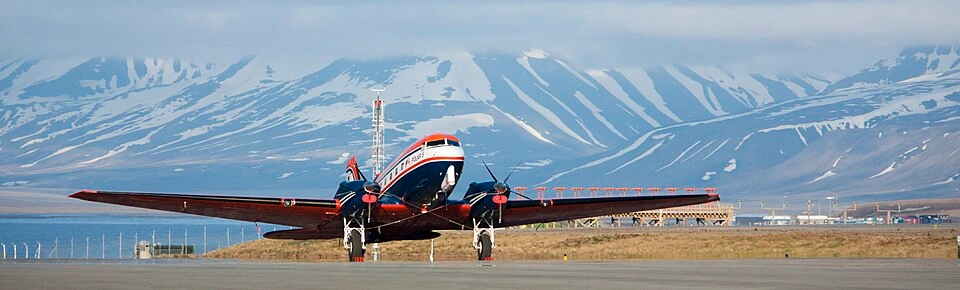
Svalbard Airport in Longyearbyen is the world's northernmost airport with scheduled commercial jet service, sitting roughly 800 miles from the North Pole. Its runway was built on permafrost that is now measurably melting, so staff inspect the surface daily each summer for signs of subsidence, according to CNN's reporting on the airport's climate challenges, which includes on-record comments from the airport's own manager.
A Runway Built on Permafrost That's Now Melting
If a flight cannot land at Svalbard, the nearest alternate airport is roughly 90 minutes away by air. Meanwhile, winter temperatures regularly drop below -40 degrees Fahrenheit, and staff maintain active protocols for polar bear encounters near the runway.
Still, American visitor numbers here remain small, since most Svalbard traffic connects through Oslo or Tromsø rather than direct US routings. SAS operates the primary scheduled service, and most Americans book it as the final leg of a longer European itinerary.
Why Danger Is the Draw, Not the Deterrent
Not every risky airport fails the same way. Newark, for example, tests passengers with scheduling congestion, while Lukla, Paro, and Svalbard test pilots with terrain, altitude, and weather, an entirely different failure mode.
That second category shares a pattern: terrain, weather, or altitude removes the margin for error that flat, low-altitude airports take for granted, and pilots train accordingly. That, in turn, is precisely what draws a specific kind of traveler.
According to Nepal Tourism Board data, the United States was Nepal's second-largest source market in 2025, sending 112,316 visitors and trailing only India. Similarly, Nepal's spring climbing season alone drew 1,168 mountaineers from 73 countries, and American climbers were the second-largest national group, ahead of China, the UK, and Russia combined.
Overall, that is a small slice of US outbound travel, but it is a growing one, concentrated almost entirely on routes that require flying into an airport like Lukla first.
What to Know Before You Book One of These Flights
None of these flights are casual bookings. Lukla flights depend on weather and often get delayed or cancelled during monsoon season, so build in buffer days before an international connection home.
Meanwhile, Paro requires booking through Bhutan's government-linked tour system, since independent travel is not permitted the way it is in Nepal. Svalbard, by contrast, is the most straightforward of the three to book, since it runs on standard European carrier schedules through Oslo.
Anyone weighing the cost of one of these flights against a standard economy fare is comparing two entirely different products: you are not paying for comfort, you are paying for access to a place a normal runway cannot reach.
Insurance and Timing Matter More Than Comfort
Standard travel insurance often excludes high-altitude trekking, so confirm coverage specifically for Everest Base Camp, Bhutan trekking, or Arctic activity before departure. Otherwise, helicopter evacuation from the Everest region alone can run several thousand dollars.
Comfort will not be the highlight of these flights either, since aircraft flying into Lukla and Paro are small turboprops with none of the legroom debates common on standard domestic routes. Timing matters too: Lukla and Paro run most reliably in spring and autumn, while Svalbard is easiest in summer's 24-hour daylight.
Finally, not every remote airport gets equal investment. Baglung Balewa Airport has a fully paved runway and a maintained terminal, yet it has had no commercial flights since 2018, a reminder that demand, not infrastructure, decides which of Nepal's airports actually stay busy.
Forget the Beach
The comfort-seeking majority is not wrong. Most travelers have limited time off and good reason to spend it recharging rather than white-knuckling a mountain approach.
Still, the outlier group flying into Lukla, Paro, and Svalbard is chasing something a beach cannot offer: a place that only exists on the other side of a flight most pilots are not qualified to make. As adventure travel spending grows, airports like these will keep testing pilots long after the beach crowd has gone home.
For more on how the structural realities of aviation shape where and how you can actually travel, explore the full archive at Air Gazette.
Frequently Asked Questions
Is Lukla airport really the most dangerous airport in the world?
Lukla, officially Tenzing-Hillary Airport, was ranked the world's most dangerous airport by the History Channel's Most Extreme Airports program for over 20 years. However, some Nepal-based aviation professionals argue other domestic airstrips in the country are technically harder to fly.
How long is the flight from Kathmandu to Lukla?
The flight typically takes 25 to 40 minutes, depending on wind conditions and whether it departs from Kathmandu or Ramechhap. Delays are common during monsoon season, from June through August.
Can American tourists fly into Paro Airport in Bhutan?
Yes, but only through Bhutan's government-regulated tourism system, which requires a licensed tour operator and a Sustainable Development Fee. Independent, unguided travel is not an option here the way it is in Nepal.
Why does Svalbard's airport need daily runway inspections?
The runway was built on permafrost, and rising temperatures have caused measurable thawing beneath the surface. As a result, staff inspect for subsidence daily each summer to catch structural changes early.
Are these flights safe despite their dangerous reputation?
Strict pilot certification and daylight-only operating rules have kept fatal incidents rare relative to flight volume in recent years. The reputation reflects the terrain, not a high statistical failure rate, and thousands of trekkers complete these routes safely every season.