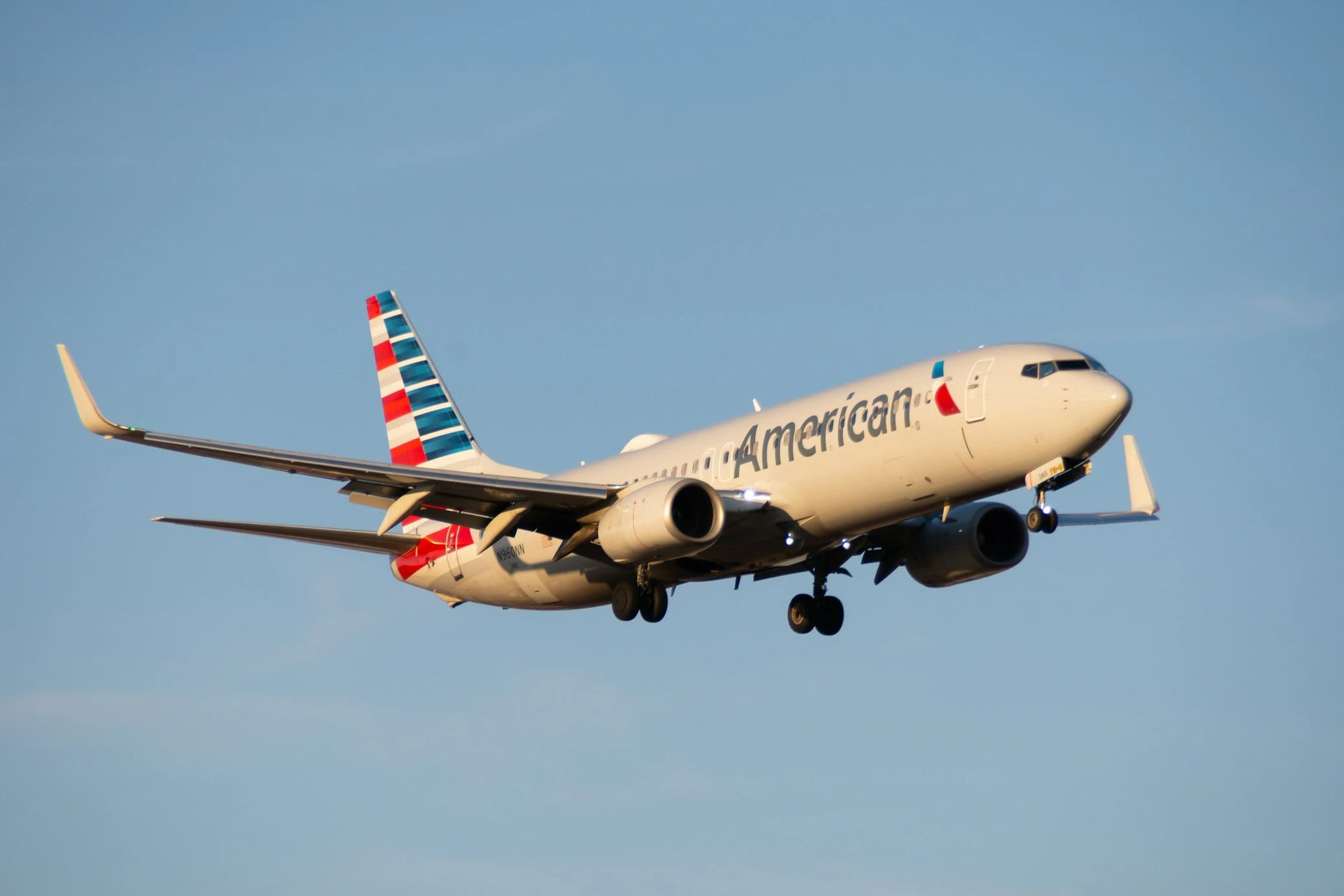
I moved my domestic status from AAdvantage to MileagePlus in 2021 to keep Star Alliance access open for ANA award space, and after years of watching these programs change shape, I don't trust anyone who ranks them with a single winner. The honest answer depends entirely on where you live and how you fly, and the comparison below is built on that, not on marketing copy.
What Makes a Frequent Flyer Program Worth Joining
A good frequent flyer program rewards how you actually travel, not how the airline wishes you traveled. It also lets you reach status without needing a corporate travel budget behind you.
The best programs on this list manage that balance without forcing you to choose between flying often and spending well, which is exactly where most mid-tier programs fall short.
Beyond that, a handful of practical details separate a program worth your loyalty from one that just looks good in an ad:
Redemption value that holds up on real routes, not just promotional sweet spots
Elite status that's reachable through spend, not only flights
Miles or points that don't quietly expire from inactivity
A partner network that actually covers where you fly, not just where the airline wants you to think you'll fly
Clear, published qualification rules instead of a vague "invite-only" tier
Skip a program that scores well on paper but doesn't match your home airport. A program that's "best" for someone flying out of Seattle is often the wrong program for someone flying out of Dallas or Atlanta, and comparing seat sizes across the same carriers is a good next step once you know which program fits.
Program-by-Program Comparison
Here's how the five major US frequent flyer programs stack up on the things that actually affect your next trip.
Program | Airline | Elite Qualification | Miles Expire? | Best For | Source |
AAdvantage | American Airlines | Loyalty Points (revenue or flight-based) | No | Reaching status without flying | American Airlines Newsroom, 2026 |
SkyMiles | Delta Air Lines | Medallion Qualification Dollars | No | Consistent domestic hub coverage | Delta Air Lines, 2026 |
MileagePlus | United Airlines | Premier Qualifying Points | No | Widest US route network | United Airlines, 2026 |
Rapid Rewards | Southwest Airlines | Tier Qualifying Points | No | No blackout dates, simple redemptions | Southwest Airlines, 2026 |
Atmos Rewards | Alaska & Hawaiian Airlines | Status Points | Never | West Coast flyers and oneworld access | Alaska Airlines Newsroom, 2026 |
Source: American Airlines Newsroom, 2026 · Delta Air Lines, 2026 · United Airlines, 2026 · Southwest Airlines, 2026 · Alaska Airlines Newsroom, 2026
American launched Loyalty Points in 2022, and it changed the game. For the first time, a major US airline let members reach its top elite tier, Executive Platinum, through credit card and partner spending alone, with no minimum flights required.
Alaska did something even bigger in 2025. It merged Mileage Plan and HawaiianMiles into a single program called Atmos Rewards, converting every mile 1:1 and folding Hawaiian into the oneworld alliance the following spring.
A Closer Look at Each Program
The comparison table tells you which program fits your pattern. Here's what actually matters once you're inside each one.
American AAdvantage
AAdvantage runs on Loyalty Points, earned one-for-one with eligible AAdvantage miles. Every dollar spent through a co-branded card, partner hotel, or shopping portal counts the same as a dollar spent on a ticket.
That structure rewards spenders over flyers. A member who never boards a plane can still reach Gold at 40,000 points, a shift worth understanding alongside American's recent Basic Economy changes before relying on the lowest fare class to earn status.
Delta SkyMiles
SkyMiles ties elite status to Medallion Qualification Dollars, a straightforward revenue threshold tracked alongside qualifying miles. Delta's hub network across Atlanta, Detroit, Minneapolis, and Salt Lake City gives status-holders a genuinely wide domestic footprint.
Delta also consistently ranks well for pairing operational reliability with loyalty perks, which matters more than most people admit when a mileage run gets disrupted by weather.
United MileagePlus
MileagePlus uses Premier Qualifying Points, a dollar-based system similar to Delta's. United's route map is the widest of the big three domestic carriers, which matters most if you live somewhere without a strong regional hub.
Star Alliance access through MileagePlus also opens up redemption options on carriers like ANA and Lufthansa, useful for anyone occasionally routing internationally on points.
Southwest Rapid Rewards
Rapid Rewards keeps things simple: points earned per dollar of fare paid, no blackout dates, and no partner-award complexity to untangle. There's no premium cabin to chase, which is either a relief or a dealbreaker depending on how you fly.
Two free checked bags used to apply to every Southwest passenger, but that changed in 2025. Free bags are now tied to status or fare type: A-List Preferred members, Business Select fares, Choice Extra fares, and active-duty military still get two free checked bags, while A-List members and Rapid Rewards credit cardholders get one.
Alaska & Hawaiian Atmos Rewards
Atmos Rewards is the newest program on this list, and the most ambitious. It combines Alaska's West Coast strength with Hawaiian's Pacific network and folds both into oneworld, giving members access to over 1,000 destinations through more than 30 airline partners.
Redemptions on Alaska and Hawaiian start at 4,500 points one-way, and points carry no expiration date at all, a stronger guarantee than any competitor on this list currently offers.
Best Program for Earning Elite Status Without Flying

If your job keeps you grounded but your spending doesn't, this category matters more than any other. American's Loyalty Points system is built for exactly this.
Every dollar spent through an AAdvantage credit card, hotel booking, or shopping portal earns Loyalty Points at the same rate as flying. Hit the higher tiers and you're competing directly with road warriors who never left the ground.
Atmos Rewards is moving the same direction. Later in 2026, Alaska will let members choose to earn status points by distance, price paid, or flight segments, whichever suits their travel pattern best.
Status Match and Challenge Options
Status match is the fastest way into a new program without starting from zero. Most major airlines will match your existing elite tier from a competitor for a limited trial period, usually around 90 days, if you can prove it.
Here's what a typical status match application requires:
A screenshot or PDF of your current elite status page from the competing program
A challenge period where you fly enough to keep the matched status once granted
No guarantee of approval; matches are discretionary, not contractual
Alaska and American have historically been the most generous with status matches for flyers relocating to a new hub city. Always apply before booking your qualifying trips, since most programs won't retroactively credit flights you've already taken, and it's worth knowing how status affects your upgrade odds in business class before you plan a challenge period around a specific cabin.
Which Programs Still Avoid Blackout Dates
Blackout dates used to be the single biggest complaint frequent flyers had. Most major programs have quietly moved to dynamic award pricing instead, which technically avoids blackout dates but can make redemption costs far less predictable.
Southwest Rapid Rewards is the clearest holdout on this list. Its points-based pricing model has never used blackout dates, and any seat that's for sale is bookable with points at a price that scales directly with the cash fare.
That predictability comes at a cost elsewhere, since Southwest doesn't operate international long-haul routes or premium cabins. For flyers who want award availability without a devaluation surprise, that trade-off is often worth accepting, though it's still worth checking how overbooked flights get handled across programs before you count on a specific seat.
How Airline Loyalty Programs Are Changing Right Now
The next 6 to 12 months bring one clear shift across the industry: airlines are rewarding spend more than distance flown. American already made that switch permanent back in 2022, and Alaska's Atmos Rewards is building toward the same flexibility by the end of 2026.
Passengers absorb this shift in more than one way, and not everyone loses ground equally:
High spenders reach elite status faster than ever, even without flying much
Occasional-but-loyal flyers who don't carry a co-branded card get no shortcut at all, since spend-based earning offers them nothing to spend toward
Mile values on legacy award charts keep drifting downward as programs lean harder on dynamic pricing, which erodes value for every tier of member over time
Airlines benefit because revenue-based earning ties directly to co-branded card spending, which is now a bigger profit center for most carriers than ticket sales themselves. That's the actual operational driver behind almost every "enhanced" loyalty program announcement you'll see this year, regardless of how the press release frames it.
Co-Branded Credit Cards and Program Value
For most members, the credit card attached to a program matters more than the program itself. Card spending now drives the majority of miles earned across every major US frequent flyer program.
A few things worth checking before you commit to one:
Look for cards with a free checked bag included, since that alone can offset a meaningful chunk of the annual fee
Compare bonus categories against your actual monthly spending, not the aspirational categories in the ad
Premium co-branded cards like Alaska's new Atmos Rewards Summit Visa Infinite carry real annual fees, currently $395, but include lounge access and a companion award that can offset the cost quickly for a couple who travels together
A program with weak flight availability can still be worth keeping if the co-branded card earns strong value elsewhere. That's often the deciding factor for someone who flies only twice a year but spends heavily on a single card the rest of the time, and it's the same logic covered across Air Gazette..
Elite Status Tiers at a Glance
Each program structures its elite tiers differently, but the shape is the same industry-wide: a low entry tier, a mid tier with upgrades and lounge access, and a top tier for the heaviest spenders and flyers.
Program | Entry Tier | Mid Tier Perks | Top Tier Perks | Source |
AAdvantage | Gold | Priority boarding, bonus miles | Executive Platinum: complimentary upgrades, systemwide upgrades | American Airlines Newsroom, 2026 |
SkyMiles | Silver Medallion | Complimentary upgrades on shorter routes | Diamond Medallion: Sky Club access, Global Upgrade Certificates | Delta Air Lines, 2026 |
MileagePlus | Premier Silver | Preferred seating, bonus miles | Premier 1K: complimentary Polaris upgrades on longer routes | United Airlines, 2026 |
Rapid Rewards | A-List | Priority boarding, 25% bonus points | A-List Preferred: same-day standby, 100% bonus points | Southwest Airlines, 2026 |
Atmos Rewards | Silver | 25% point bonus, one free checked bag | Titanium: complimentary global Business Class upgrades | Alaska Airlines Newsroom, 2026 |
The gap between entry and top tier is where the real value lives. Mid-tier status is genuinely useful domestically, but the top tier is where free upgrades and lounge access stop being occasional and start being consistent.
What a Point or Mile Is Actually Worth
Every program advertises generous earning rates, but earning rates mean nothing without redemption value. A mile that's easy to earn but expensive to redeem isn't actually a good deal, no matter how the sign-up bonus looks.
As a rough industry benchmark, most domestic economy redemptions land between 1 and 1.5 cents per mile in value. Business and first class redemptions on international partner awards can push that past 3 cents per mile, which is also where dynamic pricing hurts most, since a program can advertise a low "starting at" price while pricing the dates you actually want far higher.
A few ways to protect the value of your miles:
Check partner award charts before your home airline's own chart, since partner rates are sometimes fixed while the home chart floats
Book premium cabin awards early, since dynamic pricing tends to climb closer to departure
Don't transfer flexible credit card points until you've confirmed the specific award is available
Treat any "starting at" price in a program's marketing as the best case, not the expected one
Common Mistakes That Cost Frequent Flyers Status or Value

After watching this industry for years, the same mistakes show up again and again, usually from flyers who assumed loyalty programs still work the way they did a decade ago.
Letting miles sit untouched for years: less risky now that most programs no longer expire miles for inactivity, but devaluations still erode value the longer points sit unused
Spreading loyalty across three or four programs: chasing whichever has a promotion that month usually means never reaching a meaningful status tier anywhere
Booking before checking for a status match: once a flight is paid for on the "wrong" program, that trip generally can't be retroactively credited toward a match applied for afterward
Assuming a sign-up bonus outweighs the annual fee long-term: the bonus is one-time; the fee recurs every year the card stays open
Concentrating your spend in one program almost always beats splitting loyalty across several, even when a competitor's promotion looks better that month.
Partner Airlines and Alliance Coverage
Domestic status only tells half the story. Your program's alliance determines whether your miles work when you fly internationally, and this is where the five programs split apart most.
Program | Alliance | Notable Partners | Source |
AAdvantage | oneworld | British Airways, Japan Airlines, Qatar Airways, Cathay Pacific | oneworld Alliance, 2026 |
SkyMiles | SkyTeam | Air France, KLM, Korean Air, Virgin Atlantic | SkyTeam Alliance, 2026 |
MileagePlus | Star Alliance | Lufthansa, ANA, Singapore Airlines, Turkish Airlines | Star Alliance, 2026 |
Rapid Rewards | None | No alliance; domestic and near-international only | Southwest Airlines, 2026 |
Atmos Rewards | oneworld | British Airways, Cathay Pacific, Qantas, Japan Airlines | oneworld Alliance, 2026 |
Source: oneworld Alliance, 2026 · SkyTeam Alliance, 2026 · Star Alliance, 2026 · Southwest Airlines, 2026
Southwest's lack of an alliance is the clearest trade-off on this list. It's simple and predictable domestically, but it offers nothing if your travel plans ever expand beyond North America and the Caribbean.
How to Pick the Right Program for Your Travel Pattern
Start with your home airport, not the program rankings you find online. Your dominant local carrier usually offers the fastest path to status because you'll naturally fly it more than any competitor without even trying.
Match your situation to one of these starting points:
Frequent domestic flyer with one hub airline: stick with that airline's program and focus entirely on status
Occasional flyer who spends heavily on one card: prioritize the co-branded card's earning rate over flight-based status
West Coast or Hawaii-based traveler: Atmos Rewards now offers the broadest combined network after the 2025 merger
International traveler chasing premium cabins: compare partner award charts carefully before committing, since that's where real value or real disappointment shows up
Conclusion
There's no single best airline loyalty program — it depends entirely on your home airport and how you actually spend, not which program has the flashiest sign-up bonus this month. AAdvantage rewards spenders who don't fly much, Atmos Rewards rewards West Coast and Hawaii travelers, and Rapid Rewards rewards anyone who values predictability over premium cabins.
According to the JD Power 2026 North America Airline Satisfaction Study, the drivers behind rising passenger satisfaction were passenger communication, friendly service, and better value for money, not loyalty perks specifically. Reliability and communication matter more to how airlines are actually judged than any single redemption sweet spot, which is worth keeping in mind alongside pure mile value.
For more comparisons like this one across airlines, airports, and aircraft, explore the full collection at Air Gazette.
Frequently Asked Questions
What is the best US frequent flyer program right now?
There isn't a single best program industry-wide. AAdvantage wins for status without flying, Atmos Rewards wins for West Coast and Hawaii coverage, and Rapid Rewards wins for simplicity and no blackout dates.
Which airline has the best loyalty program for international travel?
Programs tied to a global alliance, like Atmos Rewards or AAdvantage through oneworld, generally offer better international partner redemption options than domestic-only programs without alliance ties.
How do I choose a frequent flyer program if I don't have a home hub?
Pick based on your most common travel pattern instead of geography. If you fly for price over loyalty, prioritize whichever co-branded card gives the strongest return on your actual spending.
Do airline miles expire if my account is inactive?
It depends on the program. AAdvantage, SkyMiles, MileagePlus, Rapid Rewards, and Atmos Rewards miles do not expire due to account inactivity as of 2026.
What's the difference between elite status and a status match?
Elite status is earned through a program's normal qualification period over a defined year. A status match is a temporary, discretionary credit that lets you skip ahead using proof of status from a different airline.
Are co-branded airline credit cards worth it if I don't fly often?
Often yes, if the card's non-flying benefits, like a free checked bag or companion fare, outweigh the annual fee on their own merits. Run the math on your actual spending before assuming the card isn't worth it.
How are airlines changing loyalty program earning rules in 2026?
The clearest trend is a shift toward revenue-based earning across the board. American made this permanent with Loyalty Points in 2022, and Alaska's Atmos Rewards is introducing flexible earning options later in 2026.