
In April 2021, a construction company finished blacktopping the runway at Baglung Airport. The job cost NPR 82.4 million. The tarmac stretched 700 meters, smooth and freshly sealed. A 1,500-meter perimeter fence went up. A main gate and an emergency gate were installed. A concrete drainage system ran 620 meters along the edge.
Since then, not a single commercial plane has touched that runway.
Weeds have pushed through the tarmac. The perimeter fence is rusting. Locals and visitors now come to take photos through the wire some praising the smooth surface, others posting questions on social media asking when the flights will finally come. Nobody has an answer. Not the ward chair. Not the municipality. Not even Pokhara Airport, which technically oversees Balewa, knows what comes next.
"The airport has been left abandoned, and now grass is taking over," Ward 14 Chairman Chakra Bahadur Khatri told The Kathmandu Post in October 2024.
This is the story of Baglung Airport an airstrip that a community built with their bare hands in 1965, that closed when a road arrived in 1992, that briefly reopened in 2018 for less than three months, and that now sits renovated, fenced, drained, and completely ignored.
Is Baglung Airport Open? Current Status in 2026
Baglung Airport is not operational. No scheduled commercial service has existed since mid-2018. The runway is paved. The terminal is maintained. The fence is rusting. No airline operates here, and as of 2026, no airline has been formally approached to return.
For anyone traveling to Baglung District, the only options are:
Option | Duration | Approximate Cost |
Bus from Pokhara | 3–4 hours | NPR 400–600 |
Private vehicle from Pokhara | 2.5–3 hours | NPR 2,500–3,500 |
Charter helicopter from Pokhara | 15–20 minutes | USD 800–1,200 per flight |
Scheduled fixed-wing service | Not available | N/A |
The airport is listed in CAAN's domestic inventory. A single staff member maintains the facilities. The runway is ready. No aircraft have landed since the paving was completed.
Baglung Airport: The Facts
Baglung Airport (IATA: BGL, ICAO: VNBL), also known as Balewa Airport, is located near Narayansthan in Ward 14 of Baglung Municipality, approximately 6 kilometers east of Baglung Bazaar.
Elevation: 3,320 feet (1,012 meters) above sea level
Runway length: 608 meters usable (700-meter blacktopped tarmac within a 1,100-meter gravel field)
Runway surface: Blacktopped since April 2021, 24 meters wide
Perimeter fencing: 1,500 meters
Drainage system: 620 meters of concrete
Distance from Baglung city center: approximately 6 km
Access road: approximately 10–12 km, gravel and landslide-prone
Feature | Baglung Airport (BGL) | Jomsom Airport (JMO) | Pokhara Airport (PKR) |
Elevation | 3,320 ft / 1,012 m | 8,976 ft / 2,736 m | 2,712 ft / 826 m |
Runway | 608 m usable | ~1,000 m | 1,800 m |
Surface | Blacktopped (unused) | Unpaved | Paved |
Status 2026 | Inactive | Operational | Operational |
Flight time to Pokhara | ~8 minutes | ~25 minutes | N/A |
Flight time to Kathmandu | ~45 minutes | ~60+ minutes | ~25 minutes |
The airstrip occupies a ridgeline above the Kali Gandaki River valley. The approach path crosses directly over one of the deepest river gorges on Earth. Valley thermals build through the afternoon. Monsoon upwinds hit hard from the south. Winter brings cold katabatic air down from the high Himalayan passes at speed. The pilot who flew the 2018 test flight Prabhakar Prasad Ghimire said at the time that regular operations were feasible, but that the remaining trees around the strip needed full removal and that the runway required blacktopping before monsoon season use. The runway was eventually blacktopped. The remaining trees were never fully cleared.
The History of Baglung Airport: Built by Locals, Broken by the System
Most English-language coverage of this airport runs to three sentences. The actual story runs across six decades and involves more community sacrifice than any infrastructure account has properly recorded.
1965 to 1993: A Community-Built Lifeline
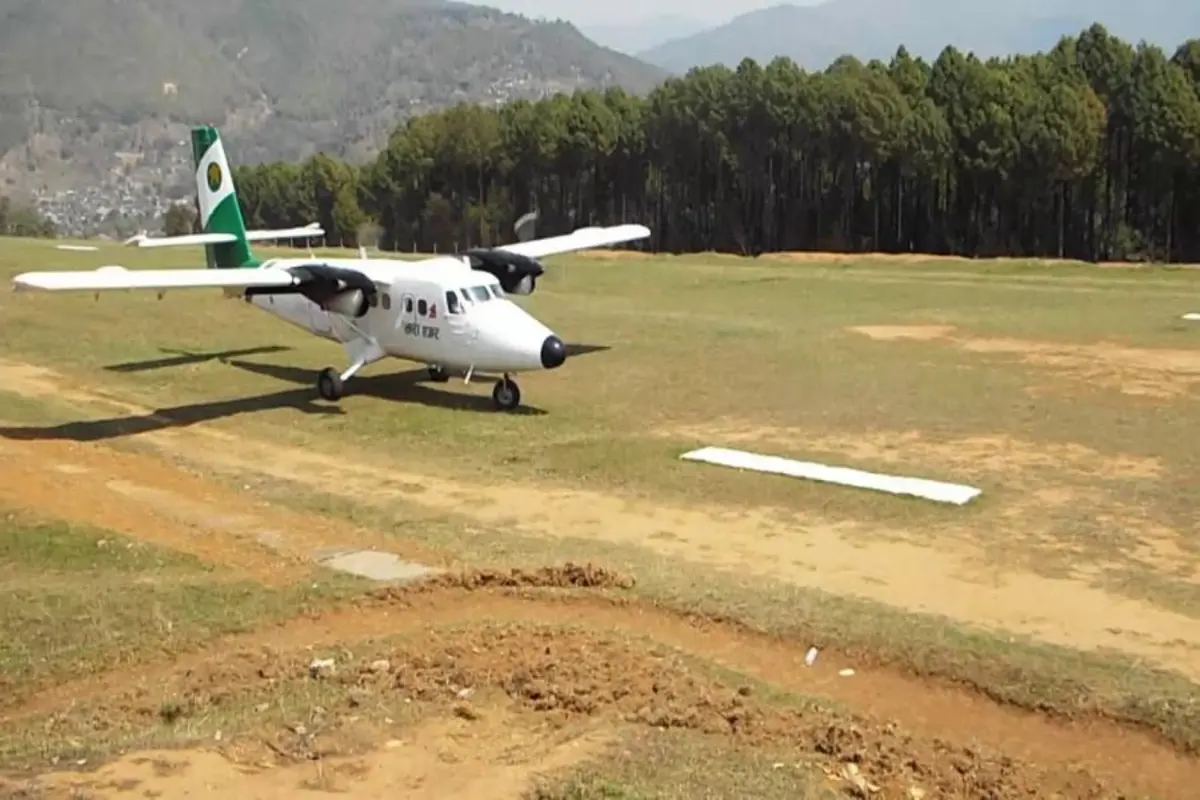
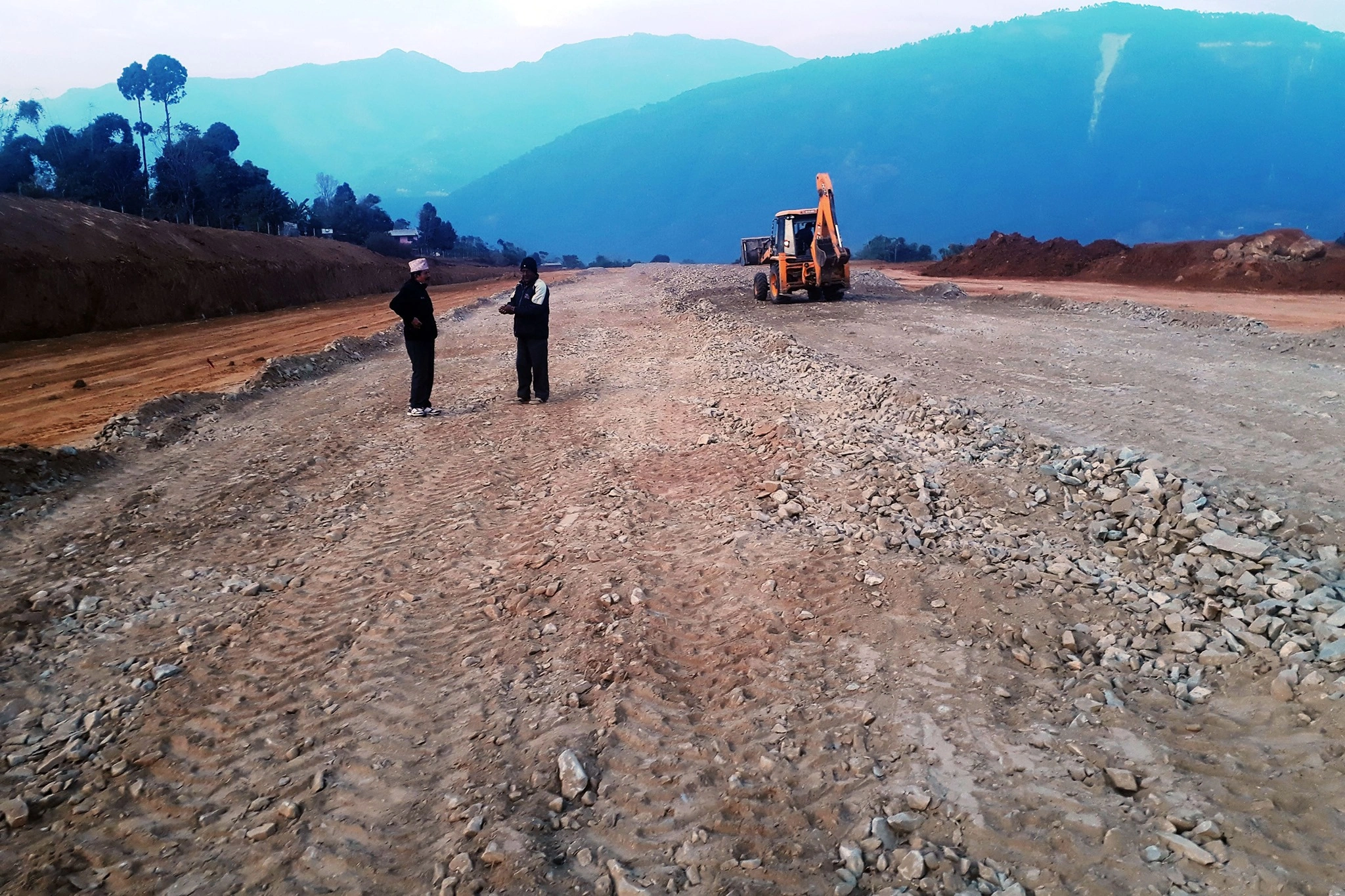
Balewa Airport was built in 1965 (2022 BS in the Nepali calendar) through community mobilization during the Panchayat era. Local residents physically cleared and leveled the ridgeline. No government contractor. No heavy machinery brought from Kathmandu. People moved earth by hand because aviation was the only way in or out of a district completely cut off by terrain.
From 1965 to 1993, residents of Baglung, Parbat, and Myagdi regularly flew to Kathmandu, Pokhara, and Bhairahawa on Royal Nepal Airlines Twin Otter service. The flight to Pokhara took 8 minutes. Kathmandu was 45 minutes away via Pokhara. For emergency medical evacuations, for commerce, for family connections to the capital the airport was not a convenience. It was a lifeline.
Then the road arrived.
1992–1993: The Road That Killed the Flights
When the Pokhara–Baglung Highway was completed, the commercial case for flying collapsed overnight. A bus ticket cost a fraction of the air fare. The journey took hours instead of minutes, but the price difference was not close. Passenger numbers fell. Airlines withdrew. The airport that locals built with their hands fell silent in 1993.
The airport would remain silent used as a grazing ground for cattle for the next 25 years.
2014: Ministers Land, Make Promises, Leave
In 2014, then Tourism Minister Lokendra Bista and Education Minister Dinanath Sharma flew into Balewa on a Nepal Airlines aircraft. They toured the airstrip. They made statements about restoring regular service. Photographs were taken.
Then they left. No scheduled flights followed.
This visit established a pattern that would repeat itself across the next decade ministers arriving, promising, and departing without any policy action.
2018: Flowers, Flights, and a Second Abandonment
On 14 January 2018, CAAN, Tara Air, Nepal Airlines Corporation, and Baglung Municipality signed a tri-party agreement to reopen the airport. On 14 March 2018, Tara Air's 19-seat Twin Otter (9N-AKL) conducted the first test flight in 26 years.
When the aircraft touched down, locals came to the ridgeline with garlands of flowers. That image is documented. After 26 years of silence 26 years in which emergency patients faced an 8-to-10-hour road journey to Pokhara for hospital treatment a plane had landed. The Spotlight Nepal described locals saying the moment fulfilled a dream held for nearly three decades.
Regular service started on 20 March 2018. Two flights per week, Sundays and Thursdays. Baglung Municipality had guaranteed 60 percent seat occupancy per flight and deposited NPR 1.2 million as financial security with the airlines.
The guarantee was never met. By mid-June 2018, less than three months after that flower-garlanded reopening, the flights stopped. The municipality paid approximately NPR 1 million each to Tara Air and Nepal Airlines to compensate for empty seats. The ticket counter set up at the district postal office was removed. The airport fell silent a second time.
Before those flights started, something significant had been done by the community. Locals had cleared more than 700 trees over 400 of them Salla pine trees to restore the approach path that had grown over during the closure years. Those trees had been growing since 1993. They were removed in weeks. The flights lasted less than three months.
2021 to 2026: The Renovation Nobody Followed Through On
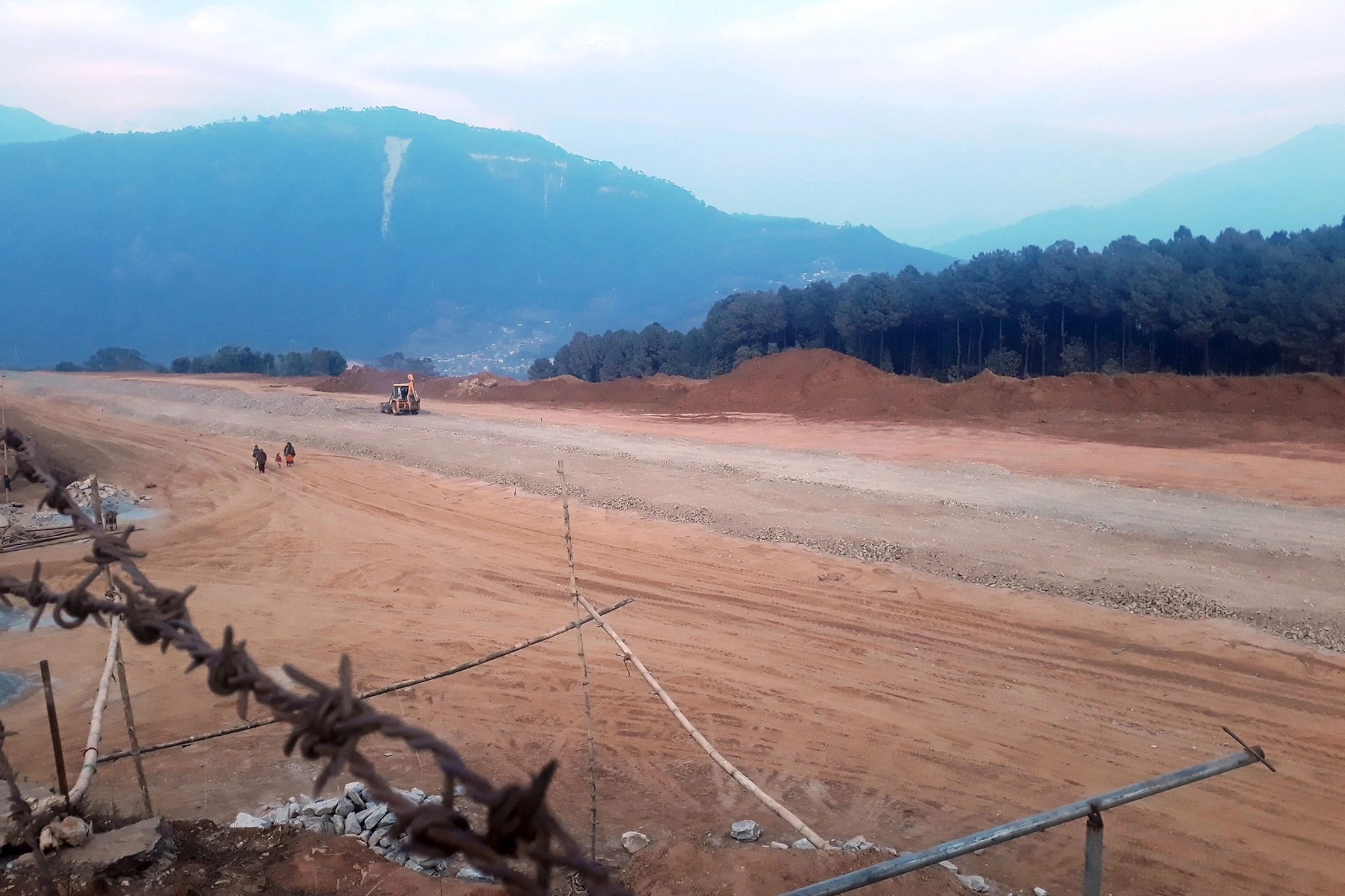
After the second closure, Baglung Municipality initiated a runway paving project. The stated logic was straightforward: the unpaved, muddy runway was cited as a reason airlines found the route unattractive. Pave it, and operations become viable.
In April 2021, Kasthamandap Uma and Joint Venture Construction Company completed the blacktopping at a cost of NPR 82.4 million. The works included the 700-meter tarmac, the 1,500-meter perimeter fence, the main and emergency gates, and the 620-meter drainage system. The airport had a renovated runway that could handle aircraft with 18 to 24 seats.
Since the paving was completed, not a single plane has landed.
As of the most recent reporting from The Kathmandu Post in October 2024, grass has grown back across the site. The fence is rusting. Visitors photograph the tarmac through the wire and post the images online with questions no official can answer.
Ward 14 Chairman Khatri summarized it directly: "For now, grass has grown all over the place, and visitors joke about it."
Why the Airport Keeps Failing: Three Problems in a Loop
The failure is not random. It is structural, and the three components reinforce each other in a cycle no single actor can break alone.
The Access Road Is the Real Problem
Both roads leading to the airport regularly collapse under landslides. The routes are completely impassable during the three months of monsoon season, forcing travelers to walk. The municipality has spent significant sums clearing landslide debris just to keep the roads temporarily open.
A contract has been awarded to blacktop a 10-kilometer stretch of the Kaligandaki Corridor from Maldhunga to Balewa. Until that work is complete and stable, no airline will operate a route where passengers cannot reliably reach the airport. The NPR 82.4 million spent on the runway did not include the access road. That sequencing renovate the airfield, ignore the road produced a technically operational airport that is practically unreachable.
"Only once the road is paved will we be able to start flights," Khatri told reporters. "Political leaders are not showing any interest, and there is no possibility of conducting services for lack of access roads."
Airlines Will Not Fly Without Guaranteed Revenue
Former airport manager Surya Bahadur Khatri stated the airline position plainly: "Airlines prioritize routes that ensure profitability. Without passenger assurance, no company wants to take the risk."
The 2018 experience proved this point in the most expensive possible way. The municipality guaranteed 60 percent seat occupancy, backed it with deposited cash, and still lost the route in under three months. No airline will return without a stronger demand case and demand cannot grow until the access road is reliable enough for passengers to actually reach the airport.
No Single Level of Government Controls All the Pieces
Baglung Mayor Basanta Kumar Shrestha put the coordination problem directly: "The municipality alone cannot revive it. Federal, provincial, and local governments must coordinate to make this happen."
The airport land belongs to CAAN, a federal body. The access road falls under a different jurisdiction. The airline subsidy decision sits with the central government. The municipality controls none of these levers independently.
Raju Khadka, deputy head of Baglung Municipality, noted that the airport could benefit the entire Dhaulagiri region Baglung, Parbat, and Myagdi combined, a population exceeding 400,000 people. Three districts. One airport. Zero coordination between the government tiers that would need to act simultaneously.
What Locals Know That No Planning Document Mentions
There are three facts about Baglung Airport that appear in local reporting but have never entered the national or international conversation about the airport's future.
First, the access road between Maldhunga and Balewa does not just need paving it needs protection from the landslides that destroy it every monsoon. The municipality has been clearing slide debris for years at its own cost, because the Road Division does not operate during the rainy season. Paving a road that slides each June is not a permanent solution. It is a more expensive version of the same annual problem.
Second, the airport once served Bhairahawa not just Pokhara and Kathmandu. The connection to Bhairahawa (now Gautam Buddha International Airport) gave Baglung direct access to the Terai and the Indian border trade corridor. That route has never been discussed in any revival proposal.
Third, the Kaligandaki Corridor the road whose completion is cited as the key to unlocking airport operations runs through terrain with active landslide history. The blacktopped section from Maldhunga toward Panitanki is not in regular operation due to landslides. Even when finished, its seasonal reliability is uncertain.
The Tourism Corridor That Could Change the Numbers
The strongest economic argument for Baglung Airport revival sits in the tourism corridor that no carrier has yet mapped against the airport.
Destination | Distance from Baglung | Category |
Dhorpatan Hunting Reserve | ~65 km southwest | Wilderness / Wildlife |
Tatopani hot springs, Kali Gandaki | ~30 km north | Natural / Therapeutic |
Nisikhola valley | ~20 km east | Trekking |
Galeshwar Temple | ~5 km | Cultural / Sacred |
Ridi Bazaar confluence | ~40 km southwest | Pilgrimage |
Kusma suspension bridge | ~10 km | Adventure |
Dhorpatan Hunting Reserve is Nepal's only legal hunting reserve 1,325 square kilometers supporting blue sheep (bharal), Himalayan tahr, and snow leopard. Hunting permit fees under Nepal's legal framework range from USD 500–1,500 per hunter per season. Currently, reaching Dhorpatan from Pokhara requires a full day by road. A charter flight to Balewa would cut that to under 30 minutes total.
The municipality has separately proposed positioning Balewa as a pilot training center and adventure aviation base for ultralight operations. Nepal has genuine demand for STOL-rated pilots, and a 608-meter blacktopped strip at 3,320 feet above sea level is a legitimate training environment for mountain flying certification.
Neither proposal has been formally modeled in any CAAN budget document. Neither has been included in any airline route development discussion. Both exist only in statements from local officials who have no authority to act on them unilaterally.
For more travel guides and aviation insights from across Nepal and beyond, explore the full collection at airgazette.
Conclusion: The Airport Is Not the Problem
The paved runway at Baglung Airport did not fail. It was never given the conditions to succeed.
The access road collapses every monsoon. The government awarded a paving contract for it without a completion date. The three tiers of government that would need to coordinate federal, provincial, local have not done so in three decades of trying. Every aviation minister who visits takes a photograph and leaves. The fence rusts. The grass grows.
The community that built this airport in 1965 cleared 700 trees in 2018 to bring it back. They watched the flights stop in three months. They watched NPR 82.4 million get spent on a runway no plane would land on. They are still waiting not for concrete, not for tarmac, not for another ribbon-cutting.
They are waiting for someone with the authority and the will to fix the road.
Frequently Asked Questions
Is Baglung Airport currently open and operational in 2026?
No. Baglung Airport (BGL) has had no scheduled commercial service since mid-2018. CAAN completed a full runway blacktopping in April 2021 at a cost of NPR 82.4 million. Despite this renovation, the perimeter fence is rusting, grass has grown across the site, and no aircraft have landed since the paving was completed. No flights are scheduled as of 2026.
How do I travel from Pokhara to Baglung?
Pokhara to Baglung by road covers approximately 72 kilometers. By private vehicle the trip takes 2.5–3 hours and costs NPR 2,500–3,500. By local bus it takes 3–4 hours and costs NPR 400–600. Charter helicopter takes 15–20 minutes and costs approximately USD 800–1,200. There is no scheduled fixed-wing service.
When was Baglung Balewa Airport originally built and by whom?
The airport was built in 1965 (2022 BS) through community labor during Nepal's Panchayat era. Local residents physically cleared and leveled the ridgeline site without government contractors. Regular commercial operations began in 1973 with Royal Nepal Airlines Twin Otter service to Pokhara, Kathmandu, and Bhairahawa.
Why did Baglung Airport close the first time?
The airport closed in 1992–1993 when the Pokhara–Baglung Highway was completed. Bus travel cost significantly less than air travel, and passenger demand collapsed within months of the road opening. The airport remained closed for 25 years and was used as grazing land for cattle.
What happened during the 2018 reopening attempt?
Tara Air conducted a test flight on 14 March 2018. Regular twice-weekly service began on 20 March 2018. Baglung Municipality had guaranteed 60 percent seat occupancy and deposited NPR 1.2 million as financial security. Flights stopped by mid-June 2018 due to insufficient passengers, and the municipality paid approximately NPR 1 million each to Tara Air and Nepal Airlines to cover their losses.
How much has been spent on Baglung Airport and what was built?
In April 2021, CAAN completed a runway renovation costing NPR 82.4 million. The works included a 700-meter blacktopped tarmac within a 1,100-meter gravel field, a 1,500-meter perimeter fence with main and emergency gates, and a 620-meter concrete drainage system. The airport can handle aircraft with 18 to 24 seats. No plane has landed on the new surface.
Why does Baglung Airport still not operate after the renovation?
Three interconnected problems prevent operations. First, the access road to the airport is approximately 10–12 kilometers of landslide-prone terrain, impassable during monsoon and requiring annual debris clearing by the municipality. Second, no airline will operate without guaranteed passenger revenue, and the 2018 experience proved demand is insufficient without road access. Third, the airport land belongs to CAAN federally, while the access road and subsidy decisions fall under different government tiers coordination that has not been achieved in three decades.
